
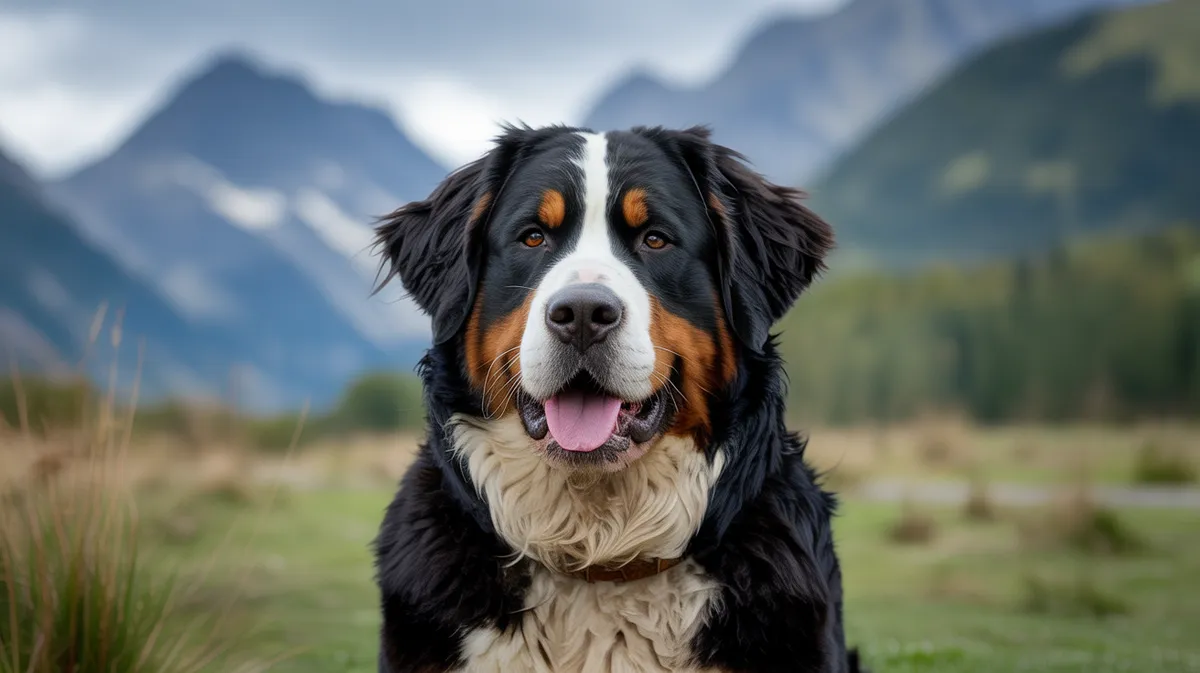
About the Bernese Mountain Dog
The Bernese Mountain Dog is a large, sturdy working breed that originated in the Swiss Alps. Known for its distinctive tri-colored coat of black, white, and rust, this breed was historically used as a farm dog, adept at herding cattle, pulling carts, and serving as a loyal companion. Friendly, intelligent, and gentle, Bernese Mountain Dogs are renowned for their affectionate nature and devotion to families. Their thick double coat protects them in cold mountain climates, but also requires regular grooming. Despite their strength and resilience, they are sensitive dogs who thrive on companionship and positive human interaction.
Fascinating facts
Swiss Heritage
The Bernese Mountain Dog originated in the canton of Bern, Switzerland, where it was developed as a versatile farm dog.
Draft Dog Skills
This breed was historically used to pull carts loaded with goods from farms to local markets in the Swiss Alps.
Family Companion
Bernese Mountain Dogs are noted for their loving disposition and are especially gentle with children and other animals.
Detailed description
The Bernese Mountain Dog is a robust, large-boned working breed, typically weighing between 35–55 kg (77–121 lbs) and standing 58–70 cm (23–27.5 in) at the shoulder. Its hallmark is a thick, weather-resistant double coat displaying a striking tri-color pattern: jet black with symmetrical white and rust markings. The breed’s broad head, gentle expression, and strong, muscular build reflect its heritage as a versatile farm dog. Anatomically, Bernese Mountain Dogs have a deep chest, powerful limbs, and a bushy tail, all adaptations for endurance and strength in mountainous terrain. Their gait is fluid and purposeful, suited to both pulling loads and traversing rugged landscapes. Behaviorally, they are renowned for their calm, affectionate temperament, forming strong bonds with family members and displaying notable patience with children. Socially, Bernese Mountain Dogs are pack-oriented, thriving in environments with regular human and animal interaction. Their intelligence and eagerness to please make them highly trainable, though they may exhibit sensitivity to harsh correction. Reproductively, they have moderate litter sizes, with an average of 6–8 puppies, and display attentive maternal care. Unique among many large breeds, Bernese Mountain Dogs are known for their gentle disposition and adaptability to both work and companionship roles.
Did you know?
Bernese Mountain Dogs were traditionally trained to pull carts, and there are still cart-pulling competitions held for them today.
Research & sources
Wikipedia summary
The Bernese Mountain Dog, German: Berner Sennenhund or Dürrbächler, is a large dog breed originating from the canton of Bern, Switzerland and the Swiss Alps. It is one of four Sennenhund-type breeds, with ancestral roots in Roman mastiffs. The name Berner refers to the breed's area of origin in the canton of Bern, and Sennenhund is derived from the German Senne and Hund ("hound/dog"), as they accompanied the alpine herders and dairymen called Senne. This breed was originally kept as a general farm dog and large Sennenhunde in the past were also used as draft animals pulling carts. The breed was officially established in 1912.
Behaviour & social structure
Bernese Mountain Dogs are characterized by their gentle, sociable, and loyal nature. They are not aggressive but may be reserved with strangers, often displaying a calm watchfulness. As historically working dogs, they possess a moderate energy level and enjoy tasks such as pulling carts (draft work), herding, and participating in canine sports. Their feeding behavior is typical of domestic dogs, with a preference for high-quality, protein-rich diets. Socially, they are highly affiliative, preferring close contact with family members and often seeking physical closeness. They are generally tolerant of other pets, especially when socialized early. Daily routines should include moderate exercise, mental stimulation, and opportunities for social interaction to prevent boredom and anxiety. Bernese Mountain Dogs may be prone to separation anxiety if left alone for extended periods, reflecting their strong pack instincts.
Reproduction & life cycle
Bernese Mountain Dogs reach sexual maturity between 12–18 months. The breed is monoestrous, with females typically coming into heat twice a year. Courtship involves playful and gentle interactions, with both sexes exhibiting affiliative behaviors. The gestation period averages 63 days. Litter sizes are moderate, averaging 6.4 puppies (range 1–15), as documented in a large-scale study of purebred dogs. Puppies are born altricial, requiring intensive maternal care for the first three weeks. Both breeders and owners emphasize early socialization and gentle handling to ensure well-adjusted adults. Weaning occurs around 6–8 weeks, and puppies are usually placed in new homes at 8–10 weeks. Responsible breeding practices are crucial due to the breed’s predisposition to certain hereditary health issues, such as hip dysplasia and cancer.
Adaptations & survival
The Bernese Mountain Dog possesses several adaptations suited to its alpine origins. Its dense, double-layered coat provides insulation against cold and wet conditions, while the undercoat repels moisture and the outer coat protects against snow and wind. The breed’s large, muscular frame and strong limbs enable it to perform draft work and traverse steep, uneven terrain. Behavioral adaptations include a calm, steady temperament, which is advantageous for working alongside livestock and humans in potentially stressful farm environments. Their intelligence and trainability are evolutionary advantages for performing complex tasks. Additionally, their social nature and strong attachment to humans reflect selective breeding for companionship and cooperative work.
Cultural significance
The Bernese Mountain Dog holds a prominent place in Swiss rural culture, historically serving as an indispensable farmhand in the canton of Bern and surrounding alpine regions. Known locally as the Berner Sennenhund, it was integral to dairy farming, herding cattle, and transporting goods to market. The breed is celebrated in Swiss folklore and is a symbol of loyalty, strength, and resilience. In modern times, Bernese Mountain Dogs are valued as therapy animals, search-and-rescue dogs, and beloved family companions worldwide. Their image is frequently used in Swiss tourism and cultural events, reflecting their status as a national icon.
Recent research
Recent genetic studies have traced the Bernese Mountain Dog’s ancestry to Roman mastiffs and indigenous Swiss farm dogs, confirming its ancient lineage. Ongoing research focuses on identifying genetic markers for inherited diseases, particularly cancer, with the goal of improving breed health and longevity. Behavioral studies highlight the breed’s high social intelligence and sensitivity to human emotional cues, making them effective therapy and assistance dogs. Veterinary research is also investigating optimal nutrition and exercise regimens to mitigate the risk of obesity and orthopedic disorders. The breed’s reproductive biology, including litter size and neonatal survival, has been well-documented in large-scale epidemiological studies.
Sources
Litter size at birth in purebred dogs—A retrospective study of 224 breeds
Borge, K. S.; Tønnessen, R.; Nødtvedt, A.; Indrebø, A. (2011)
scientificFCI Breed Standard No. 45: Bernese Mountain Dog
Fédération Cynologique Internationale (2015)
breed standardVideos
Habitat
Mountain farms and rural areas
 Global
Forest
Wooded areas with significant tree cover and diverse plant and animal communities.
 Elevated Terrain
Mountain
High-altitude environments with varying climates and specialized wildlife adapted to rugged terrain and thin air.
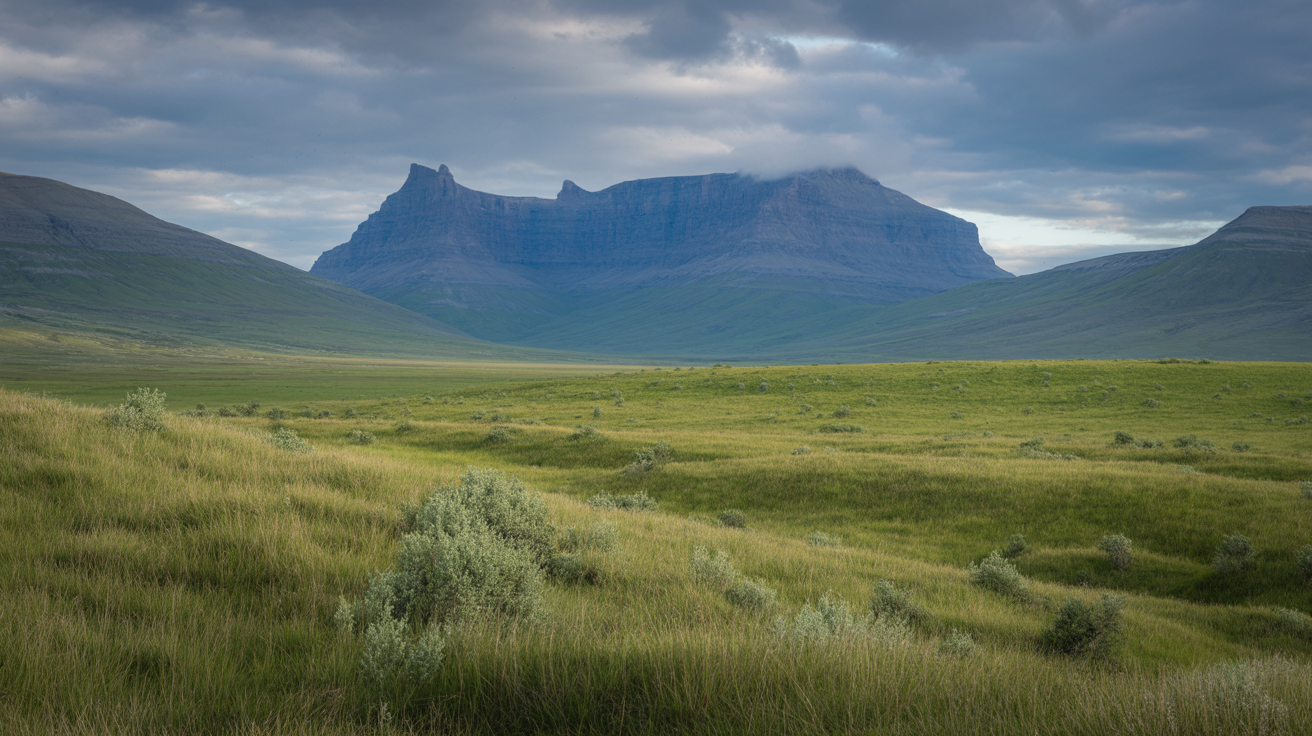 Various Continental Regions
Grassland
Open areas dominated by grasses rather than trees, supporting numerous herbivores and their predators.
Conservation
The Bernese Mountain Dog is currently classified as Least Concern on the IUCN Red List.
Threats & challenges
While the Bernese Mountain Dog is not at risk of extinction, the breed faces significant health challenges. The most pressing issues are a high incidence of hereditary cancers (notably histiocytic sarcoma), hip and elbow dysplasia, and relatively short average lifespans (6–8 years). Intensive selective breeding for appearance has exacerbated some genetic problems. Population trends remain stable due to the breed’s popularity, but responsible breeding and genetic screening are critical to improving long-term health. Environmental threats are minimal, as the breed is almost exclusively domesticated. However, obesity and lack of exercise are common in pet populations, leading to secondary health issues.
Taxonomy
Scientific name
Canis lupus familiaris
- Kingdom
- Animalia
- Phylum
- Chordata
- Class
- Mammalia
- Order
- Carnivora
- Family
- Canidae
- Genus
- Canis
- Species
- familiaris
Community notes
Share your observations about the Bernese Mountain Dog.
No community notes yet. Be the first!
Discover more wildlife
More fascinating animals from the encyclopedia.