
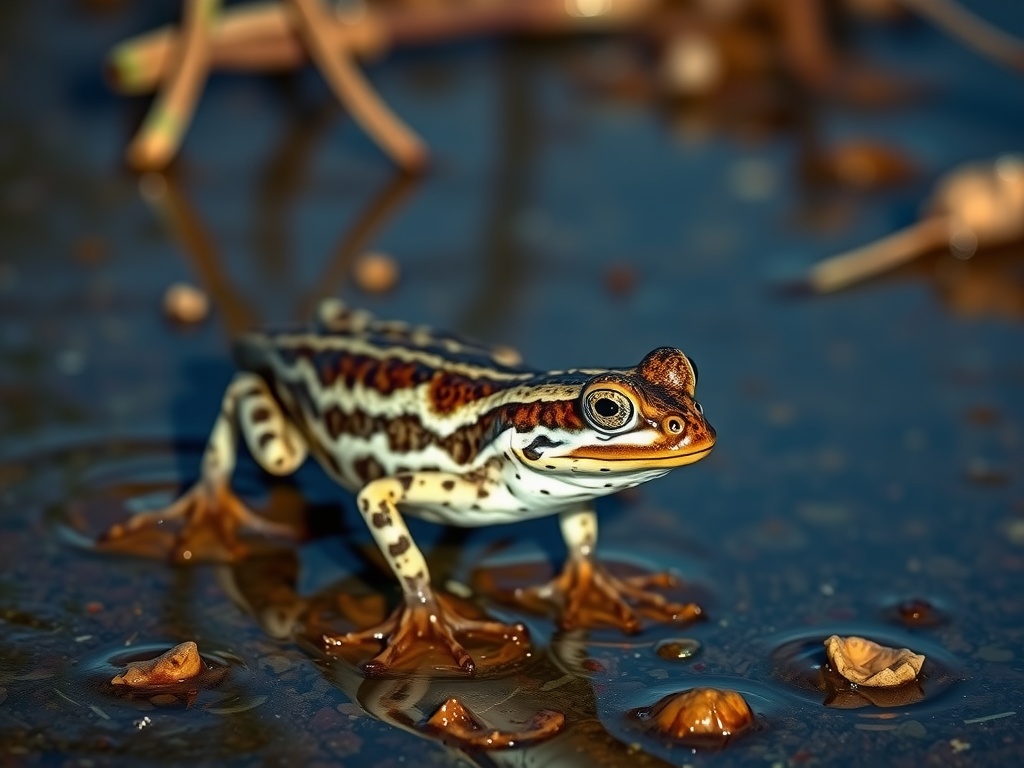
About the Mudskipper
The mudskipper is a fish that spends most of its life out of water and would drown if it could not get out. It breathes through its skin and through the lining of its mouth and throat, all of which must stay wet, so it carries a mouthful of water around like a scuba tank and rolls in puddles to keep its skin damp. It "walks" on modified pectoral fins used like crutches, skipping, leaping and climbing mangrove roots. Its eyes sit on top of its head, close together, bulging and independently mobile, giving it almost panoramic vision above the waterline; because it has no eyelids in the usual sense, it retracts each eye into a socket of water to wet it — effectively blinking by withdrawing. Its parenting is the strangest part: the male digs a deep burrow in the mud, and because that mud is anoxic, he gulps mouthfuls of air at the surface and carries them down, releasing them into a chamber to create an air pocket in which the eggs can develop without suffocating.
Fascinating facts
Amphibious Fish
Mudskippers are one of the few fish species that can spend significant time on land, using their strong pectoral fins to move across mud and sand.
Bulging Eyes
Their eyes are situated on top of their heads and can move independently, giving them excellent vision to spot both predators and prey.
Burrow Builders
Mudskippers dig deep burrows in the mud for shelter, protection from predators, and to keep moist during low tide.
Detailed description
The Atlantic mudskipper (Periophthalmus barbarus) is a medium-sized amphibious fish, typically reaching lengths of 15–25 cm, with a robust, elongated body and a broad, flattened head. Its skin is covered in a layer of mucus that facilitates cutaneous respiration, allowing efficient gas exchange when out of water. The eyes are large, protruding, and independently movable, granting panoramic vision above the waterline—a crucial adaptation for detecting predators and prey. Pectoral fins are muscular and limb-like, enabling the mudskipper to 'walk,' leap, and even climb mangrove roots. Dorsal fins are tall and often raised during displays or territorial disputes. The mouth is wide, equipped with small, conical teeth for grasping a varied diet. Coloration is generally brownish with blue or green iridescent spots, which may intensify during courtship. Mudskippers are highly territorial, constructing elaborate burrow systems in soft mud for shelter, thermoregulation, and breeding. These burrows can reach depths of up to 1 meter and are often oxygenated by the fish actively gulping air and releasing it inside. The species is diurnal, spending most daylight hours foraging and defending territory, while retreating to burrows during high tide or at night.
Did you know?
Mudskippers can absorb oxygen directly through their moist skin and the lining of their mouth, allowing them to survive out of water for hours at a time.
Research & sources
Wikipedia summary
Mudskippers are any of the 23 extant species of amphibious fish from the subfamily Oxudercinae of the goby family Oxudercidae. They are known for their unusual body shapes, preferences for semiaquatic habitats, limited terrestrial locomotion and jumping, and the ability to survive prolonged periods of time both in and out of water.
Behaviour & social structure
Periophthalmus barbarus exhibits complex behaviors rare among fish. It is primarily solitary and highly territorial, with males aggressively defending mudflat patches from rivals using threat displays—raising dorsal fins, opening mouths, and performing lateral body postures. Feeding occurs during low tide, when mudskippers emerge to hunt small invertebrates (crustaceans, insects, worms) and graze on algae and detritus. They use rapid, coordinated movements of their pectoral fins to 'skip' or leap across mud surfaces, and can even climb mangrove roots using a combination of pectoral and pelvic fin movements. Social interactions include visual signaling, burrow guarding, and occasional skirmishes. Mudskippers are known to bask in the sun, which may aid in metabolic processes. Daily routines are tightly linked to tidal cycles, with activity peaking during low tide and retreat to burrows as water rises.
Reproduction & life cycle
Breeding in P. barbarus is seasonal, typically coinciding with the rainy season when food is abundant and mud conditions are optimal. Males excavate and maintain breeding burrows, which they defend vigorously. Courtship involves elaborate displays: males raise their dorsal fins, perform body undulations, and lead females to their burrows. Females lay adhesive eggs inside the burrow, often in a special chamber above the waterline. The male may guard the eggs, ensuring adequate oxygenation by gulping air and releasing it into the chamber. Incubation lasts 8–14 days, depending on temperature and humidity. Upon hatching, larvae are planktonic and remain in the water column until they develop the ability to survive on land, at which point they settle and begin a semi-terrestrial lifestyle. Parental care is limited to egg guarding and burrow maintenance.
Adaptations & survival
P. barbarus possesses a suite of remarkable adaptations for amphibious living. Its skin and buccopharyngeal lining are highly vascularized, enabling cutaneous and buccal respiration when out of water, provided the skin remains moist. The gill chambers are enlarged and retain water, allowing limited aquatic respiration on land. The pectoral fins are modified for terrestrial locomotion, with strong musculature and a jointed structure for 'walking' and climbing. Eyes are adapted for aerial vision, with a flattened cornea and the ability to retract into the head to moisten the surface. Burrow construction serves multiple functions: protection from predators, regulation of temperature and humidity, and provision of an oxygen-rich environment for eggs. Behavioral adaptations include tidal synchronization, territoriality, and complex visual displays.
Cultural significance
Mudskippers hold a place in the folklore and traditional knowledge of West African coastal communities, where their unique appearance and behavior have inspired myths about fish that can 'walk on land.' In some cultures, they are seen as symbols of adaptability and resilience. Mudskippers are occasionally used as bait in artisanal fisheries, and their burrowing activity is recognized as beneficial for soil aeration and mangrove health. They have also become popular in public aquaria, where their amphibious lifestyle fascinates visitors and serves as an educational tool for wetland conservation.
Recent research
Recent research has focused on the physiological mechanisms underlying amphibious respiration, including the role of aquaporins and specialized vascular structures in the skin. Studies using micro-CT and high-speed video have elucidated the biomechanics of mudskipper locomotion, revealing convergent evolution with early tetrapods. Molecular phylogenetics has clarified the evolutionary relationships within Oxudercinae, supporting the monophyly of mudskippers. Ongoing research addresses the impact of environmental pollutants on mudskipper health and reproductive success, as well as their role as bioindicators of estuarine ecosystem health. Notably, mudskippers are a model system for studying the transition from aquatic to terrestrial life in vertebrates.
Sources
Family-group names of Recent fishes
Richard van der Laan, William N. Eschmeyer, Ronald Fricke (2014)
scientificTerrestrial locomotion in mudskipper fish: A model for the evolution of tetrapod movement
S. M. Ashley-Ross et al. (2013)
scientificVideos
Habitat
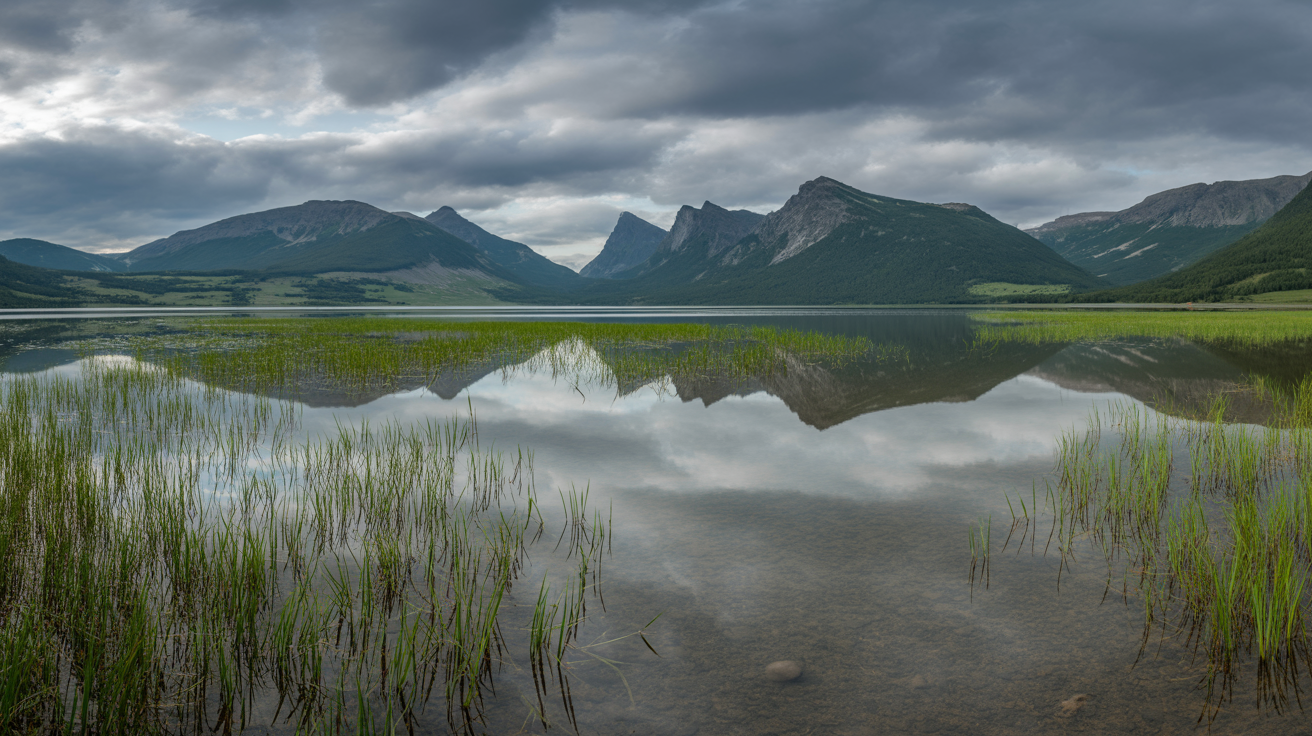
Mangrove swamps and tidal mudflats
Conservation
The Mudskipper is currently classified as Least Concern on the IUCN Red List.
Threats & challenges
While currently listed as Least Concern by the IUCN, P. barbarus faces increasing threats from habitat loss due to coastal development, mangrove deforestation, and pollution (notably oil spills and heavy metals). Overfishing and collection for the aquarium trade may also impact local populations. Climate change poses a long-term risk by altering tidal regimes and increasing the frequency of extreme weather events, which can disrupt breeding and foraging. Population trends are stable in most regions, but localized declines have been observed in heavily impacted estuaries. Conservation challenges include the need for mangrove protection, pollution control, and sustainable management of coastal resources.
Taxonomy
Scientific name
Periophthalmus barbarus
- Kingdom
- Animalia
- Phylum
- Chordata
- Class
- Actinopterygii
- Order
- Gobiiformes
- Family
- Gobiidae
- Genus
- Periophthalmus
- Species
- barbarus
Community notes
Share your observations about the Mudskipper.
No community notes yet. Be the first!
Discover more wildlife
More fascinating animals from the encyclopedia.