
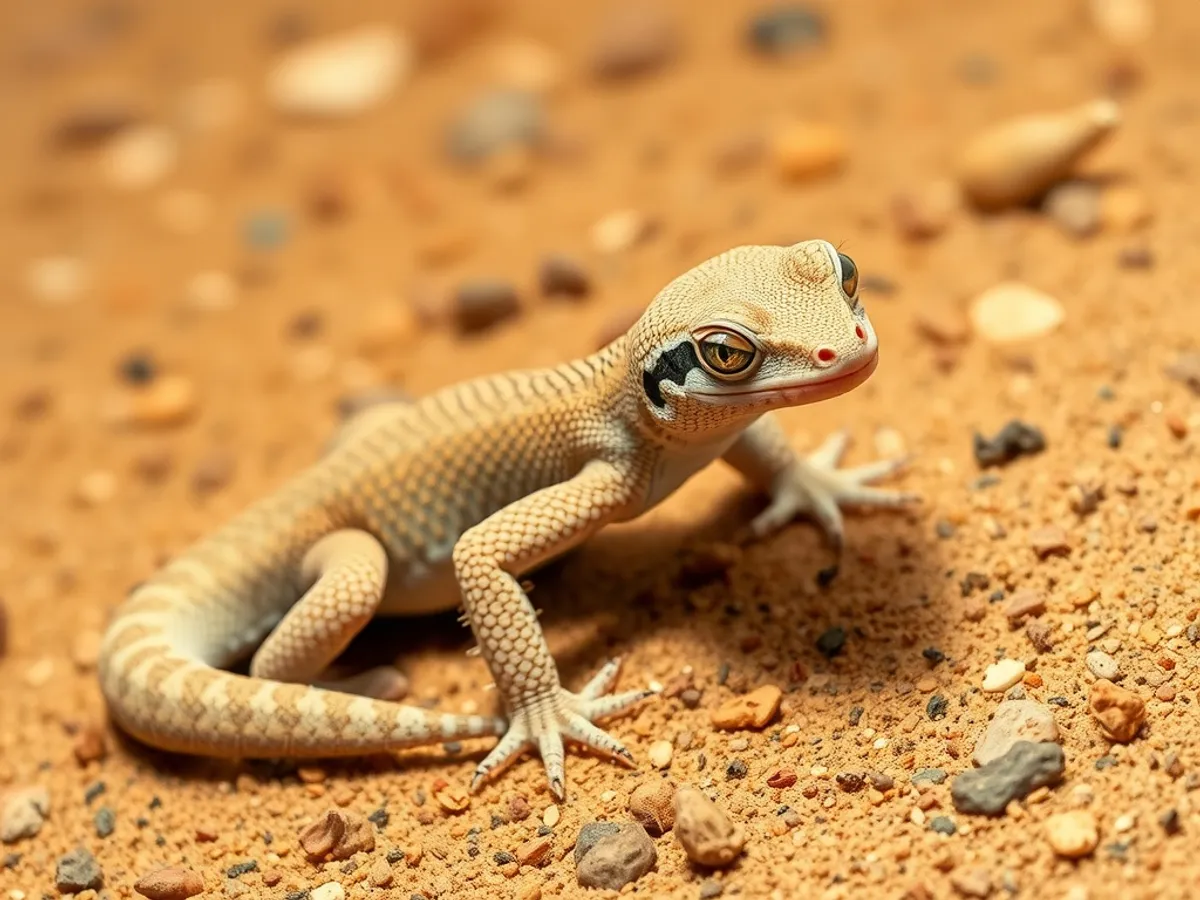
About the Namib Sand Gecko
The Namib Sand Gecko, also known as the web-footed gecko, is a small, nocturnal reptile native to the arid dunes of the Namib Desert in southwestern Africa. It is easily recognizable by its translucent skin, large eyes adapted for night vision, and webbed feet that allow it to move swiftly across loose sand. This gecko spends its days hidden in burrows to escape the extreme desert heat and emerges at night to hunt for insects. Its unique adaptations make it one of the most specialized reptiles for desert life.
Fascinating facts
Webbed Toes
The Namib Sand Gecko's toes are fringed with skin, creating webbed feet that help it move easily over loose sand and even dig quickly to escape predators.
Nocturnal Hunter
This gecko is strictly nocturnal, using its large eyes to hunt for insects and other small invertebrates under the cover of darkness.
Sand Burrower
During the scorching desert day, the Namib Sand Gecko hides in self-dug burrows several centimeters beneath the surface to stay cool and avoid dehydration.
Detailed description
The Namib Sand Gecko (Pachydactylus rangei) is a small, slender lizard, typically measuring 10–13 cm in total length, with a delicate, almost translucent skin that ranges from pale pink to sandy beige, providing effective camouflage against the desert substrate. Its most distinctive anatomical feature is its broad, webbed feet, which are fringed with skin flaps and covered in microscopic setae, allowing for exceptional traction and speed on loose sand. The gecko's large, lidless eyes are adapted for nocturnal activity, featuring vertical pupils and a reflective layer (tapetum lucidum) that enhances night vision. Its body is soft and flexible, with a thin tail that can be autotomized (shed) as a defense mechanism. The Namib Sand Gecko is primarily nocturnal, emerging at dusk to forage and returning to its self-dug burrows by dawn to avoid daytime heat and predation. It is a solitary species, with individuals maintaining overlapping home ranges but rarely interacting outside of the breeding season. Its diet consists mainly of small arthropods, including beetles, termites, and spiders, which it captures using rapid tongue flicks. Reproduction is oviparous, with females laying small clutches of eggs in moist sand. The species is highly adapted to the hyper-arid Namib Desert, relying on behavioral and physiological mechanisms to conserve water and regulate body temperature.
Did you know?
Despite living in one of the driest places on Earth, the Namib Sand Gecko rarely needs to drink liquid water, getting most of its moisture from its prey and the dew it collects at night.
Research & sources
Behaviour & social structure
Namib Sand Geckos are strictly nocturnal, spending daylight hours in burrows that they excavate themselves, often at depths of 10–30 cm to maintain stable humidity and temperature. At night, they emerge to hunt, using a combination of stealth and rapid bursts of movement to ambush prey. Their hunting strategy involves visual detection, facilitated by their large eyes, and they often stalk prey before striking with a quick lunge. The geckos are generally solitary, with minimal social interaction except during the breeding season. Territorial disputes are rare, but individuals may display threat postures or tail waving if confronted. They communicate through subtle body language and, in some cases, low-frequency vocalizations. Daily routines are closely tied to environmental conditions, with activity peaking during the coolest, most humid parts of the night, especially after fog events that provide additional moisture.
Reproduction & life cycle
Breeding in Pachydactylus rangei typically occurs during the warmer, more humid months (October to March), coinciding with increased insect activity. Courtship involves males pursuing females and engaging in gentle biting or nudging. Females lay one or two leathery-shelled eggs per clutch, often in moist sand within their burrows or in sheltered microhabitats. Incubation lasts approximately 60–90 days, depending on ambient temperature and humidity. Hatchlings are fully independent at birth, measuring around 4 cm in length, and receive no parental care. Sexual maturity is reached within 12–18 months. Reproductive output is low, but survival rates are relatively high due to the stable microclimate of burrows and the scarcity of predators in the harsh desert environment.
Adaptations & survival
The Namib Sand Gecko exhibits a suite of remarkable adaptations for desert survival. Its webbed feet and fringed toes enable rapid, efficient locomotion across loose, shifting sand, preventing sinking and aiding in burrow excavation. The translucent skin minimizes heat absorption and provides camouflage, while the ability to absorb moisture through the skin and cloaca helps offset water loss. Nocturnality reduces exposure to extreme daytime temperatures and desiccation. The gecko's kidneys are highly efficient, producing concentrated uric acid to conserve water. Behavioral thermoregulation, such as basking at burrow entrances during cool dawn or dusk periods, helps maintain optimal body temperature. Its large eyes and tapetum lucidum maximize light capture for nocturnal hunting.
Cultural significance
The Namib Sand Gecko holds limited direct significance in local human culture, primarily due to its elusive, nocturnal nature and remote habitat. However, it is occasionally featured in eco-tourism literature and desert wildlife documentaries, symbolizing the extraordinary adaptations of life in the Namib Desert. In some indigenous folklore, desert reptiles are regarded as symbols of resilience and adaptability, though specific references to Pachydactylus rangei are rare. The species is sometimes used in educational programs to highlight the importance of desert ecosystems and biodiversity.
Recent research
Recent research has focused on the biomechanics of the gecko's webbed feet, revealing convergent evolution with other sand-dwelling reptiles and providing insights into the development of biomimetic materials for robotics. Studies on its water balance and skin permeability have contributed to understanding physiological adaptations to extreme aridity. Population genetics research indicates low genetic diversity, likely due to geographic isolation, but also suggests historical stability. Ongoing ecological monitoring is assessing the impact of climate variability on activity patterns and reproductive success. The Namib Sand Gecko is also a model organism for studying the effects of fog as a critical water source in hyper-arid environments.
Sources
Pachydactylus rangei (Namib Sand Gecko): Natural History and Adaptations
Bauer, A.M. & Russell, A.P. (2000)
scientificPachydactylus rangei: The IUCN Red List of Threatened Species 2020
Bauer, A.M., Becker, F. & Branch, W.R.
conservationVideos
Habitat
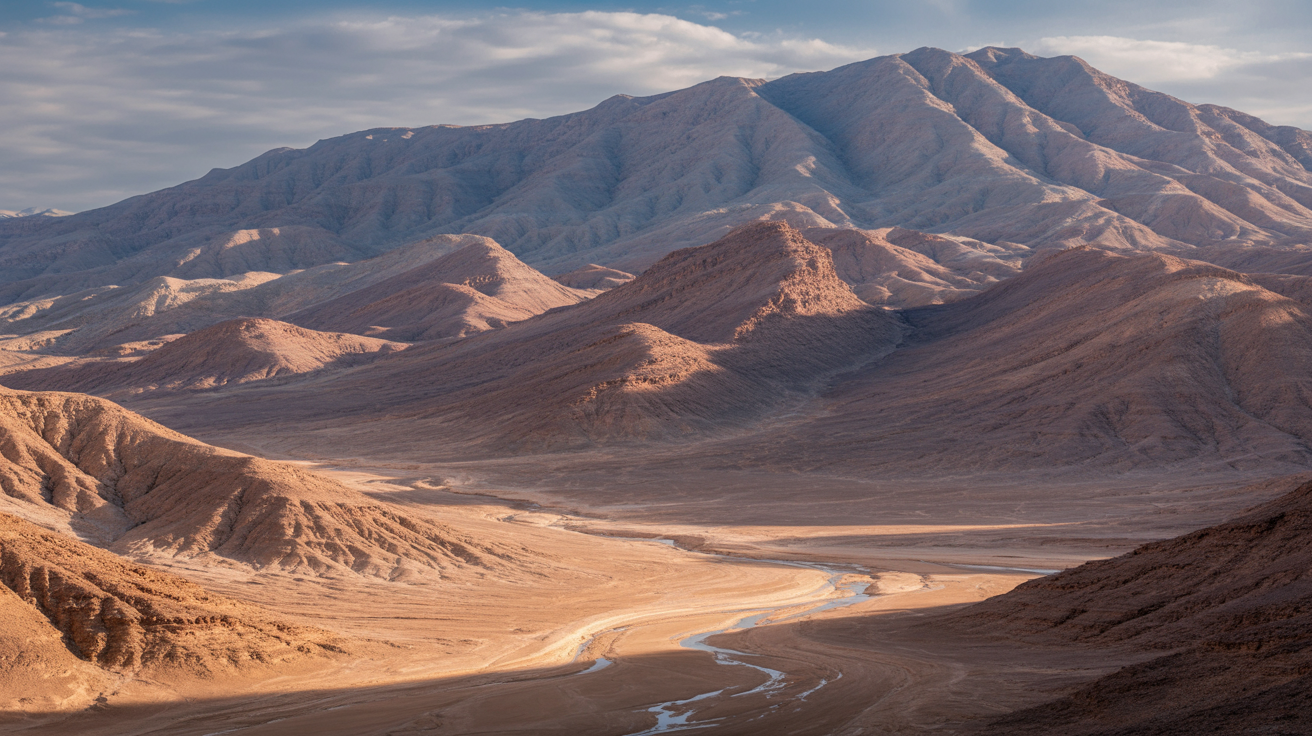
Desert
Conservation
The Namib Sand Gecko is currently classified as Least Concern on the IUCN Red List.
Threats & challenges
Currently classified as Least Concern by the IUCN, the Namib Sand Gecko faces relatively few natural threats due to its remote habitat. However, localized risks include habitat disturbance from off-road vehicles, mining activities, and increasing tourism in the Namib Desert. Climate change poses a potential long-term threat by altering fog patterns and reducing the availability of moisture, which could impact both prey abundance and reproductive success. Predation by birds, snakes, and small mammals is limited but present. Overall, populations are considered stable, but ongoing habitat monitoring is recommended to detect emerging threats.
Taxonomy
Scientific name
Pachydactylus rangei
- Kingdom
- Animalia
- Phylum
- Chordata
- Class
- Reptilia
- Order
- Squamata
- Family
- Gekkonidae
- Genus
- Pachydactylus
- Species
- rangei
Community notes
Share your observations about the Namib Sand Gecko.
No community notes yet. Be the first!
Discover more wildlife
More fascinating animals from the encyclopedia.