
About the Pacific Tree Boa
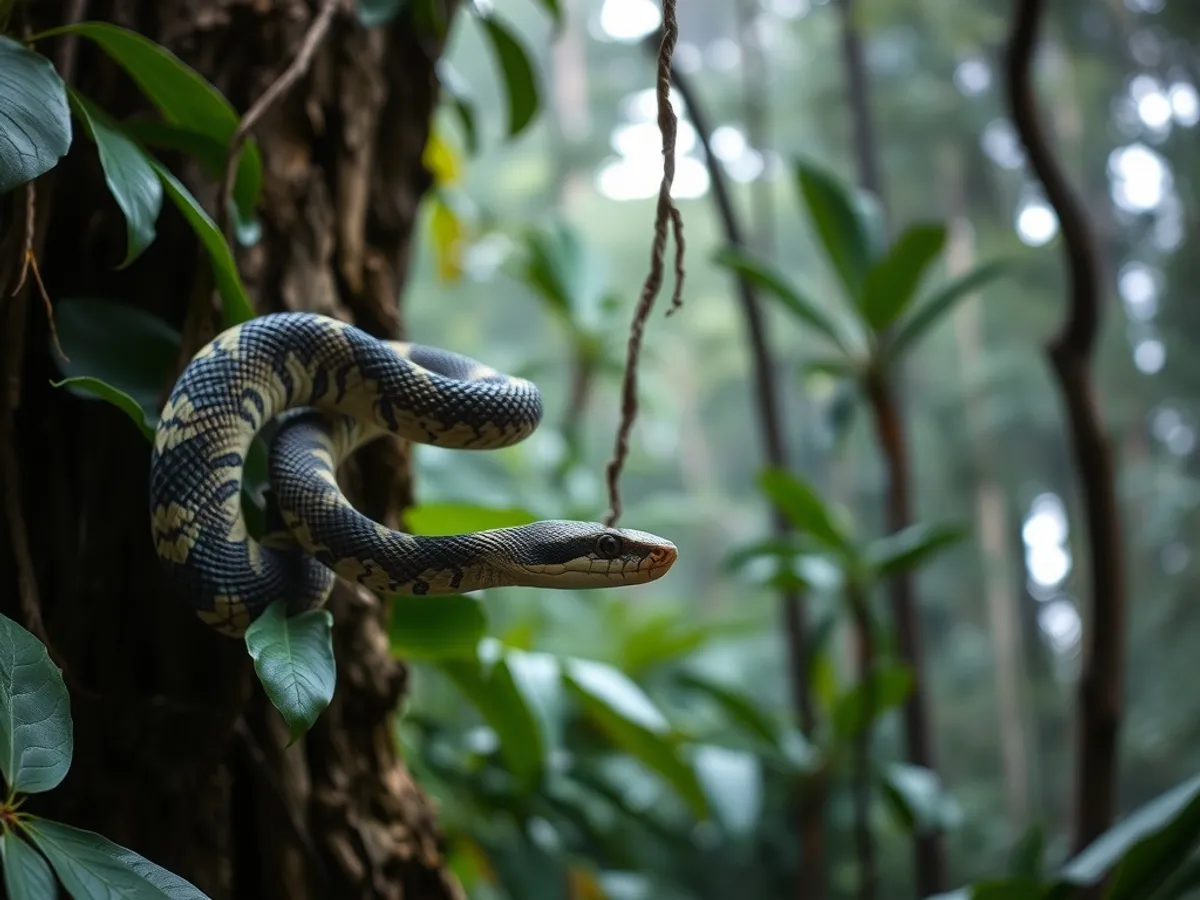
The Pacific Tree Boa is a non-venomous snake native to the Pacific islands, particularly found throughout Fiji, the Solomon Islands, and nearby archipelagos. This nocturnal, arboreal reptile is recognized for its variable coloration, which ranges from brown and olive to reddish hues, often aiding its camouflage among tree branches and foliage. Pacific Tree Boas are ambush predators, relying on stealth and patience to capture small mammals, birds, and lizards. Known for their relatively docile temperament, they play an important role in controlling rodent populations within their habitats.
Fascinating facts
Expert Climber
Pacific Tree Boas are highly adapted for life in the trees, with prehensile tails that help them grip branches securely.
Color Variability
Their coloration can range from brown and olive to orange and red, providing camouflage in the diverse forest environments they inhabit.
Live Bearers
Unlike many snakes, Pacific Tree Boas give birth to live young, with females producing litters of up to 20 offspring.
Detailed description
The Pacific Tree Boa (Candoia bibroni) is a medium-sized, non-venomous snake, typically reaching lengths of 1 to 1.5 meters, with some individuals exceeding 2 meters. Its robust, muscular body is well adapted for an arboreal lifestyle, featuring a prehensile tail that aids in climbing and anchoring among branches. The head is distinct from the neck, with heat-sensitive pits along the upper lip, allowing the detection of warm-blooded prey in low-light conditions. Coloration is highly variable, ranging from earthy browns and olives to reddish and even pinkish hues, often with irregular blotching or banding that provides effective camouflage in forested environments. The scales are keeled, giving the snake a rough texture that enhances grip on bark and foliage. Primarily nocturnal, C. bibroni spends daylight hours concealed in tree hollows or dense vegetation, emerging at night to hunt. Its diet consists mainly of small mammals, birds, and occasionally lizards, which it subdues by constriction. The species is solitary outside of the breeding season and exhibits a calm demeanor, rarely displaying aggression unless threatened. As an ambush predator, it relies on stealth and patience, often remaining motionless for extended periods while waiting for prey.
Did you know?
Unlike many snakes, the Pacific Tree Boa spends most of its life in the trees, rarely descending to the ground except to hunt or find mates.
Research & sources
Behaviour & social structure
Pacific Tree Boas are predominantly nocturnal and arboreal, spending most of their active time in trees or shrubs. They exhibit sit-and-wait predatory behavior, often positioning themselves along branches or near animal trails to ambush passing prey. Their feeding response is triggered by both visual and thermal cues, utilizing their labial pits to detect endothermic animals in darkness. When hunting, they strike rapidly and coil around the prey, using constriction to subdue it. Social interactions are minimal, with individuals maintaining exclusive territories except during the breeding season. They are generally non-aggressive and rely on camouflage and stillness as primary defense mechanisms. During the day, they seek shelter in tree hollows, under bark, or within dense foliage to avoid predators and extreme temperatures. Activity peaks during the wet season, correlating with increased prey availability.
Reproduction & life cycle
Candoia bibroni is ovoviviparous, meaning females retain eggs internally and give birth to live young. Mating typically occurs during the wet season (November to April), when males actively seek out receptive females, sometimes engaging in mild combat with rivals. Gestation lasts approximately 6 to 8 months, after which females give birth to litters of 5 to 20 neonates, each measuring around 20 to 30 centimeters in length. There is no parental care post-birth; the young are independent from birth and must fend for themselves. Sexual maturity is generally reached at 3 to 4 years of age. Breeding frequency may be biennial, depending on the female's body condition and environmental factors.
Adaptations & survival
The Pacific Tree Boa exhibits several key adaptations for arboreal life, including a prehensile tail for climbing and anchoring, and strongly keeled scales that enhance grip on rough surfaces. Its cryptic coloration provides effective camouflage against tree bark and foliage, reducing predation risk. The presence of heat-sensitive labial pits allows for precise detection of warm-blooded prey in low-light conditions, an adaptation convergent with many other boid snakes. Its muscular body enables powerful constriction of prey, while a slow metabolism allows it to endure extended periods between meals. Behavioral adaptations include nocturnality to avoid diurnal predators and exploit nocturnal prey, and a tendency to remain motionless for long periods, minimizing detection by both prey and predators.
Cultural significance
In some Pacific island cultures, snakes, including the Pacific Tree Boa, are featured in folklore and traditional stories, often symbolizing transformation or guardianship. While not commonly used in traditional medicine or rituals, their presence in local ecosystems is sometimes acknowledged in indigenous ecological knowledge. In modern times, they are occasionally kept as exotic pets, valued for their unique appearance and docile nature, though this practice is not widespread.
Recent research
Recent genetic studies have clarified the taxonomy of the Candoia genus, revealing significant genetic divergence among island populations, which may warrant recognition of additional subspecies or even cryptic species. Ongoing ecological research focuses on the species' role in controlling invasive rodent populations, highlighting its importance for native biodiversity. Studies on reproductive biology and thermal ecology are providing insights into how the species adapts to variable island climates. There is also interest in the impact of habitat fragmentation and introduced predators on population viability, with some conservation programs advocating for habitat protection and invasive species management.
Videos
Habitat
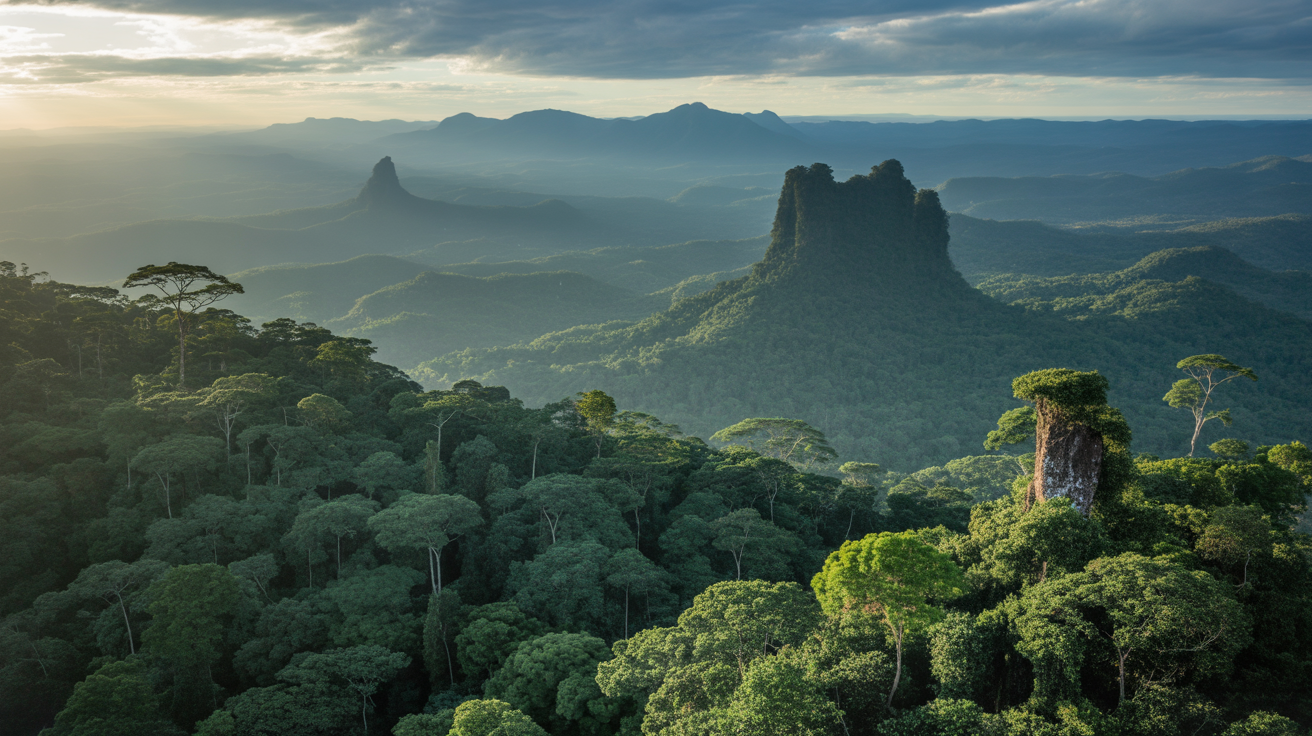
Tropical forests

Conservation
The Pacific Tree Boa is currently classified as Least Concern on the IUCN Red List.
Threats & challenges
Although currently listed as Least Concern by the IUCN, Pacific Tree Boas face localized threats from habitat loss due to deforestation, agricultural expansion, and urban development. Invasive species, such as rats and cats, pose additional risks by preying on juveniles and competing for food resources. Collection for the pet trade has occurred but is not considered a major threat at present. Climate change, particularly increased frequency of cyclones and droughts, may impact habitat quality and prey availability. Population trends are generally stable across their range, but some island populations may be more vulnerable due to their restricted distributions and sensitivity to environmental changes.
Taxonomy
Scientific name
Candoia bibroni
- Kingdom
- Animalia
- Phylum
- Chordata
- Class
- Reptilia
- Order
- Squamata
- Family
- Boidae
- Genus
- Candoia
- Species
- bibroni
Community notes
Share your observations about the Pacific Tree Boa.
No community notes yet. Be the first!
Discover more wildlife
More fascinating animals from the encyclopedia.