
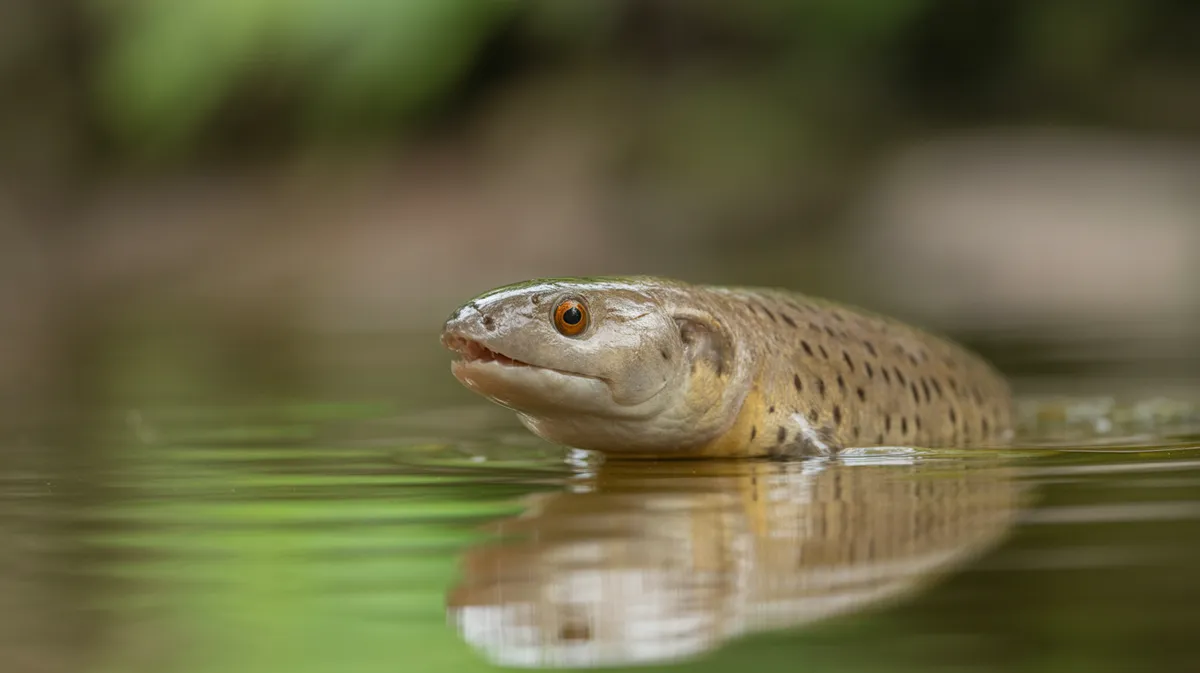
About the Piraputanga
The Piraputanga is a colorful freshwater fish native to South American river basins, most notably the Paraguay and Paraná rivers. Known for its striking appearance, it boasts a silvery body with vibrant orange fins and a yellowish stripe along its sides. This species is an agile swimmer, often seen leaping out of the water to catch fruits and insects falling from overhanging branches. Piraputangas play an important ecological role by dispersing seeds and maintaining the health of aquatic and riparian environments.
Fascinating facts
Colorful Appearance
Piraputangas are recognized by their bright orange fins and a silvery body, making them one of the most visually striking fish in their native rivers.
Seed Dispersers
By consuming and excreting seeds, Piraputangas help regenerate riparian forests along riverbanks.
Cultural Importance
In Brazil’s Pantanal region, the Piraputanga is a symbol of local biodiversity and is featured in ecotourism activities such as snorkeling and wildlife observation.
Detailed description
Brycon hilarii, commonly known as Piraputanga, is a medium to large-sized characiform fish, typically reaching lengths of 30–50 cm, with some individuals growing up to 60 cm and weighing up to 4 kg. Its streamlined, laterally compressed body is covered with large, cycloid scales, and it is easily recognized by its metallic silver coloration, bright orange or reddish fins, and a distinctive yellow lateral stripe running from the operculum to the caudal peduncle. The species possesses a robust, terminal mouth with well-developed jaws adapted for both frugivory and opportunistic carnivory. Piraputangas are agile swimmers, capable of powerful leaps to capture fruits, seeds, and insects falling from riparian vegetation. They are diurnal, often seen in midwater or near the surface, and display schooling behavior, especially during juvenile stages or migratory events. Their large eyes suggest reliance on visual cues for foraging. The digestive tract is elongated, reflecting their omnivorous diet, and their gill rakers are moderately spaced, allowing filtration of small food particles. Piraputangas play a crucial ecological role as seed dispersers, influencing the structure and regeneration of riparian forests. Their life history includes seasonal migrations linked to spawning, which are synchronized with the flood pulses of their native river systems. The species exhibits high adaptability to varying flow regimes and water conditions, contributing to its resilience in dynamic freshwater habitats.
Did you know?
The Piraputanga’s diet changes with the seasons, shifting from more fruits during the rainy season to insects and small fish during the dry season.
Research & sources
Wikipedia summary
Brycon is a genus of fish in the family Bryconidae and order Characiformes found in freshwater habitats in Central and South America, ranging from southern Mexico to northern Argentina. Despite not being closely related to true trout, they are sometimes called South American trout. Members of the genus may be referred to by a number of other different common names in various languages. They reach a maximum length of 11.9–79.5 cm (4.7–31.3 in) depending on the species involved. Some species perform seasonal breeding migrations.
Behaviour & social structure
Piraputangas are highly active and social fish, often forming loose schools that provide protection from predators and facilitate efficient foraging. Their feeding behavior is characterized by opportunism; they consume a wide variety of items, including fruits, seeds, aquatic invertebrates, small fish, and terrestrial insects. During the fruiting season, they congregate beneath overhanging trees and leap out of the water to snatch falling fruits, a behavior that enhances seed dispersal. They exhibit crepuscular peaks in activity, with heightened foraging at dawn and dusk. Piraputangas are known to undertake upstream migrations during the rainy season, triggered by increased water levels and temperature changes. Within schools, they display minimal aggression, though larger individuals may dominate access to preferred feeding sites. Their spatial memory and learning abilities are well developed, allowing them to exploit predictable food resources efficiently.
Reproduction & life cycle
Brycon hilarii is a migratory spawner, with reproduction closely tied to seasonal hydrological cycles. Spawning typically occurs at the onset of the wet season (October to January in the Pantanal and Upper Paraguay basins), when rising water levels provide access to floodplain habitats. Adults migrate upstream in large groups to reach suitable spawning grounds with clean, oxygen-rich water and abundant submerged vegetation. Females are highly fecund, producing between 50,000 and 200,000 adhesive, pelagic eggs per spawning event. Fertilization is external, and both eggs and larvae are carried downstream by currents. There is no parental care; larvae are planktonic and rely on yolk reserves before transitioning to active feeding. Juvenile Piraputangas form schools in shallow, vegetated areas, where they are less vulnerable to predation. Sexual maturity is typically reached at 2–3 years of age.
Adaptations & survival
Piraputangas exhibit several adaptations for survival in dynamic riverine environments. Their streamlined bodies and powerful caudal fins enable rapid swimming and leaping, essential for escaping predators and capturing aerial prey. The omnivorous dentition, with molariform and incisiform teeth, allows efficient processing of both plant and animal matter. Their acute vision supports foraging in well-lit, turbid waters. Physiologically, they tolerate a wide range of dissolved oxygen levels and temperatures, reflecting adaptation to fluctuating floodplain conditions. Behaviorally, their migratory instincts ensure access to optimal spawning and feeding habitats, while schooling reduces individual predation risk. The ability to digest complex plant materials, such as fruit pulp and seeds, is facilitated by a long intestine and symbiotic gut microbiota.
Cultural significance
Piraputanga holds significant value in local cultures throughout the Pantanal and Upper Paraguay River regions. It is a popular target for recreational fishing, celebrated for its fighting ability and culinary qualities. The species features in regional folklore and is often depicted in art and ecotourism materials as a symbol of healthy river ecosystems. In some indigenous and rural communities, Piraputanga is associated with the seasonal rhythms of the rivers and is considered an indicator of environmental health. Its role in seed dispersal is recognized by local conservation initiatives, which promote the protection of both the fish and riparian forests.
Recent research
Recent studies have focused on the ecological role of Brycon hilarii as a keystone seed disperser, highlighting its mutualistic interactions with riparian plants and its contribution to forest regeneration. Genetic research has revealed significant population structuring across river basins, with implications for conservation management. Telemetry and mark-recapture studies have elucidated migratory patterns and habitat preferences, informing the design of fish passages and protected areas. Ongoing research is examining the impacts of climate change and habitat modification on reproductive success and recruitment. There is also growing interest in the species' potential for sustainable aquaculture, given its fast growth and adaptability.
Videos
Habitat
Freshwater rivers and streams


Conservation
The Piraputanga is currently classified as Least Concern on the IUCN Red List.
Threats & challenges
While currently listed as Least Concern, Piraputangas face several anthropogenic threats. Habitat fragmentation due to dam construction disrupts migratory routes and alters natural flood regimes, impacting spawning success. Overfishing, both for local consumption and sport, can reduce population densities, especially in areas with high fishing pressure. Pollution from agricultural runoff and urbanization degrades water quality, affecting both adults and developing larvae. Deforestation of riparian zones diminishes food availability and reduces seed dispersal opportunities, with cascading effects on ecosystem health. Climate change poses additional risks by altering hydrological cycles and increasing the frequency of extreme events. Despite these challenges, the species' broad ecological tolerance and high reproductive output have so far supported stable populations in much of its range.
Taxonomy
Scientific name
Brycon hilarii
- Kingdom
- Animalia
- Phylum
- Chordata
- Class
- Actinopterygii
- Order
- Characiformes
- Family
- Characidae
- Genus
- Brycon
- Species
- hilarii
Community notes
Share your observations about the Piraputanga.
No community notes yet. Be the first!
Discover more wildlife
More fascinating animals from the encyclopedia.