
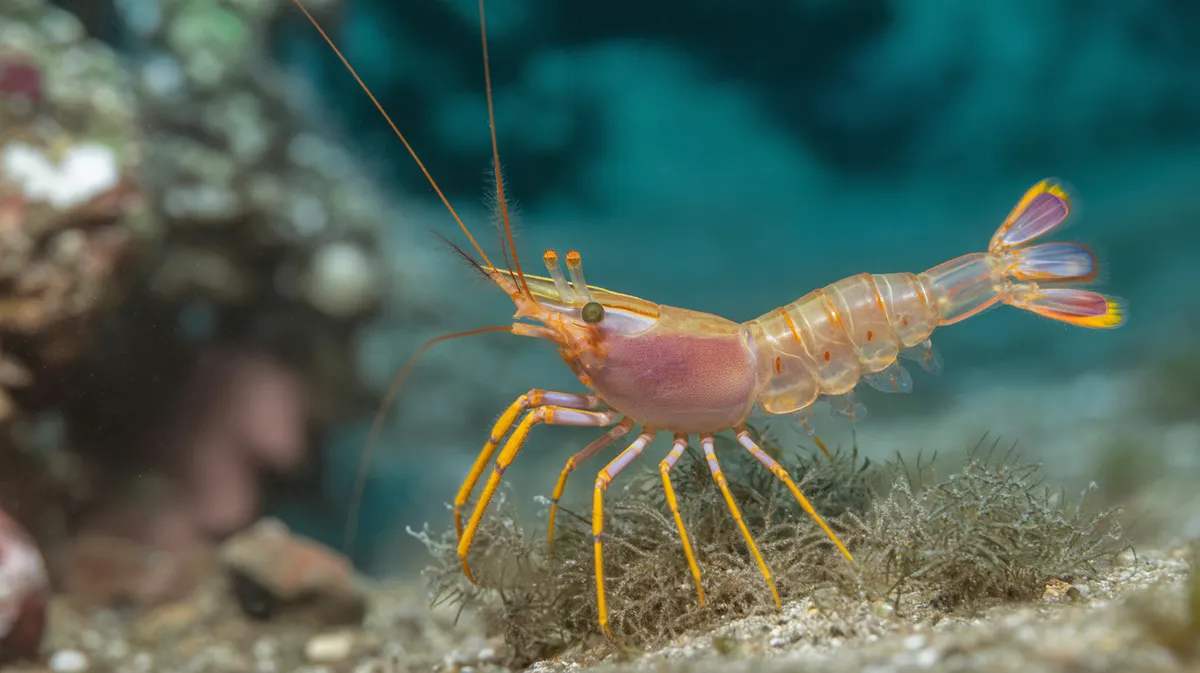
About the Pistol Shrimp
Alpheid snapping shrimp do not stun prey with the snap of the claw — they stun it with the bubble the snap creates. The oversized claw is cocked open, held by a physical latch and loaded by muscle like a crossbow, then released; the dactyl slams shut so fast that it fires a jet of water at around 25 m/s, and the pressure in the jet's wake drops below the vapour pressure of water, so a cavitation bubble forms and then violently collapses. The collapse produces the shockwave that kills the prey, a snap of up to about 210 decibels underwater, and a flash of light — sonoluminescence, discovered in these animals in 2001 and dubbed shrimpoluminescence. The gas inside the collapsing bubble momentarily reaches thousands of kelvin, briefly as hot as the surface of the sun, in a volume too tiny to matter. Colonies of snapping shrimp are so loud that in the Second World War they interfered with sonar, and submarines were reported hiding in shrimp beds to mask engine noise; the crackle is still one of the loudest persistent sounds in shallow tropical seas. One genus, Synalpheus, is eusocial — colonies inside a sponge have a single reproducing queen and sterile defenders with enlarged claws, the only known eusocial marine animals.
Fascinating facts
Sonic Weapon
The pistol shrimp’s snap creates a bubble that collapses with a sound reaching up to 210 decibels, louder than a gunshot.
Mutualistic Relationship
Pistol shrimp often live in a burrow with goby fish; the shrimp digs and maintains the home while the goby acts as a lookout.
Bubble Jet
The rapid claw closure produces a jet of water that stuns prey and can even break glass in aquariums.
Detailed description
The pistol shrimp (Alpheus bellulus) is a small, benthic crustacean typically measuring 3–5 cm in length, with a robust, laterally compressed body and a distinctive pair of asymmetrical chelae (claws). The larger claw, often nearly half the shrimp’s body length, is highly specialized: it possesses a plunger-like structure that can rapidly close to generate a high-velocity water jet, producing a cavitation bubble that collapses with a loud snap, reaching sound pressures up to 218 decibels and temperatures momentarily exceeding 4,700°C. This unique adaptation is used for hunting, defense, and communication. The exoskeleton is translucent to mottled brown, providing camouflage among sand, rubble, and coral. Pistol shrimp are primarily nocturnal, spending daylight hours in complex burrow systems that they excavate and maintain. Socially, many species, including A. bellulus, form mutualistic relationships with goby fish, relying on the fish’s keen eyesight for predator detection while the shrimp maintains the shared burrow. Their antennae are long and sensitive, aiding in tactile exploration and social signaling. Reproduction involves internal fertilization, with females carrying fertilized eggs on their pleopods until hatching. Larvae are planktonic before settling to the benthos. Pistol shrimp play a significant ecological role as ecosystem engineers, influencing sediment turnover and providing shelter for other organisms.
Did you know?
The snap of a pistol shrimp’s claw is so loud it can disrupt sonar and is one of the loudest biological sounds in the ocean.
Research & sources
Wikipedia summary
Alpheidae is a family within the shrimp infraorder Caridea characterized by having asymmetrical claws, the larger of which is typically capable of producing a loud snapping sound.
Behaviour & social structure
Pistol shrimp are highly territorial and spend much of their time maintaining and defending their burrows. They use their snapping claw both as a weapon to stun small prey such as worms, crustaceans, and small fish, and as a deterrent against intruders. Hunting typically involves stealth; the shrimp approaches prey with its claw cocked, then releases a rapid snap to immobilize or kill. Socially, A. bellulus often cohabits with goby fish in a mutualistic partnership: the shrimp keeps physical contact with the goby using its antennae, while the goby signals danger with tail flicks. Daily routines include burrow excavation, feeding, and periodic social interactions with conspecifics or symbiotic partners. Communication between individuals may involve both tactile signals and the use of snapping sounds. Some pistol shrimp species exhibit eusociality, but A. bellulus is primarily solitary or forms pairs.
Reproduction & life cycle
Alpheus bellulus is gonochoric (separate sexes), with external sexual dimorphism often subtle. Courtship involves tactile and chemical cues, with males approaching receptive females near or within burrows. Mating occurs after the female molts, when her exoskeleton is soft. Fertilization is internal, and the female carries several hundred to a few thousand eggs on her pleopods for 2–3 weeks, depending on temperature. During this period, she aerates and cleans the eggs. Upon hatching, larvae are released into the plankton, undergoing several zoeal stages before settling to the substrate as juveniles. There is little to no parental care after larval release. Breeding can occur year-round in tropical environments, but peaks may align with warmer seasons.
Adaptations & survival
The most remarkable adaptation of pistol shrimp is the hypertrophied snapping claw, which has evolved a unique plunger and socket mechanism enabling rapid closure and cavitation bubble formation. This adaptation allows the shrimp to hunt prey larger than itself and defend territory effectively. Their cryptic coloration and burrowing behavior provide camouflage and protection from predators. The symbiotic relationship with gobies is a behavioral adaptation enhancing survival: the shrimp benefits from the goby’s vigilance, while the goby gains a safe refuge. Sensory adaptations include highly sensitive antennae for tactile exploration and chemoreception. Pistol shrimp can autotomize (shed) limbs to escape predation and regenerate lost appendages over successive molts.
Cultural significance
Pistol shrimp have fascinated humans due to their extraordinary snapping ability, which has inspired research in physics and engineering, particularly in the study of cavitation and bioacoustics. In some cultures, their snapping sounds are part of local folklore, believed to be the voices of spirits or underwater creatures. They are occasionally featured in public aquaria and educational programs to illustrate symbiosis and animal adaptations. There are no known traditional uses in medicine or cuisine, but their unique biology has made them a subject of popular science media and documentaries.
Recent research
Recent research has focused on the biomechanics of the snapping claw, revealing the precise physical processes behind cavitation bubble formation and collapse. Studies using high-speed videography and hydrophones have quantified the speed (up to 30 m/s) and force of the snap. Genomic and transcriptomic analyses are shedding light on the molecular basis of claw asymmetry and regeneration. Ongoing ecological studies are examining the role of pistol shrimp in sediment turnover and their influence on benthic community structure. The mutualism with gobies is a model system for studying interspecies communication and coevolution. Some research is exploring the potential of mimicking pistol shrimp mechanics in underwater robotics and medical devices.
Videos
Habitat
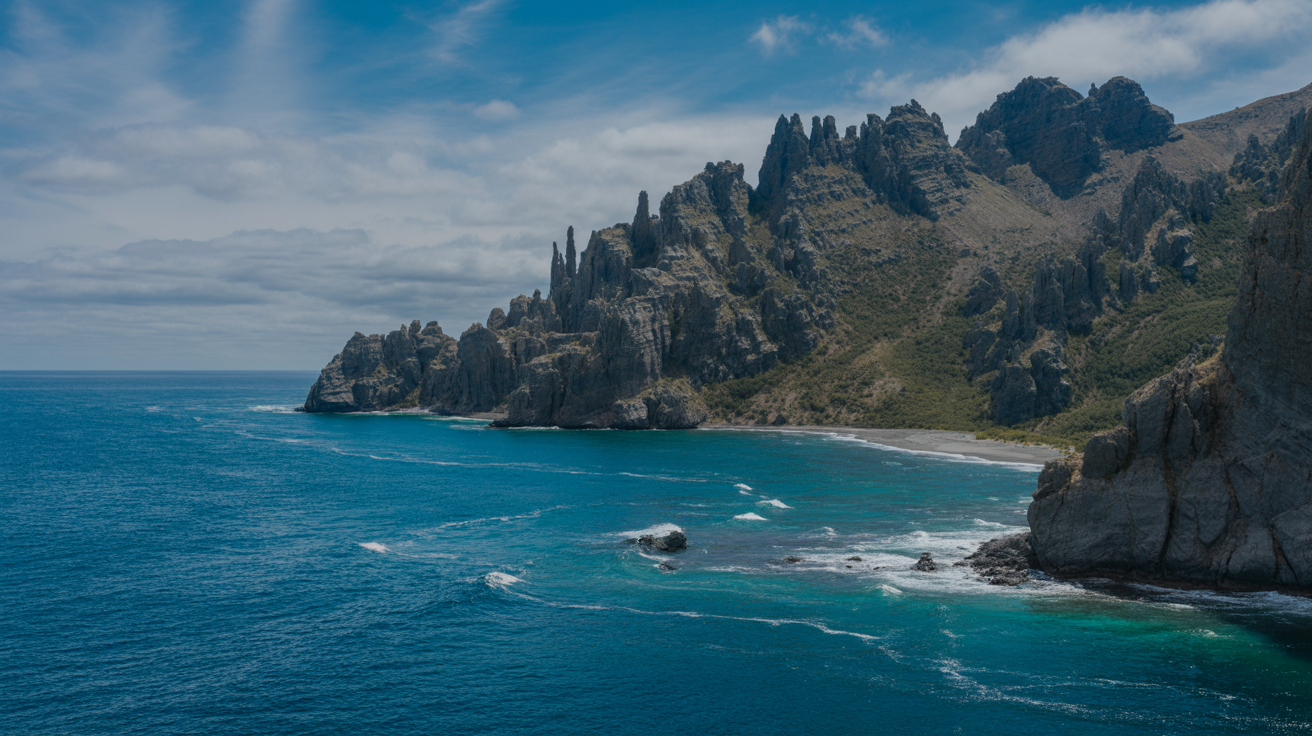
Shallow tropical and subtropical coastal waters, coral reefs, and seagrass beds
Conservation
The Pistol Shrimp is currently classified as Least Concern on the IUCN Red List.
Threats & challenges
Currently, Alpheus bellulus is listed as Least Concern, but local populations may be affected by habitat degradation, especially the loss of coral reefs and seagrass beds due to coastal development, pollution, and climate change. Ocean acidification and rising sea temperatures threaten the structural integrity of their habitats. Collection for the aquarium trade poses localized risks. While not directly targeted by fisheries, bycatch and sedimentation from trawling can impact populations. Despite these pressures, their broad distribution and adaptability confer some resilience, but ongoing habitat loss remains a significant conservation challenge.
Taxonomy
Scientific name
Alpheus bellulus
- Kingdom
- Animalia
- Phylum
- Arthropoda
- Class
- Malacostraca
- Order
- Decapoda
- Family
- Alpheidae
- Genus
- Alpheus
- Species
- bellulus
Community notes
Share your observations about the Pistol Shrimp.
No community notes yet. Be the first!
Discover more wildlife
More fascinating animals from the encyclopedia.