
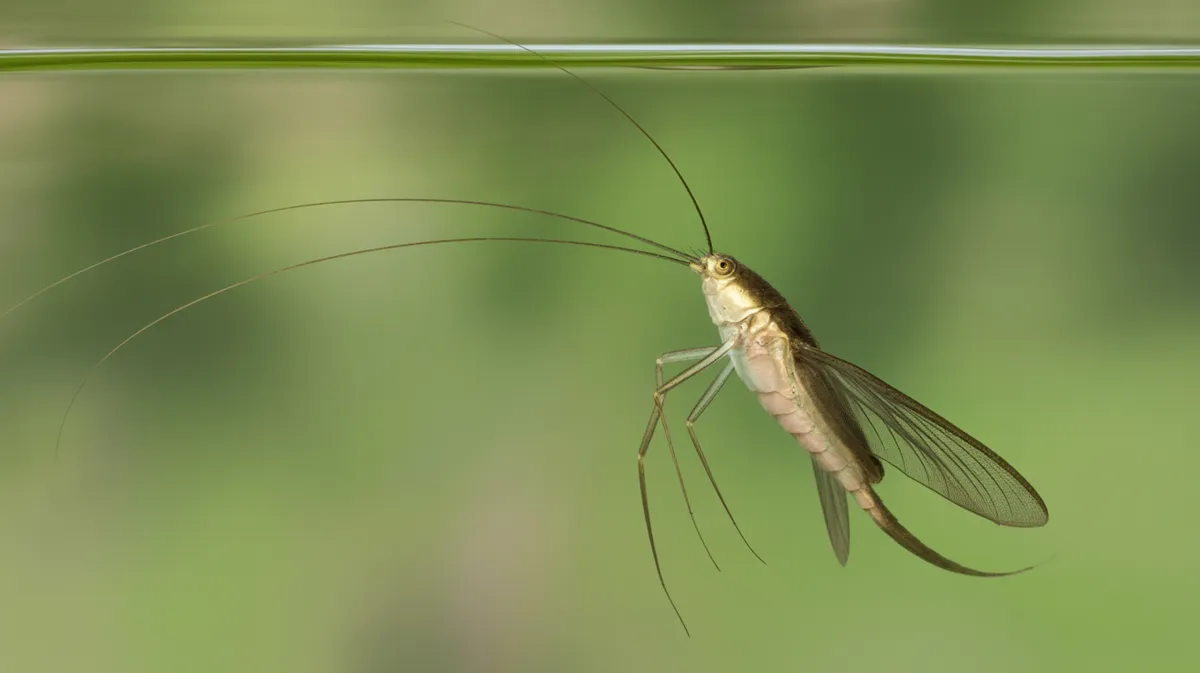
About the Pond Skater
The pond skater, also known as the common water strider, is a slender insect famous for its ability to walk on the surface of water. Its long, hydrophobic legs distribute its weight, allowing it to glide effortlessly across ponds, lakes, and slow-moving streams. Pond skaters are highly adapted predators, using their front legs to grasp small insects and larvae that fall onto the water's surface. These insects are sensitive to vibrations, helping them detect both prey and potential threats. Their unique locomotion has inspired scientific studies in physics and robotics.
Fascinating facts
Walk on Water
Pond skaters use microscopic water-repellent hairs on their legs to stay above the water’s surface tension.
Sensitive Hunters
They detect minute ripples caused by struggling insects or falling debris, enabling precise hunting.
Insect Eaters
Pond skaters feed mainly on insects and larvae that fall onto the water, piercing them with their mouthparts to suck out bodily fluids.
Detailed description
The pond skater (Gerris lacustris) is a medium-sized aquatic insect, typically measuring 8–10 mm in length, with a slender, elongated body and extremely long legs adapted for life on water surfaces. Its body is dark brown to black, often with a subtle metallic sheen, and covered in fine, water-repellent hairs (microsetae) that prevent wetting and aid buoyancy. The forelegs are shorter and robust, specialized for grasping prey, while the middle and hind legs are long and flexible, enabling rapid, gliding locomotion across the water. Pond skaters possess compound eyes that provide a wide field of vision, crucial for detecting prey and predators. Their mouthparts are adapted for piercing and sucking, allowing them to feed on small invertebrates trapped on the water surface. Gerris lacustris is highly sensitive to surface vibrations, using mechanoreceptors on its legs to detect the slightest disturbances. This species is generally solitary but may aggregate in favorable habitats, especially during mating season. Pond skaters are found in a variety of still or slow-moving freshwater habitats across Europe and temperate Asia, including ponds, lakes, ditches, and streams. Their ability to exploit the water-air interface makes them a key predator in the neustonic (surface-dwelling) community.
Did you know?
Pond skaters can survive on both still and gently flowing waters, and even temporarily withstand being submerged if disturbed.
Research & sources
Wikipedia summary
The Gerridae are a family of insects in the order Hemiptera, commonly known as water striders, water skeeters, water scooters, water bugs, pond skaters, water skippers, water gliders, water skimmers or puddle flies. They are true bugs of the suborder Heteroptera and have mouthparts evolved for piercing and sucking. A distinguishing feature is the ability to move on top of the water's surace, making them pleuston (surface-living) animals. They can be found on most ponds, rivers or lakes, and over 1,700 species of gerrids have been described, 10% of them being marine.
Behaviour & social structure
Pond skaters are diurnal and most active during warm daylight hours, patrolling the water surface in search of prey. They hunt by detecting ripples caused by struggling insects or falling debris, quickly homing in on the source. Upon locating prey, they seize it with their forelegs and pierce it with their rostrum to inject digestive enzymes, then suck out the liquefied tissues. While generally solitary, pond skaters may form loose aggregations in areas with abundant food or during the breeding season. They display territorial behavior, with males often defending small patches of water against rivals. Communication is primarily through ripple signals, which are used in courtship, aggression, and territory establishment. In colder months, adults may seek shelter in terrestrial vegetation or leaf litter near water bodies to overwinter, resuming activity in spring.
Reproduction & life cycle
Gerris lacustris breeds from late spring to early autumn, with peak mating activity typically in May and June. Males court females by producing specific ripple patterns on the water surface. Mating involves the male mounting the female, sometimes for extended periods, which can lead to intense competition among males. Females lay elongated, white eggs either on submerged aquatic plants, floating debris, or occasionally directly on the water surface. The eggs hatch after 10–20 days, depending on temperature. The nymphs resemble miniature adults but lack wings and undergo five molts before reaching maturity, a process that takes 4–6 weeks. There is little to no parental care; after oviposition, the eggs and nymphs are left to develop independently. In temperate regions, there may be one or two generations per year.
Adaptations & survival
Pond skaters exhibit remarkable adaptations for surface life. Their legs are covered in dense, hydrophobic microsetae that trap air, preventing them from breaking the water’s surface tension. The distribution of body weight across the long middle and hind legs allows them to 'skate' without sinking. Their tarsal claws are positioned above the water surface, minimizing drag and preventing water penetration. Sensory hairs on the legs detect minute vibrations, enabling precise localization of prey and avoidance of predators. The ability to fly, present in some individuals, allows for rapid colonization of new habitats, especially after local disturbances. Physiologically, they can tolerate a range of temperatures and oxygen levels, contributing to their widespread distribution.
Cultural significance
Pond skaters have long fascinated humans with their effortless movement across water, inspiring folklore and symbolism related to agility, balance, and adaptation. In some cultures, they are seen as symbols of lightness and the ability to navigate emotional or spiritual 'waters.' Their locomotion has influenced biomimetic engineering, particularly in the design of water-walking robots and materials that mimic their hydrophobic leg structures. While not directly used in traditional medicine or cuisine, they are often featured in educational materials and natural history exhibits.
Recent research
Recent research has focused on the biomechanics of pond skater locomotion, revealing the critical role of leg microstructure and surface tension in enabling water walking. Studies using high-speed videography and force sensors have quantified the forces involved in their jumps and glides, informing the development of biomimetic robots. Molecular studies have examined the genetic basis of wing polymorphism, which allows some individuals to develop functional wings for dispersal while others remain flightless. Ecological research has highlighted their role as top predators in the neustonic food web and their sensitivity to environmental changes, making them potential bioindicators of freshwater ecosystem health.
Videos
Habitat
Freshwater

Conservation
The Pond Skater is currently classified as Least Concern on the IUCN Red List.
Threats & challenges
Currently classified as Least Concern, Gerris lacustris faces few direct threats at a global scale. However, local populations may be affected by water pollution, habitat loss due to drainage or infilling of wetlands, and the use of pesticides that reduce prey availability or cause direct toxicity. Climate change may alter the distribution of suitable habitats, but the species’ dispersal ability provides resilience. Predators include fish, amphibians, birds, and larger aquatic insects. Invasive species and increased competition from other surface-dwelling insects can also pose challenges in some regions.
Taxonomy
Scientific name
Gerris lacustris
- Kingdom
- Animalia
- Phylum
- Arthropoda
- Class
- Insecta
- Order
- Hemiptera
- Family
- Gerridae
- Genus
- Gerris
- Species
- lacustris
Community notes
Share your observations about the Pond Skater.
No community notes yet. Be the first!
Discover more wildlife
More fascinating animals from the encyclopedia.