
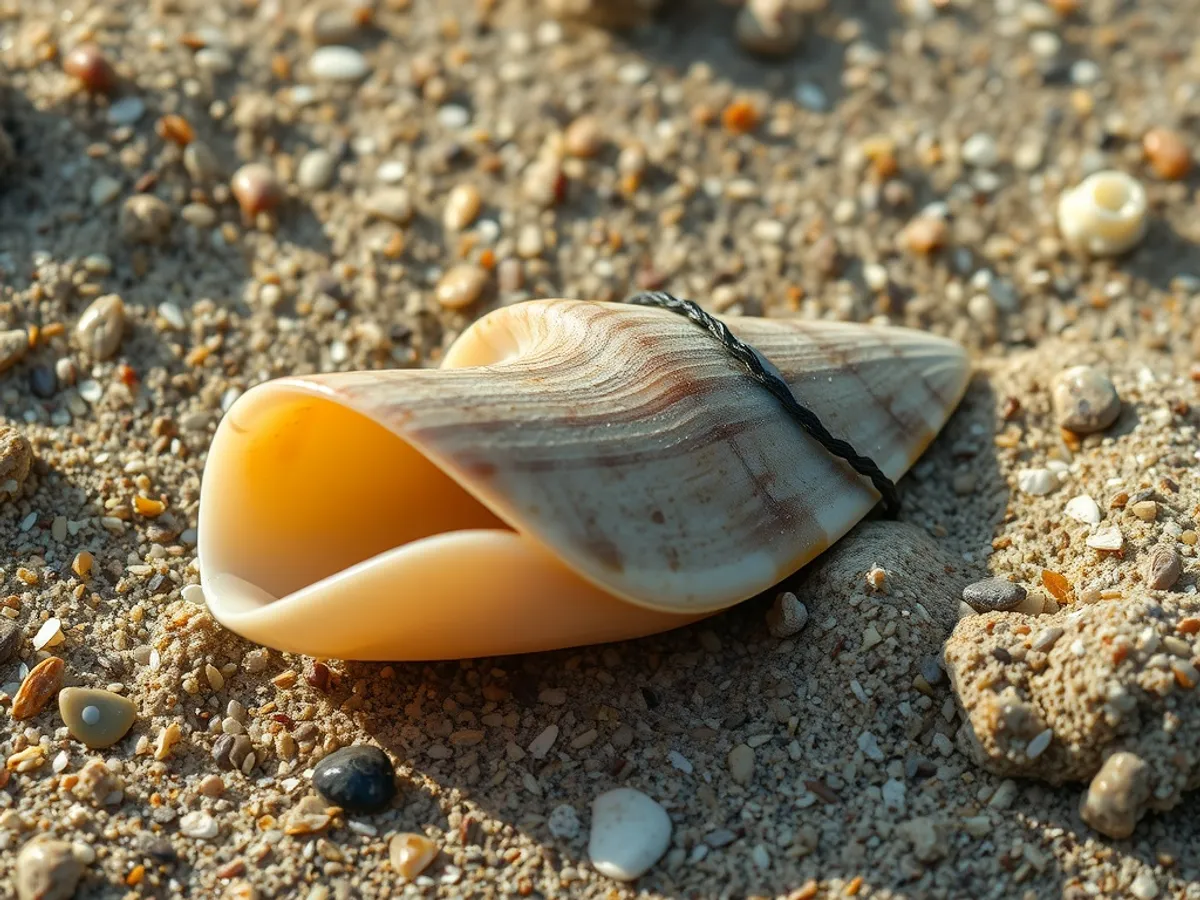
About the Razor clam
The razor clam is a bivalve mollusk known for its elongated, thin, and razor-like shell, which can grow up to 15 centimeters in length. It is typically found buried vertically in sandy beaches and intertidal zones, where it uses its powerful foot to burrow quickly when disturbed. Razor clams are filter feeders, drawing in water to extract plankton and organic particles. Their shells are delicate, and their swift burrowing makes them a challenging species to harvest, prized both by commercial and recreational collectors.
Fascinating facts
Speedy Burrowers
Razor clams can dig into the sand at speeds of up to one centimeter per second, making them one of the fastest burrowers among bivalves.
Filter Feeders
They feed by filtering microscopic plankton and organic matter from the surrounding water, playing an important ecological role in their coastal habitats.
Sharp Shells
The shell edges of razor clams are extremely sharp, which is how they got their common name and why caution is needed when handling them.
Detailed description
Solen marginatus, commonly known as the grooved razor shell or razor clam, is a marine bivalve mollusk belonging to the family Solenidae. Its shell is elongated, laterally compressed, and typically measures between 10 and 15 centimeters in length, with a maximum recorded length of about 17 centimeters. The shell is smooth, glossy, and fragile, colored pale yellow to light brown, often with subtle longitudinal grooves, which give the species its common name. The two valves are connected by a flexible ligament and can close tightly to protect the soft body inside. The animal possesses a large, muscular foot that is highly specialized for rapid vertical burrowing, allowing it to escape predators and environmental stressors. Solen marginatus is primarily found in clean, well-oxygenated sandy substrates of the intertidal and shallow subtidal zones, from the Mediterranean Sea to the eastern Atlantic coasts of Europe and North Africa. It is a suspension feeder, extending its siphons to the surface to filter plankton and organic particles from the water column. The species is adapted to a relatively solitary lifestyle, with individuals spaced apart in their burrows, though dense aggregations can occur in optimal habitats. Razor clams play an important ecological role in sediment turnover and nutrient cycling within their environments.
Did you know?
Despite their delicate appearance, razor clams are capable of digging themselves more than a foot deep into the sand in just a few minutes.
Research & sources
Wikipedia summary
Razor clam is a common name for long, narrow, saltwater clams, including:Atlantic jackknife clam, Ensis leei Gould's razor shell, Solen strictus Pacific razor clam, Siliqua patula Pinna bicolor, a species of large saltwater clam in the family Pinnidae Razor shell, Ensis magnus Rosy razor clam, Solecurtus strigilatus Siliqua alta, the northern or Arctic razor clam Siliqua costata, Atlantic razor clam Solen marginatus, the grooved razor shell Sinonovacula constricta, the Chinese razor clam
Behaviour & social structure
Solen marginatus is primarily sedentary, spending most of its life buried vertically in sand, with only its siphons protruding to the surface for feeding and respiration. When threatened by predators such as birds, fish, or humans, it can rapidly retract its siphons and use its powerful foot to dig deeper into the substrate, achieving burrowing speeds of up to several centimeters per second. Feeding occurs mainly during high tide, when the clam extends its paired siphons to filter suspended plankton and detritus from the water. The species exhibits a strong tidal rhythm, with activity levels and siphon extension closely linked to tidal cycles. Social interactions are minimal, as individuals do not form true colonies or exhibit cooperative behaviors, but they may occur in high densities in suitable habitats. Razor clams are sensitive to vibrations and sudden changes in water pressure, which trigger rapid burrowing responses. They are also capable of limited horizontal movement within the substrate to optimize their position for feeding or to avoid unfavorable conditions.
Reproduction & life cycle
Solen marginatus is a dioecious species, with separate male and female individuals. Spawning typically occurs in late spring to early summer, though timing can vary with local environmental conditions such as temperature and food availability. Fertilization is external: both sexes release gametes into the water column, where fertilization takes place. The resulting planktonic larvae, known as veligers, remain in the water column for several weeks, undergoing multiple developmental stages before settling to the substrate and metamorphosing into juvenile clams. There is no parental care; survival of larvae depends on environmental factors and predation pressure. Sexual maturity is usually reached within 1–2 years, and individuals may live up to 5–7 years in the wild. Recruitment success is highly variable and influenced by factors such as sediment quality, water temperature, and predation.
Adaptations & survival
Solen marginatus exhibits several notable adaptations for its burrowing lifestyle. Its elongated, streamlined shell reduces resistance when moving through sand, while the large, muscular foot acts as an anchor and digging tool, allowing rapid vertical movement. The clam can secrete mucus to stabilize the walls of its burrow and prevent collapse. Its siphons are highly extensible, enabling the animal to remain buried at safe depths while still accessing the water column for feeding and respiration. The shell's fragile construction is offset by the clam's ability to quickly retreat from threats. Sensory cells on the siphons detect vibrations and chemical cues, enhancing predator avoidance. Physiologically, the species is tolerant of moderate fluctuations in salinity and temperature, which is advantageous in the dynamic intertidal environment.
Cultural significance
Razor clams, including Solen marginatus, have been harvested for centuries along Mediterranean and Atlantic coasts, valued for their sweet, delicate flesh. They are featured in traditional dishes in Spain, Portugal, Italy, and France, often grilled or served in seafood stews. The species is also important in local economies, supporting small-scale fisheries and recreational harvesting. In some regions, razor clams are used as bait in sport fishing. There is limited evidence of symbolic or mythological significance, but their unique shape and burrowing behavior have made them subjects of curiosity and folklore in coastal communities.
Recent research
Recent research on Solen marginatus has focused on its population genetics, larval dispersal, and responses to environmental stressors such as pollution and climate change. Studies have examined the impacts of different harvesting techniques on population structure and benthic habitats, with recommendations for sustainable management practices. Advances in molecular biology have improved understanding of the species' phylogenetic relationships within Solenidae. Ongoing research is investigating the effects of ocean acidification on shell formation and larval development, as well as the potential for aquaculture production to reduce pressure on wild stocks. Tagging and tracking studies have provided new insights into movement patterns and habitat preferences.
Videos
Habitat
Sandy intertidal and subtidal zones along coasts

Conservation
The Razor clam is currently classified as Least Concern on the IUCN Red List.
Threats & challenges
While Solen marginatus is currently listed as Least Concern, it faces several localized threats. Overharvesting for human consumption, particularly in regions where it is considered a delicacy, can lead to population declines and habitat disturbance. Mechanical harvesting methods may damage both the clams and the sandy substrate, affecting benthic community structure. Pollution, especially from agricultural runoff and coastal development, can degrade water quality and reduce larval survival. Climate change poses additional risks through rising sea temperatures, ocean acidification, and increased frequency of extreme weather events, which may alter habitat suitability and reproductive success. Despite these challenges, the species remains widespread and resilient in much of its range, though careful management is necessary to ensure long-term sustainability.
Taxonomy
Scientific name
Solen marginatus
- Kingdom
- Animalia
- Phylum
- Mollusca
- Class
- Bivalvia
- Order
- Solenida
- Family
- Solenidae
- Genus
- Solen
- Species
- marginatus
Community notes
Share your observations about the Razor clam.
No community notes yet. Be the first!
Discover more wildlife
More fascinating animals from the encyclopedia.