Mollusks
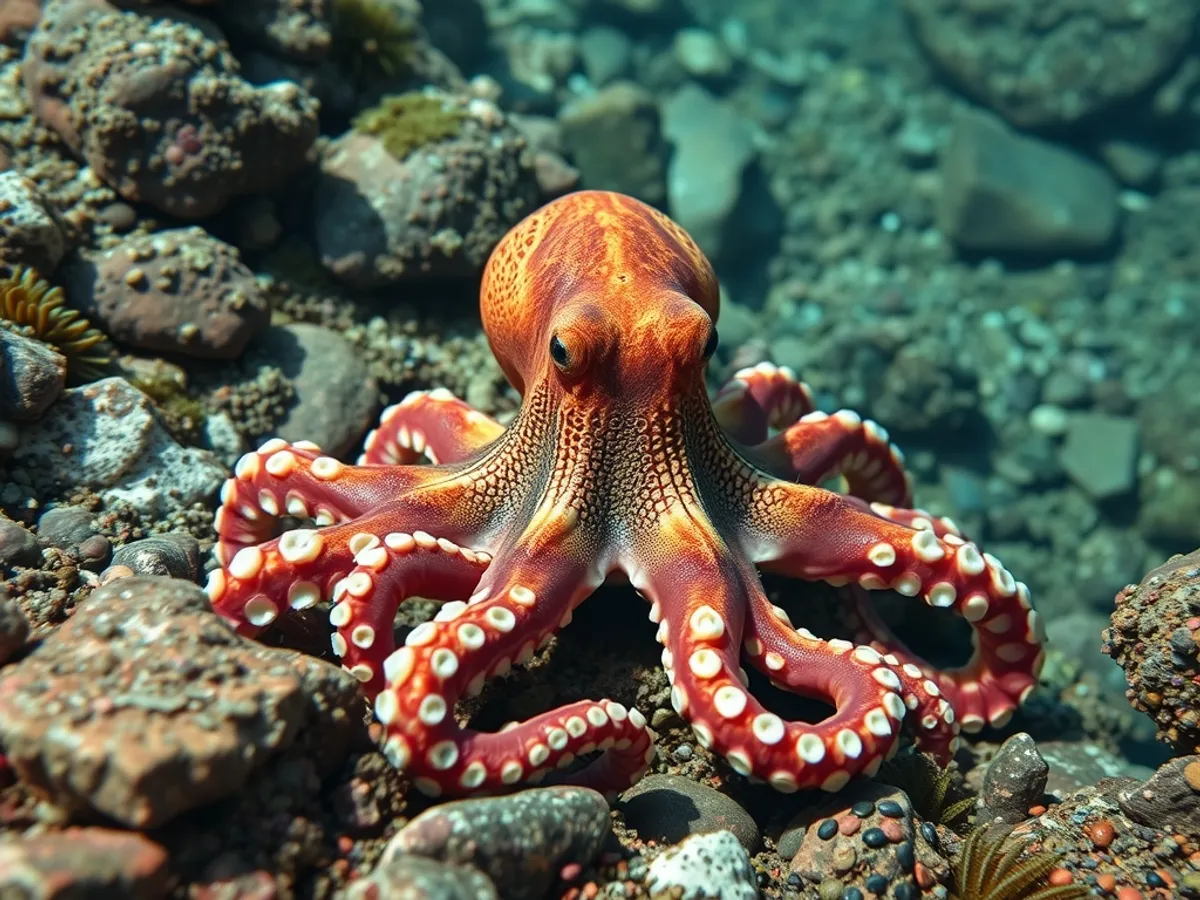
Invertebrates with a soft, unsegmented body, often protected by a shell.
59 species
Amber Snail
Succinea putris
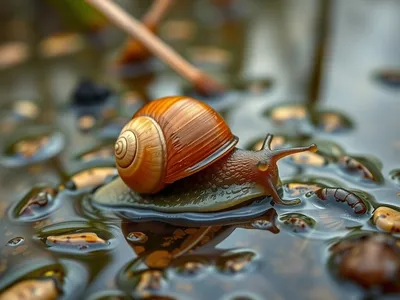
The Amber Snail is a small terrestrial gastropod mollusk recognized for its translucent, amber-colored shell. It is most commonly found in moist habitats near freshwater sources such as streams, rivers, and marshes. The snail prefers environments with abundant vegetation, where it feeds primarily on decaying plant matter and algae. Amber Snails play a role in nutrient cycling within wetland ecosystems and serve as prey for a variety of birds, amphibians, and insects.
Apple Snail
Pomacea canaliculata
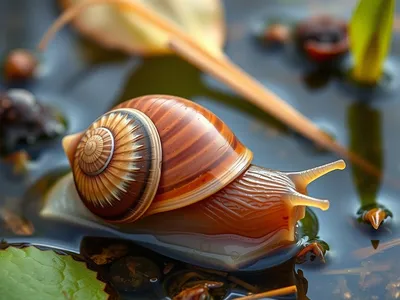
The Apple Snail is a large freshwater gastropod known for its rounded shell, which can range in color from golden yellow to dark brown. Native to South America, this snail is highly adaptable and has been introduced to many regions worldwide, often becoming an invasive species. Apple Snails are equipped with both gills and lungs, allowing them to survive in oxygen-poor waters and even on land for short periods. Their voracious appetite for aquatic plants can have significant impacts on local ecosystems and agriculture, particularly rice paddies.
Atlantic Pygmy Octopus
Octopus joubini
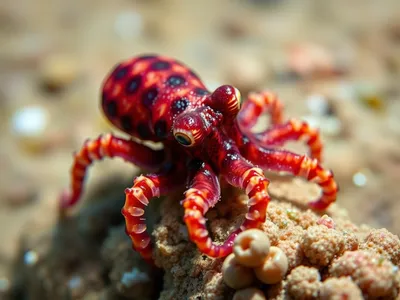
The Atlantic Pygmy Octopus is a small, secretive cephalopod found in shallow coastal waters of the western Atlantic Ocean, particularly in the Caribbean and Gulf of Mexico. Typically measuring no more than 12 centimeters in arm span, this octopus is renowned for its agility, intelligence, and remarkable ability to camouflage among rocks, shells, and sea grass. It spends much of its time hidden during the day, becoming more active at night to hunt small crustaceans and mollusks. Its short lifespan and cryptic behavior make it a rarely observed but fascinating inhabitant of tropical marine ecosystems.
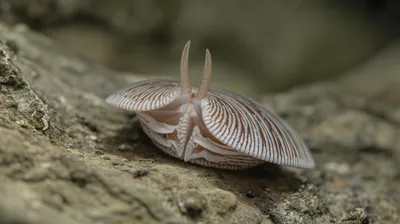
Atlantic slipper limpet
Crepidula fornicata
The Atlantic slipper limpet is a small marine mollusk recognized by its distinctively shaped shell, which resembles a slipper or a boat. This invertebrate typically forms stacked chains of individuals, with the largest female at the bottom and smaller males on top. Originally native to the east coast of North America, it has since become widespread in European waters due to shipping and aquaculture. The species is known for its remarkable ability to change sex during its life, transitioning from male to female as it matures.
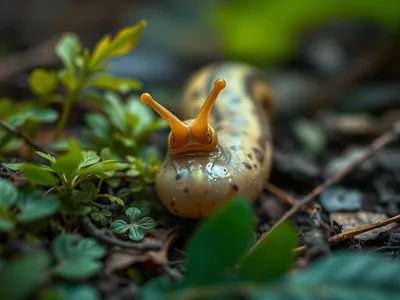
Banana Slug
Ariolimax dolichophallus
The banana slug is the second-largest terrestrial slug on Earth, reaching about 25 cm, and it is essentially a walking chemistry experiment. Its slime is not merely lubricant: it contains a compound that anaesthetises tissue, so a predator that mouths a banana slug finds its tongue going numb, and this is the main reason most animals leave them alone. The mucus is also a remarkable material — a hydrogel that absorbs many times its weight in water and behaves as a shear-thinning liquid, turning runny under the pressure of the slug's foot and stiffening again at rest, which is how an animal with no legs sticks to a vertical trunk and still moves. Slugs are hermaphrodites, and banana slugs mate reciprocally, each fertilising the other. It works the redwood forest floor as a decomposer, eating fungi, dead leaves and animal droppings, and its droppings return a rich, nitrogen-loaded pellet to the soil. It also disperses fungal spores through the forest in its gut.
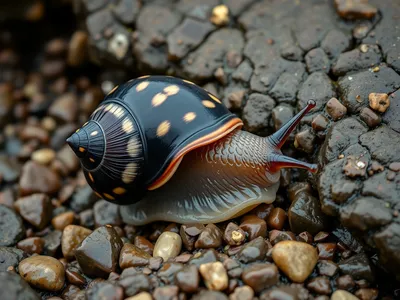
Black turban snail
Chlorostoma funebralis
The black turban snail is a medium-sized marine gastropod commonly found along the rocky intertidal shores of the Pacific coast of North America. Its smooth, rounded, turban-shaped shell is dark purple to black, often encrusted with algae or barnacles, and can grow up to 3 centimeters in diameter. This snail plays an important ecological role by grazing on algae, helping to maintain the balance of intertidal ecosystems. Black turban snails are known for their hardiness and ability to cling tightly to rocks, even in turbulent surf conditions.
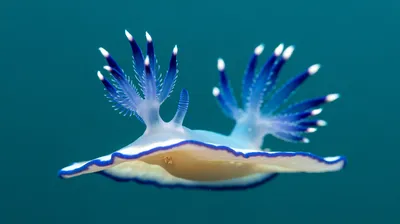
Blue dragon nudibranch
Glaucus atlanticus
Glaucus atlanticus is a 3 cm sea slug that lives upside down on the surface of the open ocean, hanging from the underside of the water's surface film and kept there by a bubble of gas it swallows and holds in its stomach. It feeds on the most dangerous drifting animals in the sea — the Portuguese man o' war, the by-the-wind sailor, the blue button — and it does not merely tolerate their stings. It stores the prey's unfired stinging cells, moving them intact through its own body to the tips of its finger-like cerata, and because it concentrates them there, a blue dragon's sting can be more painful than that of the man o' war it ate. Its colouring is countershading applied to an upside-down animal: the side facing the sky is silver-grey, and the side facing down into the sea is brilliant blue, so a bird looking down sees water and a fish looking up sees sky. It is a hermaphrodite, and both partners lay eggs after mating — sometimes on the carcass of the prey they have just eaten.
Blue-rayed limpet
Patella pellucida
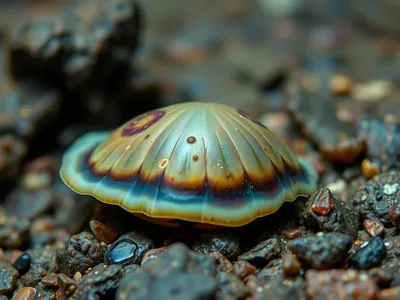
The blue-rayed limpet is a small and striking marine mollusk known for its translucent shell adorned with vibrant, iridescent blue stripes. Found along the coasts of the northeastern Atlantic, it typically resides on brown algae, especially kelp. Its delicate shell usually measures less than 2 centimeters and provides effective camouflage on its seaweed hosts. The blue rays are produced by microscopic structures that refract light, making this limpet one of the most visually remarkable invertebrates in its range. Despite its beauty, the species is well-adapted to withstand the rough conditions of the intertidal zone.
Blue-ringed Octopus
Hapalochlaena lunulata
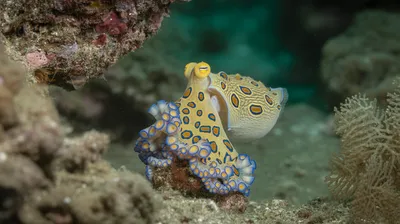
The blue-ringed octopus is roughly the size of a golf ball and carries enough tetrodotoxin to kill several adult humans. The toxin is the same one found in pufferfish, and the octopus does not make it — it is produced by symbiotic bacteria living in its salivary glands. There is no antivenom. The toxin paralyses by blocking the nerve signals that drive muscle, including the muscles of breathing, and the horror of it is that it does not touch consciousness: a victim can be fully aware while unable to move or breathe, and survival depends entirely on someone providing artificial respiration until the toxin clears. The bite is often painless and can go unnoticed. Its famous rings are not on constant display — the animal is drab and cryptic most of the time, and the iridescent blue flashes on in under a second when it is threatened, using specialised reflective cells beneath the skin. It is a warning, not a lure, and it means the animal has already decided you are a problem.
Californian Sea Hare
Aplysia californica
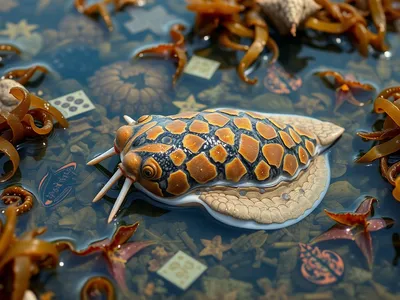
The Californian Sea Hare is a large marine gastropod mollusk renowned for its soft, elongated, and often reddish-brown body, which can reach up to 75 cm in length. It inhabits the coastal waters of the eastern Pacific Ocean, especially around California, where it grazes on seaweed and algae in shallow, rocky areas. Notable for its rabbit-like 'ear' structures (actually sensory rhinophores), this invertebrate can expel a distinctive purple ink when threatened, confusing predators. Its unique nervous system has made it a valuable model organism in neuroscience research.
Chambered Nautilus
Nautilus pompilius
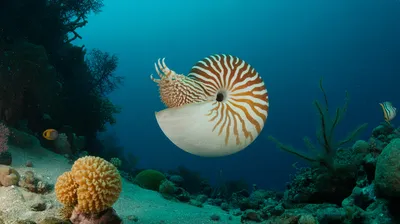
The nautilus is the last of its kind. Its lineage goes back some five hundred million years, and where every other surviving cephalopod — octopus, squid, cuttlefish — abandoned the external shell, the nautilus kept it. That shell is a buoyancy device. It is divided into sealed chambers, and a living tube called the siphuncle threads through them, allowing the animal to adjust the balance of gas and liquid inside and to hover, weightless, without effort. Its eye is startlingly primitive: an open pinhole, with no lens and no cornea, flooded with seawater — it forms an image the way a pinhole camera does, dim and low-resolution, in an era when its cousins evolved eyes rivalling our own. It has up to ninety tentacles, and unlike a squid's they carry no suckers, gripping instead with ridged, sticky surfaces. It is a slow scavenger, drifting up the reef slope at night to feed, and it is now heavily hunted for its shell.
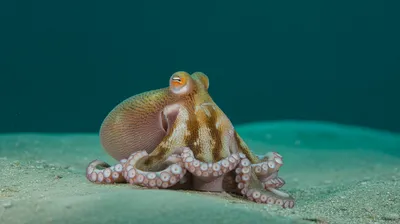
Coconut octopus
Amphioctopus marginatus
Amphioctopus marginatus is a small, soft-bodied octopus of shallow Indo-Pacific sand and silt flats, habitats that offer almost no natural shelter. Its solution made it famous: it collects discarded coconut halves and bivalve shells, cleans them out, and carries them across open seabed to assemble into a portable bunker later. Because the animal transports an object that has no immediate use and only pays off in the future, biologists studying it in Indonesia argued this meets the strict definition of tool use — the first such case accepted in any invertebrate. Carrying the load is costly and awkward: the octopus stiffens six arms into rigid struts and "stilt-walks" over the sediment with the shells clutched beneath it, a gait that is slower and more exposed than normal swimming. In life it is a dark animal veined with pale lines, with a mantle rarely longer than about 8 cm, and it forages mainly at dusk for crabs, shrimp and clams. When no coconut is available it will settle for a coke bottle, a clam pair, or a hollow in the mud. Its whole biology is a rebuttal to the assumption that complex, planned behaviour requires a backbone.
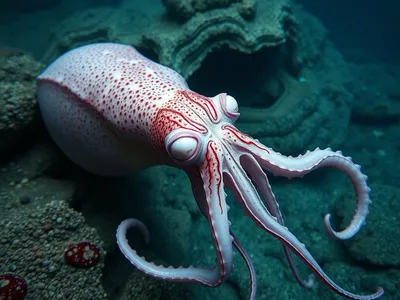
Colossal Squid
Mesonychoteuthis hamiltoni
Mesonychoteuthis hamiltoni is the heaviest invertebrate known, with confirmed specimens near 495 kg — far bulkier than the longer, more slender giant squid. It lives in the freezing waters around Antarctica, and almost everything known about it comes from two sources: whole animals hauled up by Antarctic toothfish longliners, and beaks recovered from the stomachs of sperm whales. Its eyes are the largest of any animal that has ever lived, roughly 27 cm across with a built-in light organ, and the leading hypothesis is that they exist to spot the faint bioluminescent glow stirred up by an approaching sperm whale from over 100 m away. Its arms and the clubs at the ends of its tentacles carry swivelling, rotating hooks, a weapon the giant squid entirely lacks. Its flesh is buoyed by ammonium chloride solution held in the tissues, which keeps it neutrally buoyant but makes the body flabby and jelly-like, so it is almost certainly a slow ambush predator rather than a pursuit hunter. The 2007 capture of an intact 495 kg adult by the New Zealand vessel San Aspiring remains the reference specimen, thawed under supervision and now held in Wellington. No adult has ever been observed alive in its own habitat.
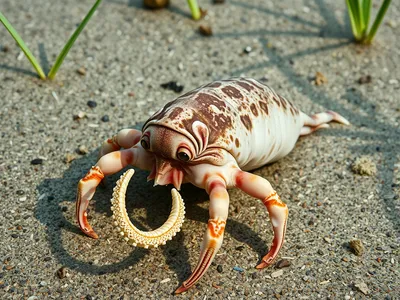
Common Cuttlefish
Sepia officinalis
The cuttlefish is one of the great paradoxes in animal vision: it is a master of colour camouflage and is almost certainly colourblind. It has a single type of photoreceptor, which ought to make colour matching impossible — and yet it reproduces the hue of its background with uncanny accuracy. The leading explanation is that it exploits a flaw in its own eye: a bizarre W-shaped pupil and severe chromatic aberration mean different colours come into focus at different depths, so by changing the shape of its eye it may effectively read colour from which wavelength sharpens. The skin itself is a display built in three layers — chromatophores, pigment sacs hauled open by muscle; iridophores that reflect and split light; and leucophores that scatter it — all under direct neural control, so a full change takes a fraction of a second. It hunts with the same equipment, running a hypnotic "passing cloud" of moving stripes down its body that appears to transfix prey. Smaller males will even mimic a female's colouring and posture to slip past a guarding rival and mate — deception written directly onto the skin.
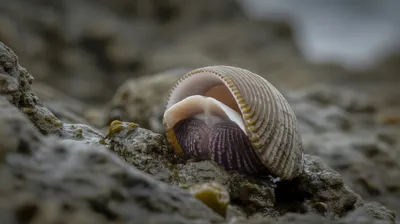
Common Limpet
Patella vulgata
The common limpet is a small, marine gastropod mollusk known for its distinct conical shell, which tightly adheres to rocks in the intertidal zone. Limpets use a powerful muscular foot and secreted mucus to cling tenaciously to surfaces, helping them withstand powerful waves. They feed primarily on algae, scraping it off rocks with their specialized radula. Limpets are an important part of the coastal ecosystem, influencing the distribution of algae and providing food for various predators.
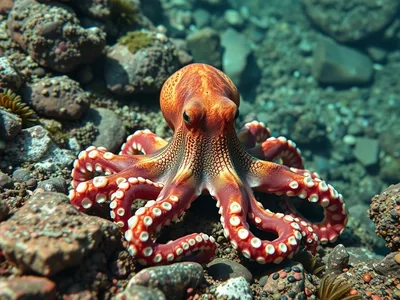
Common Octopus
vulgaris
Octopus vulgaris runs on a body plan so unlike ours that almost every organ is a surprise: three hearts, of which two push blood through the gills and one drives it round the body, and blood that is blue because it carries oxygen on copper-based haemocyanin rather than iron. Of its roughly 500 million neurons, about two-thirds sit in the arms rather than the brain, so an arm can find and reject food, or continue exploring a crevice, with a degree of local autonomy. Its skin is a display screen made of three layers — elastic chromatophore sacs pulled open by muscle, reflective iridophores and white leucophores — and it can also raise papillae to change texture, all under direct neural control in under a second. The paradox is that the animal appears to be colourblind, with a single visual pigment; the leading explanation is that it exploits chromatic blur through its odd slit pupil to infer colour from focus. Reproduction is a one-shot affair: the female seals herself in a den, aerates her eggs for weeks or months, does not feed, and dies as they hatch. Removing the optic gland in a classic experiment stopped that death spiral and let females feed and live on, showing the decline is hormonally programmed rather than simple exhaustion. Genetic work has since shown "O. vulgaris" is really a cluster of very similar species.
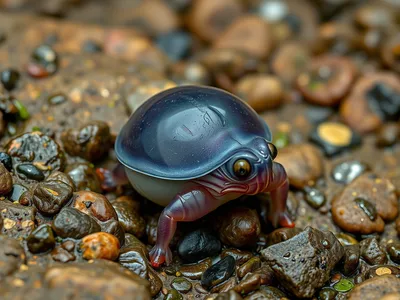
Common periwinkle
Littorina littorea
The common periwinkle is a small marine snail that inhabits rocky shorelines and coastal habitats throughout the North Atlantic. Its shell is typically dark gray or brown, smooth, and measures up to 3 cm in height. This hardy mollusk is highly adaptable, able to survive exposure to air during low tide and tolerate fluctuations in salinity. Common periwinkles play an important role in the ecosystem by grazing on algae and helping to control algal growth. They are also widely harvested for food, especially in Europe.
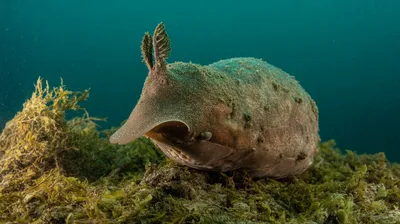
Common sea hare
Aplysia punctata
The common sea hare is a medium-sized, soft-bodied marine mollusk belonging to the group of opisthobranch gastropods. Their bodies are elongated and somewhat flattened, with a pair of long, ear-like rhinophores on their heads that resemble rabbit ears, giving them their common name. Sea hares are known for their ability to release a purple ink when threatened, which helps deter predators. They are found in shallow coastal waters, especially among seaweed beds where they graze on algae.
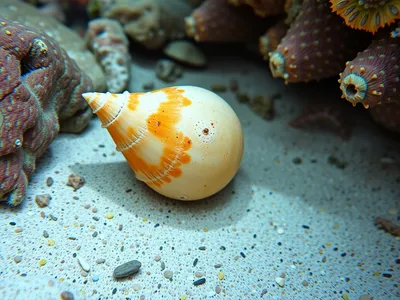
Cone Snail
Conus
Cone snails are slow-moving marine snails that have converted a tooth into a harpoon. A single radular tooth is hollowed into a barbed dart, loaded into the proboscis, charged with venom and fired hydraulically into prey — the strike is over in milliseconds and the snail simply reels the impaled fish in. What makes the group extraordinary is the venom itself: each species produces its own cocktail of a hundred or more small peptides, each tuned to a different ion channel or receptor, and many species make two entirely different venoms, one for hunting and a milder one for defence. Fish-hunting cones use a strategy nicknamed the "nirvana cabal" — they release insulin and other compounds into the water first, dropping the fish's blood sugar so it goes limp and stops swimming, and only then engulf it. Because those peptides hit precise nerve targets, they have been a goldmine for pharmacology: ziconotide, marketed as Prialt, is a synthetic copy of a peptide from the magician cone and is used as a non-opioid painkiller delivered directly to the spinal cord. The fish-eating species are also the dangerous ones; the geography cone has killed people, and its venom has no antivenom.
Crown Snail
Stephanosphaera coronata
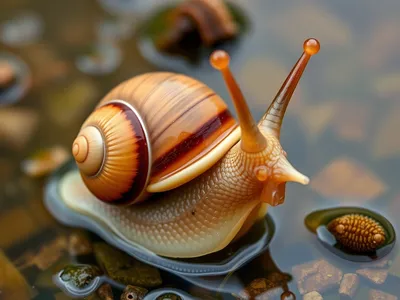
The Crown Snail is a small, freshwater gastropod mollusk known for its distinctive, crown-like shell adorned with spiny projections. These snails are often found in clean, slow-moving streams, ponds, and marshes where aquatic vegetation is abundant. Their shells provide both camouflage and protection from predators, while their slow movements and cryptic coloration help them blend into their environment. Crown Snails play an important ecological role in their habitat by consuming algae and decaying plant material, thereby contributing to nutrient cycling. Though not commonly encountered, their unique appearance makes them a favorite among mollusk enthusiasts.
Dog Whelk
Nucella lapillus
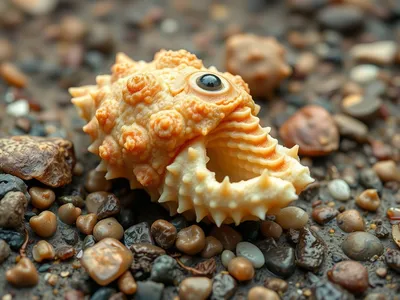
The Dog Whelk is a marine gastropod mollusk commonly found along rocky shores in the North Atlantic. It boasts a sturdy, spiral shell that varies in color from white and grey to brown and purple, and typically grows up to 4 cm long. This predatory snail is best known for drilling holes into the shells of barnacles and mussels to feed on their soft tissues. Dog Whelks play a significant role in controlling the population of other intertidal invertebrates and are considered an indicator species for monitoring marine pollution.
Dumbo Octopus
Grimpoteuthis spp.
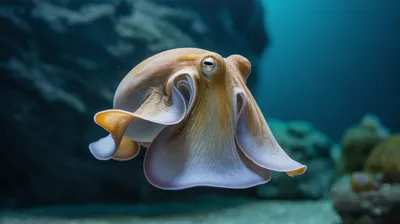
Grimpoteuthis is the deepest-living octopus known, recorded below 4,000 m and observed near 7,000 m — depths where no other octopus is found at all. It belongs to the cirrate octopuses, a lineage that abandoned almost everything we associate with the animals: it has no ink sac, because ink is useless in permanent darkness; it has a reduced radula and generally swallows small crustaceans and worms whole rather than drilling and biting them; and it retains an internal U-shaped cartilaginous shell remnant, which serves as the anchor for the two ear-like fins on the mantle that give it its nickname. Those fins, not jet propulsion, are its main means of travel — it flaps slowly, hovering above the sediment like a jellyfish, and it can also pulse the deep web that joins its arms to move in a soft medusoid contraction. Its arms carry paired cirri, fleshy filaments alongside the suckers thought to help waft food particles or sense prey. Because season means nothing at abyssal depths, reproduction is continuous: females carry eggs at every stage of development at once and cement them singly onto hard substrate such as a stone or a dead coral stalk, then abandon them. There is no brooding, no den, and no aggregation.
Firefly Squid
Watasenia scintillans
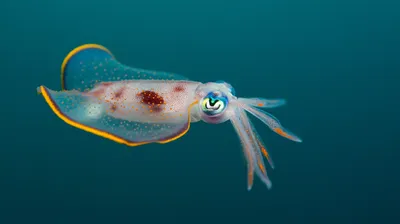
The firefly squid is a small deep-water cephalopod studded with photophores — light-producing organs running along its arms, body and around its eyes — and it uses them in two entirely opposite ways. Pointed downward, the lights are camouflage: the squid matches the faint glow filtering down from the surface, so that anything looking up from below sees no silhouette at all. This is counter-illumination, and it means the animal is brightly lit and simultaneously invisible. Pointed outward, the same organs become a signal and a distraction, flashed in patterns to startle a predator or to communicate. It is also one of very few cephalopods known to have colour vision — most, including octopuses, are colourblind — carrying three visual pigments, which in an animal that lives surrounded by its own coloured light is unlikely to be a coincidence. Each spring it enters Toyama Bay in Japan in vast numbers to spawn, turning the water glowing blue, and the adults die shortly afterwards, having lived only about a year.
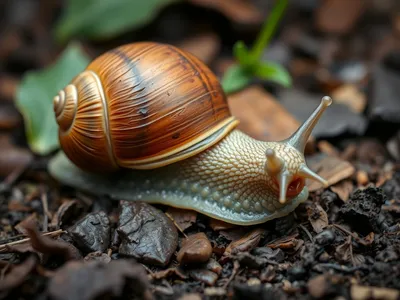
Garden Snail
Cornu aspersum
The Garden Snail is a common terrestrial mollusk known for its coiled shell and slow movement. Native to the Mediterranean region, this snail has been introduced to many parts of the world, often found in gardens, parks, and woodlands. It is recognized by its brownish shell, which is usually patterned with yellow or cream bands. Garden Snails are mostly active during damp conditions and retreat into their shells to conserve moisture during dry periods. Their slow, gliding movement is aided by a muscular foot that secretes mucus, allowing them to travel smoothly over various surfaces.