
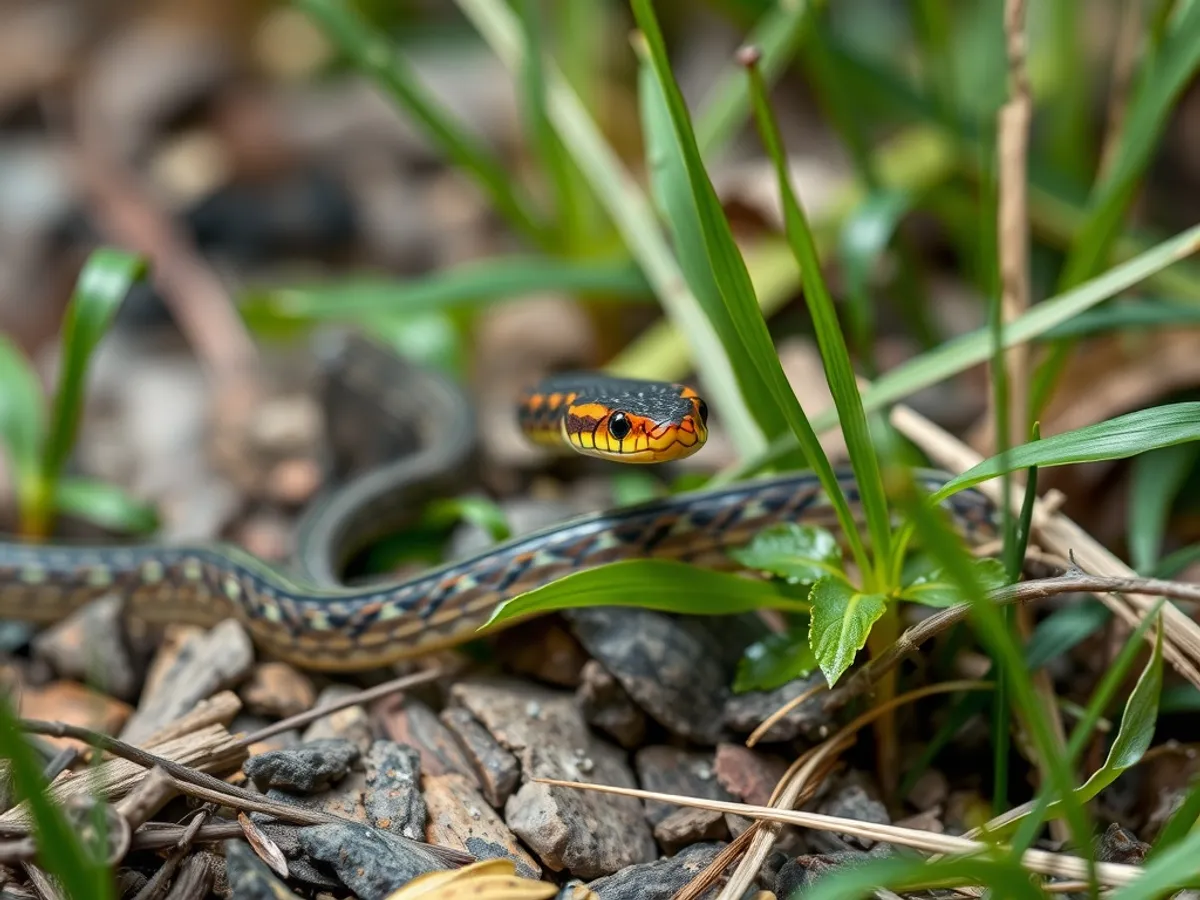
About the Red-sided Garter Snake
Thamnophis sirtalis parietalis stages the largest concentration of snakes on Earth. Around Narcisse in Manitoba, tens of thousands of red-sided garter snakes overwinter together in limestone sinkholes below the frost line — the only refuge available on a prairie where the ground freezes deep — and emerge over a few days in late April into mating balls, dozens of small males coiling around each large female. Males emerge first and wait. Some males produce female pheromones, becoming "she-males"; rival males then court them instead of the females, which appears to help the mimic warm up in the middle of a writhing ball and may divert competitors. Mating ends with a gelatinous copulatory plug that blocks the female's cloaca for a day or two, a chastity device that reduces the chance of a rival's sperm succeeding. Females then leave for summer feeding grounds up to 20 km away and give birth to live young in late summer — garter snakes are viviparous, not egg-layers. Red-sided garters are also central to the classic newt arms race: this species is the one that evolved tetrodotoxin resistance to eat rough-skinned newts, at the cost of being slowed for hours after each meal. They are mildly venomous by human standards, with a saliva that can cause local swelling, but harmless.
Fascinating facts
Massive Hibernation Dens
Red-sided Garter Snakes gather in large numbers in communal dens to hibernate, sometimes with tens of thousands of individuals sharing the same site.
Brightly Colored
Their striking red, yellow, and black coloration serves as both camouflage among grasses and a warning to potential predators.
Fast Movers
These snakes are agile and quick, allowing them to escape predators and actively hunt prey such as amphibians, fish, and earthworms.
Detailed description
The Red-sided Garter Snake (Thamnophis sirtalis parietalis) is a medium-sized, slender colubrid notable for its striking coloration: three longitudinal stripes, with the lateral stripes often bright red or orange, flanking a central yellow or cream dorsal stripe against a dark (black, brown, or olive) background. Adults typically measure 45–85 cm (18–33 in) in total length, with females generally larger and heavier than males, sometimes exceeding 100 cm (39 in). The head is slightly wider than the neck, with keeled dorsal scales and a relatively short, tapering tail. This subspecies exhibits sexual dimorphism, with males being smaller and more agile, a trait linked to their intense breeding competition. Red-sided Garter Snakes are diurnal and highly active during the warmer months, displaying seasonal behaviors such as mass emergence from communal hibernacula in early spring. Their communal hibernation sites, often in limestone crevices or mammal burrows, can host tens of thousands of individuals, making them one of the most social snake species during this period. They are opportunistic carnivores, preying on amphibians (notably wood frogs and chorus frogs), earthworms, leeches, small fish, and sometimes small mammals. Their reproductive strategy is ovoviviparous: females give birth to live young, typically in late summer, with litter sizes ranging from 7 to over 50 neonates. The Red-sided Garter Snake is well-adapted to the variable climates of central North America, tolerating cold temperatures and displaying rapid physiological responses to environmental changes. Their ecological role as both predator and prey is vital in maintaining the balance of grassland and wetland ecosystems.
Did you know?
The Narcisse Snake Dens in Manitoba, Canada, host the world's largest gathering of Red-sided Garter Snakes, with tens of thousands emerging from hibernation each spring.
Research & sources
Wikipedia summary
The common garter snake is a species of snake in the subfamily Natricinae of the family Colubridae. The species is indigenous to North America and found widely across the continent. There are several recognized subspecies. Most common garter snakes have a pattern of yellow stripes on a black, brown or green background, and their average total length is about 55 cm (22 in), with a maximum total length of about 137 cm (54 in). The average body mass is 150 g (5.3 oz). The common garter snake is the state reptile of Massachusetts.
Behaviour & social structure
Red-sided Garter Snakes are primarily diurnal, with peak activity in the morning and late afternoon. They exhibit strong site fidelity, often returning to the same hibernaculum and summer foraging grounds year after year. During the breeding season, males emerge earlier from hibernation and congregate around hibernacula entrances, forming 'mating balls'—large aggregations where dozens of males compete to court and mate with a single female. Their hunting strategy relies on active foraging, using chemosensory cues (Jacobson's organ) to locate prey. They subdue prey with a rapid strike and swallow it whole, aided by their flexible jaws and backward-curved teeth. Social interactions are most prominent during hibernation and mating, but otherwise, individuals are largely solitary. They exhibit a range of defensive behaviors, including rapid escape, cloacal discharge, and flattening of the body to appear larger. When threatened, they may release a foul-smelling musk from their cloacal glands.
Reproduction & life cycle
Breeding occurs immediately after emergence from hibernation, typically from late April to early May, depending on latitude and weather conditions. Males locate females by following pheromone trails, and intense competition leads to the formation of mating balls. Copulation can last several hours, and females may mate with multiple males, resulting in sperm competition and multiple paternity within a single litter. Females store sperm and fertilization is delayed until ovulation. Gestation lasts approximately 2–3 months, with live birth (ovoviviparity) occurring from late July to early September. Litter size is highly variable, influenced by female size and condition, but averages 15–30 neonates. Neonates are independent at birth, measuring 13–23 cm (5–9 in) and immediately disperse to find food and shelter. There is no parental care post-birth.
Adaptations & survival
Red-sided Garter Snakes exhibit several adaptations for survival in temperate climates. Their ability to hibernate communally in deep, insulated sites allows them to survive harsh winters where temperatures can drop well below freezing. Physiologically, they can tolerate low body temperatures and have rapid metabolic adjustments to seasonal changes. Their bright lateral stripes serve as disruptive coloration, confusing predators during rapid movement (the 'optical illusion' effect). They possess mild toxins in their saliva, effective against amphibian prey, and have evolved resistance to amphibian skin toxins, such as tetrodotoxin from newts. Chemoreception is highly developed, aiding in prey detection and mate location. Their reproductive strategy, including sperm storage and multiple paternity, increases genetic diversity and reproductive success in unpredictable environments.
Cultural significance
Red-sided Garter Snakes are well-known in the folklore and natural history of the North American prairies. Their spectacular spring mating aggregations, especially in Manitoba, Canada, attract thousands of tourists and are celebrated in local festivals and educational programs. Indigenous peoples have recognized garter snakes in their oral traditions, sometimes viewing them as symbols of renewal and fertility due to their mass emergences in spring. They are occasionally kept as pets and are valued for their role in controlling pest populations. Their harmless nature and striking appearance make them a frequent subject in environmental education.
Recent research
Recent research has focused on the physiological mechanisms underlying cold tolerance and hibernation, revealing unique adaptations in metabolic suppression and antifreeze protein production. Studies on mating behavior have elucidated the role of pheromones and sexual selection in the evolution of mating balls and multiple paternity. Genetic analyses have provided insights into population structure, gene flow, and the impacts of habitat fragmentation. Ongoing research investigates the effects of climate change on phenology and the potential for adaptation. The Red-sided Garter Snake is also a model organism for studying the evolution of viviparity and reproductive strategies in temperate reptiles.
Sources
Ecology and Behavior of the Red-sided Garter Snake (Thamnophis sirtalis parietalis)
R. Shine, R.T. Mason, D.O. Crews (2001)
scientificPhysiological and Behavioral Adaptations of Garter Snakes to Cold Climates
G. Blouin-Demers, P.J. Weatherhead (2001)
scientificVideos
Habitat
Grasslands, prairies, forest edges, and wetlands
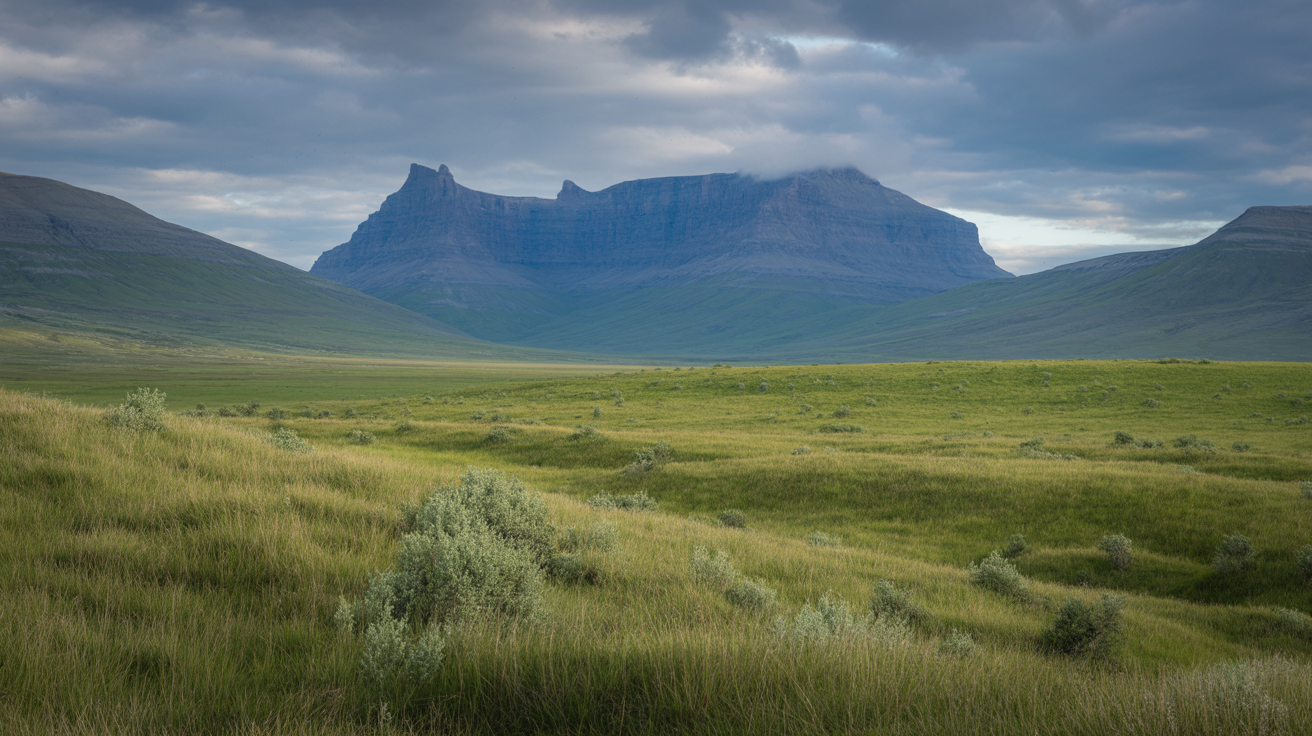 Various Continental Regions
Grassland
Open areas dominated by grasses rather than trees, supporting numerous herbivores and their predators.
 Global
Forest
Wooded areas with significant tree cover and diverse plant and animal communities.
 Global
Freshwater
Lakes, rivers, and wetlands with diverse aquatic ecosystems.
Conservation
The Red-sided Garter Snake is currently classified as Least Concern on the IUCN Red List.
Threats & challenges
Although currently listed as Least Concern by the IUCN, Red-sided Garter Snakes face several localized threats. Habitat loss and fragmentation due to agriculture, urbanization, and wetland drainage reduce available foraging and hibernation sites. Road mortality is significant, especially during seasonal migrations to and from hibernacula. Pesticide use can reduce prey availability and cause direct toxicity. Climate change may alter hibernation patterns and breeding phenology, potentially impacting survival and reproductive success. Despite these challenges, large populations persist in protected areas, and the species is resilient due to its wide distribution and ecological flexibility. Population trends are stable overall, but local declines have been documented where habitat loss is severe.
Taxonomy
Scientific name
Thamnophis sirtalis parietalis
- Kingdom
- Animalia
- Phylum
- Chordata
- Class
- Reptilia
- Order
- Squamata
- Family
- Colubridae
- Genus
- Thamnophis
- Species
- parietalis
Community notes
Share your observations about the Red-sided Garter Snake.
No community notes yet. Be the first!
Discover more wildlife
More fascinating animals from the encyclopedia.