
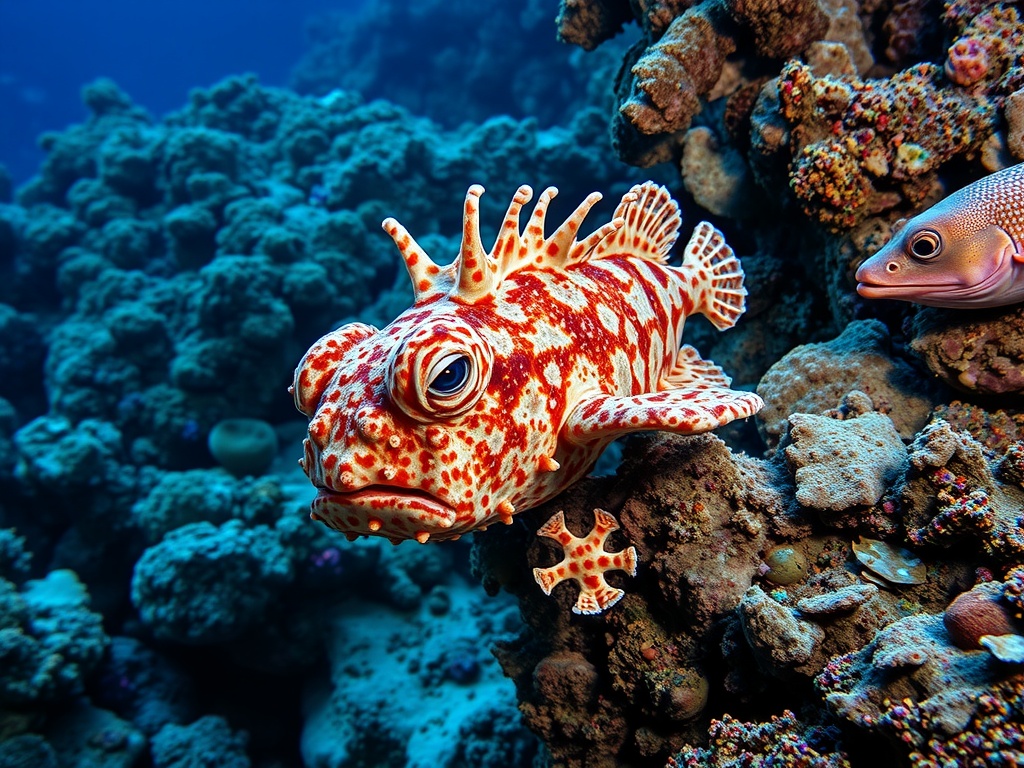
About the Reef Stonefish
The stonefish is the most venomous fish in the world, and it never uses that venom to hunt. Its thirteen dorsal spines are purely defensive, each a hypodermic needle with a venom sac at the base that injects on pressure — so the classic injury is inflicted by a foot, and the pain is described as among the worst known, sometimes bad enough that victims beg for amputation. Its actual hunting is a matter of stillness. It is a stone, or an excellent forgery of one, encrusted and mottled and often overgrown with algae, and it lies motionless on the reef or half-buried in sand for hours or days, and then it does not chase: the strike takes about fifteen milliseconds, and the prey is swallowed before it can register that the seabed has moved. One useful quirk of its venom is that the toxin is a protein and heat-labile, so immersing the wound in water as hot as can be tolerated breaks it down and provides genuine relief while antivenom is found.
Fascinating facts
Deadly Venom
The stonefish's dorsal spines inject venom that can cause intense pain, paralysis, and even death if not promptly treated.
Camouflage Expert
Stonefish closely resemble rocks or coral, making them almost invisible to both predators and prey.
Survival Adaptation
Stonefish can survive out of water for up to 24 hours, thanks to their ability to retain moisture within their bodies.
Detailed description
The reef stonefish (Synanceia verrucosa) is a robust, benthic fish reaching up to 40 cm in length and weighing up to 2.4 kg. Its body is covered with wart-like protuberances, skin flaps, and variable coloration ranging from mottled browns to reds and yellows, providing exceptional camouflage among rocks and coral rubble. The head is broad and upturned, with small, upward-facing eyes and a large, cavernous mouth suited for rapid ambush predation. The skin lacks scales and is often encrusted with algae or debris, enhancing its disguise. Stonefish possess 13 stout dorsal spines, each connected to venom glands capable of delivering a potent neurotoxin and cytotoxin. These spines are normally concealed but can be erected defensively when threatened. The pectoral and pelvic fins are rounded and fleshy, aiding in stability on uneven substrates. Stonefish are solitary and sedentary, rarely moving except to feed or avoid predators. Their cryptic appearance and stillness make them nearly invisible to both prey and predators. They are primarily nocturnal, remaining hidden during the day and becoming more active at dusk.
Did you know?
Despite their deadly reputation, stonefish are sometimes kept in public aquariums for their unique appearance and impressive camouflage abilities.
Research & sources
Behaviour & social structure
Reef stonefish are classic ambush predators, remaining motionless for hours, partially buried in sand or nestled among rocks. When prey such as small fish or crustaceans approach within striking distance, the stonefish lunges with remarkable speed, creating a vacuum to suck prey into its mouth in less than 0.015 seconds. They feed infrequently, relying on the high caloric value of their prey. Social interactions are minimal; individuals are highly territorial and may display threat postures if approached by conspecifics. Stonefish are generally solitary, only aggregating during breeding periods. Their daily routine is dominated by inactivity, with brief periods of hunting at dawn or dusk. They are known to occasionally move short distances to find better feeding or hiding spots, but otherwise exhibit low mobility.
Reproduction & life cycle
Reef stonefish are oviparous, with external fertilization. Spawning typically occurs during warmer months, often linked to lunar cycles and water temperature. Females release thousands of large, adhesive eggs onto the substrate, which are then fertilized by nearby males. There is no parental care; eggs and larvae are left to develop independently. The eggs hatch after several days, and the planktonic larvae drift with currents before settling onto the reef as juveniles. Sexual maturity is reached at approximately 2-3 years of age. Breeding aggregations are rare and poorly documented, but some evidence suggests that multiple individuals may spawn simultaneously in favorable conditions.
Adaptations & survival
The reef stonefish exhibits a suite of adaptations for survival in complex reef environments. Its cryptic coloration and irregular skin texture provide near-perfect camouflage, reducing predation risk and enhancing ambush hunting success. The venomous dorsal spines are a formidable defense, deterring most would-be predators, including humans. The rapid buccal expansion mechanism allows for extremely fast prey capture. Stonefish can survive for up to 24 hours out of water, an adaptation to tidal fluctuations in shallow reef zones. Their ability to tolerate low-oxygen environments enables survival in tide pools and hypoxic reef crevices. Specialized sensory organs, such as the lateral line, detect minute water movements, aiding in prey detection even when visibility is low.
Cultural significance
The reef stonefish holds a place in the folklore and cautionary tales of many Indo-Pacific coastal communities, often symbolizing danger and the hidden perils of the sea. In some traditional medicine systems, dried stonefish parts have been used, though this is rare and not scientifically validated. The species is sometimes featured in public aquaria for educational purposes, highlighting the importance of venomous marine life. Stonefish envenomation is a well-known hazard among fishermen and divers, leading to the development of specialized first aid protocols and antivenoms in Australia and Southeast Asia.
Recent research
Recent research has focused on the molecular composition of stonefish venom, revealing a complex mixture of proteins (notably verrucotoxin) with potent neurotoxic and cytolytic effects. Studies are investigating potential biomedical applications of these toxins, including pain management and anti-cancer properties. Ecological research has examined the stonefish's role as a top mesopredator in reef ecosystems, influencing prey populations and community structure. Ongoing studies are assessing the impact of habitat loss and climate change on stonefish distribution and abundance. Advances in imaging and genetic analysis have improved understanding of their phylogenetic relationships within the family Synanceiidae.
Videos
Habitat
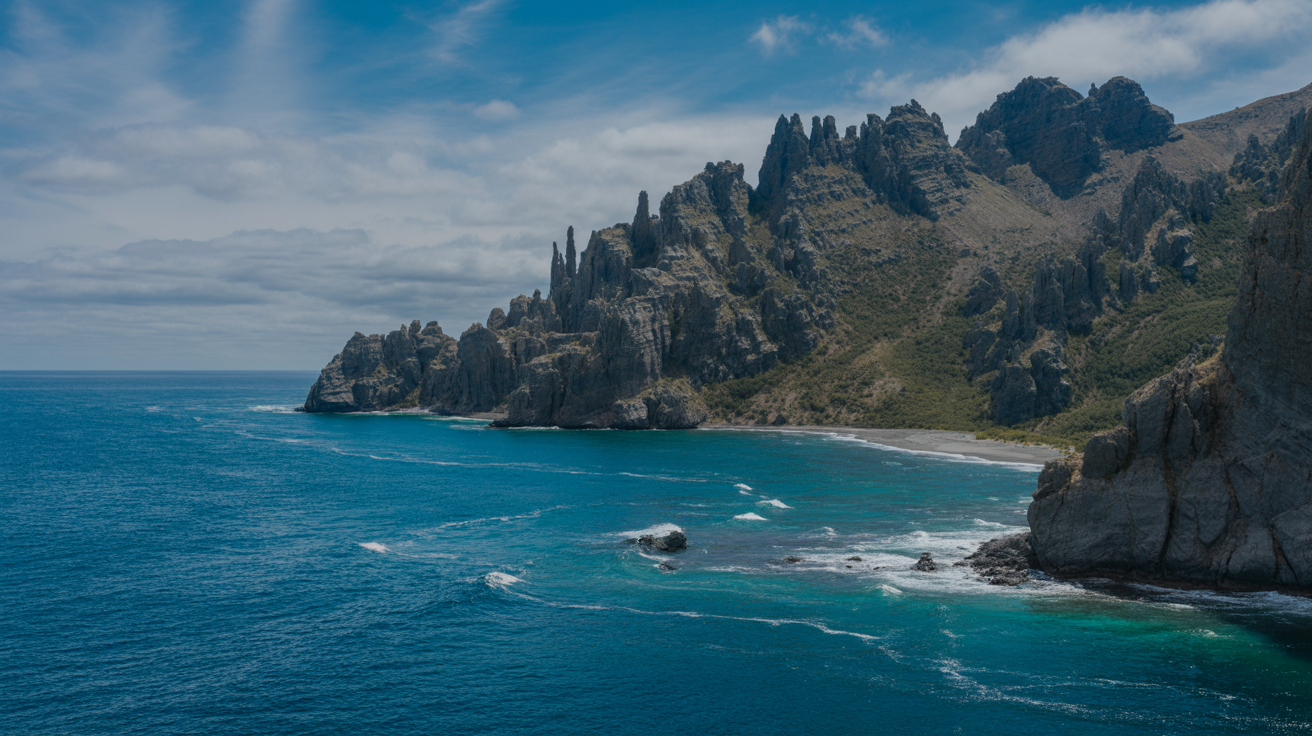
Coral reefs and rocky coastal regions
Conservation
The Reef Stonefish is currently classified as Least Concern on the IUCN Red List.
Threats & challenges
Currently listed as Least Concern by the IUCN, the reef stonefish faces localized threats from habitat degradation, particularly coral reef destruction due to climate change, pollution, and destructive fishing practices. Bycatch in trawl fisheries and collection for the aquarium trade also pose risks in some regions. While populations are stable in much of their range, ongoing reef decline could impact long-term survival. Human envenomations, though rare, often result from accidental contact by waders or divers, leading to medical emergencies. There are no targeted conservation programs for this species, but general reef protection measures benefit stonefish populations indirectly.
Taxonomy
Scientific name
Synanceia verrucosa
- Kingdom
- Animalia
- Phylum
- Chordata
- Class
- Actinopterygii
- Order
- Scorpaeniformes
- Family
- Synanceiidae
- Genus
- Synanceia
- Species
- verrucosa
Community notes
Share your observations about the Reef Stonefish.
No community notes yet. Be the first!
Discover more wildlife
More fascinating animals from the encyclopedia.