
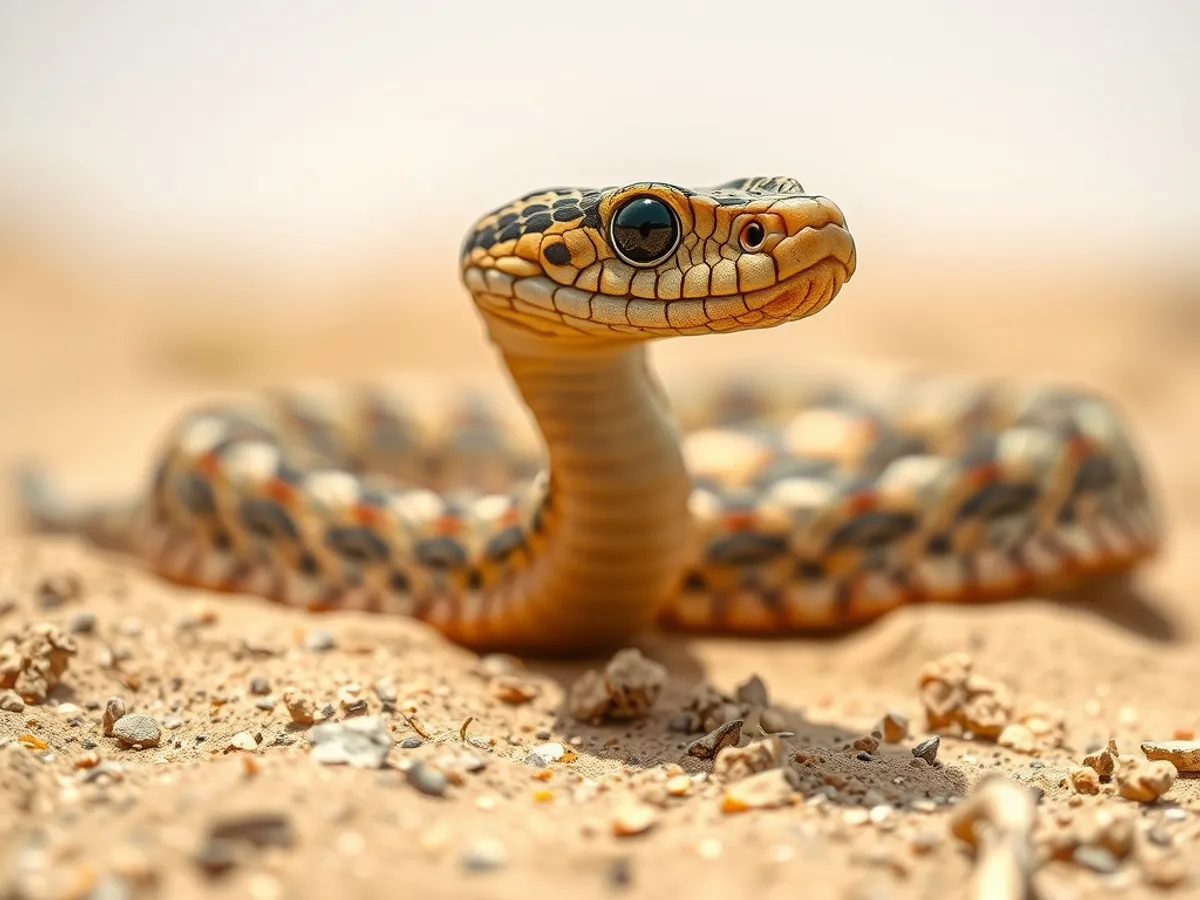
About the Saharan Sand Viper
The Saharan Sand Viper is a small, venomous snake native to the arid deserts of North Africa, particularly the Sahara. It is well-adapted to life in loose sand, with a short, stout body and a broad, flat head that helps it burrow and remain concealed. This viper is known for its distinctive sidewinding locomotion, which enables it to move efficiently across hot, shifting sands. Its coloration provides excellent camouflage, making it a formidable ambush predator of small mammals, lizards, and birds.
Fascinating facts
Sidewinding Movement
The Saharan Sand Viper moves by sidewinding, a special form of locomotion that helps it travel efficiently over loose desert sands.
Master of Camouflage
Its sandy coloration allows it to blend seamlessly into its environment, making it extremely difficult to spot in the wild.
Ambush Predator
This viper often buries itself in the sand, waiting patiently for unsuspecting prey such as small rodents, birds, or lizards to pass by.
Detailed description
The Saharan Sand Viper (Cerastes vipera) is a small, robust viperid snake, typically measuring 20–35 cm in total length, with females generally larger than males. Its body is short and stout, covered in keeled, heavily textured scales that aid in minimizing water loss and facilitate movement through loose sand. The head is broad, flat, and distinct from the neck, with relatively large eyes featuring vertical pupils adapted for nocturnal activity. Unlike its close relative Cerastes cerastes, C. vipera usually lacks prominent supraocular 'horns,' though small scale projections may be present. Its dorsal coloration ranges from pale beige to reddish-brown, patterned with darker blotches or crossbands that provide effective camouflage against the desert substrate. The ventral surface is typically white or cream. This viper is a master of ambush predation, often burying itself almost entirely beneath the sand with only its eyes and snout exposed, waiting motionless for unsuspecting prey. Its venom, while potent for small vertebrates, is considered of low medical significance to humans. Cerastes vipera is primarily nocturnal, emerging at dusk to hunt and avoid the extreme daytime temperatures. It is a solitary species, coming together only during the breeding season. Reproduction is oviparous, with females laying clutches of eggs in concealed locations. The species is highly adapted to the harsh, arid conditions of the Sahara, exhibiting both physiological and behavioral traits that minimize water loss and maximize survival.
Did you know?
Despite being venomous, the Saharan Sand Viper is relatively small and rarely poses a threat to humans due to its secretive and non-aggressive nature.
Research & sources
Behaviour & social structure
Cerastes vipera is predominantly nocturnal, spending daylight hours buried beneath the sand to avoid predation and desiccation. Its primary hunting strategy is ambush predation: the snake remains motionless, concealed under sand, and strikes rapidly when prey approaches. Prey consists mainly of small lizards (such as Acanthodactylus spp.), rodents, and occasionally small birds. The viper uses a combination of chemical and vibrational cues to detect prey. Feeding is infrequent, reflecting the scarcity of prey in its environment. The species exhibits sidewinding locomotion, a specialized movement that minimizes contact with hot sand and allows efficient travel across loose substrates. Social interactions are minimal outside the breeding season, and individuals are highly territorial. Defensive behaviors include rapid sidewinding to escape, hissing, and striking if threatened. Activity peaks during the cooler hours of the night, particularly after rainfall, which increases prey availability.
Reproduction & life cycle
Breeding in Cerastes vipera occurs in the spring, typically from March to May, coinciding with rising temperatures and increased prey activity. Males locate females through pheromonal cues and may engage in brief combat for access to receptive females. The species is oviparous, with females laying 3–15 eggs per clutch, depending on body size and environmental conditions. Eggs are deposited in moist, sheltered locations such as under rocks or within burrows to prevent desiccation. Incubation lasts approximately 6–8 weeks, after which hatchlings emerge fully independent and capable of hunting. There is no parental care post-oviposition. Sexual maturity is reached at around 2–3 years of age. Reproductive output is closely linked to environmental factors, with drought years resulting in reduced clutch sizes or skipped breeding.
Adaptations & survival
Cerastes vipera exhibits a suite of adaptations for desert survival. Its keeled, rough scales reduce friction and aid in sidewinding locomotion, which is energy-efficient and minimizes heat absorption from the sand. The ability to bury itself rapidly provides both camouflage and protection from extreme temperatures. Its coloration matches the sandy environment, enhancing concealment from both predators and prey. The snake's metabolism is highly efficient, allowing it to survive long periods without food or water. Nocturnal activity patterns reduce water loss and exposure to lethal temperatures. Physiologically, the viper can tolerate significant dehydration and has specialized kidneys to concentrate urine, conserving water. Its venom is adapted for rapid immobilization of small, fast-moving prey typical of desert ecosystems.
Cultural significance
The Saharan Sand Viper holds a modest place in North African folklore, often symbolizing stealth, danger, and the harshness of the desert. While not as prominent in mythology as some larger viper species, it is sometimes referenced in local tales as a creature to be respected and avoided. There is little evidence of traditional medicinal or ritual use, likely due to its small size and elusive nature. In modern times, it has attracted interest from herpetologists and reptile enthusiasts, though its venom is not considered medically important to humans.
Recent research
Recent research on Cerastes vipera has focused on its biomechanics, particularly the efficiency of sidewinding locomotion in loose sand, which has inspired studies in robotics and biomimicry. Genetic studies have clarified its phylogenetic relationship within the genus Cerastes and highlighted low genetic diversity across its range, likely due to the extreme uniformity of its habitat. Ecological studies have examined its role as a mesopredator in desert food webs and its responses to climatic variability. Ongoing research is investigating the composition of its venom, which contains unique proteases and neurotoxins adapted for rapid prey immobilization. Conservation studies are monitoring the impact of habitat disturbance and climate change on population dynamics.
Sources
Cerastes vipera (Linnaeus, 1758): Taxonomy, Ecology, and Natural History
Baha El Din, S. (2006)
scientificCerastes vipera: The IUCN Red List of Threatened Species 2021
IUCN SSC Snake Specialist Group
conservationCerastes vipera (Linnaeus, 1758): Taxonomy, Distribution, and Natural History
J.-C. Rage, G. Nilson, D. Mallow (2013)
scientificCerastes vipera: The IUCN Red List of Threatened Species 2021
IUCN SSC Snake Specialist Group
conservationVideos
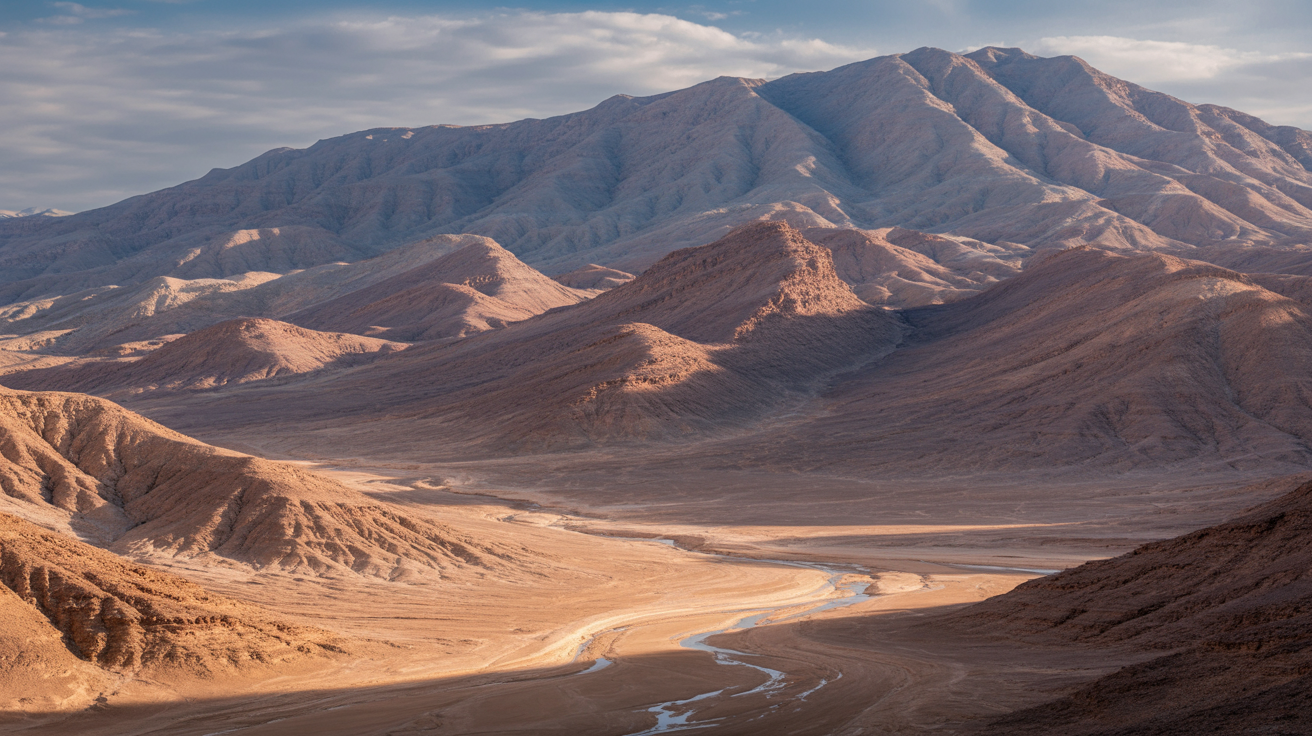
Habitat
Desert
Conservation
The Saharan Sand Viper is currently classified as Least Concern on the IUCN Red List.
Threats & challenges
Currently assessed as Least Concern by the IUCN, Cerastes vipera faces relatively few direct threats due to its remote and inhospitable habitat. However, localized pressures include habitat disturbance from expanding human settlements, off-road vehicle activity, and collection for the pet trade. Climate change poses a potential long-term threat by altering desert ecosystems and prey availability. Mortality from road traffic and persecution due to fear of venomous snakes can impact local populations. Despite these challenges, the species remains widespread and stable across much of its range, with no evidence of significant population declines.
Taxonomy
Scientific name
Cerastes vipera
- Kingdom
- Animalia
- Phylum
- Chordata
- Class
- Reptilia
- Order
- Squamata
- Family
- Viperidae
- Genus
- Cerastes
- Species
- vipera
Community notes
Share your observations about the Saharan Sand Viper.
No community notes yet. Be the first!
Discover more wildlife
More fascinating animals from the encyclopedia.