
About the Scarlet Badis
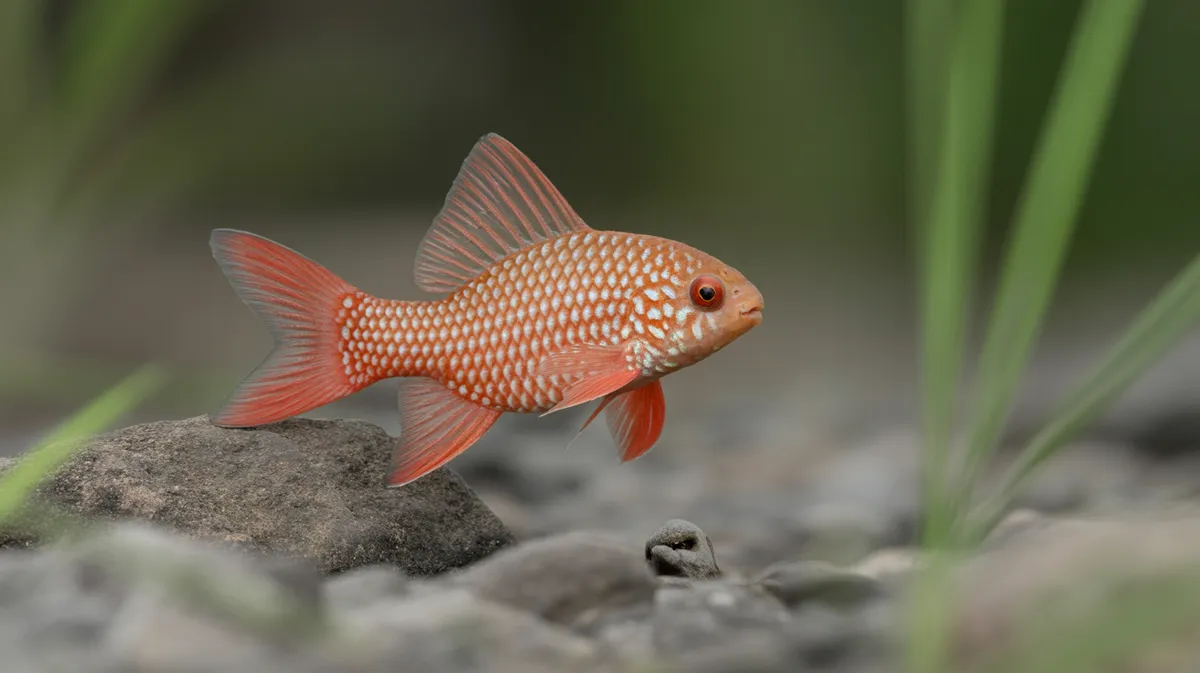
The Scarlet Badis is a tiny, vividly colored freshwater fish native to the river systems of India. Males are renowned for their striking red and blue vertical stripes and elongated fins, while females exhibit more subdued coloration. This species is peaceful and somewhat shy, often preferring heavily planted aquariums or dense vegetation in the wild. Though small in size, Scarlet Badis are territorial, especially among males, and require specific water conditions to thrive. Their delicate nature and specialized diet make them a favorite among experienced aquarists.
Fascinating facts
Striking Coloration
Male Scarlet Badis are renowned for their brilliant red, orange, and blue hues, which intensify during breeding or territorial displays.
Specialized Diet
They primarily eat tiny aquatic invertebrates, such as micro-worms and small crustaceans, rather than standard flake foods.
Habitat Preference
Scarlet Badis thrive in densely vegetated, slow-moving waters with plenty of hiding spots and shaded areas.
Detailed description
The Scarlet Badis (Dario dario) is a diminutive freshwater fish, rarely exceeding 2 cm in standard length, with males typically reaching 2–2.1 cm and females slightly smaller. Males are especially striking, displaying vibrant scarlet to orange-red vertical bars along their flanks, interspersed with iridescent blue highlights, while females are more cryptically colored in silvery or pale hues with faint markings. The species exhibits marked sexual dimorphism, not only in coloration but also in fin morphology—males possess elongated dorsal, anal, and pelvic fins, which are used in courtship and territorial displays. The body is laterally compressed and streamlined, adapted for maneuvering through dense aquatic vegetation and leaf litter in their native habitats. Scarlet Badis are benthopelagic, spending much of their time near the substrate or among submerged roots and plants. Their large eyes relative to body size suggest a reliance on visual cues for both foraging and social interactions. The mouth is small and upturned, suited for picking microinvertebrates from surfaces. In the wild, they inhabit clear, slow-flowing streams with soft, slightly acidic to neutral water, often in shaded forested areas. Their cryptic coloration and small size provide camouflage from predators, while their territorial nature ensures access to optimal feeding and breeding sites.
Did you know?
Despite their bright colors and beauty, Scarlet Badis are notoriously picky eaters and often refuse commercial fish foods, requiring live or frozen fare.
Research & sources
Wikipedia summary
The scarlet badis is a tropical freshwater fish and one of the smallest known percoid fish species. It is a micropredator, feeding on small aquatic crustaceans, worms, insect larvae and other zooplankton. It is sold under a variety of names in the aquarium trade.
Behaviour & social structure
Scarlet Badis are primarily crepuscular, exhibiting peak activity during dawn and dusk. They are micropredators, employing a sit-and-wait hunting strategy, often hovering motionless before darting at tiny prey such as copepods, ostracods, insect larvae, and micro-worms. Males are highly territorial, establishing small territories of approximately 10–20 cm in diameter, which they defend vigorously against rival males through lateral displays, fin flaring, and occasional chasing. Females and subdominant males are more reclusive, foraging in less contested areas. Social hierarchies are established quickly in confined environments, with dominant males occupying the most desirable territories rich in cover and food. In aquaria, they may become shy and reclusive if kept with boisterous or larger tankmates. Daily routines involve alternating periods of foraging, territory patrol, and rest among dense cover. Communication is primarily visual, with body postures and fin displays signaling aggression, submission, or courtship intent.
Reproduction & life cycle
Breeding in Dario dario is closely linked to environmental cues such as temperature rise and increased food availability, often coinciding with the onset of the monsoon in their native range. Males initiate courtship by intensifying their coloration and performing elaborate fin displays to attract females into their territory. Spawning occurs in secluded spots among fine-leaved aquatic plants or leaf litter. The species is an egg-scatterer with no nest-building; females lay small batches of adhesive eggs (typically 10–50 per spawning event), which adhere to vegetation or substrate. There is no parental care—adults may consume their own eggs if not separated. Incubation lasts 2–3 days at 24–26°C, after which the fry become free-swimming within 3–4 days. High-quality live foods are essential for successful rearing of fry due to their minute mouth size and rapid growth requirements.
Adaptations & survival
Scarlet Badis have evolved several adaptations for survival in their specialized habitats. Their small size and cryptic coloration provide effective camouflage among leaf litter and aquatic vegetation, reducing predation risk. The upturned mouth and acute vision are adaptations for precise capture of small, mobile prey. Males' bright coloration and fin extensions are sexually selected traits, enhancing reproductive success through mate attraction and territory defense. Physiologically, they are tolerant of a range of soft, slightly acidic to neutral water conditions, reflecting the seasonal variability of their native streams. Their ability to exploit microhabitats and feed on a wide array of microfauna allows them to persist in environments with fluctuating food resources.
Cultural significance
Scarlet Badis have no known role in traditional folklore or subsistence fisheries, likely due to their small size and cryptic habits. However, they have gained significant popularity in the global aquarium trade since the early 2000s, prized for their vivid coloration and peaceful demeanor. Their presence in aquaria has spurred interest in nano-aquascaping and the maintenance of biotope tanks that replicate their natural environment. This popularity has also led to increased awareness of the biodiversity of Indian freshwater ecosystems.
Recent research
Recent research on Dario dario has focused on its taxonomy, reproductive biology, and ecological requirements. Molecular studies have clarified its placement within the Badidae family and its distinction from closely related species. Observational studies in both wild and captive settings have documented its complex social and reproductive behaviors, including the role of male coloration in mate selection. There is ongoing interest in understanding its microhabitat preferences and responses to environmental stressors, with implications for conservation and sustainable collection. Some studies have highlighted the importance of live food diets for optimal health and breeding success in captivity, underscoring the species' specialized feeding adaptations.
Videos
Habitat
Shallow, slow-moving freshwater streams and rivers


Conservation
The Scarlet Badis is currently classified as Least Concern on the IUCN Red List.
Threats & challenges
Although currently listed as Data Deficient by the IUCN due to limited population data, Scarlet Badis face several potential threats in the wild. Habitat degradation from deforestation, agricultural runoff, and stream modification in northeastern India may reduce suitable habitats. Over-collection for the aquarium trade, while not currently at crisis levels, could become problematic if unmanaged. Their specialized habitat requirements and sensitivity to water quality make them vulnerable to pollution and hydrological changes. Climate change poses an additional long-term threat by altering rainfall patterns and stream flow regimes. There is a lack of comprehensive population studies, making it difficult to assess trends or implement targeted conservation measures.
Taxonomy
Scientific name
Dario dario
- Kingdom
- Animalia
- Phylum
- Chordata
- Class
- Actinopterygii
- Order
- Perciformes
- Family
- Badidae
- Genus
- Dario
- Species
- dario
Community notes
Share your observations about the Scarlet Badis.
No community notes yet. Be the first!
Discover more wildlife
More fascinating animals from the encyclopedia.