
About the Sea Mouse
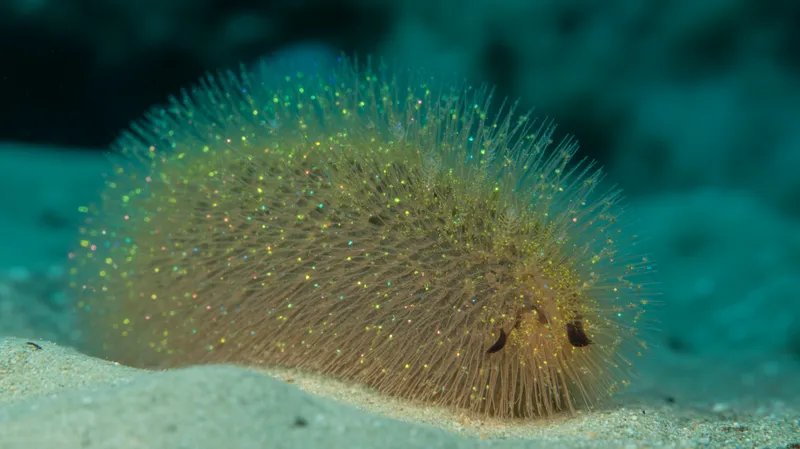
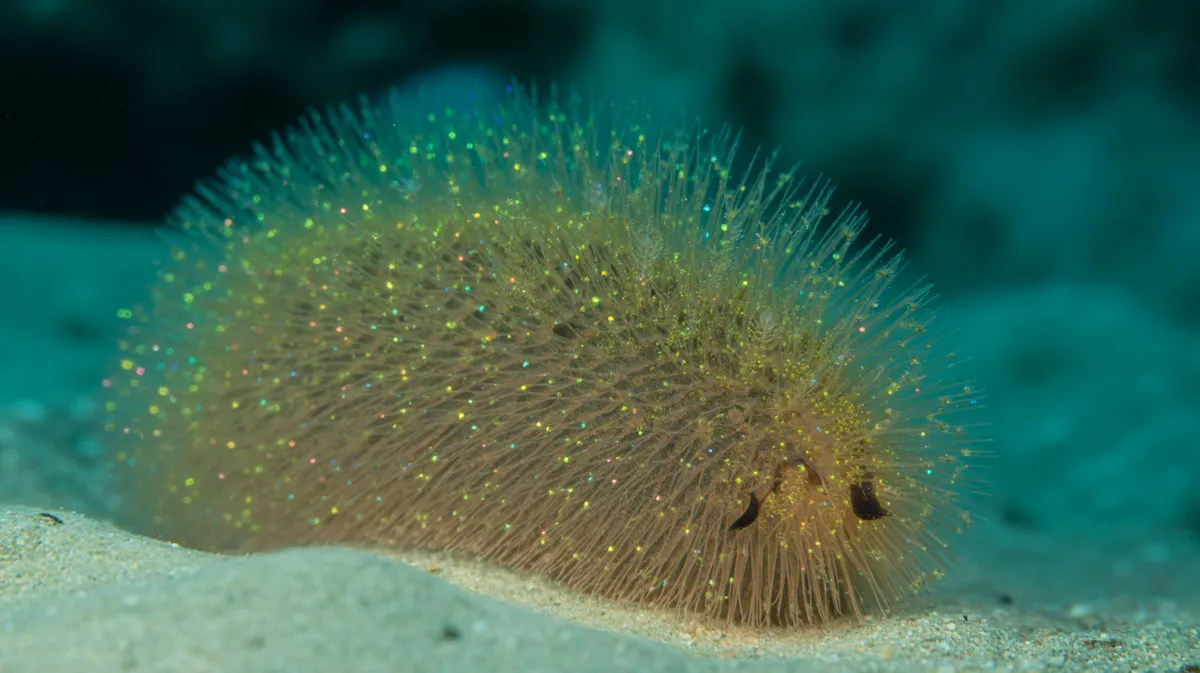
The sea mouse (Aphrodita aculeata) is not a mouse but a stout polychaete worm of North Atlantic and Mediterranean seabeds, usually 10 to 20 centimetres long, that spends most of its time buried head-down in mud. It is covered by a dense felt of grey bristles that resemble matted fur when it is washed up, hence the name; Linnaeus, less politely, named the genus after Aphrodite because he thought the buried animal resembled human genitalia. Its real distinction is optical. The stiff spines along its flanks are natural photonic crystals: each is a hollow cylinder whose wall is built from a precisely spaced hexagonal array of smaller cylinders, and this structure reflects light with extraordinary efficiency, throwing back deep red when viewed head-on and shifting through green and blue at other angles. A 2001 analysis in Nature found the bristles outperformed the man-made optical fibres of the time at some wavelengths, and they have since been studied as a template for photonic waveguides. The colour is entirely structural, produced by geometry rather than pigment, which is why it does not fade. The sea mouse is a carnivore that hunts other worms and small crustaceans, and it can swallow prey nearly as long as itself.
Fascinating facts
Iridescent Armor
The sea mouse's bristles reflect light in brilliant rainbow colors, a defense mechanism that warns predators and camouflages them on the ocean floor.
Polychaete Power
Sea mice belong to the polychaete class of worms, characterized by segmented bodies and bristles called setae used for movement and protection.
Scavenger & Predator
Sea mice feed on both dead animals and live prey, including other worms, making them important recyclers in marine ecosystems.
Detailed description
Aphrodita aculeata, commonly known as the sea mouse, is a strikingly unique polychaete annelid worm measuring typically between 7.5 and 20 cm in length, though individuals up to 30 cm have been recorded. Its body is dorsoventrally flattened and oval in shape, covered with a dense mat of iridescent setae (bristles) that can display vivid metallic hues ranging from green to red and blue when illuminated, an effect caused by microscopic photonic structures within the bristles. The ventral side is smoother and paler, housing the worm's mouth and parapodia used for locomotion. The sea mouse possesses a segmented body plan typical of annelids, with each segment bearing parapodia for crawling or burrowing into soft substrates. Internally, it has a closed circulatory system and a well-developed nervous system with a ventral nerve cord. The anterior end is not well differentiated and lacks prominent sensory appendages, but the worm is sensitive to vibrations and chemical cues in the water. Sea mice are solitary, benthic predators and scavengers, often found burrowing in sandy or muddy sediments at depths ranging from the intertidal zone down to 1,000 meters. Their coloration and bristle arrangement provide both camouflage and a warning display to potential predators. They play a significant ecological role as both predators of smaller invertebrates and as recyclers of organic detritus on the seafloor.
Did you know?
Despite their soft appearance, sea mice are voracious predators that can consume other polychaete worms nearly their own size.
Research & sources
Wikipedia summary
Aphrodita is a genus of marine polychaete worms found in the Mediterranean Sea and the Atlantic Ocean.
Behaviour & social structure
Sea mice are primarily nocturnal and solitary, spending most of their time buried just beneath the sediment surface. They use their parapodia and bristles to crawl slowly across or through the substrate. Their hunting behavior involves detecting prey—such as small mollusks, other polychaetes, and carrion—using chemosensory and mechanosensory cues. When a suitable food item is located, the sea mouse everts its muscular proboscis to grasp and ingest the prey. They are opportunistic feeders and may scavenge on dead animals as well as actively hunt live prey. Defensive behaviors include rapid burrowing and the erection of iridescent bristles, which may deter predators by making the worm appear larger or more threatening. Social interactions are minimal outside of breeding, as individuals are generally territorial and avoid close contact.
Reproduction & life cycle
Aphrodita aculeata exhibits separate sexes (dioecious) and external fertilization. Spawning typically occurs in late winter to early spring, though timing may vary with local conditions. During the breeding season, males and females release gametes into the water column, where fertilization occurs. The fertilized eggs develop into planktonic trochophore larvae, which drift with currents for several weeks before settling to the seabed and metamorphosing into juvenile worms. There is no parental care; survival of offspring depends on dispersal and suitable habitat availability. Fecundity is high, with females producing thousands of eggs per spawning event, a strategy that compensates for high larval mortality in the planktonic stage.
Adaptations & survival
The sea mouse is highly adapted to benthic life. Its dense, iridescent setae serve multiple functions: camouflage against the seabed, warning coloration to deter predators, and possibly even photonic signaling. The bristles are composed of chitin and arranged in overlapping layers, providing both protection and flexibility. The worm's muscular parapodia allow efficient burrowing and crawling in soft sediments. Chemosensory cells distributed along the body help detect prey and avoid predators. The iridescence is a result of nanostructured layers within the setae that manipulate light, a rare adaptation among annelids. Additionally, the sea mouse can rapidly contract its body to escape threats and can regenerate lost segments, a common trait among polychaetes.
Cultural significance
The sea mouse has intrigued naturalists and collectors since its discovery, primarily due to its unusual appearance and iridescent bristles. Its name derives from its superficial resemblance to a mouse, especially when observed crawling on the seabed. In classical mythology, the genus name Aphrodita references the Greek goddess Aphrodite, alluding to the animal's perceived beauty. While it has no major role in folklore or traditional medicine, its bristles have been studied for their unique optical properties, inspiring biomimetic research in materials science.
Recent research
Recent studies have focused on the photonic properties of the sea mouse's setae, revealing that their iridescence is due to a complex arrangement of chitin nanofibers, which manipulate light in ways similar to advanced optical fibers. This has implications for the development of new materials in photonics and bioengineering. Ongoing ecological research is examining the sea mouse's role in nutrient cycling and its responses to environmental stressors such as hypoxia and pollution. Molecular phylogenetic studies are refining the evolutionary relationships within the Aphroditidae family, providing insights into the diversification of polychaete worms.
Videos
Habitat
Ocean floor (continental shelf, sandy or muddy substrates)

Conservation
The Sea Mouse is currently classified as Least Concern on the IUCN Red List.
Threats & challenges
Currently, Aphrodita aculeata is not considered threatened and is listed as Least Concern. Its wide distribution and adaptability to various sediment types contribute to its stable population. However, localized threats include habitat disturbance from bottom trawling, dredging, and pollution, which can alter sediment composition and reduce prey availability. Climate change and ocean acidification may also pose long-term risks by affecting benthic ecosystems. The species is not targeted by fisheries, but incidental bycatch can occur. Monitoring of benthic habitats is important to ensure continued population health.
Taxonomy
Scientific name
Aphrodita aculeata
- Kingdom
- Animalia
- Phylum
- Annelida
- Class
- Polychaeta
- Order
- Phyllodocida
- Family
- Aphroditidae
- Genus
- Aphrodita
- Species
- aculeata
Community notes
Share your observations about the Sea Mouse.
No community notes yet. Be the first!
Discover more wildlife
More fascinating animals from the encyclopedia.