
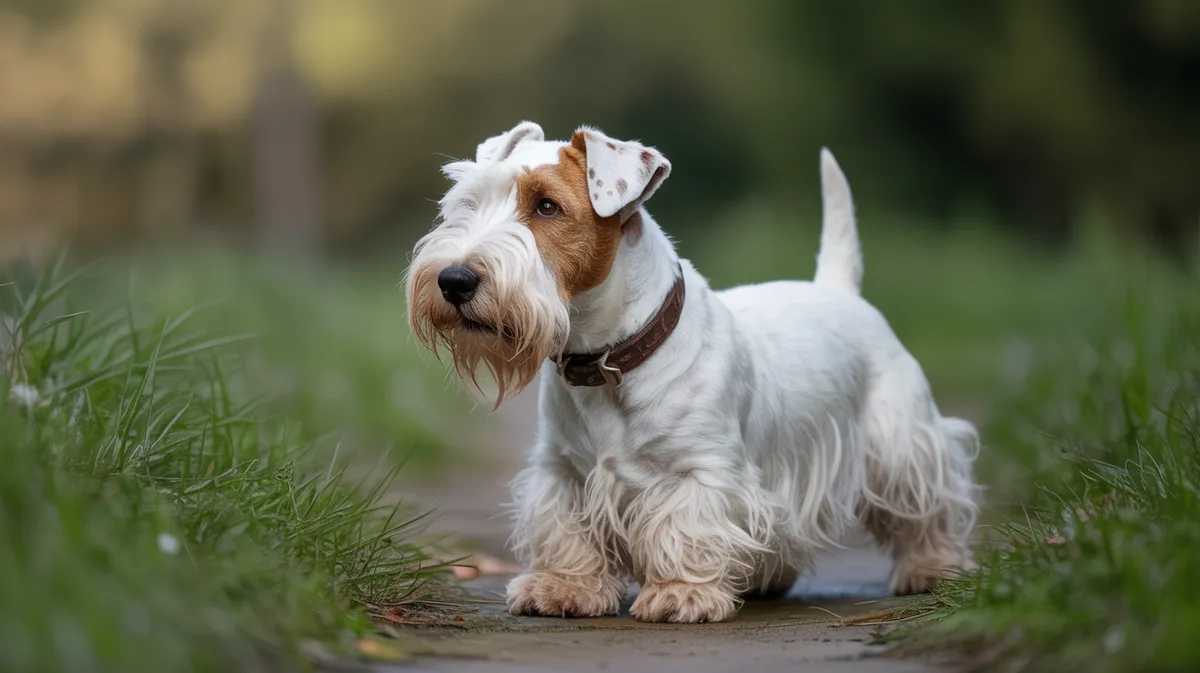
About the Sealyham Terrier
The Sealyham Terrier is a small, sturdy breed of terrier that originated in Wales in the mid-19th century. Known for its distinctive long, white double coat and bushy eyebrows, this dog was originally bred for hunting small game such as badgers, otters, and foxes. Sealyhams are spirited, affectionate, and independent, making them both excellent companions and effective working dogs. Though playful and loyal, they are also known for their alertness and courage, despite their compact size.
Fascinating facts
Welsh Origins
The breed was developed in Pembrokeshire, Wales, by Captain John Edwardes in the mid-1800s for use as a hunting dog.
Hollywood Favorite
Sealyham Terriers were once popular with celebrities such as Alfred Hitchcock and Cary Grant, even appearing in classic films.
Distinctive Appearance
They are easily recognized by their long white coats, beard, and expressive eyes, which require regular grooming to maintain.
Detailed description
The Sealyham Terrier is a compact, robust terrier breed, typically standing about 27–31 cm (10.5–12 inches) at the withers and weighing 8–9 kg (18–20 lbs), with males slightly heavier than females. The breed is characterized by a broad, slightly domed skull, strong jaws, and a pronounced stop, giving the head a distinctive rectangular appearance. Its double coat consists of a dense, weather-resistant undercoat and a harsh, wiry outer coat, predominantly white, sometimes with lemon, tan, or badger markings on the head and ears. The Sealyham's body is longer than it is tall, with a deep chest and well-sprung ribs, providing both agility and stamina for its original role as a working terrier. The breed's dark, oval eyes convey a keen, alert expression, while its bushy eyebrows and beard enhance its characteristic look. Sealyhams possess a strong, muscular neck and well-developed hindquarters, enabling them to pursue quarry underground. Their tail is typically docked in countries where this practice is permitted, carried upright and alert. Despite their small size, Sealyham Terriers are known for their strength, tenacity, and courageous temperament, traits that made them effective in hunting and bolting badgers, otters, and foxes from their dens.
Did you know?
Sealyham Terriers are now considered a rare breed, with fewer than 100 puppies registered annually in the UK in recent years.
Research & sources
Wikipedia summary
The Sealyham Terrier is a rare Welsh breed of small to medium-sized terrier that originated in Wales as a working dog. It is principally a white-bodied, rough-coated breed, developed in the mid-to-late-19th century by Captain John Edwardes at Sealyham House, Pembrokeshire.
Behaviour & social structure
Sealyham Terriers are intelligent, independent, and spirited, displaying a blend of playfulness and determination. Historically, they were bred to work alone or in small packs, which has contributed to their self-reliant nature. They are alert watchdogs, quick to sound the alarm at unfamiliar noises or strangers, yet are generally less yappy than some other terrier breeds. Sealyhams form strong bonds with their families and are known for their affectionate, loyal demeanor, often seeking close contact with their owners. Their hunting instincts remain strong; they may dig, chase small animals, or exhibit a pronounced prey drive. Daily routines typically include periods of energetic play interspersed with calm, restful intervals. Socially, Sealyhams can be reserved with unfamiliar dogs but are usually sociable with those they know, and they tend to get along well with children when properly socialized. Early training and consistent boundaries are important, as their independence can sometimes manifest as stubbornness.
Reproduction & life cycle
Sealyham Terriers are monoestrous, with females typically coming into heat twice a year. The average gestation period is approximately 63 days. Litter sizes generally range from 3 to 6 puppies, though larger litters are possible. Breeding is usually planned and supervised by responsible breeders to maintain genetic diversity and avoid hereditary health issues. Both parents may exhibit protective and attentive behaviors toward their offspring, but primary care is provided by the dam. Puppies are born blind and deaf, opening their eyes around 10–14 days after birth. Weaning begins at 3–4 weeks, and puppies are usually ready for adoption at 8–10 weeks. The breed does not have a defined breeding season, as domestic dogs can breed year-round, but most breeders time litters for favorable weather and optimal socialization opportunities.
Adaptations & survival
The Sealyham Terrier's physical adaptations reflect its origins as a working terrier for underground hunting. Its low, elongated body and strong, short legs allow it to enter and maneuver within burrows. The double coat provides insulation and protection from harsh weather and rough terrain. The wiry outer coat resists dirt and moisture, while the dense undercoat maintains body heat. The breed's powerful jaws and large teeth were essential for gripping and dispatching quarry. Its keen sense of smell and acute hearing aid in locating prey underground. Behaviorally, the Sealyham's independence, boldness, and problem-solving abilities are evolutionary specializations for solitary hunting. Their white coat was intentionally selected to make them easily visible to hunters during pursuits.
Cultural significance
The Sealyham Terrier has a notable place in British canine history, particularly among the Welsh gentry and sporting classes of the late 19th and early 20th centuries. It was a favored breed of celebrities and royalty, including Alfred Hitchcock and Princess Margaret, and has appeared in films and literature as a symbol of pluck and loyalty. The breed's association with Sealyham House in Pembrokeshire is a point of regional pride in Wales. While not prominent in mythology, the Sealyham's image as a courageous and steadfast companion has made it a beloved pet in select circles. Its rarity has also made it a subject of interest among canine preservationists and enthusiasts.
Recent research
Recent scientific studies on the Sealyham Terrier have focused on genetic diversity, hereditary health conditions, and breed conservation. DNA testing has identified loci associated with primary lens luxation and other inherited disorders, enabling breeders to make informed mating decisions. Population genetics research highlights the need for outcrossing and international cooperation to maintain genetic health. Behavioral studies have examined the breed's temperament, confirming its suitability as a companion animal with moderate exercise needs and adaptability to urban environments. Ongoing research by breed clubs and veterinary geneticists aims to map the full genome of the Sealyham Terrier to better understand its unique traits and health risks.
Videos
Habitat
Domestic
 Various Continental Regions
Grassland
Open areas dominated by grasses rather than trees, supporting numerous herbivores and their predators.
 Global
Forest
Wooded areas with significant tree cover and diverse plant and animal communities.
 Elevated Terrain
Mountain
High-altitude environments with varying climates and specialized wildlife adapted to rugged terrain and thin air.
Conservation
The Sealyham Terrier is currently classified as Least Concern on the IUCN Red List.
Threats & challenges
The Sealyham Terrier is currently classified as a rare breed, with global population numbers in decline. The primary threats are loss of genetic diversity due to a small breeding pool, popularity of other breeds, and lack of public awareness. In the UK, the breed is listed as 'Vulnerable Native Breed' by The Kennel Club, with annual registrations often below 100 puppies. Health challenges include a predisposition to certain hereditary conditions such as lens luxation, cataracts, and deafness, which are being addressed through responsible breeding and genetic testing. Human impact, particularly changes in rural land use and the decline in traditional hunting practices, has reduced the breed's working role, further contributing to its rarity. Conservation efforts focus on promoting the breed as a companion animal and preserving its unique genetic heritage.
Taxonomy
Scientific name
Canis lupus familiaris
- Kingdom
- Animalia
- Phylum
- Chordata
- Class
- Mammalia
- Order
- Carnivora
- Family
- Canidae
- Genus
- Canis
- Species
- lupus familiaris
Community notes
Share your observations about the Sealyham Terrier.
No community notes yet. Be the first!
Discover more wildlife
More fascinating animals from the encyclopedia.