
About the Sidewinder
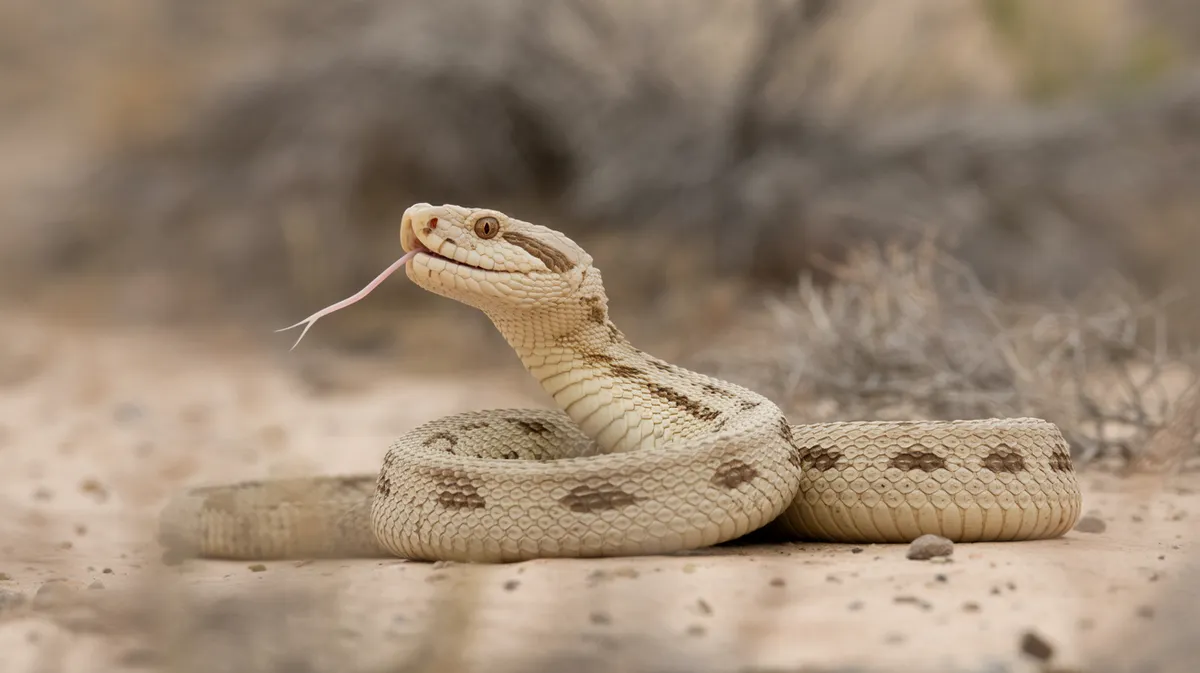
The sidewinder (Crotalus cerastes) is a small rattlesnake of the Mojave and Sonoran deserts, rarely exceeding 80 centimetres, and it moves in a way that is easy to admire and hard to explain. In sidewinding, only two short sections of the body touch the ground at any moment while the rest is lifted and thrown forward, so the snake travels diagonally and leaves a series of disconnected J-shaped tracks angled across its direction of travel. The advantage is twofold: the lifted body spends less time on scorching sand, and, more importantly, the static contact points do not slide, giving grip on loose dune faces where an ordinary slithering snake would simply shovel sand backwards. Work at Georgia Tech using a robot and sand-filled trackways showed the snake climbs slopes by increasing the length of body it lays down rather than pushing harder, which keeps the sand below the angle at which it avalanches, and this insight was fed straight back into snake robots. The pointed, upturned scales above each eye, the "horns" that give it the name cerastes, fold down over the eyes and shield them when the snake shuffles down into loose sand to ambush. It hunts lizards and kangaroo rats, often burying itself with only the eyes and nostrils showing, and its venom is comparatively mild for a rattlesnake.
Fascinating facts
Unique Locomotion
Sidewinders move using a sideways, looping motion that allows them to travel efficiently across hot, loose desert sand without overheating.
Desert Specialist
This snake is highly adapted to desert life, able to withstand extreme temperatures and scarce water by being nocturnal in the hottest months.
Horned Eyes
The sidewinder's distinctive 'horns' above its eyes help reduce glare and protect its vision from blowing sand.
Detailed description
The sidewinder (Crotalus cerastes) is a small to medium-sized rattlesnake, typically measuring 45–80 cm (18–31 in) in length, with females generally smaller than males. Its most distinctive anatomical feature is the presence of supraocular 'horns'—enlarged scales above each eye—which are thought to protect the eyes from sand and intense sunlight. The body is stout, with a triangular head and a tail tipped with a small rattle. Coloration varies from pale tan to gray or pinkish, closely matching the sandy substrates of its desert habitat for effective camouflage. The dorsal surface is marked by a series of darker blotches, aiding in disruptive coloration. Sidewinders possess heat-sensitive loreal pits between the eyes and nostrils, enabling them to detect warm-blooded prey even in total darkness. Their scales are keeled, providing traction on loose sand. The species is primarily nocturnal during the hot summer months but may be crepuscular or diurnal in cooler periods. Sidewinders are solitary outside of the breeding season, and their unique sidewinding locomotion allows efficient movement across unstable, hot desert sands while minimizing body contact with the substrate, reducing heat gain and risk of burns.
Did you know?
Unlike most rattlesnakes, sidewinders lay eggs that hatch inside the female's body, giving birth to live young in a process called ovoviviparity.
Research & sources
Behaviour & social structure
Sidewinders are ambush predators, spending much of the day partially buried in sand near rodent burrows or under sparse vegetation, waiting for prey to approach. They primarily feed on small mammals such as kangaroo rats (Dipodomys spp.), lizards, and occasionally birds. Juveniles often specialize in lizard prey, while adults consume more mammals. Hunting is facilitated by their heat-sensing pits and cryptic coloration. They strike rapidly, injecting hemotoxic venom to immobilize prey, then track and swallow it whole. Sidewinders are generally non-aggressive and rely on camouflage and rapid escape rather than confrontation. They exhibit seasonal activity patterns, being most active in spring and fall, and may enter brief periods of torpor during extreme heat or cold. Social interactions are minimal, except during the mating season or when multiple individuals den in the same location during winter.
Reproduction & life cycle
Sidewinders are ovoviviparous, meaning females retain eggs internally and give birth to live young. Mating occurs in late spring (April–May), with males engaging in combat dances to compete for females. After a gestation period of approximately 2–3 months, females give birth to 5–18 neonates, typically in late summer (July–August). Newborns measure about 15–20 cm (6–8 in) and are fully independent at birth, receiving no parental care. Females may breed annually or biennially, depending on food availability and environmental conditions. Neonates are born with functional venom and are capable of hunting small lizards and insects immediately.
Adaptations & survival
The sidewinder's most notable adaptation is its sidewinding locomotion, a specialized form of movement that minimizes contact with hot sand and allows rapid, energy-efficient travel across loose substrates. The supraocular 'horns' protect the eyes from abrasive sand and intense sunlight. Their cryptic coloration provides effective camouflage against predators and prey. Heat-sensitive loreal pits enable precise detection of endothermic prey, even at night. The ability to burrow and partially bury themselves aids in thermoregulation and predator avoidance. Their venom is adapted to quickly immobilize small, fast-moving prey typical of arid environments.
Cultural significance
The sidewinder has long captured the imagination of desert-dwelling peoples and naturalists. Its unique movement has been referenced in Native American folklore and is often used as a symbol of agility and adaptability. The term 'sidewinder' has entered popular language to describe anything that moves in a zigzag or indirect fashion. The species is sometimes featured in regional art and storytelling, and its name has been adopted for military hardware (e.g., the AIM-9 Sidewinder missile) due to its swift, unpredictable movement.
Recent research
Recent studies have focused on the biomechanics of sidewinding locomotion, revealing how the snake's body lifts and moves in discrete segments to optimize movement across granular surfaces. Research on venom composition has identified unique proteins adapted for rapid immobilization of desert prey. Genetic studies are exploring population structure and adaptation to different desert microhabitats. Conservation research is monitoring the effects of habitat fragmentation and climate change on distribution and reproductive success. Ongoing telemetry studies are providing new insights into home range, seasonal movement patterns, and den site fidelity.
Videos
Habitat
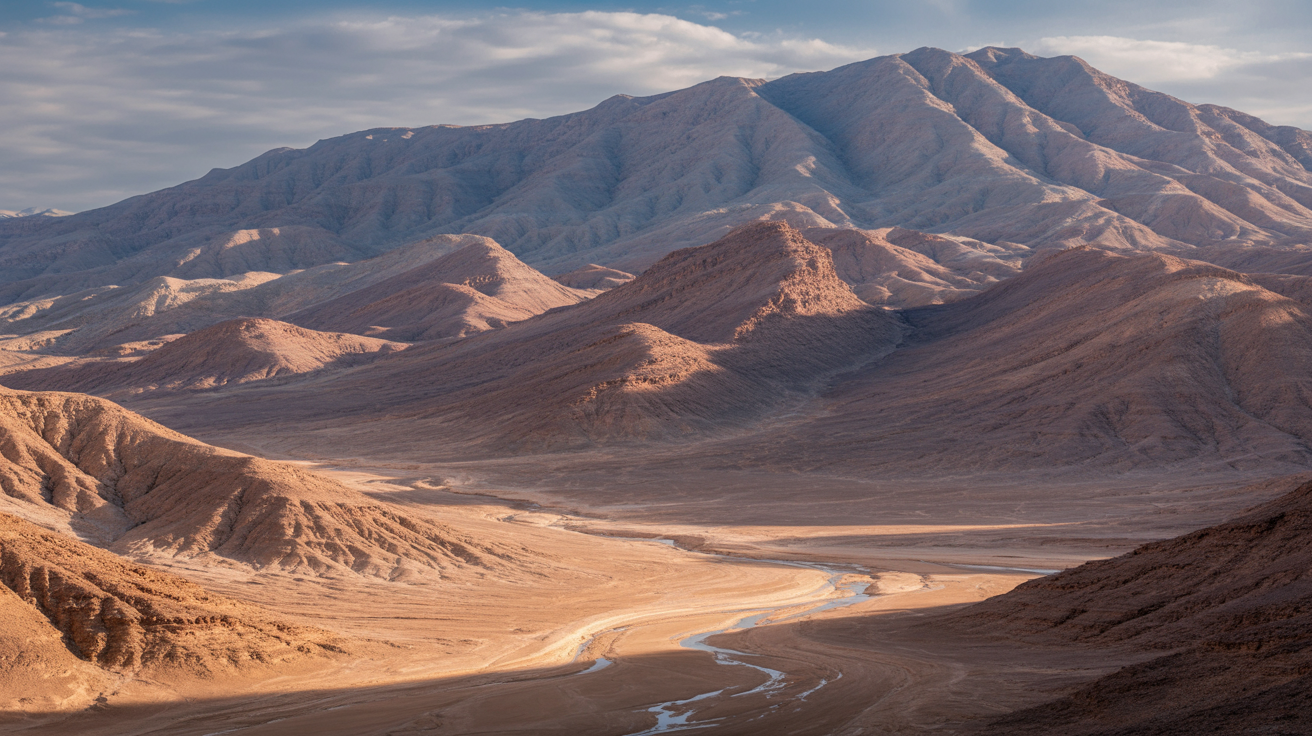
Desert
Conservation
The Sidewinder is currently classified as Least Concern on the IUCN Red List.
Threats & challenges
Currently classified as Least Concern by the IUCN, sidewinders face localized threats from habitat loss due to urbanization, off-road vehicle activity, and climate change, which may alter desert ecosystems. Road mortality and illegal collection for the pet trade also pose risks in some areas. However, their wide distribution and adaptability to harsh environments have helped maintain stable populations. Ongoing monitoring is needed to assess the impacts of increasing human encroachment and changing climate patterns.
Taxonomy
Scientific name
Crotalus cerastes
- Kingdom
- Animalia
- Phylum
- Chordata
- Class
- Reptilia
- Order
- Squamata
- Family
- Viperidae
- Genus
- Crotalus
- Species
- cerastes
Where to see a sidewinder
2 zoos and aquariums in 1 country are recorded as keeping this species.

Community notes
Share your observations about the Sidewinder.
No community notes yet. Be the first!
Discover more wildlife
More fascinating animals from the encyclopedia.