
About the Sunflower Sea Star
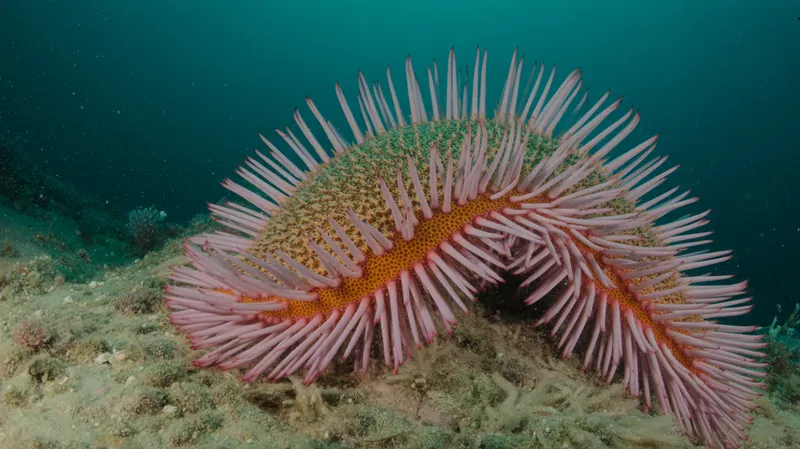
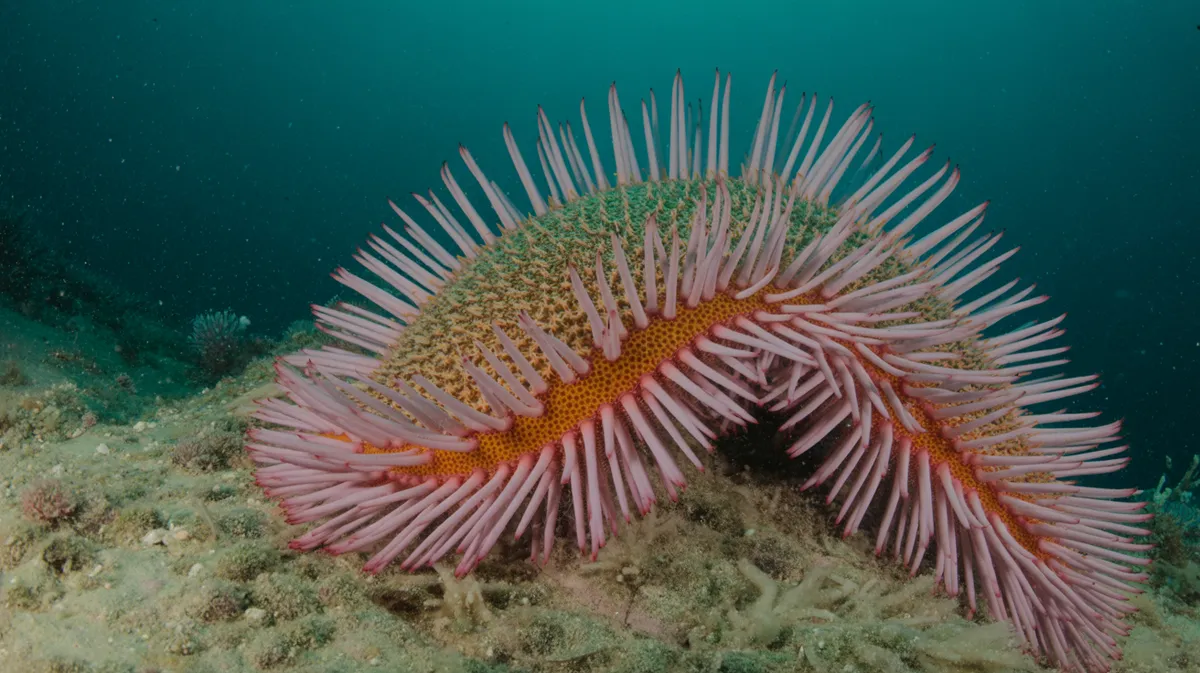
The sunflower sea star (Pycnopodia helianthoides) is one of the largest sea stars in the world, spanning up to a metre across, and one of the fastest, moving over a metre a minute on as many as 15,000 tube feet. It is not born with its full complement of arms: juveniles start with five and add more as they grow, ending with up to 24. It is a voracious predator of sea urchins, and along the northeast Pacific coast it was the main thing keeping purple urchin numbers in check. From 2013, sea star wasting disease swept the coast from Alaska to Mexico, causing the animals to develop lesions, twist their arms off and dissolve within days. The sunflower star was hit harder than any other species: an estimated five billion animals died, more than 90 per cent of the global population, and it vanished entirely from the southern half of its range. The consequences were immediate. Freed from predation, purple urchins exploded, mowed down bull kelp, and turned vast stretches of northern California reef into urchin barrens; roughly 95 per cent of the bull kelp forest north of San Francisco was lost. Pycnopodia was listed as Critically Endangered in 2020, and captive breeding programmes, notably at the University of Washington's Friday Harbor Laboratories, are now raising animals for eventual reintroduction.
Fascinating facts
Ocean Sprinter
Unlike most sea stars, the Sunflower Sea Star is remarkably fast, gliding across the ocean floor at up to one meter per minute.
Arm Regenerator
If a Sunflower Sea Star loses an arm to a predator, it has the ability to regenerate it, sometimes growing several new arms simultaneously.
Disease Threat
Populations have been devastated by sea star wasting syndrome—a mysterious disease that causes rapid tissue decay and has led to dramatic declines.
Detailed description
The Sunflower Sea Star (Pycnopodia helianthoides) is the largest sea star species in the world, with adults reaching arm spans of up to 1 meter (about 3.3 feet) and weighing as much as 5 kg (11 lbs). Characterized by their soft, flexible bodies and an extraordinary number of arms—typically 16 to 24—these sea stars are covered in a dense carpet of tube feet, numbering up to 15,000, which enable rapid locomotion and dexterous manipulation of prey. Their coloration is highly variable, ranging from vivid oranges and purples to reds, yellows, and browns, often with mottled patterns that provide camouflage among kelp and rocky substrates. The central disc is relatively small compared to the long, tapering arms, which are highly regenerative and capable of regrowth if lost to predation or injury. Sunflower sea stars possess a water vascular system that powers their tube feet, allowing them to move at speeds up to 1 meter per minute—exceptionally fast for echinoderms. They are voracious predators and play a key ecological role in regulating populations of benthic invertebrates, particularly sea urchins, which in turn helps maintain the health of kelp forest ecosystems. Their body structure lacks a rigid skeleton, making them more vulnerable to desiccation and predation in intertidal zones, so they are most commonly found in subtidal habitats down to depths of 435 meters (1,427 feet). Sunflower sea stars are solitary for most of the year, but may aggregate in areas of high prey density. Their unique combination of size, speed, and predatory efficiency distinguishes them within the class Asteroidea.
Did you know?
The Sunflower Sea Star can have up to 24 arms, making it one of the sea stars with the most appendages in the world.
Research & sources
Behaviour & social structure
Sunflower sea stars are primarily solitary and exhibit crepuscular or nocturnal activity patterns, although they may be active during the day in deeper waters. They are highly mobile, using coordinated waves of tube feet to glide rapidly over the substrate in search of food. Their hunting strategy involves both active pursuit and ambush; they use chemosensory cues to detect prey such as sea urchins, bivalves, gastropods, and even other echinoderms. Upon encountering prey, they extend their flexible arms to envelop and manipulate it, everting their stomachs through their mouths to externally digest soft tissues. They are known to exert considerable force to pry open the shells of bivalves. Sunflower sea stars rarely interact socially except during periods of high food availability, when multiple individuals may converge on a food source. When threatened, they can autotomize (shed) arms as a defense mechanism and rapidly retreat. They are sensitive to environmental changes, often moving to deeper waters in response to temperature fluctuations or low oxygen conditions.
Reproduction & life cycle
Pycnopodia helianthoides is gonochoric, with separate male and female individuals. Spawning occurs annually, typically from late winter to early summer, with timing varying by latitude and local conditions. Fertilization is external; both sexes release gametes into the water column, where fertilization occurs. Females can produce millions of eggs per spawning event. The resulting planktonic larvae, called bipinnaria, drift with ocean currents for several weeks, undergoing multiple developmental stages before settling to the benthos and metamorphosing into juvenile sea stars. There is no parental care post-spawning. Sexual maturity is reached at approximately 3 to 5 years of age, depending on environmental conditions. Recruitment success is highly variable and influenced by predation, food availability, and oceanographic factors.
Adaptations & survival
Sunflower sea stars possess several notable adaptations: their extensive array of tube feet, equipped with suction capabilities, provides exceptional mobility and grip on varied substrates. Their soft, flexible bodies allow them to squeeze into crevices to pursue prey or avoid predators. The ability to autotomize arms enables escape from predation, with lost limbs regenerating over several months. Their keen chemosensory abilities allow them to detect prey and conspecifics at a distance. The water vascular system not only powers locomotion but also facilitates respiration and waste removal. Their rapid movement is an evolutionary specialization among sea stars, allowing them to outcompete slower echinoderms for food. Color polymorphism provides camouflage and may deter predators through aposematic signaling.
Cultural significance
While not traditionally harvested for food or materials, the sunflower sea star holds ecological and educational significance. It is a popular subject in public aquaria and marine education programs, symbolizing the complexity and vulnerability of coastal ecosystems. Its dramatic decline has made it an emblematic species in discussions of marine disease, climate change, and conservation. In some Indigenous coastal cultures, sea stars in general are featured in stories and art, though Pycnopodia helianthoides is not specifically singled out in mythology or traditional use.
Recent research
Recent research has focused on the etiology and epidemiology of sea star wasting syndrome, with genomic studies confirming the association with SSaDV but also highlighting the role of environmental stressors in disease outbreaks. Ongoing studies are investigating the potential for population recovery, genetic diversity among remnant populations, and the feasibility of captive breeding and reintroduction. Ecological research underscores the keystone role of sunflower sea stars in controlling sea urchin populations, with their decline linked to urchin population explosions and subsequent kelp forest collapse (urchin barrens). Experimental restoration projects are underway, including captive rearing and disease resistance screening. Advances in non-invasive monitoring, such as environmental DNA (eDNA) sampling, are improving detection of rare individuals in the wild.
Sources
Pycnopodia helianthoides: A Review of Its Biology and the Impacts of Sea Star Wasting Disease
Schiebelhut, L. M., et al. (2022)
scientificPycnopodia helianthoides: The IUCN Red List of Threatened Species 2020
International Union for Conservation of Nature (IUCN)
conservationThe collapse of a keystone predator: Multidecadal impacts of disease on the sunflower sea star (Pycnopodia helianthoides)
Sara M. Hamilton et al. (2021)
scientificPycnopodia helianthoides: IUCN Red List of Threatened Species
International Union for Conservation of Nature (IUCN)
conservationVideos
Habitat
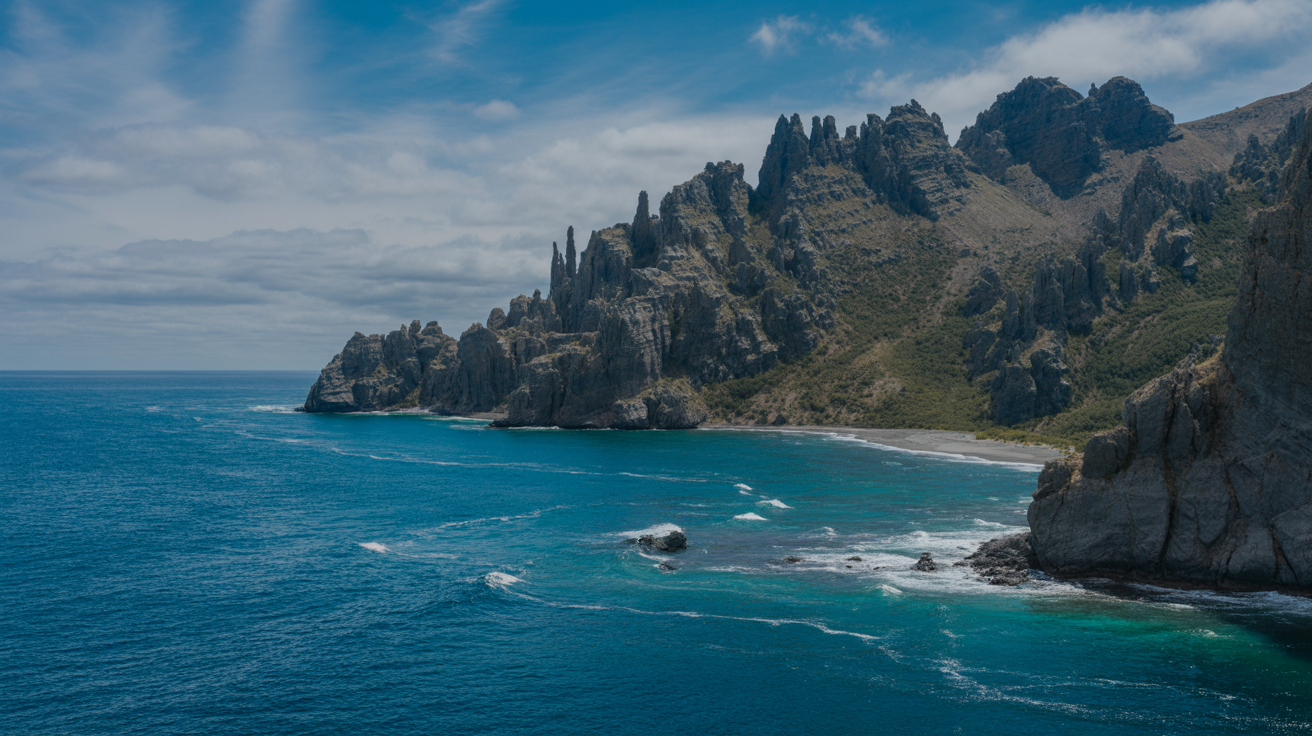
Coastal ocean, rocky bottoms, and kelp forests
Conservation
The Sunflower Sea Star is currently classified as Critically Endangered on the IUCN Red List.
Threats & challenges
The most significant threat to Pycnopodia helianthoides is sea star wasting syndrome (SSWS), a disease outbreak first noted in 2013 that has caused catastrophic population declines—over 90% in many regions along the Pacific coast. The disease, associated with a densovirus (Sea Star-associated Densovirus, SSaDV), leads to rapid tissue decay, limb loss, and death. Additional threats include ocean warming, hypoxia, pollution, and habitat degradation, all of which may exacerbate disease severity and reduce recovery potential. Overharvesting of prey species and changes in kelp forest dynamics, often driven by climate change and human activity, indirectly affect sunflower sea star populations. As of 2020, the IUCN Red List classifies the species as Critically Endangered, with little evidence of natural recovery in most areas. Conservation challenges include the lack of effective disease management, limited captive breeding success, and the need for large-scale habitat protection.
Taxonomy
Scientific name
Pycnopodia helianthoides
- Kingdom
- Animalia
- Phylum
- Echinodermata
- Class
- Asteroidea
- Order
- Forcipulatida
- Family
- Asteriidae
- Genus
- Pycnopodia
- Species
- helianthoides
Where to see a sunflower sea star
2 zoos and aquariums in 1 country are recorded as keeping this species.


Community notes
Share your observations about the Sunflower Sea Star.
No community notes yet. Be the first!
Discover more wildlife
More fascinating animals from the encyclopedia.