
About the Venezuelan Glass Frog
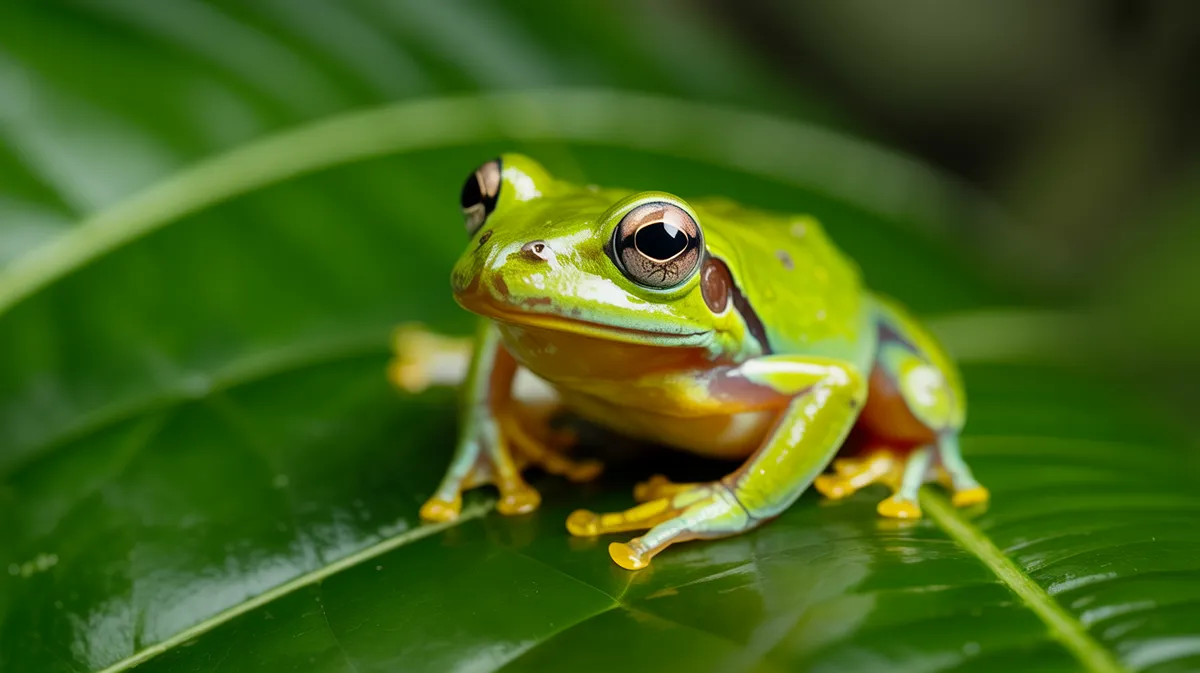
The Venezuelan Glass Frog is a small, translucent amphibian native to the subtropical and tropical moist lowland forests of Venezuela. Its most distinctive feature is its nearly transparent skin on the underside, allowing a clear view of internal organs including the heart and digestive tract. This frog is predominantly nocturnal and spends much of its time perched on vegetation near fast-flowing streams, where it breeds and lays eggs on leaves overhanging the water. The species is elusive and sensitive to habitat disturbance, making it of particular interest to conservationists and researchers.
Fascinating facts
Transparent Skin
The Venezuelan Glass Frog's belly skin is so clear you can see its heart beating and other internal organs, a trait that helps it blend into its leafy surroundings.
Unusual Parenting
Unlike most frogs, males of this species stay with the eggs, keeping them moist and protecting them from predators until they hatch.
Streamside Dwellers
These frogs are found exclusively along fast-moving streams in undisturbed rainforests, relying on pristine aquatic habitats for reproduction.
Detailed description
The Venezuelan Glass Frog (Vitreorana helenae, formerly known as Hyalinobatrachium pallidum in some sources) is a small, delicate amphibian, typically measuring between 20–26 mm in snout–vent length. Its most remarkable feature is its translucent ventral skin, which reveals internal organs such as the heart, liver, and gastrointestinal tract, a trait characteristic of the Centrolenidae family. The dorsal surface is a pale green, often speckled with tiny yellow or white spots, providing camouflage among mosses and leaves. The limbs are slender and equipped with extensive webbing, aiding in both climbing and swimming. The species has large, forward-facing eyes with horizontal pupils, an adaptation for nocturnal activity. The tympanum (external eardrum) is usually visible, and the digits bear adhesive pads for gripping smooth vegetation. These frogs are primarily arboreal, spending most of their lives in the understory and lower canopy near clear, fast-flowing streams. Their skin contains specialized guanine crystals, which enhance transparency and may play a role in thermoregulation and predator avoidance. The species is highly sensitive to environmental changes, with a preference for pristine, undisturbed habitats. Its elusive nature and cryptic coloration make field observations challenging, contributing to gaps in knowledge about its full distribution and population status.
Did you know?
Despite their delicate appearance, glass frogs are highly adapted to climbing and can even cling to smooth wet leaves with ease.
Research & sources
Wikipedia summary
Vitreorana helenae is a species of frog in the family Centrolenidae. Two common names are sometimes used to refer to this species: Venezuelan glass frog and Helena's glass frog. In Spanish, it is locally known as ranita de cristal de Helena.
Behaviour & social structure
Venezuelan Glass Frogs are strictly nocturnal, emerging at dusk to forage and engage in reproductive activities. They are sit-and-wait predators, feeding primarily on small arthropods such as ants, spiders, and flies, which they capture with rapid tongue flicks. Individuals are generally solitary outside the breeding season, exhibiting minimal social interaction except during mating. Males establish small territories on leaves overhanging streams, where they call to attract females using high-pitched, pulsed vocalizations. These calls are species-specific and play a crucial role in mate recognition and territory defense. During the day, frogs remain motionless on the underside of leaves, relying on their transparency and stillness to avoid detection by predators such as birds, snakes, and larger amphibians. They are highly sensitive to vibrations and disturbances, quickly retreating into dense foliage if threatened.
Reproduction & life cycle
Breeding occurs during the rainy season, typically from May to September, when stream levels are high and humidity is optimal. Males call from the undersides of leaves overhanging water, and successful courtship leads to amplexus (the male grasping the female from behind). Females lay clutches of 20–40 gelatinous eggs on the lower surfaces of leaves. After oviposition, males often remain nearby to guard the eggs against predators and desiccation, a form of parental care observed in many glass frogs. Embryonic development lasts 10–14 days, after which the tadpoles drop into the stream below, where they continue development in the aquatic environment. Tadpoles are adapted to fast-flowing waters, with streamlined bodies and muscular tails for maintaining position and avoiding being swept away.
Adaptations & survival
The most notable adaptation is the ventral transparency, which serves as camouflage by allowing background colors to show through, reducing visibility to predators from below. The dorsal coloration mimics the green hues of moss and leaves, further enhancing concealment. Adhesive toe pads and extensive webbing facilitate climbing and stability on wet, slippery vegetation. The species' nocturnal habits reduce predation risk and competition for food. Eggs are laid on leaves above streams, minimizing aquatic predation and ensuring immediate access to water for hatching tadpoles. Males' vocalizations are adapted for transmission in dense, humid forest environments, and parental egg-guarding increases offspring survival.
Cultural significance
While not widely featured in folklore, the Venezuelan Glass Frog is locally known as 'ranita de cristal de Helena,' and its unique appearance has made it a symbol of the rich biodiversity of Venezuelan cloud forests. It is occasionally referenced in environmental education and ecotourism materials to highlight the importance of amphibian conservation and the fragility of tropical ecosystems. There are no known traditional uses, but its striking transparency has inspired fascination and scientific curiosity.
Recent research
Recent studies have focused on the ecological requirements and reproductive behaviors of Vitreorana helenae, including the role of male parental care in egg survival. Molecular phylogenetic analyses have clarified its taxonomic placement within Centrolenidae, resolving confusion with related genera such as Hyalinobatrachium and Cochranella. Ongoing research is investigating the physiological mechanisms underlying skin transparency and the potential impacts of environmental contaminants on embryonic development. Conservation genetics projects are underway to assess population structure and connectivity, which are critical for effective management. The species' sensitivity to environmental change makes it a valuable bioindicator for monitoring ecosystem health.
Videos
Habitat
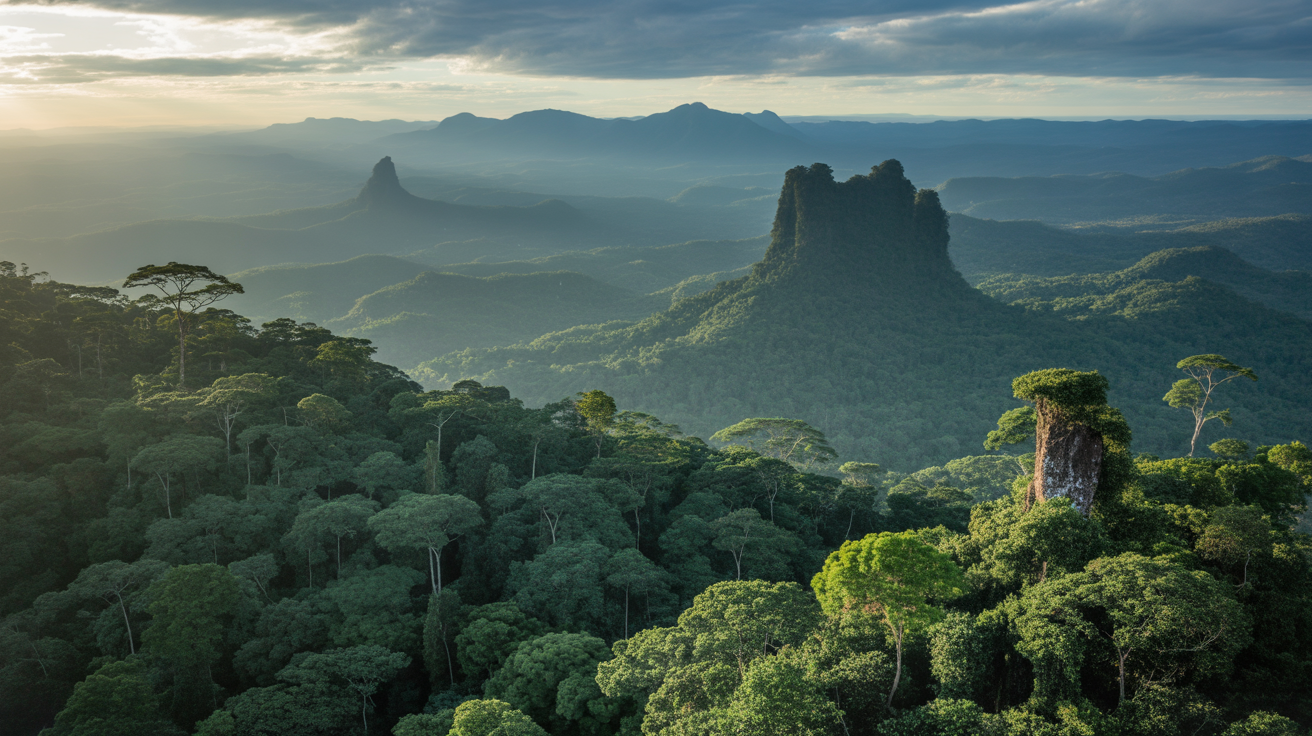
Tropical lowland rainforest near streams
 Tropical Regions
Rainforest
Dense, wet forests with the highest biodiversity on Earth, containing more than half of the world's plant and animal species.
 Global
Forest
Wooded areas with significant tree cover and diverse plant and animal communities.
 Global
Freshwater
Lakes, rivers, and wetlands with diverse aquatic ecosystems.
Conservation
The Venezuelan Glass Frog is currently classified as Near Threatened on the IUCN Red List.
Threats & challenges
Major threats include habitat loss due to deforestation, agricultural expansion, and infrastructure development, which fragment and degrade the pristine streamside habitats required for breeding. Water pollution from pesticides and mining activities poses additional risks to both adults and developing tadpoles. Climate change may alter rainfall patterns, affecting breeding success and stream flow. The species is also vulnerable to chytridiomycosis, a fungal disease devastating to many amphibian populations. Population trends are poorly understood due to the frog's secretive nature, but declines have been noted in some localities, leading to its classification as Vulnerable by the IUCN.
Taxonomy
Scientific name
Hyalinobatrachium pallidum
- Kingdom
- Animalia
- Phylum
- Chordata
- Class
- Amphibia
- Order
- Anura
- Family
- Centrolenidae
- Genus
- Hyalinobatrachium
- Species
- pallidum
Community notes
Share your observations about the Venezuelan Glass Frog.
No community notes yet. Be the first!
Discover more wildlife
More fascinating animals from the encyclopedia.