
About the Waxy Monkey Tree Frog
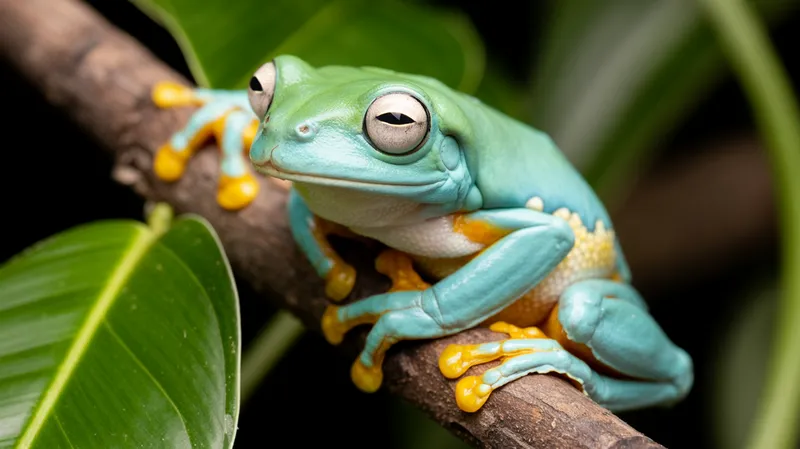
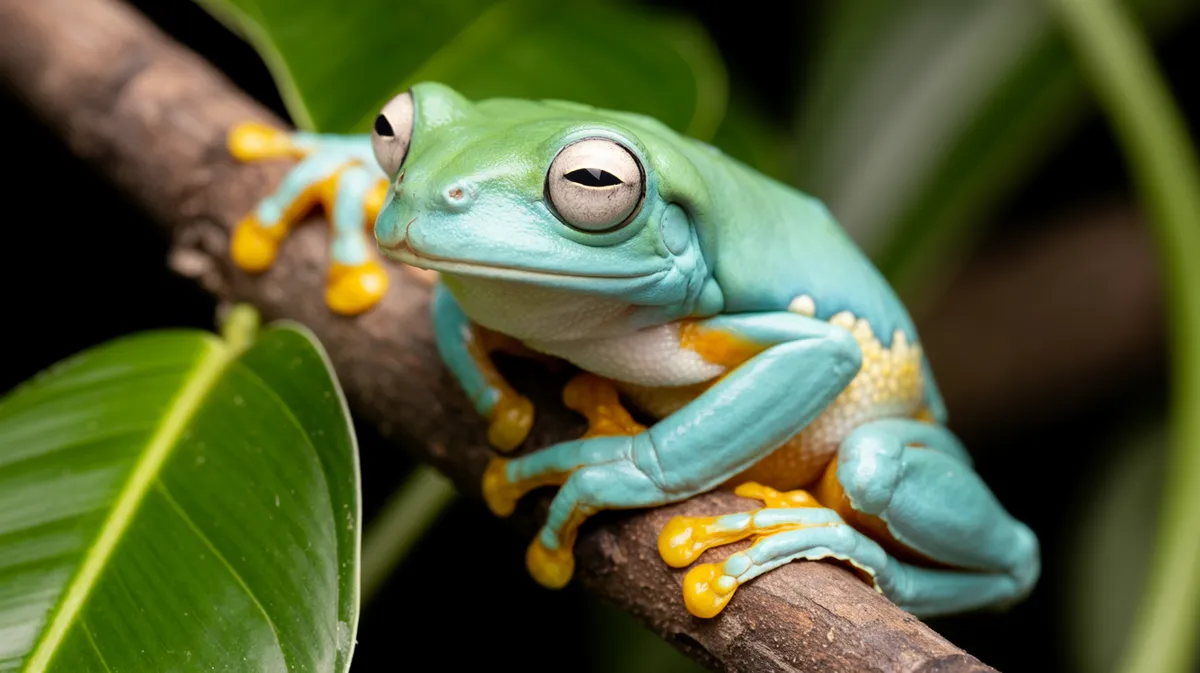
The waxy monkey tree frog (Phyllomedusa sauvagii) lives in the dry Gran Chaco of South America, a place where an ordinary frog would desiccate within hours, and it survives by waterproofing itself. Glands in its skin secrete a lipid wax, and the frog wipes this over its entire body in a stereotyped routine lasting a couple of minutes: forelegs over the head and back, hind legs up over the flanks and belly, until every surface is coated. The effect is dramatic, cutting evaporative water loss to something close to a reptile's, and it allows the frog to sit out in full sun on an exposed branch, which almost no other frog can do. It goes further: instead of excreting nitrogen as urea, as frogs normally do, it excretes uric acid as a paste, the way reptiles and birds do, which costs almost no water at all. Its name comes from its slow, deliberate hand-over-hand walking gait; it rarely hops, and it grips branches with opposable digits. Its skin is also a pharmacy. Dermorphin, an opioid peptide isolated from this species, is roughly a thousand times more potent than morphine by weight, and it has turned up as a doping agent in racehorses, along with the related deltorphins, which have driven a great deal of research into opioid receptor biology.
Fascinating facts
Waxy Skin
They secrete a waxy substance from their skin, which they spread with their legs to help prevent water loss in dry conditions.
Arboreal Adaptation
Their opposable thumbs and strong grip allow them to climb and maneuver through trees with ease.
Unique Egg-Laying
They lay their eggs on leaves above water; once hatched, tadpoles drop into the water below to begin their aquatic life stage.
Detailed description
The Waxy Monkey Tree Frog (Phyllomedusa sauvagii) is a medium-sized arboreal amphibian, typically reaching 6–8 cm in length, with females generally larger than males. Its robust body is covered in smooth, waxy green skin, which can appear bluish or grayish depending on environmental conditions and individual variation. The skin's waxy coating is produced by specialized cutaneous glands and is spread over the body using the frog’s hind legs in a unique grooming behavior, significantly reducing water loss in its arid habitat. The frog’s head is broad with prominent, forward-facing golden eyes that provide excellent binocular vision for nocturnal hunting. Its limbs are strong and muscular, with opposable thumbs and adhesive toe pads that facilitate precise, slow climbing among branches, resembling the movement of primates—hence the common name. Unlike many frogs, P. sauvagii is primarily terrestrial and arboreal, rarely entering water except during breeding. The species exhibits a sedentary lifestyle, often remaining motionless for extended periods to conserve energy and avoid predation. Its coloration provides effective camouflage among leaves and branches. Socially, these frogs are mostly solitary outside of the breeding season, though they may aggregate loosely in suitable microhabitats. Their unique reproductive strategy involves laying eggs in folded leaves above water, a behavior that minimizes predation risk for eggs and allows the tadpoles to drop into water upon hatching.
Did you know?
Unlike most frogs, Waxy Monkey Tree Frogs are resistant to dehydration and can thrive in relatively arid environments.
Research & sources
Behaviour & social structure
Waxy Monkey Tree Frogs are predominantly nocturnal, becoming active at dusk when humidity rises. They exhibit slow, deliberate movements, often pausing for long periods to ambush prey. Their diet consists mainly of insects such as crickets, moths, and beetles, but they may also consume other small arthropods. Hunting is typically sit-and-wait, relying on their camouflage and quick tongue strikes to capture prey. Social interactions are minimal outside the breeding season, with individuals maintaining separate territories. During the day, they seek shelter in shaded, humid microhabitats, often in dense foliage. They are known for their distinctive grooming behavior, in which they use their hind legs to spread secreted wax over their bodies, a behavior triggered by dry conditions or exposure to sunlight.
Reproduction & life cycle
Breeding in Phyllomedusa sauvagii is closely tied to seasonal rainfall, typically occurring during the wet season (November to March in their native range). Males establish calling sites in vegetation above temporary pools and emit low, guttural calls to attract females. Amplexus is axillary, with the male clasping the female behind her forelimbs. Females lay clutches of 100–300 eggs, which are deposited in folded leaves overhanging water; both sexes may participate in folding and sealing the leaf with jelly secretions. The eggs develop for 8–14 days, depending on temperature and humidity. Upon hatching, tadpoles drop into the water below, where they complete metamorphosis over 6–8 weeks. There is no parental care after egg deposition.
Adaptations & survival
Phyllomedusa sauvagii exhibits several remarkable adaptations for survival in xeric environments. The most notable is its ability to secrete a lipid-rich wax from cutaneous glands, which it spreads over its skin to minimize evaporative water loss—an adaptation rare among amphibians. Its slow, deliberate movements reduce metabolic water loss and make it less conspicuous to predators. The frog’s opposable thumbs and adhesive toe pads are specialized for climbing and grasping, allowing it to exploit arboreal niches. Its reproductive strategy of laying eggs above water reduces aquatic predation on eggs and synchronizes tadpole development with temporary water availability. Additionally, the species can tolerate significant fluctuations in body temperature and dehydration, entering a state of torpor during extreme dryness.
Cultural significance
While not prominent in indigenous folklore, Phyllomedusa sauvagii and related species have attracted scientific and medical interest due to their unique skin secretions, which contain bioactive peptides with potential pharmacological applications. These peptides have been studied for their antimicrobial, analgesic, and immunomodulatory properties. The species is also popular in the exotic pet trade, valued for its unusual appearance and behaviors, though this has led to concerns about unsustainable collection in some areas.
Recent research
Recent research on Phyllomedusa sauvagii has focused on the chemical composition of its skin secretions, leading to the discovery of novel peptides such as dermaseptins and phylloseptins with potent antimicrobial activity. Studies have also explored the frog’s physiological adaptations to arid environments, including its ability to regulate water loss and tolerate dehydration. Ongoing research is investigating the genetic basis of these adaptations and the potential impacts of environmental change on its reproductive ecology. Conservation genetics studies are being used to monitor population structure and assess the effects of habitat fragmentation.
Sources
The Biology of Phyllomedusa sauvagii: Adaptations to Arid Environments
C. Jared, D.C. Blackburn, et al. (2019)
scientificPhyllomedusa sauvagii: The IUCN Red List of Threatened Species 2020
IUCN SSC Amphibian Specialist Group
conservationThe Amphibian Tree of Life: Phylogeny and Classification of Phyllomedusidae
Faivovich, J. et al. (2010)
scientificVideos
Habitat
Dry forests and scrublands

Conservation
The Waxy Monkey Tree Frog is currently classified as Least Concern on the IUCN Red List.
Threats & challenges
Currently classified as Least Concern by the IUCN, the Waxy Monkey Tree Frog faces localized threats from habitat loss due to agricultural expansion, deforestation, and collection for the pet trade. Although populations remain stable across much of their range, overharvesting and habitat fragmentation could pose future risks. The species is also susceptible to chytridiomycosis, a fungal disease affecting amphibians globally, though its arid-adapted lifestyle may offer some protection. Climate change, particularly shifts in rainfall patterns, could impact breeding success and larval survival.
Taxonomy
Scientific name
Phyllomedusa sauvagii
- Kingdom
- Animalia
- Phylum
- Chordata
- Class
- Amphibia
- Order
- Anura
- Family
- Phyllomedusidae
- Genus
- Phyllomedusa
- Species
- sauvagii
Where to see a waxy monkey tree frog
2 zoos and aquariums in 1 country are recorded as keeping this species.

Community notes
Share your observations about the Waxy Monkey Tree Frog.
No community notes yet. Be the first!
Discover more wildlife
More fascinating animals from the encyclopedia.