
About the Western Green Mamba
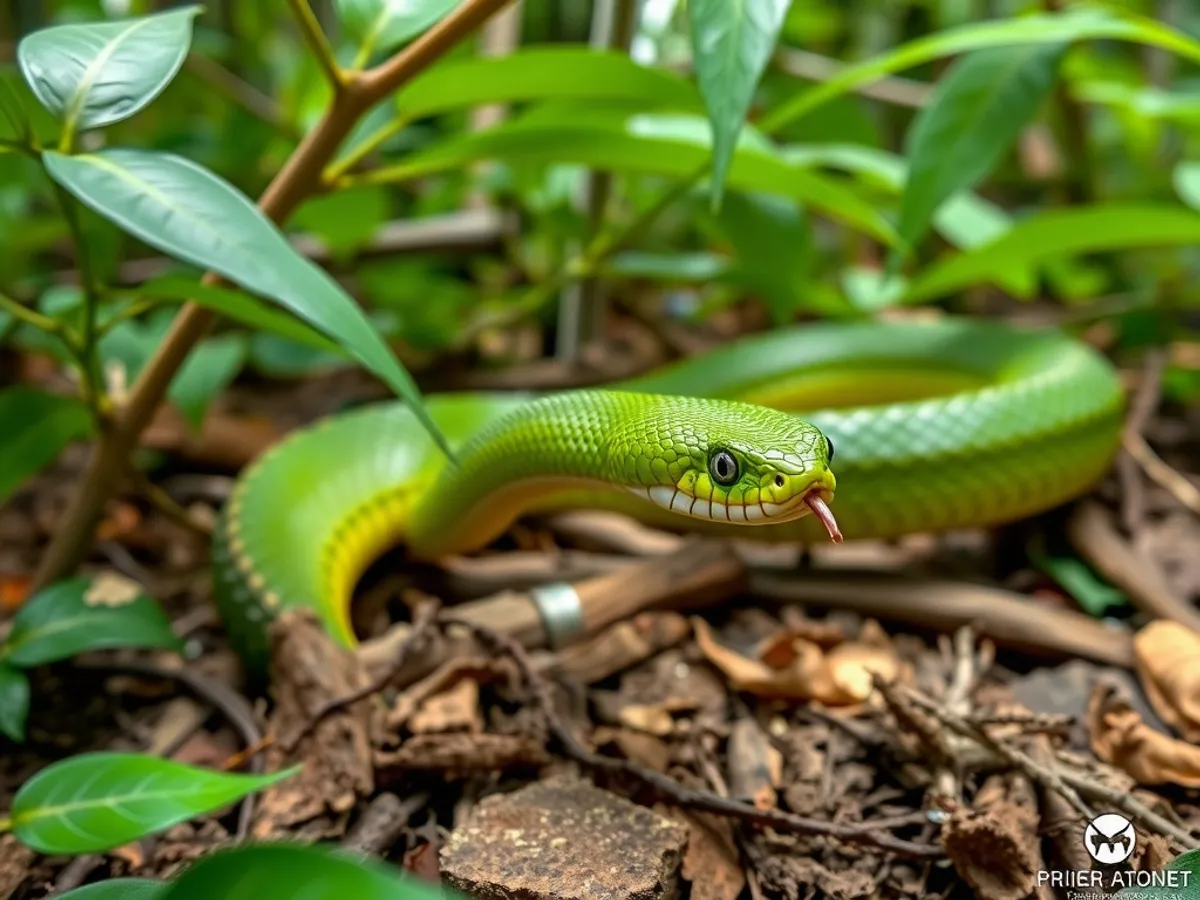
The Western Green Mamba is a highly venomous snake native to the forests and woodlands of West Africa. Recognized by its slender, elongated body and vivid green coloration, this arboreal species is both agile and fast-moving, often found in trees and dense vegetation. Its potent neurotoxic venom can be fatal to humans, though encounters are rare due to the snake’s shy and elusive nature. The Western Green Mamba plays a crucial role in its ecosystem by controlling populations of small mammals, birds, and lizards.
Fascinating facts
Tree Dweller
The Western Green Mamba is highly adapted to life in the trees, where its bright green coloration provides excellent camouflage among the leaves.
Potent Venom
Its venom contains powerful neurotoxins that can cause paralysis and respiratory failure, making it one of Africa's most dangerous snakes.
Exceptional Vision
This species has excellent eyesight, which it uses to locate prey and detect potential threats from a distance.
Detailed description
The Western Green Mamba (Dendroaspis viridis) is a large, slender, and highly arboreal elapid snake, reaching adult lengths typically between 1.4 and 2.2 meters, with some individuals exceeding 2.5 meters. Its vivid green dorsal coloration, often interspersed with yellowish or bluish hues, provides exceptional camouflage among the foliage of West African forests. The ventral surface is usually lighter, ranging from pale green to yellowish. The head is elongated and distinct from the neck, with large eyes featuring round pupils, indicative of its diurnal activity. Scales are smooth and glossy, aiding in rapid, silent movement through branches. The Western Green Mamba is renowned for its agility and speed, both on the ground and in trees, where it spends the majority of its life. It is primarily solitary, except during the breeding season, and is known for its secretive and shy disposition, often fleeing at the first sign of disturbance. Its venom is a potent neurotoxin, capable of causing rapid paralysis and respiratory failure in prey and, if untreated, in humans. Despite its dangerous reputation, bites are rare due to the snake’s reclusive habits and preference for dense canopy cover. The species plays an important ecological role as a top arboreal predator, regulating populations of birds, small mammals, and reptiles.
Did you know?
Despite their deadly reputation, Western Green Mambas rarely bite humans, and most bites occur only when the snake is accidentally threatened or handled.
Research & sources
Behaviour & social structure
Western Green Mambas are diurnal, actively hunting during daylight hours, especially in the early morning and late afternoon. They exhibit sit-and-wait as well as active foraging strategies, often moving gracefully through the canopy in search of prey. Their diet consists mainly of birds, bird eggs, small mammals such as rodents and bats, and occasionally lizards. They use their acute vision to detect movement and rely on their speed and agility to ambush or pursue prey. Once prey is captured, the mamba delivers a rapid series of bites, injecting neurotoxic venom that quickly immobilizes the victim. Social interactions are minimal; individuals are territorial and avoid conspecifics outside of the breeding season. When threatened, the Western Green Mamba may display defensive behaviors such as flattening its neck, opening its mouth, and hissing, but it prefers to escape rather than confront. Nocturnal activity is rare, and the snake typically rests coiled in dense foliage or tree hollows at night.
Reproduction & life cycle
Breeding occurs during the rainy season, typically from April to June, when males actively seek out receptive females. Courtship involves tongue-flicking and body alignment, with males sometimes engaging in ritualized combat for access to females. The species is oviparous: after mating, females lay clutches of 6 to 17 elongated, leathery eggs in concealed, humid locations such as leaf litter, decaying logs, or termite mounds. Incubation lasts 10 to 12 weeks, depending on ambient temperature and humidity. Hatchlings measure 35–45 cm in length and are fully independent at birth, receiving no parental care. Juveniles are similarly colored to adults but may exhibit more pronounced yellow or blue tones. Sexual maturity is reached at approximately 2 to 3 years of age.
Adaptations & survival
Dendroaspis viridis exhibits several adaptations for an arboreal lifestyle, including a laterally compressed body, long prehensile tail, and smooth, overlapping scales that reduce friction and facilitate swift movement through branches. Its bright green coloration provides effective camouflage in the leafy canopy, reducing predation risk. The species' large eyes and keen vision are adapted for detecting prey and predators in complex three-dimensional environments. Its potent neurotoxic venom, composed of dendrotoxins and other neuropeptides, rapidly immobilizes prey and deters potential threats. Behavioral adaptations include extreme wariness and avoidance of open ground, as well as the ability to remain motionless for extended periods to avoid detection.
Cultural significance
The Western Green Mamba is less prominent in local folklore than some other African snakes, but it is occasionally referenced in regional myths as a symbol of danger and agility. In some West African communities, mambas are respected and feared, sometimes associated with forest spirits or used in traditional medicine, though this is more common with other snake species. Its striking appearance and potent venom have made it a subject of fascination among herpetologists and snake enthusiasts.
Recent research
Recent research has focused on the molecular composition of D. viridis venom, revealing unique dendrotoxins with potential applications in neuroscience and pharmacology, particularly in the study of ion channel function. Ongoing ecological studies are examining the species' role in controlling pest populations and its adaptability to fragmented habitats. Genetic analyses have clarified its phylogenetic relationships within the genus Dendroaspis, supporting its distinction from the Eastern Green Mamba (D. angusticeps) and the Black Mamba (D. polylepis). There is also interest in the development of more effective antivenoms, given the rapid onset of symptoms following envenomation.
Sources
Dendroaspis viridis (Western Green Mamba): Natural History and Venom Composition
Spawls, S., Howell, K., Drewes, R., Ashe, J. (2018)
scientificDendroaspis viridis: The IUCN Red List of Threatened Species 2021
IUCN SSC Snake Specialist Group
conservationDendroaspis viridis (Western Green Mamba): Ecology, Behavior, and Venom Composition
Spawls, S., Branch, B., & Broadley, D. (2018)
scientificDendroaspis viridis: The IUCN Red List of Threatened Species 2021
IUCN SSC Snake Specialist Group
conservationVideos
Habitat
Tropical forests and woodland areas

Conservation
The Western Green Mamba is currently classified as Least Concern on the IUCN Red List.
Threats & challenges
While currently listed as Least Concern by the IUCN, the Western Green Mamba faces localized threats from habitat loss due to deforestation, agricultural expansion, and urbanization in West Africa. The species is sometimes killed out of fear or for traditional medicine, though such incidents are infrequent due to its secretive habits. Road mortality and accidental capture during logging or land clearing also pose risks. Despite these challenges, the species' wide distribution and adaptability to secondary forests have helped maintain stable populations. Continued habitat degradation, however, could pose future risks, and monitoring is recommended.
Taxonomy
Scientific name
Dendroaspis viridis
- Kingdom
- Animalia
- Phylum
- Chordata
- Class
- Reptilia
- Order
- Squamata
- Family
- Elapidae
- Genus
- Dendroaspis
- Species
- viridis
Where to see a western green mamba
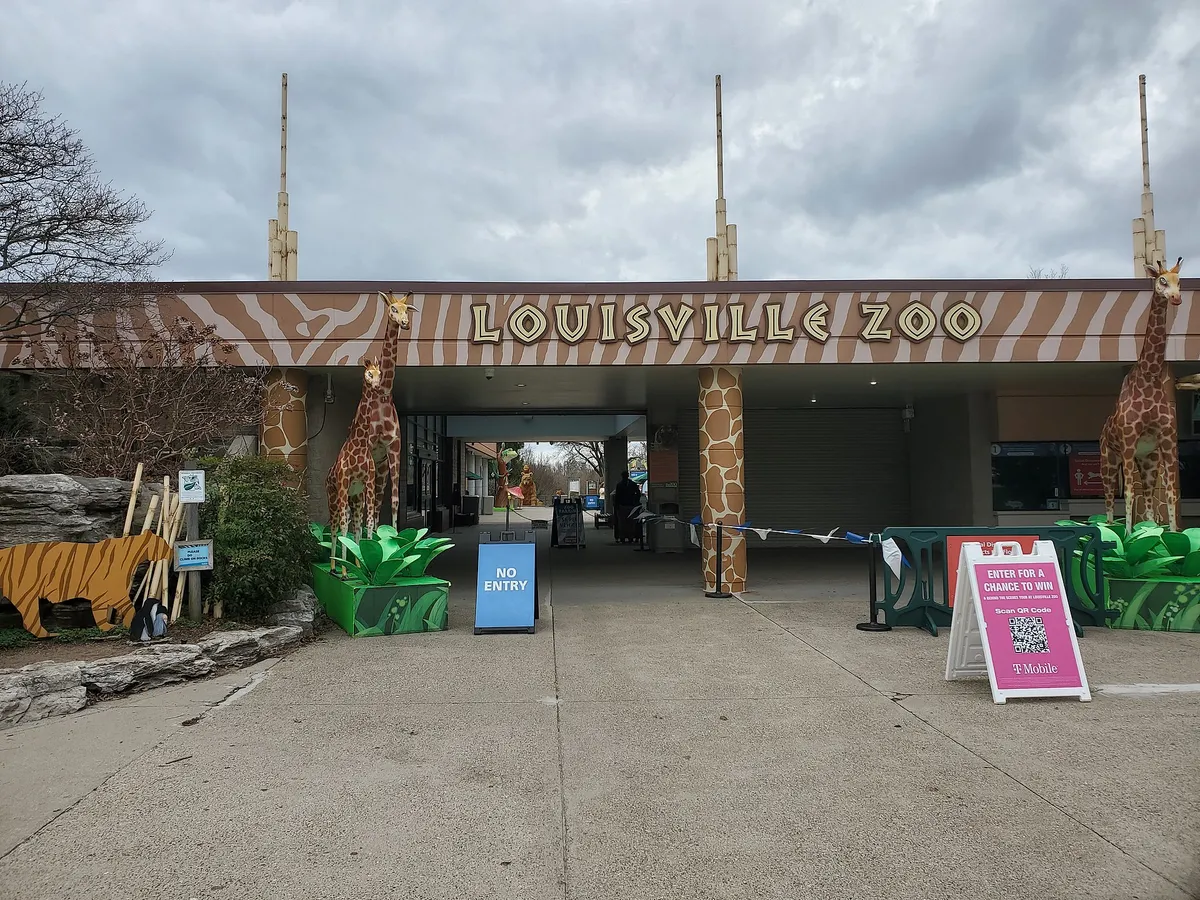
2 zoos and aquariums in 1 country are recorded as keeping this species.

Community notes
Share your observations about the Western Green Mamba.
No community notes yet. Be the first!
Discover more wildlife
More fascinating animals from the encyclopedia.