
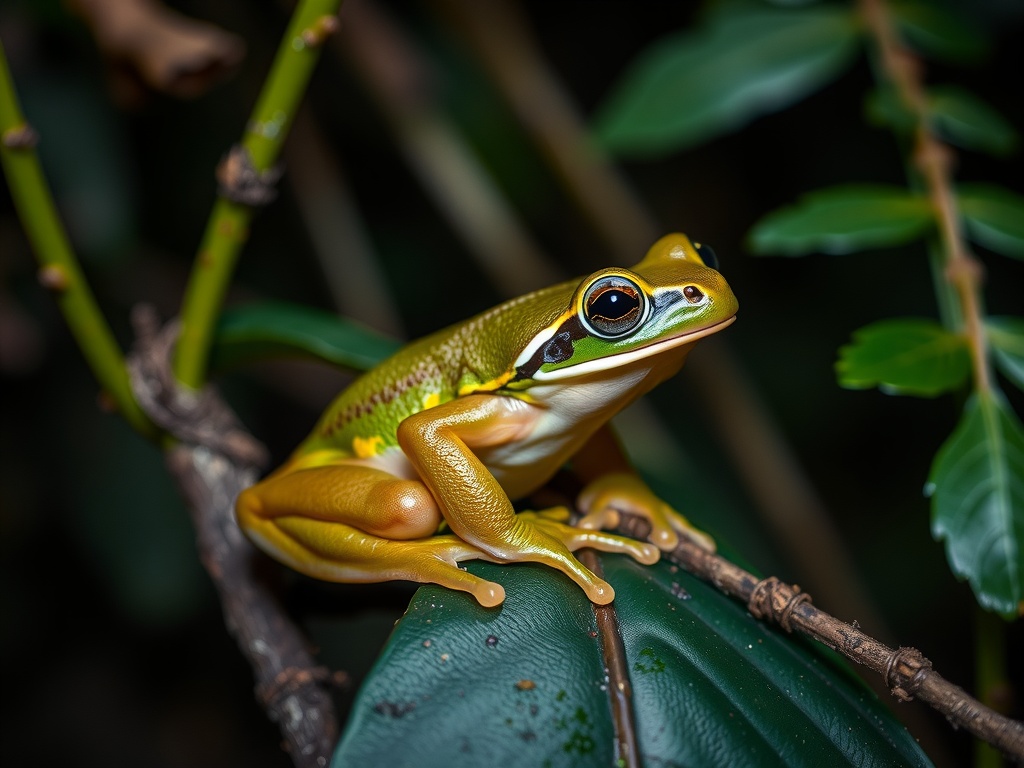
About the White-lipped Tree Frog
The White-lipped Tree Frog is the world’s largest tree frog, recognizable by its vibrant green coloration and distinctive white stripe along its lower lip and jaw. Native to northern Australia, New Guinea, and surrounding islands, it thrives in humid, tropical rainforests and sometimes near human habitation. This nocturnal amphibian is primarily arboreal, spending much of its life in trees and bushes, and is noted for its loud, barking call during the rainy season. Although mainly green, individuals can change color to brown depending on temperature and environment.
Fascinating facts
Largest Tree Frog
The White-lipped Tree Frog holds the title of the world's largest tree frog, with females reaching up to 14 centimeters in length.
Insect Hunter
Their diet consists mostly of insects and other small invertebrates, which they catch using their sticky tongues.
Color Changing
These frogs can shift their skin color from bright green to brown to blend with their environment or regulate body temperature.
Detailed description
The White-lipped Tree Frog (Litoria infrafrenata), also known as the Giant Tree Frog, is the largest tree frog species in the world, with adult females reaching up to 14 cm (5.5 in) in snout-vent length, while males are slightly smaller. Its dorsal skin is smooth and bright green, occasionally shifting to brown or olive hues depending on temperature, humidity, or stress. The most distinctive feature is the prominent white stripe running from the lower lip along the jaw and sometimes extending to the shoulder. The ventral surface is white or pale yellow, and the toes are equipped with large adhesive pads aiding in arboreal locomotion. Eyes are large and golden with horizontal pupils, providing excellent night vision. This species is primarily nocturnal and arboreal, spending daylight hours concealed in foliage or tree hollows. During the wet season, it descends to breed in temporary pools or slow-moving streams. Its call is a loud, barking 'wark-wark-wark,' often heard after heavy rains. The skin secretes mild toxins as a defense against predators, and the frog's robust build allows it to leap considerable distances between branches.
Did you know?
Despite their size, White-lipped Tree Frogs are sometimes found perched on outdoor lights, attracted by the insects drawn to the illumination.
Research & sources
Wikipedia summary
The white-lipped tree frog is a species of frog in the subfamily Pelodryadinae. It is the world's largest tree frog and is found in Australia. Other common names include the New Guinea treefrog, giant tree frog, and Australian giant treefrog.
Behaviour & social structure
White-lipped Tree Frogs are solitary and territorial, especially during the breeding season when males compete for optimal calling sites. They are primarily insectivorous, preying on a variety of invertebrates such as moths, beetles, spiders, and occasionally small vertebrates like other frogs or lizards. Hunting is typically ambush-based: the frog remains motionless, then lunges at passing prey with a rapid extension of its sticky tongue. Activity peaks at night, with individuals emerging from daytime refuges to forage and call. During dry periods, they may enter a state of torpor, reducing activity and seeking moist microhabitats to prevent desiccation. Social interactions are limited outside of breeding, though multiple individuals may congregate around abundant food sources or breeding sites.
Reproduction & life cycle
Breeding is closely tied to the onset of the rainy season, typically from November to March in northern Australia. Males establish territories near water and produce loud, repetitive calls to attract females. Amplexus is axillary, with the male grasping the female behind her forelimbs. Females lay up to several thousand eggs in shallow, still water, attaching them to submerged vegetation. Embryonic development is rapid, with eggs hatching within 1–2 days depending on temperature. Tadpoles are large, reaching up to 6 cm, and undergo metamorphosis within 40–60 days. There is no parental care post-oviposition; tadpoles are left to fend for themselves. Breeding success is highly dependent on rainfall and the availability of suitable aquatic habitats.
Adaptations & survival
Litoria infrafrenata exhibits several adaptations for arboreal life, including enlarged toe pads with specialized epithelial cells that secrete mucous, enhancing grip on smooth surfaces. Its skin is permeable, facilitating cutaneous respiration, but also secretes mild toxins that deter some predators. The ability to change dorsal coloration aids in camouflage and thermoregulation. Nocturnal behavior reduces predation risk and water loss. The species' loud vocalizations are adapted for long-distance communication in dense rainforest environments. Tadpoles possess keratinized mouthparts for grazing on algae and detritus, and their large size may confer competitive advantages in ephemeral pools.
Cultural significance
In northern Australia and New Guinea, the White-lipped Tree Frog is a familiar presence and sometimes kept as a pet due to its size and docile nature. It features in local folklore as a harbinger of rain, with its calls signaling the onset of the wet season. In some indigenous traditions, frogs are associated with fertility and renewal. The species is occasionally depicted in art and educational materials to promote rainforest conservation. There are no known traditional medicinal uses, but its striking appearance makes it a popular subject for ecotourism and wildlife photography.
Recent research
Recent studies have focused on the species' resistance to chytrid fungus (Batrachochytrium dendrobatidis), with some populations showing genetic or behavioral adaptations that mitigate disease impact. Research into its vocalization patterns has provided insights into acoustic communication in dense rainforest habitats. Genetic analyses have clarified its phylogenetic relationships within the Pelodryadinae subfamily, leading to periodic taxonomic revisions (e.g., placement in Nyctimystes vs. Litoria). Ongoing ecological monitoring tracks population trends in response to habitat alteration and climate variability. The species is also used as a model organism for studying amphibian skin secretions and their antimicrobial properties.
Videos
Habitat
Tropical rainforest
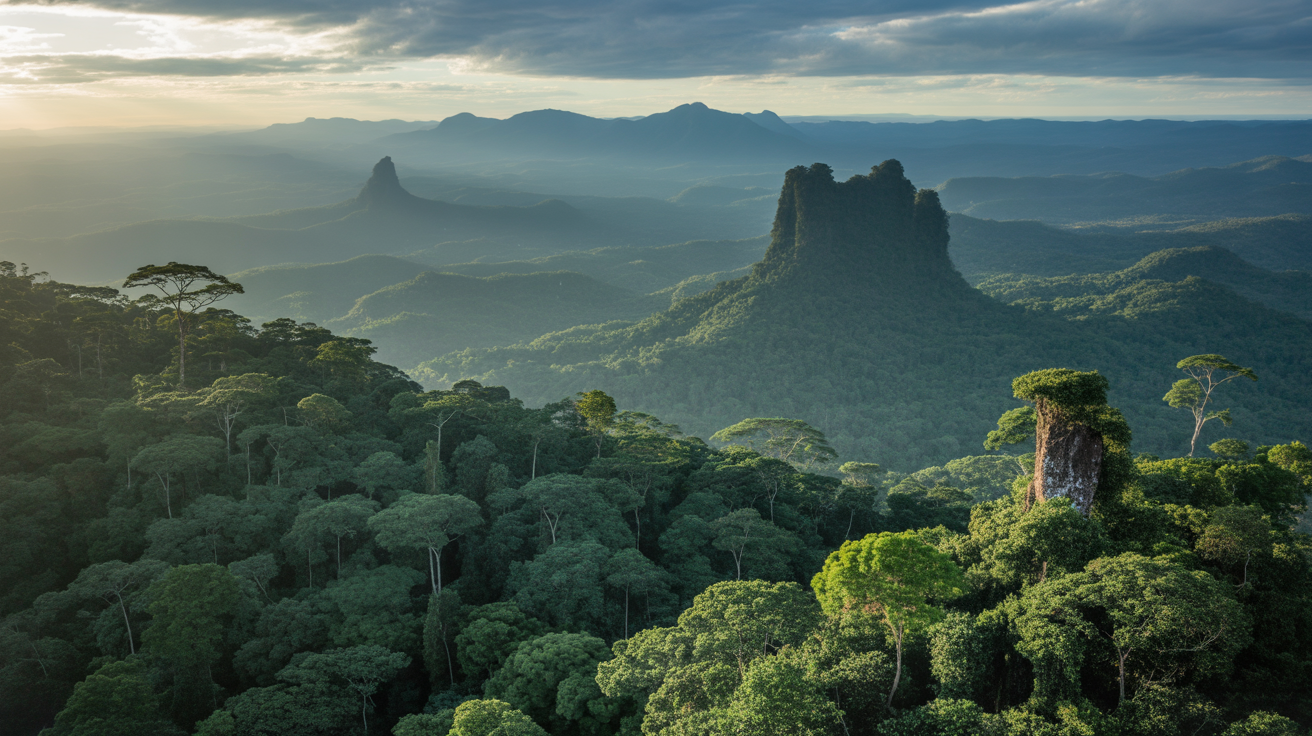 Tropical Regions
Rainforest
Dense, wet forests with the highest biodiversity on Earth, containing more than half of the world's plant and animal species.
 Global
Forest
Wooded areas with significant tree cover and diverse plant and animal communities.
 Global
Freshwater
Lakes, rivers, and wetlands with diverse aquatic ecosystems.
Conservation
The White-lipped Tree Frog is currently classified as Least Concern on the IUCN Red List.
Threats & challenges
Currently assessed as Least Concern by the IUCN, the White-lipped Tree Frog has stable populations across its range. However, localized threats include habitat loss due to deforestation, wetland drainage, and urban expansion. The species is susceptible to chytridiomycosis, a fungal disease affecting amphibians globally, though it appears relatively resilient compared to other species. Climate change poses a long-term risk by altering rainfall patterns and breeding site availability. Collection for the pet trade is regulated but can impact local populations if not managed sustainably. Road mortality and predation by introduced species (e.g., cats, rats) are additional pressures in some areas.
Taxonomy
Scientific name
Litoria infrafrenata
- Kingdom
- Animalia
- Phylum
- Chordata
- Class
- Amphibia
- Order
- Anura
- Family
- Hylidae
- Genus
- Litoria
- Species
- infrafrenata
Community notes
Share your observations about the White-lipped Tree Frog.
No community notes yet. Be the first!
Discover more wildlife
More fascinating animals from the encyclopedia.