
About the Yacare caiman
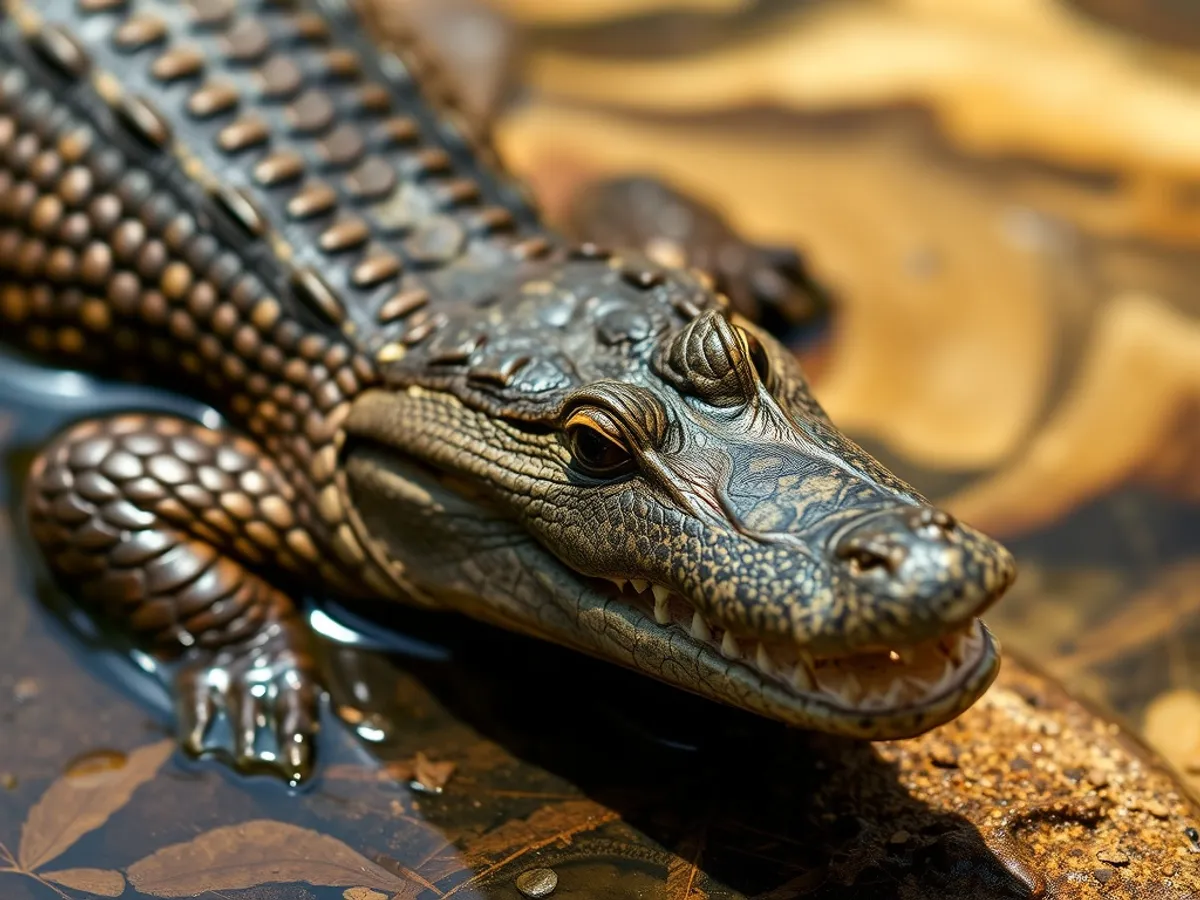
The yacare caiman is a medium-sized crocodilian native to central South America, particularly thriving in the wetlands, rivers, and marshes of Brazil, Bolivia, Paraguay, and Argentina. Sporting a robust, armored body with dark olive or brown coloring and distinctive bony ridges above its eyes, this reptile can often be seen basking on riverbanks or submerged with only its eyes and nostrils exposed. Yacare caimans are highly adaptable and play a crucial role in their ecosystem as both predator and prey. They are known for their opportunistic feeding behavior and strong social displays, especially during the breeding season.
Fascinating facts
Distinctive Teeth
The yacare caiman's lower teeth fit perfectly into notches in the upper jaw, giving them a jagged smile similar to that of a piranha.
Wetland Specialist
This caiman thrives in seasonally flooded wetlands, especially in the Pantanal, one of the world's largest tropical wetland areas.
Population Recovery
Once heavily hunted for their skins, yacare caiman populations have rebounded significantly in recent decades due to conservation efforts and legal protection.
Detailed description
The yacare caiman (Caiman yacare) is a medium-sized crocodilian distinguished by its robust, muscular body, elongated snout, and prominent bony ridges above the eyes, which give it a 'spectacled' appearance. Adults display a coloration ranging from olive-brown to dark brown, often marked with irregular black blotches and banding, especially along the tail and flanks. Sexual dimorphism is evident, with males typically reaching lengths of 2–3 meters and weighing 40–50 kg, while females are smaller, averaging 1.4 meters and 15–20 kg. The species possesses a powerful tail and webbed hind feet, adaptations for efficient swimming in slow-moving or stagnant waters. The jaws are lined with sharp, conical teeth, and the fourth tooth in the lower jaw fits into a notch in the upper jaw, a trait shared with other caimans. The skin is heavily ossified, providing protection from predators and conspecific aggression. Yacare caimans are highly adaptable, inhabiting a range of freshwater environments including seasonally flooded savannas, oxbow lakes, and marshes. They are primarily nocturnal, spending daylight hours basking or resting in dense vegetation. Socially, they are often found in loose aggregations, especially during the dry season when water sources contract. Their ecological role as apex and mesopredators helps regulate populations of fish, invertebrates, and even invasive species, contributing to wetland ecosystem stability.
Did you know?
Yacare caimans are known to use tools, such as balancing sticks on their snouts to lure birds within striking distance.
Research & sources
Wikipedia summary
The yacare caiman, also known commonly as the jacare caiman, Paraguayan caiman, piranha caiman, red caiman, and southern spectacled caiman, is a species of caiman, a crocodilian in the family Alligatoridae. The species is endemic to Argentina, Bolivia, Brazil, and Paraguay. Brown in color and covered with dark blotches, males grow to a total length of 2–3 m and weigh around 40–50 kg (88–110 lb); while females grow to 1.4 m long and about 15–20 kg (33–44 lb). Typical habitats of this caiman include lakes, rivers, and wetlands. Its diet primarily consists of aquatic animals, such as snails, and occasionally land vertebrates. Mating occurs in the rainy season and eggs hatch in March, with young fending for themselves as soon as they hatch. The yacare caiman was hunted heavily for its skin to use for leather in the 1980s, which caused its population to decrease significantly. However, trading restrictions placed since have caused its population to increase. Its population in the Pantanal is about 10 million, and it is listed as least concern on the IUCN Red List.
Behaviour & social structure
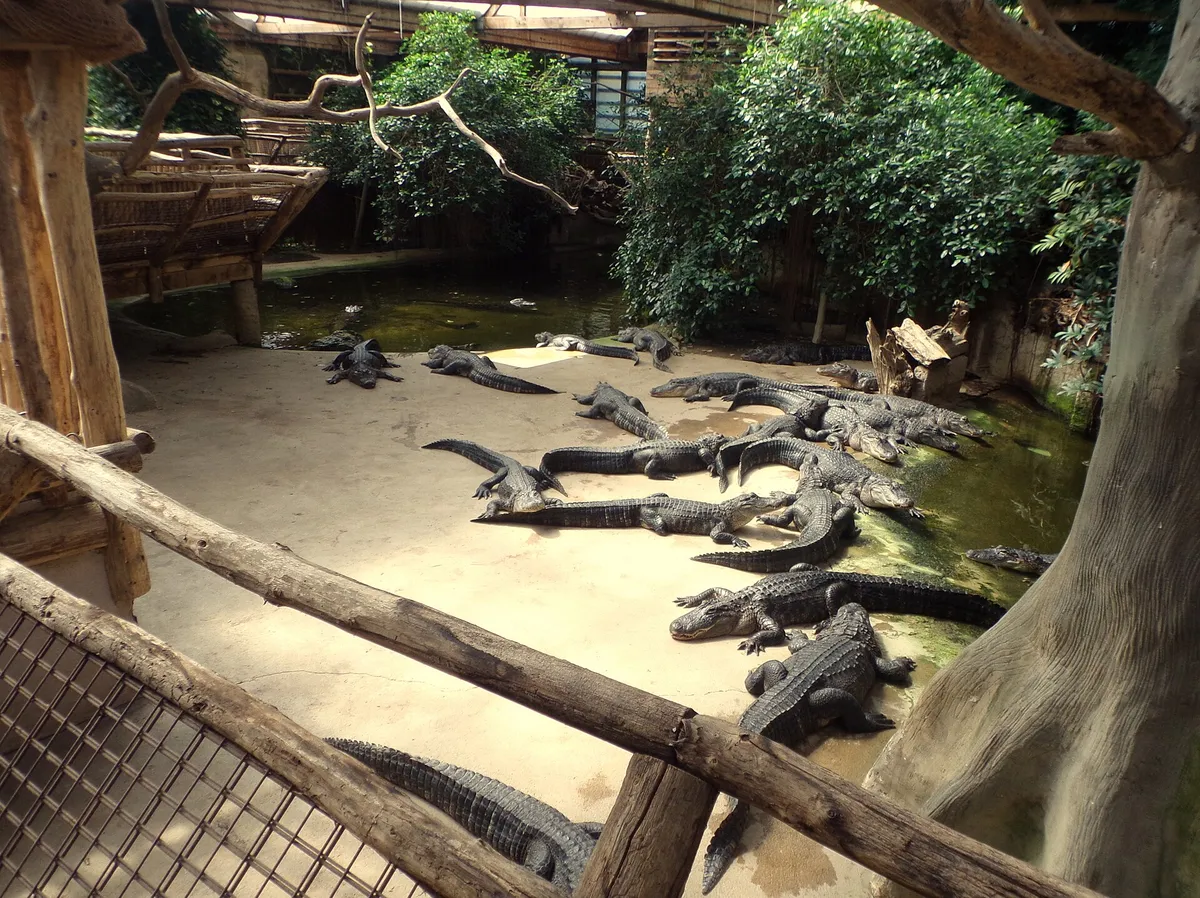
Yacare caimans exhibit both solitary and gregarious behaviors depending on environmental conditions. During the wet season, individuals are more dispersed, while in the dry season, they congregate in remaining water bodies, sometimes forming groups of dozens or even hundreds. They are primarily nocturnal hunters, using stealth and ambush tactics to capture prey, which includes fish (notably piranhas and catfish), aquatic snails, crustaceans, amphibians, and occasionally birds and small mammals. Their strong jaws enable them to crush hard-shelled prey, such as apple snails, a significant part of their diet. Social interactions are most pronounced during the breeding season, with males displaying territoriality through vocalizations, head-slapping, and jaw clapping. Juveniles often form crèches—groups of young from multiple females—for protection, though adult caimans may cannibalize hatchlings if food is scarce. Basking is a routine behavior, essential for thermoregulation, and individuals may be seen lying motionless on riverbanks or floating with only their eyes and nostrils exposed.
Reproduction & life cycle
Breeding in yacare caimans is closely tied to the rainy season, typically commencing from November to January. Courtship involves complex vocalizations and physical displays, with dominant males defending territories and courting multiple females. Females construct mound nests from vegetation and mud, usually near water, and lay clutches of 20–50 eggs. Incubation lasts approximately 70–90 days, with nest temperature influencing the sex of the hatchlings (temperature-dependent sex determination). Hatching usually occurs in March, coinciding with the onset of the dry season. Females may guard the nest during incubation and assist hatchlings to water upon emergence, but parental care is generally brief compared to some other crocodilians. Hatchlings are precocial and must quickly fend for themselves, facing high predation rates from birds, mammals, and even adult caimans.
Adaptations & survival
Yacare caimans possess several adaptations for survival in dynamic wetland environments. Their heavily armored skin provides defense against predators and conspecific aggression. The webbed hind feet and muscular tail facilitate powerful swimming, while their eyes and nostrils are positioned dorsally, allowing them to remain mostly submerged while observing their surroundings. Their dentition is specialized for a varied diet, including robust teeth for crushing mollusk shells. Physiologically, they can tolerate periods of low oxygen and high temperatures, and exhibit estivation behavior during extreme droughts by burrowing into mud. Temperature-dependent sex determination in eggs allows populations to adjust sex ratios in response to environmental conditions. Their cryptic coloration aids in camouflage among aquatic vegetation and muddy waters.
Cultural significance
Yacare caimans hold cultural significance in several South American countries, where they are featured in local folklore and traditional stories, often symbolizing strength and resilience. In some indigenous communities, caiman teeth and bones have been used as tools, ornaments, or in ritual practices. The species has also been a source of subsistence protein and, historically, a target for the leather trade. Ecotourism centered on caiman watching contributes to local economies, particularly in the Pantanal, promoting conservation awareness. However, negative perceptions persist in some areas due to fear of attacks or competition with fisheries.
Recent research
Recent phylogenetic studies, such as those by Rio and Mannion (2021), have clarified the evolutionary relationships within Crocodylia, confirming the distinct lineage of Caiman yacare and its close relationship to other South American caimans. Ongoing research focuses on population genetics, movement ecology using satellite telemetry, and the species' role in controlling invasive apple snail populations. Studies on temperature-dependent sex determination are providing insights into potential impacts of climate change on reproductive success. Conservation research is also examining the effectiveness of sustainable use programs and community-based management in maintaining healthy caiman populations.
Sources
Phylogenetic analysis of a new morphological dataset elucidates the evolutionary history of Crocodylia and resolves the long-standing gharial problem
Jonathan P. Rio & Philip D. Mannion (2021)
scientificVideos
Habitat
Freshwater wetlands, rivers, and marshes


Conservation
The Yacare caiman is currently classified as Least Concern on the IUCN Red List.
Threats & challenges
Historically, the yacare caiman faced severe population declines due to unregulated hunting for its valuable skin, particularly during the 1970s and 1980s. Although international trade restrictions (CITES Appendix II) and national conservation measures have enabled significant recovery, ongoing threats include habitat loss from wetland drainage, agricultural expansion, and pollution. Illegal hunting persists in some regions, and climate change poses emerging risks by altering hydrological cycles and nesting success. Invasive species, such as non-native fish, may also impact prey availability. Despite these challenges, the species remains abundant in key habitats like the Pantanal, with an estimated population exceeding 10 million individuals. Continued monitoring and habitat protection are essential to maintain stable populations.
Taxonomy
Scientific name
Caiman yacare
- Kingdom
- Animalia
- Phylum
- Chordata
- Class
- Reptilia
- Order
- Crocodylia
- Family
- Alligatoridae
- Genus
- Caiman
- Species
- yacare
Where to see a yacare caiman
2 zoos and aquariums in 2 countries are recorded as keeping this species.

Community notes
Share your observations about the Yacare caiman.
No community notes yet. Be the first!
Discover more wildlife
More fascinating animals from the encyclopedia.