
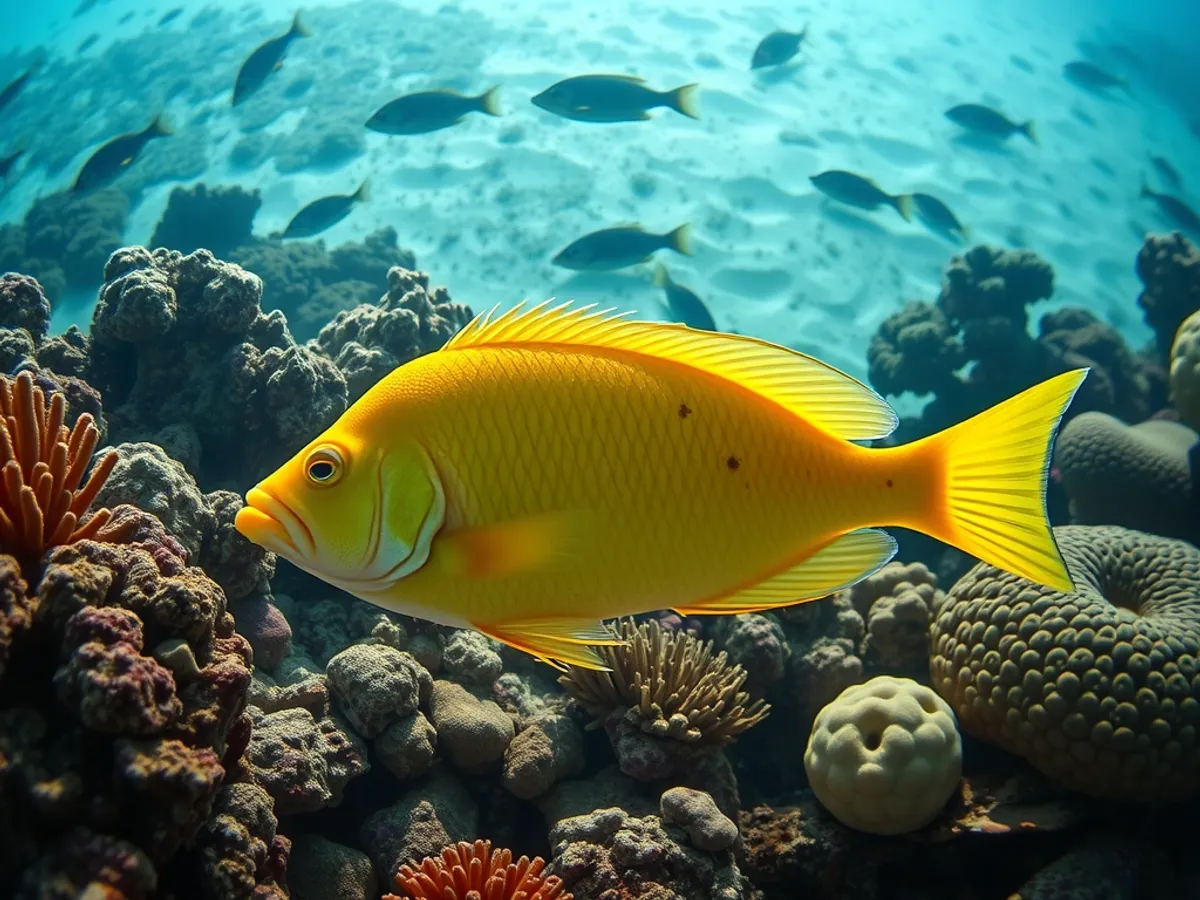
About the Yellowtail snapper
The Yellowtail snapper is a vibrantly colored marine fish, easily recognized by its yellow stripe running from the snout to its deeply forked, bright yellow tail. Native to the western Atlantic Ocean, particularly around the Caribbean and the Gulf of Mexico, it inhabits coral reefs and sandy bottoms. Yellowtail snappers are known for their schooling behavior and agile swimming, often forming large groups for protection. Their striking coloration and mild flavor make them both a favorite among snorkelers and a highly valued fish in commercial and recreational fisheries.
Fascinating facts
Colorful Appearance
The Yellowtail snapper is named for its distinctive bright yellow tail and stripe that contrasts with its silver body.
Schooling Fish
They often swim in large schools, which helps them avoid predators and increases their chances during spawning.
Spawning Rituals
Yellowtail snappers typically spawn in large aggregations around the full moon, releasing eggs into the open water.
Detailed description
The Yellowtail snapper (Ocyurus chrysurus) is a medium-sized marine fish distinguished by its streamlined, laterally compressed body and a deeply forked, vivid yellow caudal fin. Adults typically measure 30–40 cm in length, though exceptional individuals can reach up to 86 cm and weigh nearly 5 kg. The dorsal surface is bluish to olive, fading to silvery sides marked by a prominent, continuous yellow stripe running from the snout through the eye to the tail. The ventral side is white. The mouth is terminal and slightly oblique, equipped with sharp canine teeth and fine villiform teeth suited for grasping prey. Yellowtail snappers are highly social, forming large, loosely organized schools that can number in the hundreds, especially over reef slopes and drop-offs. Their large eyes are adapted for keen vision in dimly lit reef environments. This species is diurnal, exhibiting peak activity during daylight hours. Juveniles often inhabit seagrass beds or sandy areas adjacent to reefs, where their coloration provides camouflage. As they mature, individuals transition to deeper reef habitats. The species is the sole member of its genus, reflecting unique evolutionary traits within the Lutjanidae family.
Did you know?
Despite their popularity as a food fish, Yellowtail snapper populations are stable due to responsible fishing practices and their high reproductive rates.
Research & sources
Wikipedia summary
The yellowtail snapper is an abundant species of snapper native to the western Atlantic Ocean including the Gulf of Mexico and the Caribbean Sea. Although they have been found as far north as Massachusetts, their normal range is along Florida south to the West Indies and Brazil. This species is mostly found around coral reefs, but may be found in other habitats. They occur at depths of from near the surface to 180 meters (590 ft), though mostly between 10 and 70 m. This species can reach a length of 86.3 cm (34.0 in), though most do not exceed 40 cm (16 in). The greatest weight recorded for this species is 4.98 kg (11.0 lb). Yellowtail snapper is a commercially important species and has been farmed. It is sought as a game fish by recreational anglers and is a popular species for display in public aquaria. This species is the only known member of its genus.
Behaviour & social structure
Yellowtail snappers are primarily schooling fish, often seen in mixed-age groups that provide protection from predators such as groupers, barracudas, and sharks. They exhibit complex social hierarchies, with larger individuals typically occupying more central, protected positions within the school. Their feeding behavior is opportunistic and primarily crepuscular, with increased foraging activity at dawn and dusk. They feed on a variety of prey, including small fishes, crustaceans (such as shrimp and crabs), polychaete worms, and cephalopods. Yellowtail snappers employ a combination of pursuit and ambush tactics, using their agility to dart after prey or pick food items from the substrate. They are known to follow larger predatory fish to scavenge leftovers. During the day, schools often hover above reefs, dispersing at night to feed more actively. Communication within schools is facilitated by body postures and rapid color changes, which may signal alarm or coordinate group movements.
Reproduction & life cycle
Yellowtail snappers are broadcast spawners, with external fertilization occurring in open water. Spawning typically peaks during warmer months, from late spring to early fall, with regional variation based on latitude. In the Florida Keys, for example, peak spawning occurs from April to August, often coinciding with the lunar cycle, particularly around the full moon. During spawning events, large aggregations form near the edges of reefs or drop-offs. Males and females ascend in the water column, releasing gametes simultaneously to maximize fertilization success. Eggs are pelagic, spherical, and buoyant, hatching within 24 hours. Larvae are planktonic and undergo several developmental stages before settling in shallow nursery habitats such as seagrass beds or mangroves. There is no parental care post-spawning. Sexual maturity is typically reached at 2–3 years of age, at lengths of approximately 25–30 cm.
Adaptations & survival
Yellowtail snappers possess several adaptations for reef life. Their bright coloration provides both camouflage among corals and a warning signal to potential predators. The deeply forked tail and streamlined body enable rapid bursts of speed, aiding in both predator evasion and prey capture. Their large eyes are adapted for enhanced vision in low-light conditions, crucial for crepuscular feeding. The species' schooling behavior reduces individual predation risk and increases foraging efficiency. Juvenile coloration and habitat selection in seagrass beds offer additional protection during vulnerable life stages. Physiologically, they tolerate a range of salinities and temperatures, allowing them to exploit diverse habitats from shallow inshore waters to deeper offshore reefs.
Cultural significance
Yellowtail snapper holds considerable economic and cultural value throughout the Caribbean and southeastern United States. It is a staple in local diets, featured in traditional dishes such as ceviche and grilled preparations. The species is highly prized by recreational anglers for its fighting ability and is a mainstay of charter fishing industries, especially in Florida and the Bahamas. In some cultures, the yellowtail's vibrant coloration is associated with good fortune and abundance. The species is also popular in public aquaria due to its striking appearance and schooling behavior, serving as an ambassador for coral reef conservation.
Recent research
Recent research has focused on the species' population genetics, revealing significant connectivity among Caribbean and western Atlantic populations, which has implications for regional management. Studies on spawning aggregations have improved understanding of reproductive timing and the impact of fishing on reproductive success. Ongoing research is examining the effects of habitat degradation and climate change on recruitment and juvenile survival. Aquaculture trials have shown promise, with advances in larval rearing and grow-out techniques potentially reducing pressure on wild stocks. Stable isotope and stomach content analyses have elucidated their role as mid-level predators in reef ecosystems, highlighting their importance in maintaining ecological balance.
Sources
Ocyurus chrysurus (Yellowtail Snapper): The IUCN Red List of Threatened Species 2016
Lindeman, K. et al. (2016)
conservationReproductive biology and spawning aggregations of the yellowtail snapper, Ocyurus chrysurus
Claro, R. & Lindeman, K.C. (2003)
scientificVideos
Habitat
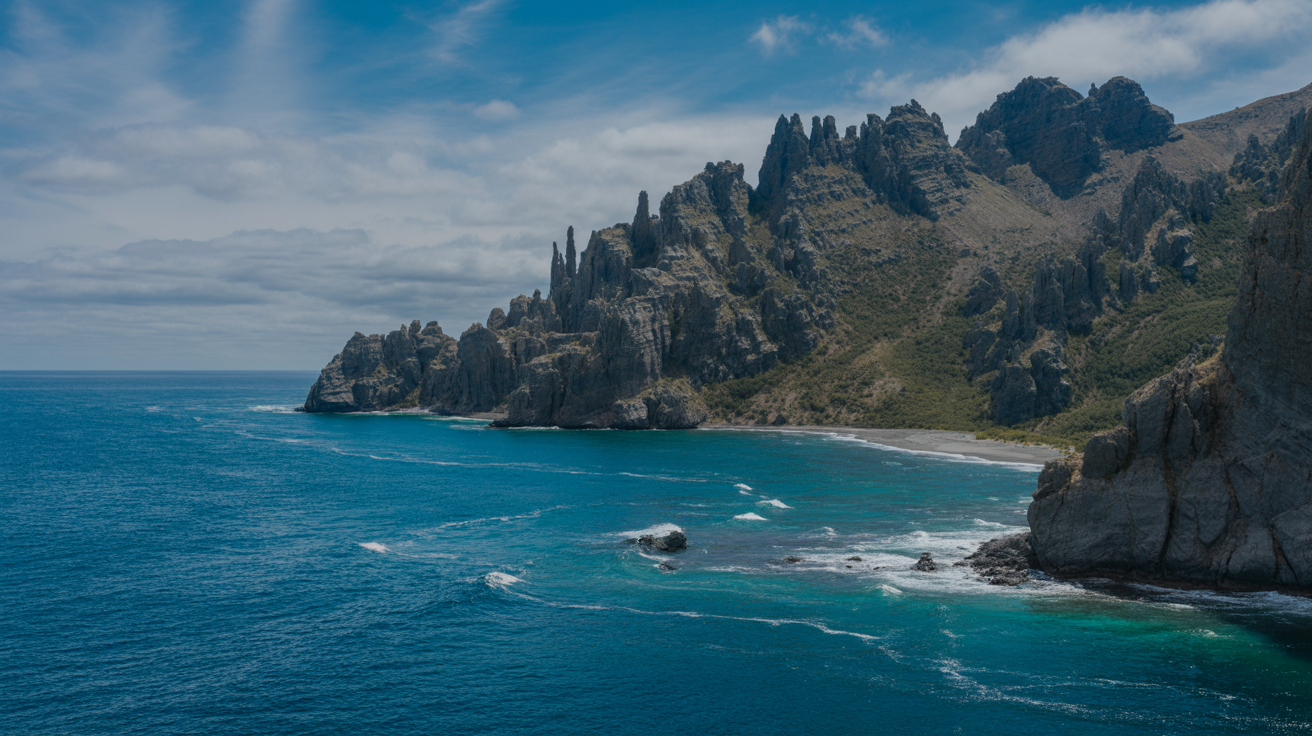
Coral reefs and adjacent sandy or grassy areas in tropical marine waters
Conservation
The Yellowtail snapper is currently classified as Least Concern on the IUCN Red List.
Threats & challenges
While currently listed as 'Data Deficient' by the IUCN, Yellowtail snapper populations face several threats. Overfishing, particularly in areas with high commercial and recreational pressure, can lead to local declines. Habitat degradation, especially coral reef loss due to climate change, ocean acidification, and pollution, poses significant risks to their primary habitats. Bycatch in other fisheries and illegal, unreported, or unregulated (IUU) fishing further exacerbate population pressures. Although the species is relatively resilient due to its broad distribution and high reproductive output, localized depletions have been documented. Management measures, such as size and bag limits, seasonal closures, and marine protected areas, are in place in some regions to mitigate these threats.
Taxonomy
Scientific name
Ocyurus chrysurus
- Kingdom
- Animalia
- Phylum
- Chordata
- Class
- Actinopterygii
- Order
- Perciformes
- Family
- Lutjanidae
- Genus
- Ocyurus
- Species
- chrysurus
Community notes
Share your observations about the Yellowtail snapper.
No community notes yet. Be the first!
Discover more wildlife
More fascinating animals from the encyclopedia.