
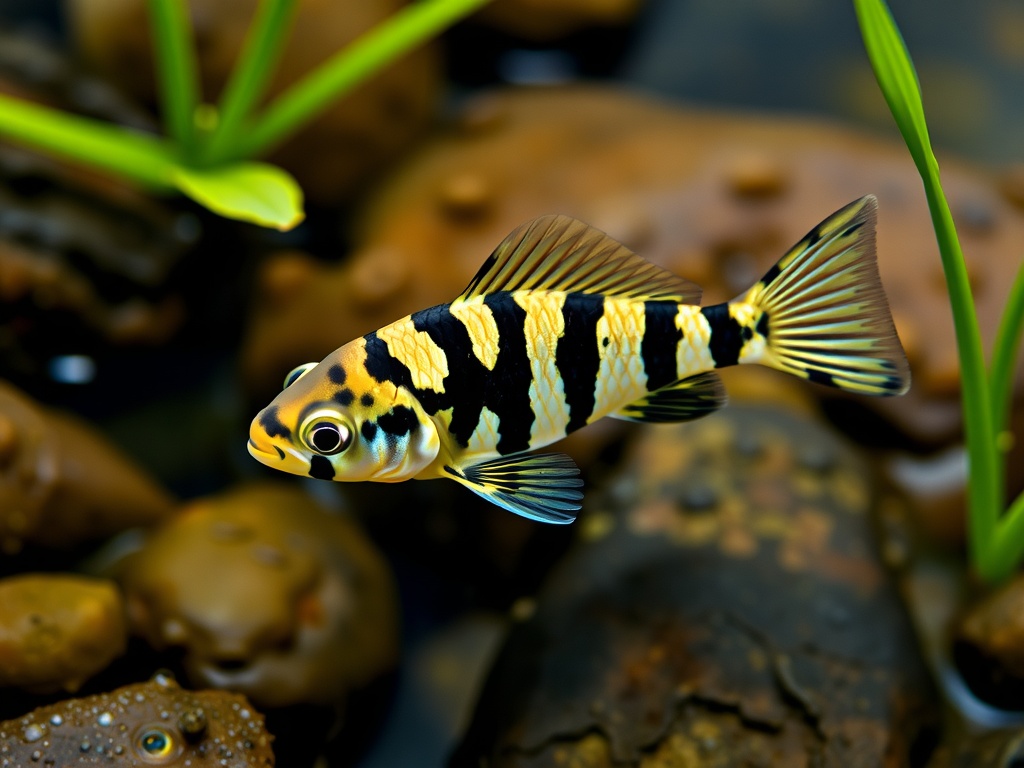
About the Zebra danio
The zebrafish (Danio rerio), sold in aquarium shops as the zebra danio, is one of the most consequential animals in modern medicine. Its value comes from three properties that coincide in almost no other vertebrate: it is fertilised externally, the embryo is transparent, and it develops fast. A researcher can watch the heart form and start beating, the nervous system wire itself and the gut fold, under a microscope, in a living animal, within 24 to 48 hours of fertilisation, with no need to cut anything open. A transgenic line called Casper is transparent for life, allowing tumour cells or migrating immune cells to be tracked through an adult body in real time. Zebrafish also regenerate structures that mammals cannot, including fin, spinal cord, retina and, most striking of all, heart muscle: a zebrafish can have a fifth of its ventricle removed and rebuild it without scarring, which is why it is central to cardiac regeneration research. Its natural history is often misdescribed. Wild zebrafish come from the floodplains of the Ganges and Brahmaputra, and they live in warm, shallow, still or slow-moving water, rice paddies, ditches and seasonal pools, not the cool fast streams often claimed. They shoal, learn, and show consistent individual differences in boldness that persist across situations.
Fascinating facts
Scientific Model
Zebra danios are a key model organism in genetics, developmental biology, and medical research because of their genetic similarity to humans and transparent embryos.
Native Habitat
They are native to floodplains, rice paddies, and slow-moving streams of India, Bangladesh, Nepal, and Myanmar.
Rapid Reproduction
A single female can lay between 100 and 300 eggs per spawning, and the eggs hatch within just 2-3 days.
Detailed description
The Zebra danio (Danio rerio) is a small, slender-bodied freshwater fish, typically reaching 4–5 cm in length, with females often slightly larger and rounder than males. Its most distinctive feature is a series of five to seven horizontal, iridescent blue and silver stripes running from gill to tail, which provide camouflage among aquatic vegetation and dappled light. The species exhibits a fusiform body shape, aiding in swift, agile swimming. Zebra danios are highly social, forming tight shoals in the wild and in captivity, which helps reduce predation risk and facilitates complex social interactions. Their fins are relatively short and rounded, and the caudal fin is deeply forked, enhancing maneuverability. They possess two pairs of barbels near the mouth, which are sensory organs used to detect food particles and navigate murky waters. The species is diurnal, with peak activity during daylight hours, and displays a variety of behaviors including synchronized swimming and rapid darting movements. Zebra danios are omnivorous, feeding on small invertebrates, zooplankton, algae, and detritus. Their adaptability to a wide range of environmental conditions, including temperature fluctuations (16–38°C) and variable water chemistry, contributes to their resilience and widespread distribution.
Did you know?
Zebra danios were the first fish species to be cloned, and their transparent embryos allow scientists to observe development in real time.
Research & sources
Wikipedia summary
The zebrafish is a species of freshwater ray-finned fish belonging to the family Danionidae of the order Cypriniformes. Native to South Asia, it is a popular aquarium fish, frequently sold under the trade name zebra danio.
Behaviour & social structure
Zebra danios are active, schooling fish that exhibit pronounced social behaviors, including hierarchical interactions and coordinated group swimming. In the wild, they form shoals of 5–20 individuals, which provides safety in numbers and enhances foraging efficiency. They are opportunistic feeders, foraging throughout the water column and displaying a pecking order at feeding times. Zebra danios communicate through subtle body postures, fin displays, and rapid changes in swimming speed. They are known for their playful, exploratory behavior, often investigating new objects or changes in their environment. During rest periods, they seek shelter among aquatic plants or substrate. Aggression is minimal, but males may chase each other or display fin flaring during breeding or when establishing dominance. Their daily routine is governed by light cycles, with increased activity at dawn and dusk.
Reproduction & life cycle
Zebra danios are oviparous, exhibiting external fertilization. Spawning typically occurs at dawn, triggered by increasing light and temperature. Males pursue females in elaborate courtship displays, involving rapid circling and nudging. Females can lay 100–400 transparent eggs per spawning event, scattering them among aquatic plants or substrate. There is no parental care; adults may consume their own eggs if not separated. Embryonic development is rapid, with hatching occurring within 48–72 hours at 28°C. Larvae become free-swimming within 5 days post-fertilization and begin feeding on microscopic plankton. Sexual maturity is reached at 3–4 months, and breeding can occur year-round in favorable conditions, although peak activity aligns with the monsoon season in their native range.
Adaptations & survival
Zebra danios possess several adaptations for survival in variable environments. Their cryptic striping provides camouflage from predators in vegetated or dappled habitats. The ability to tolerate a broad range of temperatures and water qualities allows them to inhabit diverse freshwater systems, including rice paddies, streams, and ponds. Their rapid reproductive cycle and high fecundity enable quick population recovery after disturbances. Sensory barbels enhance foraging in turbid waters, while their schooling behavior reduces individual predation risk. Physiologically, they exhibit robust immune responses and regenerative abilities, notably the capacity to regenerate heart, fin, and spinal tissues—a trait of significant scientific interest.
Cultural significance
While not prominent in traditional folklore, Zebra danios have gained significant cultural and scientific importance as one of the most widely used model organisms in biomedical research. Their transparent embryos and genetic tractability have made them invaluable for studies in developmental biology, genetics, toxicology, and regenerative medicine. In the aquarium hobby, they are celebrated for their hardiness, peaceful nature, and striking appearance, making them a staple in community tanks worldwide.
Recent research
Zebra danios are a cornerstone of vertebrate research, with a fully sequenced genome and extensive genetic tools available. Recent studies have leveraged their regenerative abilities to investigate heart and spinal cord repair, offering insights into potential human therapies. Their rapid development and transparent embryos facilitate real-time observation of organogenesis and disease progression. Advances in CRISPR/Cas9 gene editing have enabled precise manipulation of genes, further enhancing their utility in modeling human diseases such as cancer, neurodegeneration, and congenital disorders. Ongoing research explores their social behavior, circadian rhythms, and responses to environmental stressors, contributing to fields as diverse as neuroscience, pharmacology, and ecology.
Videos
Habitat
Freshwater streams and ponds

Conservation
The Zebra danio is currently classified as Least Concern on the IUCN Red List.
Threats & challenges
Currently listed as Least Concern by the IUCN, wild populations of Zebra danio are stable, though localized threats exist. Habitat degradation from agricultural runoff, pollution, and water diversion can impact populations, particularly in densely populated regions of South Asia. Overcollection for the aquarium trade is not considered a major threat due to widespread captive breeding. Climate change and the introduction of invasive species may pose future risks. Conservation challenges include maintaining genetic diversity in both wild and captive populations and monitoring for emerging diseases.
Taxonomy
Scientific name
Danio rerio
- Kingdom
- Animalia
- Phylum
- Chordata
- Class
- Actinopterygii
- Order
- Cypriniformes
- Family
- Cyprinidae
- Genus
- Danio
- Species
- rerio
Community notes
Share your observations about the Zebra danio.
No community notes yet. Be the first!
Discover more wildlife
More fascinating animals from the encyclopedia.