
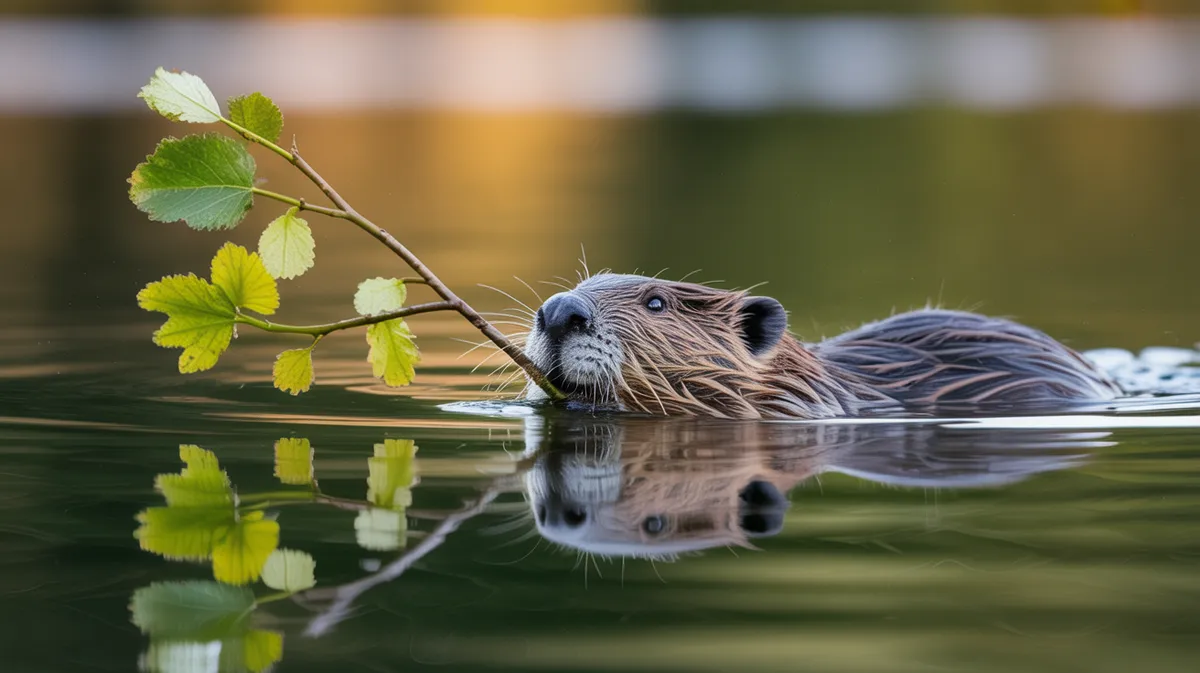
The beaver is one of the only animals that, like us, reshapes the world to suit itself. With nothing but its teeth and tireless effort, it fells trees, dams rivers, and conjures entire wetlands into being — homes not just for itself but for countless other species. In this entry of our A Day in the Life series, we follow a beaver through a day built almost entirely around the night shift.
Like the red fox, the beaver works while we sleep, so its day runs largely in reverse. See also the leaderless industry of a day in the life of an ant colony and the busy hive in a day in the life of a honeybee.
Before dawn
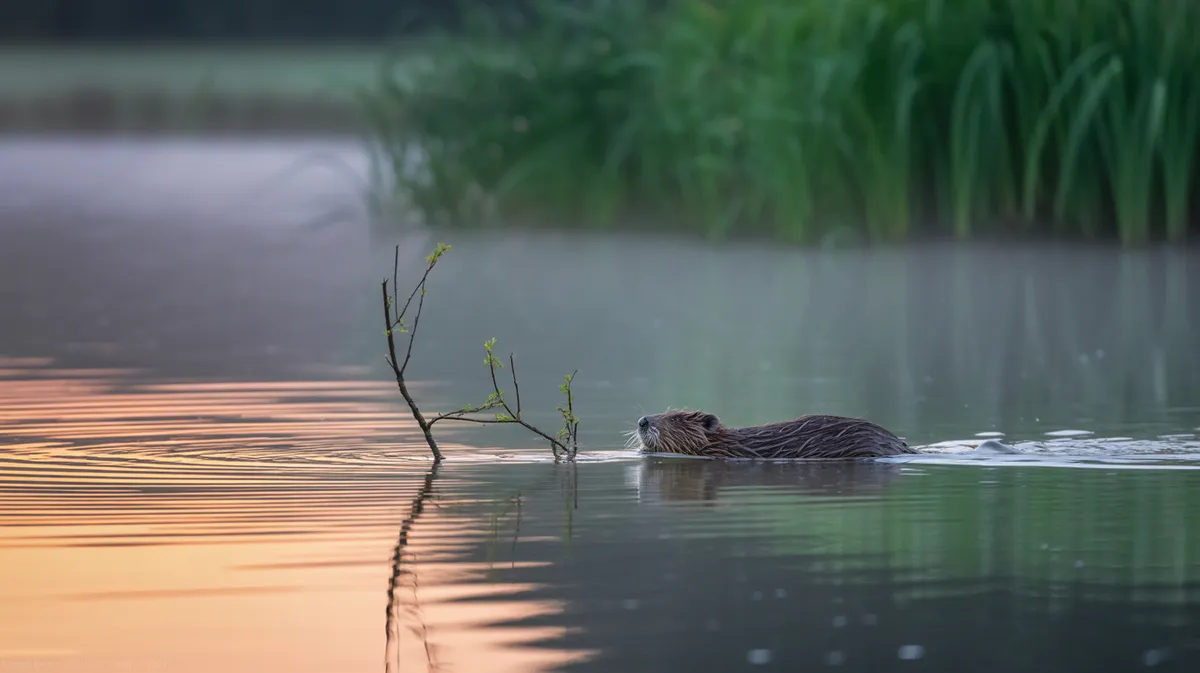
As the sky begins to lighten, our beaver is wrapping up a long night of labour. It makes a final pass along its dam, pressing fresh mud and sticks into any weak spots it can feel in the flow.
With the last branch hauled into place, it turns toward home, swimming low and silent across the still pond it built.
Powerful webbed hind feet and a flat, paddle-like tail drive it through the water, while a set of transparent third eyelids act like built-in goggles so it can see as it swims.
Sunrise
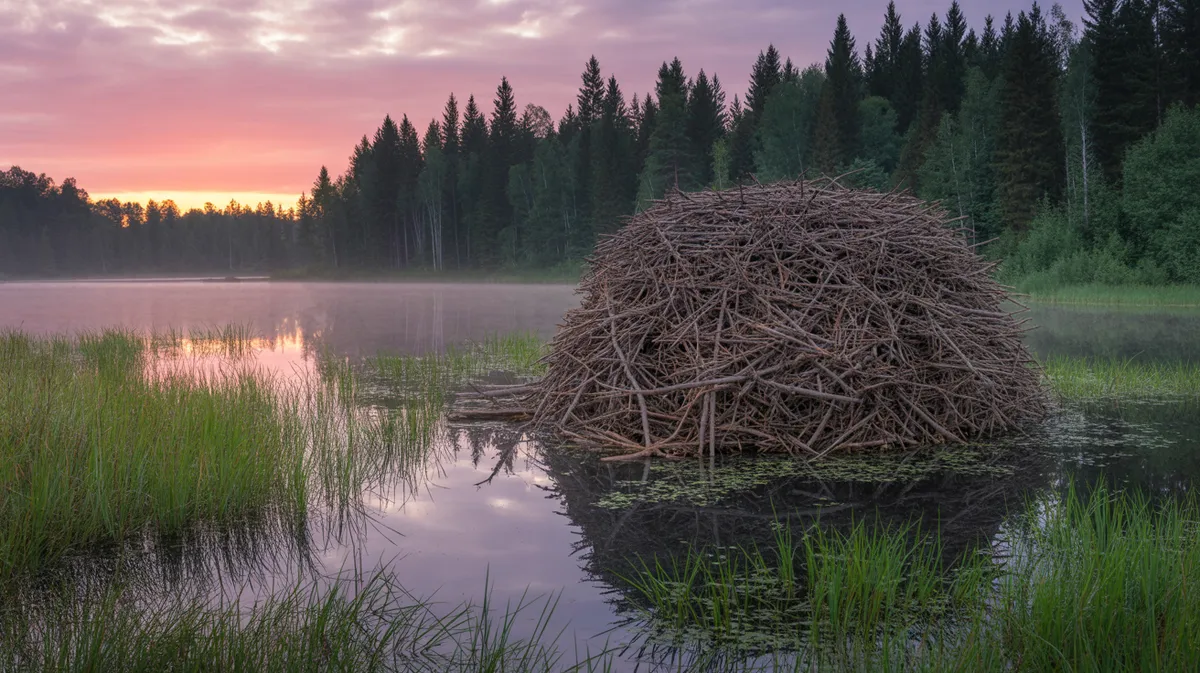
Home is the lodge — a great dome of branches and mud rising from the water, with all its entrances hidden safely below the surface. The beaver dives down and swims up into a snug, dry chamber that sits just above the waterline.
Inside, the family is gathered: a bonded pair, this year's kits, and often the young from the previous year, who stay to help raise their siblings.
As the day brightens outside, the beaver settles in among them, safe behind walls so thick they can freeze rock-hard in winter, sealing the family away from predators.
Midday
Through the daylight hours the beaver mostly rests, dozing in the dim lodge. This is also grooming time, and it's far from vanity.
The beaver combs its dense fur with a special split claw and works in an oil called castoreum, waterproofing the coat that keeps it warm and dry in cold water.
That double-layered fur is so effective that the skin beneath barely gets wet, even after hours of swimming in near-freezing ponds.
Afternoon
The lodge stays quiet, but the world the beaver created is anything but. The pond behind its dam now teems with fish, frogs, insects, and birds drawn to the new wetland.
Young kits practise swimming in the safety of the lodge pool, building the strength they'll need for a life of aquatic engineering.
This is why beavers are called a keystone species: simply by living their lives, they create habitat that an entire community of animals depends on.
Dusk
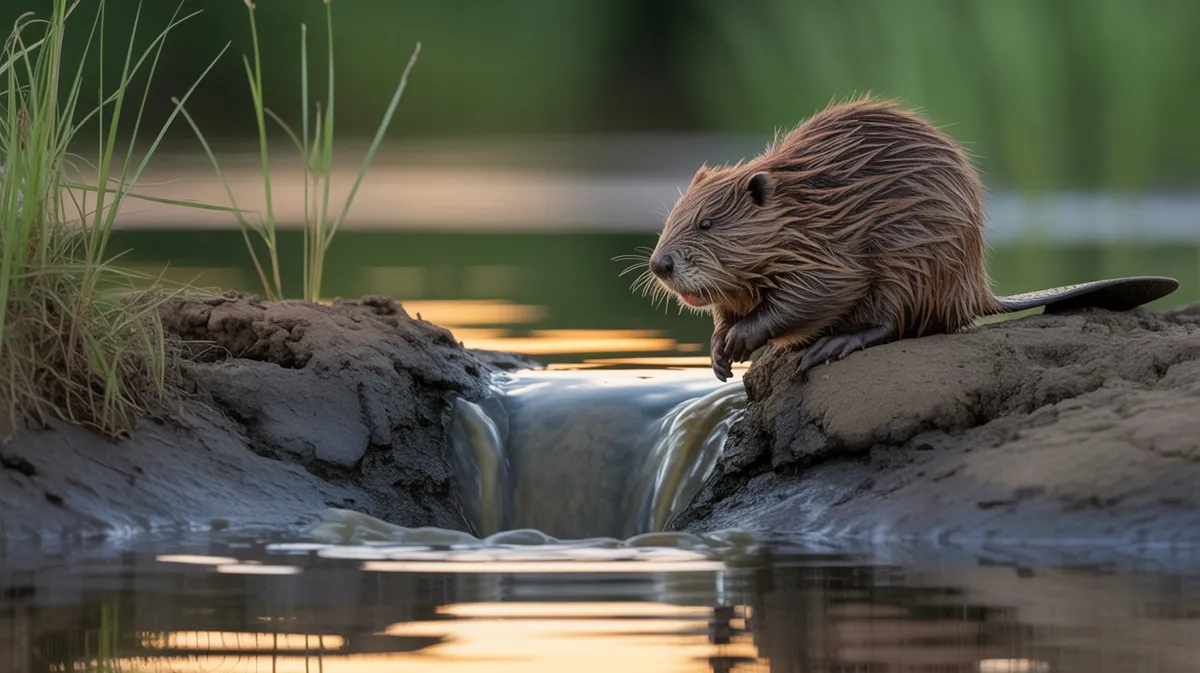
As the light fades, the beaver rouses and slips back into the water — its day is truly beginning. Its first task is an inspection, and it is driven by a famous instinct: the very sound of running water compels a beaver to find and plug the leak.
Satisfied the dam is holding, it turns to dinner, feeding on the bark, leaves, and soft inner wood of the trees it has felled.
Beavers are strict vegetarians, and in summer they branch out to pond weeds, water lilies, and fresh shoots along the bank.
After dark
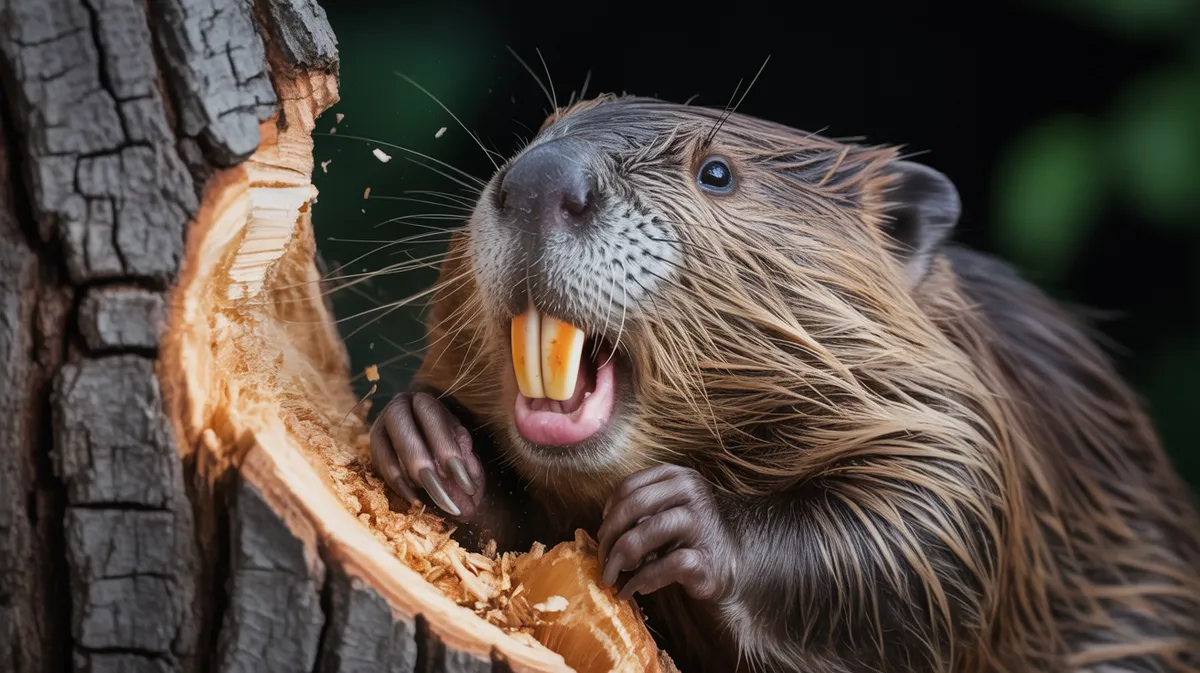
Night is when the real engineering happens. Using chisel-like front teeth that never stop growing, the beaver gnaws through tree trunks, dropping timber to repair the dam, extend the lodge, and stockpile food.
Before winter it caches a raft of branches underwater near the lodge, a frozen-in larder it can reach without ever surfacing once ice seals the pond.
If danger appears, it sounds the alarm with a thunderous slap of its tail on the water — a warning that sends the whole family diving for safety before it, too, vanishes beneath the surface.
The Beaver's Great Comeback
For a long time this daily routine had almost vanished. Beavers were hunted relentlessly for their fur and for castoreum, and were driven to the edge of extinction across Europe and much of North America.
Now they are coming back, both naturally and through deliberate reintroduction. Where they return, the effects are dramatic: their dams slow floodwaters, filter pollutants, recharge groundwater, and create wetlands that teem with life.
Some communities have even embraced them as cheap, self-repairing flood defence — a wild animal doing for free what expensive engineering struggles to achieve. The beaver has gone from persecuted pest to one of rewilding's greatest success stories.
What a day reveals
A beaver's day is a quiet masterclass in engineering and family teamwork, lived mostly under cover of darkness. By doing nothing more than building a home, it filters water, prevents floods, and creates entire ecosystems — proof that one determined animal really can reshape the land.
Frequently asked questions
Are beavers nocturnal? Largely — they're most active from dusk through the night, resting in the lodge by day.
Why do beavers build dams? To create deep, calm ponds that protect their lodge and give them safe underwater access to food and home.
Do beavers eat the wood they cut? They eat the bark, leaves, and soft inner wood — they're vegetarians — and use the rest for building.
Do beavers eat fish? No. Beavers are strict vegetarians, eating bark, leaves, and water plants.
Why do beavers slap their tails? It is an alarm signal, warning the family to dive for safety.
How long do beavers live? Often around 10 to 20 years in the wild.
Do beaver dams cause flooding? They can locally, but they more often reduce downstream flooding by slowing water.
How big do beavers get? They are the second-largest rodent, commonly around 20 to 30 kilograms.
Do beavers hibernate? No. They stay active all winter, living off a cache of branches stored underwater.
Why are beavers called ecosystem engineers? Their dams create wetlands that countless other species depend on.
That's another remarkable day. Revisit a day in the life of a red fox and a day in the life of an ant colony — and watch for more in the A Day in the Life series.