
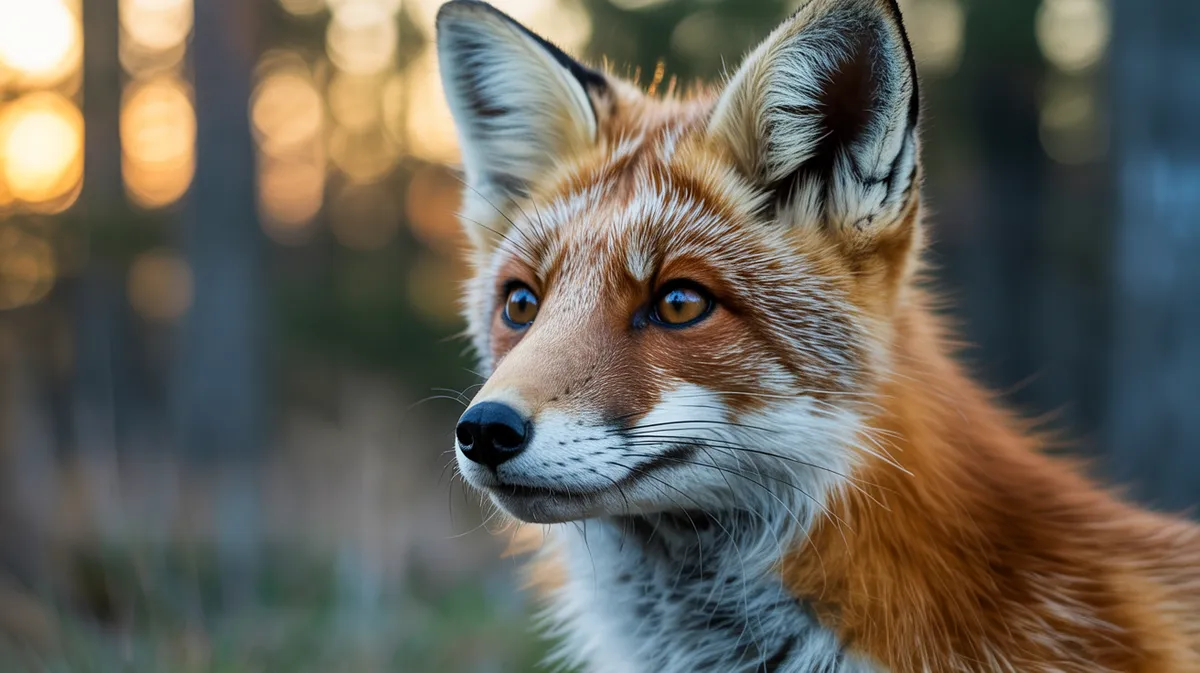
The red fox is the most widespread wild carnivore on Earth, equally at home in a snowy forest, a windswept moor, or the middle of a sleeping city. To follow its day is to follow a creature whose clock runs opposite to ours — for the fox, the real day begins as ours ends. In this entry of our A Day in the Life series, we trace a red fox through twenty-four hours, from its dawn return to its midnight hunt.
Clever, adaptable, and endlessly resourceful, the fox is a survivor's survivor. See also the teamwork of a day in the life of a meerkat and the ocean hunter in a day in the life of a great white shark.
Before dawn
As the sky begins to pale, our fox is finishing its night's work. Returning along familiar trails, it pauses to bury any surplus food in a shallow cache, scraping soil over a mouse or scrap to dig up later when hunting is poor.
Its night has covered a wide territory, marked at the edges with scent so rivals know it's claimed. Now, well-fed or not, it turns toward home.
Foxes have astonishing spatial memory for these caches, relocating hundreds of small hidden stores across their territory weeks later.
Sunrise
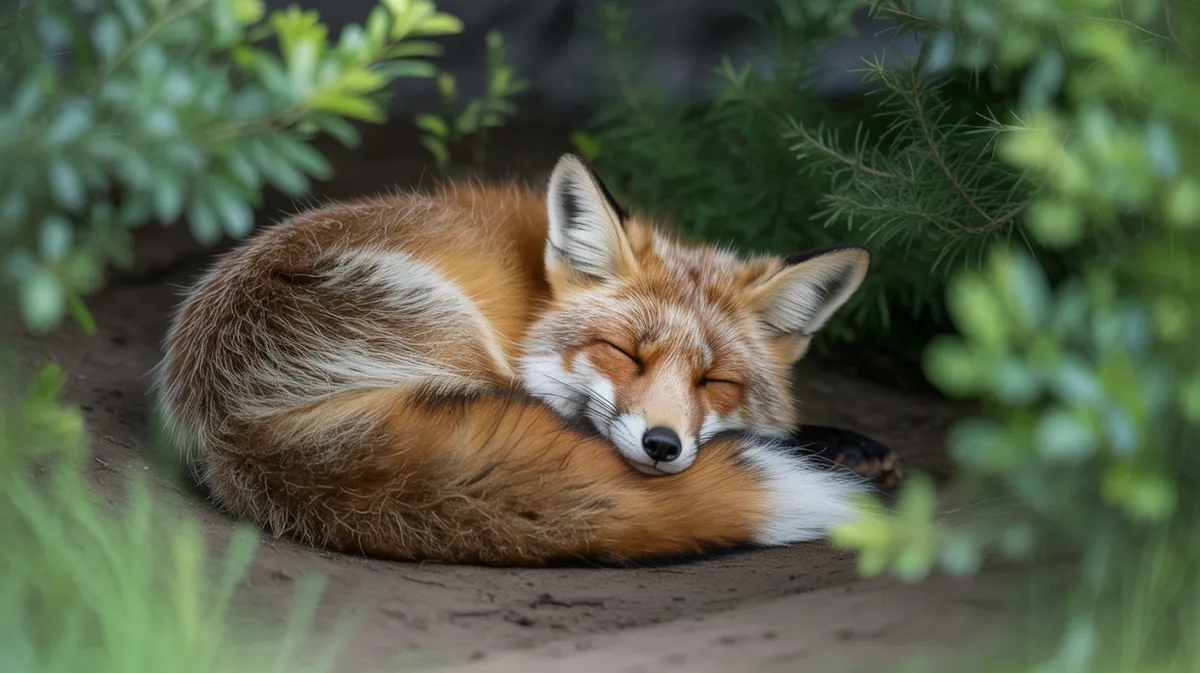
With daylight comes rest. The fox curls into a sheltered spot — a thicket, a quiet garden, or the mouth of an earthen den — and wraps its luxuriant tail, the "brush," around its body and nose like a built-in blanket.
Foxes don't usually sleep deep underground except when raising cubs; for much of the year they simply doze above ground, tucked out of sight and out of the wind.
A fox's thick winter brush isn't just bedding — it also acts as a rudder and a balance aid when the animal makes its acrobatic pounces.
Midday
Through the bright hours the fox lies low, dozing in light, broken sleep. Even at rest its radar-dish ears keep swivelling, twitching toward every rustle and footstep around it.
In towns and cities this is when foxes vanish from view, lying up under sheds and decking while the human world bustles overhead, completely unaware of the predator napping below.
City foxes have shifted their whole routine around us, growing bolder and more active in the quiet pre-dawn hours when the streets finally empty.
Afternoon
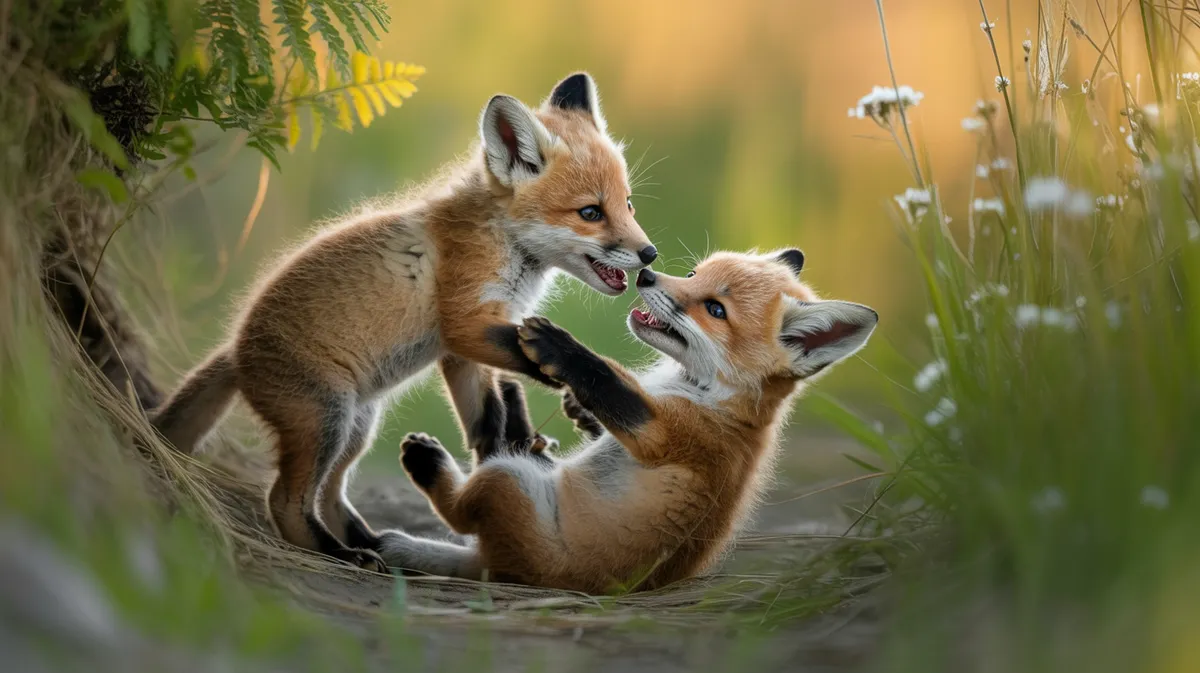
As the day cools, the fox stirs, stretches, and grooms its thick coat. In spring and early summer this is when fox cubs come tumbling out near the den, play-fighting and pouncing on leaves while a watchful parent dozes nearby.
That play is serious training: every mock-pounce is rehearsal for the hunting skills the cubs will soon need to survive on their own.
Cubs are born blind and helpless in spring, and both parents — sometimes with help from older siblings — share the work of feeding and guarding them.
Dusk
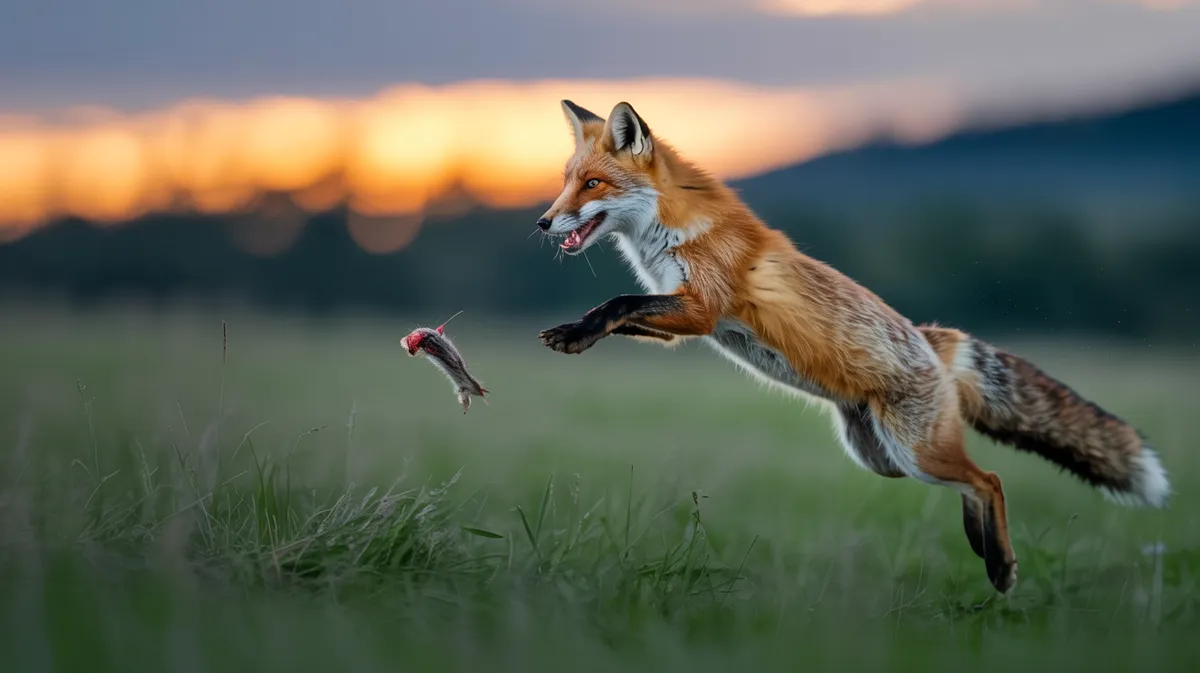
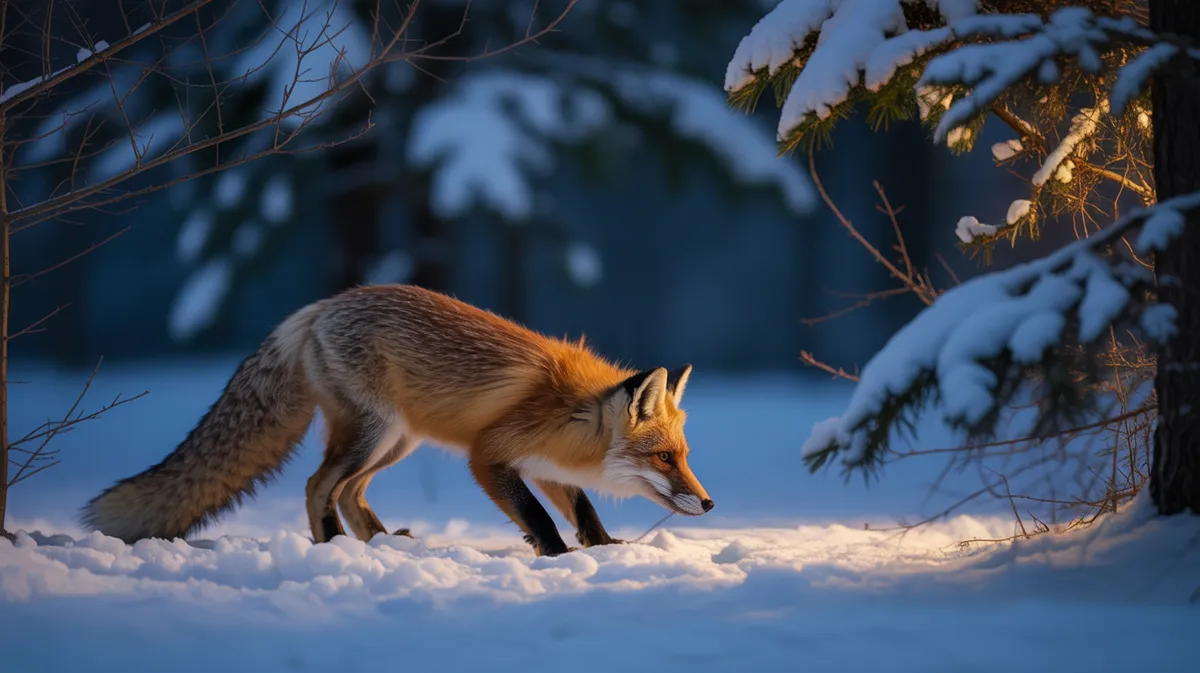
This is the fox's golden hour. As the light fades it sets out to hunt, relying on extraordinary hearing that can pinpoint a mouse moving beneath grass or snow from metres away.
When it locates prey, it performs its signature move — the high, arcing "mouse pounce," leaping up and crashing down nose-first to pin the prey beneath its paws. It's an omnivore, too, happily taking worms, beetles, berries, and whatever a bin might offer.
That famous hearing is tuned to low-frequency rustling, letting a fox detect a vole gnawing or a worm moving through soil it can't even see.
After dark
The deep night is the heart of the fox's day. It patrols its whole range, hunting, scavenging, caching food, and refreshing the scent-marks that define its territory.
In winter, when it hunts prey hidden under snow, the fox seems to aim its pounces using the Earth's magnetic field, lining up north-east for a striking boost in success — one of the eeriest hunting tricks in the animal world.
Foxes are also surprisingly vocal at night, using an eerie repertoire of screams, barks, and "gekkering" chatter to communicate across the dark.
The Fox That Moved to Town
The red fox's greatest trick is that it barely needed to change to live alongside us. Urban foxes are not a different animal; they are the same fox, working the same night shift in a new landscape.
They den beneath sheds, decking, and railway embankments, and they exploit an abundant food supply — bins, scraps, fallen fruit, and a healthy population of rats and pigeons.
City foxes are bolder and often live at far higher densities than rural ones, but they remain wild. They are not a threat to people, and the simplest way to keep them at a comfortable distance is not to feed them and to secure the bins.
What a day reveals
The red fox's inverted, adaptable day is the secret to its astonishing success: it simply works the hours we don't, eats almost anything, and thrives wherever it lands. Few wild animals have adjusted to a human-shaped world so completely — usually right under our noses.
Frequently asked questions
Are foxes nocturnal? Mostly crepuscular and nocturnal — they hunt at dusk and through the night and rest during the day.
How do foxes hunt? With exceptional hearing and a high "mouse pounce," and they sometimes aim using the Earth's magnetic field.
Do foxes store food? Yes — they cache surplus food in shallow holes to dig up later when hunting is poor.
Are urban foxes dangerous? Essentially no. Attacks are extraordinarily rare, and foxes generally avoid people.
How long do foxes live? Often only 2 to 5 years in the wild, though they can live longer in safety.
Do foxes hunt cats? Very rarely. An adult cat is a formidable opponent, and foxes generally avoid them.
Why do foxes scream at night? It is a vocal contact and mating call, most common in winter — eerie, but harmless.
Next in the series: the ocean's apex hunter in a day in the life of a great white shark, and the tireless society of a day in the life of an ant colony.