
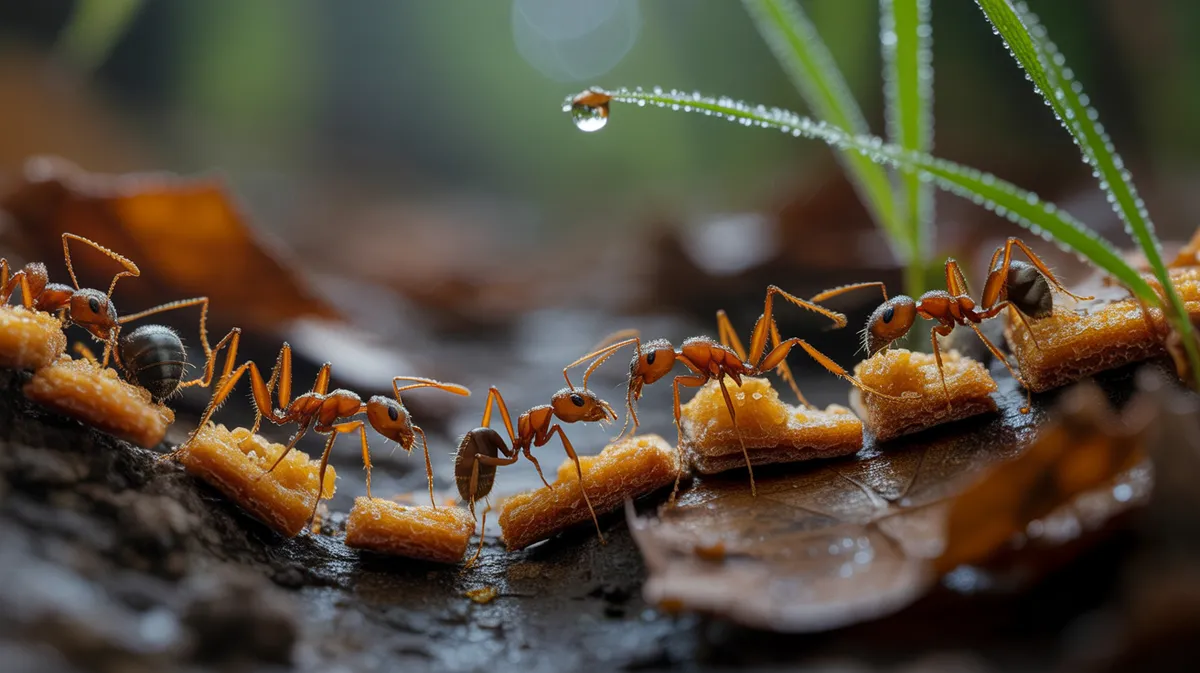
An ant colony is less a group of insects than a single creature with thousands of bodies. No ant is in charge — not even the queen — yet together they build, farm, fight wars, and feed a whole city, all through simple rules and chemical signals. In this entry of our A Day in the Life series, we follow an entire ant colony through one day as a single, humming superorganism.
It's one of the most astonishing examples of teamwork on Earth. See also the cooperative hive in a day in the life of a honeybee and the watchful mob in a day in the life of a meerkat.
Before dawn
In the cool darkness underground, the colony stirs slowly. Deep in the nest the queen continues the one job she has done for years — laying eggs, sometimes thousands a day — while nurse ants tend the growing brood in temperature-controlled chambers.
Near the surface, a few early workers test the air at the nest entrance, gauging whether the day is warm enough to send out the foragers.
The queen can live for many years — in some species, decades — and a colony's entire existence is built around keeping her and her eggs safe and fed.
Sunrise
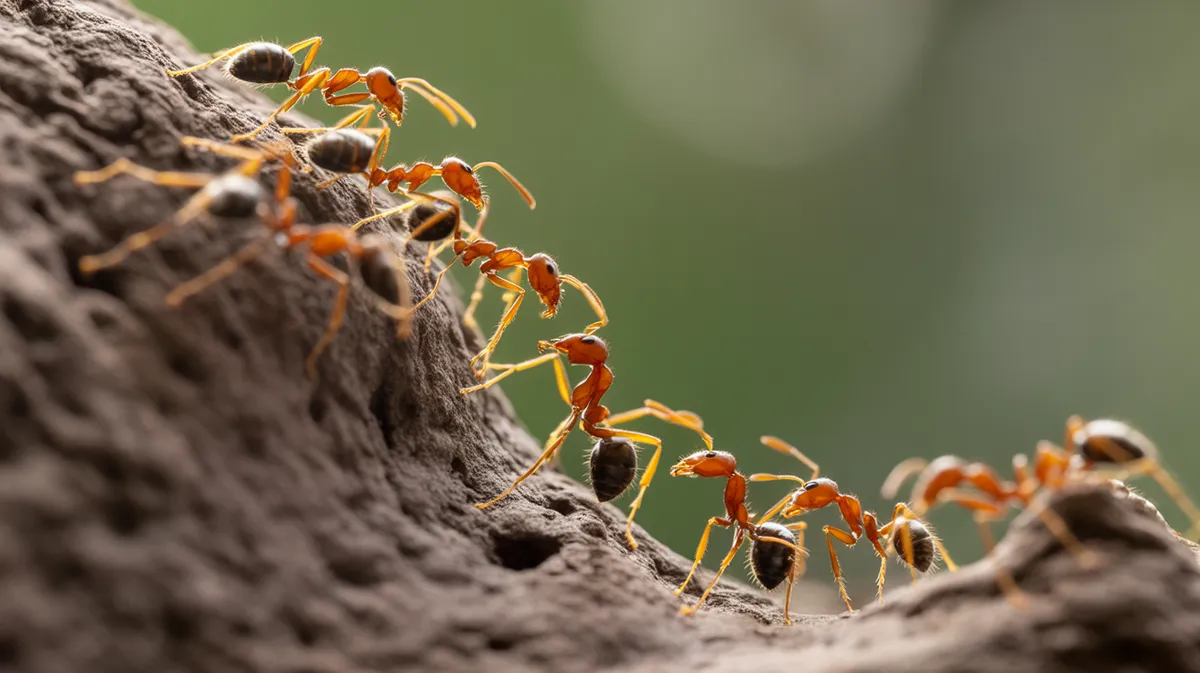
As warmth reaches the nest, the first foragers pour out. Scouts that found food the day before have laid invisible trails of scent chemicals called pheromones, and now their nestmates follow these chemical roads to the harvest.
The system is beautifully simple: the richer the food, the stronger the trail laid on the way back, and the more ants are drawn to follow it.
If a trail leads to a dead end, the lack of fresh pheromone simply lets it fade, so the colony constantly and automatically updates its own road map.
Midday
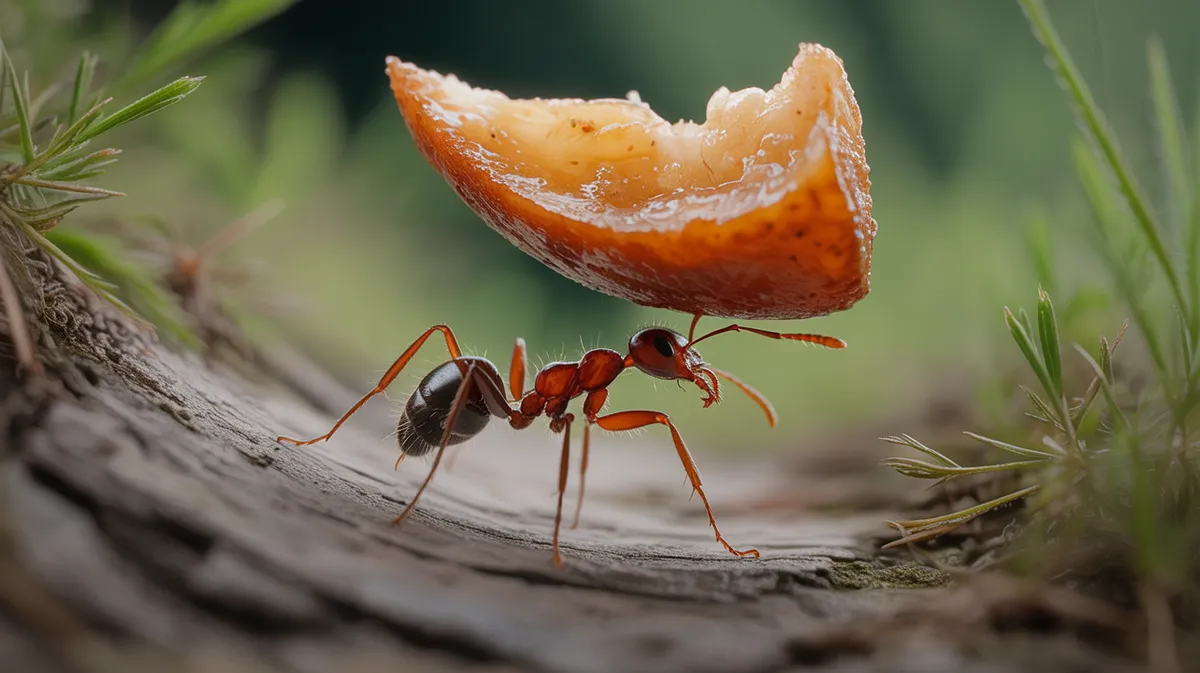
The colony hits full stride. Lines of foragers stream out and back, carrying seeds, insect prey, and droplets of sugary liquid, some hauling items many times their own body weight.
Different workers do completely different jobs without anyone assigning them — foraging, building, hauling waste, and tending the young — the whole division of labour emerging from local cues rather than any central command.
Some ants act as living "honeypots," hanging from the ceiling gorged with food and serving as living storage tanks the colony can tap in lean times.
Afternoon
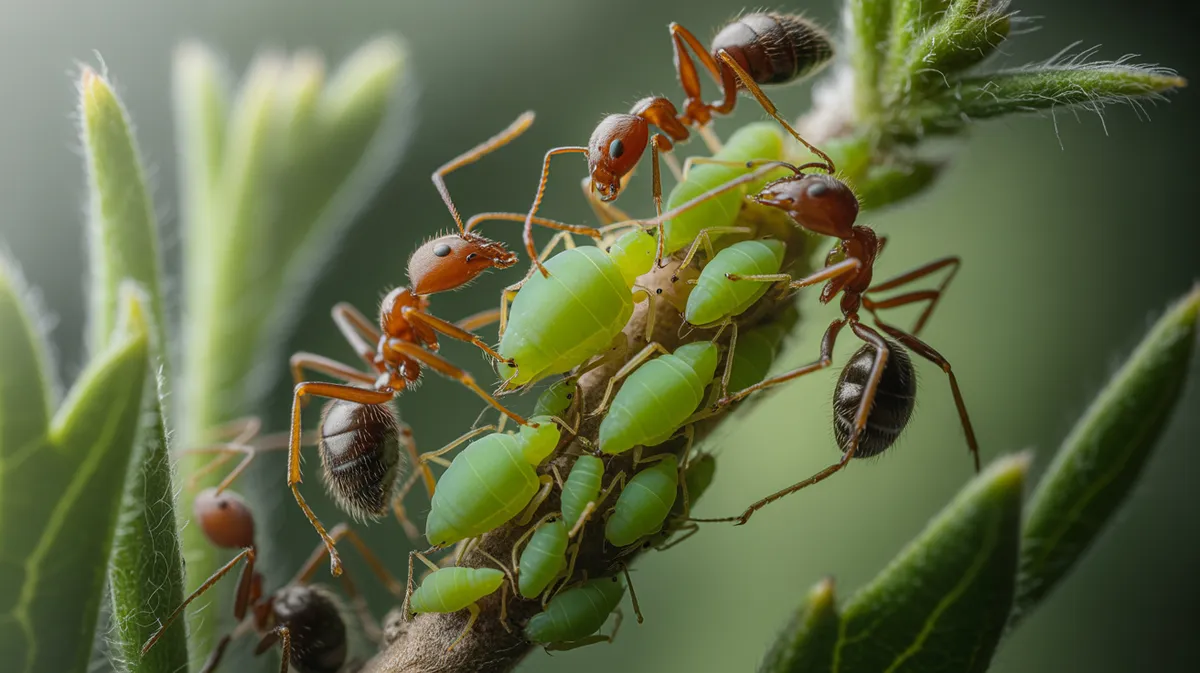
Some colonies reveal their most surprising skills now. Many species "farm," herding tiny aphids and protecting them in exchange for the sweet honeydew they produce, milking them like miniature livestock.
Meanwhile, soldier ants with oversized jaws patrol the nest's borders, ready to repel rival colonies or predators, while workers constantly repair and extend the tunnels.
Other species are full-blown fungus farmers, growing underground gardens on chewed leaves — an agricultural lifestyle they evolved tens of millions of years before humans.
Dusk
As the light fades and the air cools, the foragers stream home, and the pheromone roads that guided them all day slowly evaporate. The colony draws its workforce back inside the safety of the nest.
Returning foragers pass their food to others through mouth-to-mouth sharing, distributing the day's harvest deep into the colony.
This constant mouth-to-mouth food sharing, called trophallaxis, also spreads a chemical signature that lets every ant instantly recognise a nestmate from an intruder.
After dark
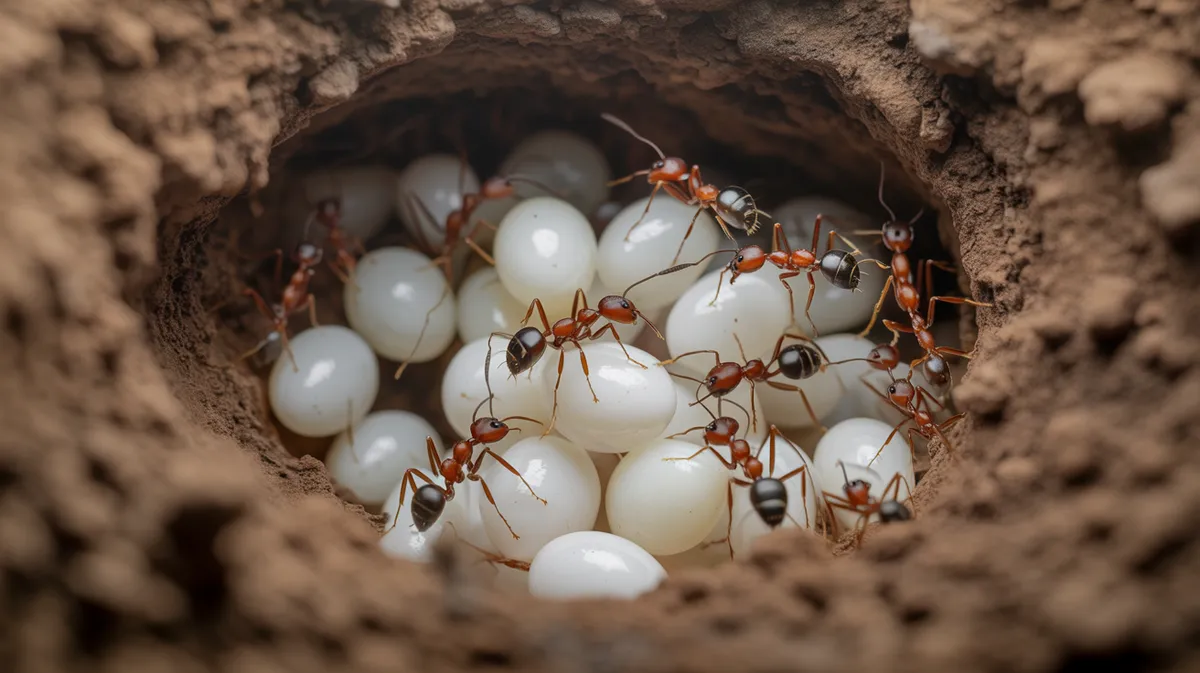
By night most of the colony retreats underground, sealing or guarding the entrance against intruders. Inside, the work never fully stops: nurses tend eggs and larvae around the clock, shifting the brood between chambers to keep it at the perfect temperature.
The colony rests as a single living mass, conserving its energy until the warmth of morning sends the foragers out once more.
Together the colony can weigh as much as a large mammal, and across the planet the combined mass of all ants rivals that of all humans.
The Day the Colony Takes Flight
Most days in an ant colony look much like the last. But once a year, on a warm, still day after rain, everything changes.
The colony releases its winged males and young queens, and they pour out to mate in the air, often in enormous synchronised swarms with neighbouring colonies. The males die within hours. A surviving queen lands, tears off her own wings, and digs a chamber to start a colony of her own.
Almost all of them fail — eaten, dried out, or starved. But the few that succeed will spend years, sometimes decades, laying the eggs that build another city.
What a day reveals
An ant colony's day shows how breathtaking complexity can emerge from simple individuals following simple rules. With no leader and no plan, thousands of tiny brains together behave like one intelligent organism — a model of cooperation that has helped ants thrive for over 100 million years.
Frequently asked questions
Does the queen ant control the colony? No — she only lays eggs. The colony organises itself through simple rules and chemical signals.
How do ants find food? Scouts lay scent trails (pheromones) that nestmates follow; richer food gets a stronger trail and more followers.
Do ants really farm? Yes — many species herd and protect aphids, "milking" them for sugary honeydew.
How long does a queen ant live? Many years — and in some species several decades, far outliving her workers.
How do ants find the shortest path to food? The strongest pheromone trail wins, and the shortest route naturally gets reinforced fastest.
How many ants are there on Earth? Estimates run to many trillions — their combined mass rivals that of all humans.
Do all ants sting? No. Many bite instead, and plenty are entirely harmless to people.
Do ants sleep? They take many very short rests rather than one long sleep, so the colony never fully shuts down.
How strong is an ant? Many can carry many times their own body weight, thanks to the physics of being small.
Do ants have a leader? No. The colony organises itself through simple rules and chemical signals.
That's three more very different days. Revisit a day in the life of a honeybee and a day in the life of a great white shark — and watch for more in the A Day in the Life series.