
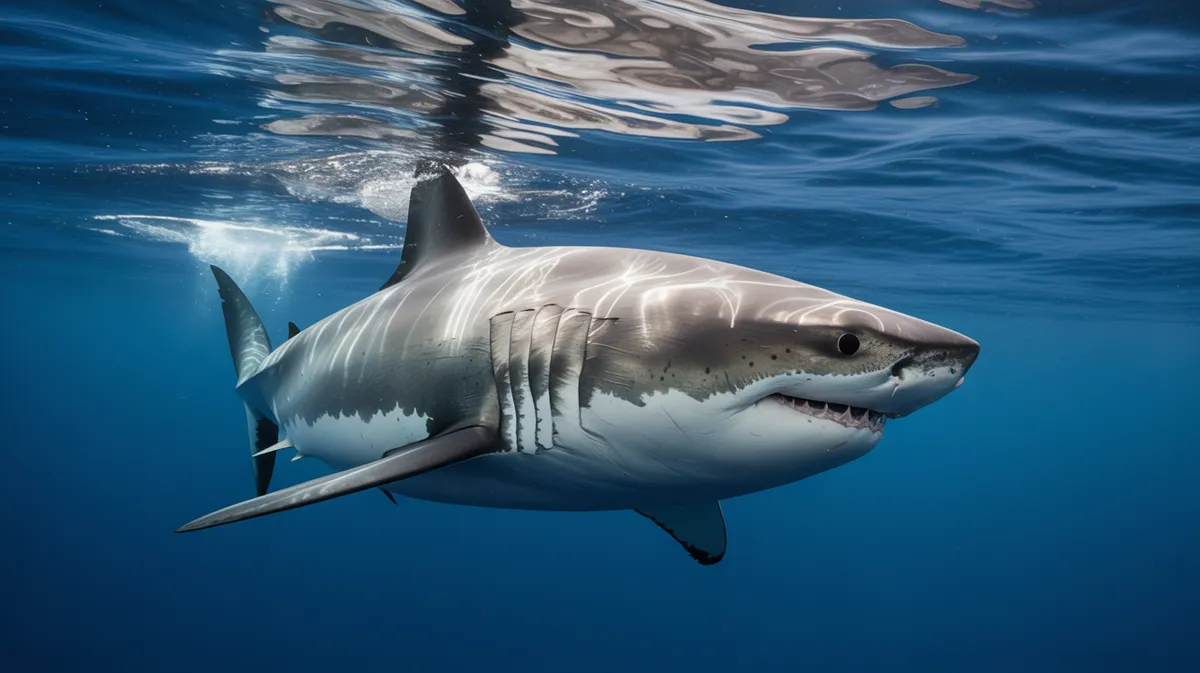
A great white shark cannot stop. It has no swim bladder to keep it afloat and, like many sharks, must keep water moving over its gills to breathe — so its entire life is one continuous, prowling journey. In this entry of our A Day in the Life series, we follow a great white through a day off a seal colony, where the most feared fish in the sea is also one of the most misunderstood.
Far from a mindless killing machine, it's a precise, sensitive hunter that rarely bothers humans at all. See also the land hunter in a day in the life of a red fox and the airborne dynamo in a day in the life of a hummingbird.
Before dawn
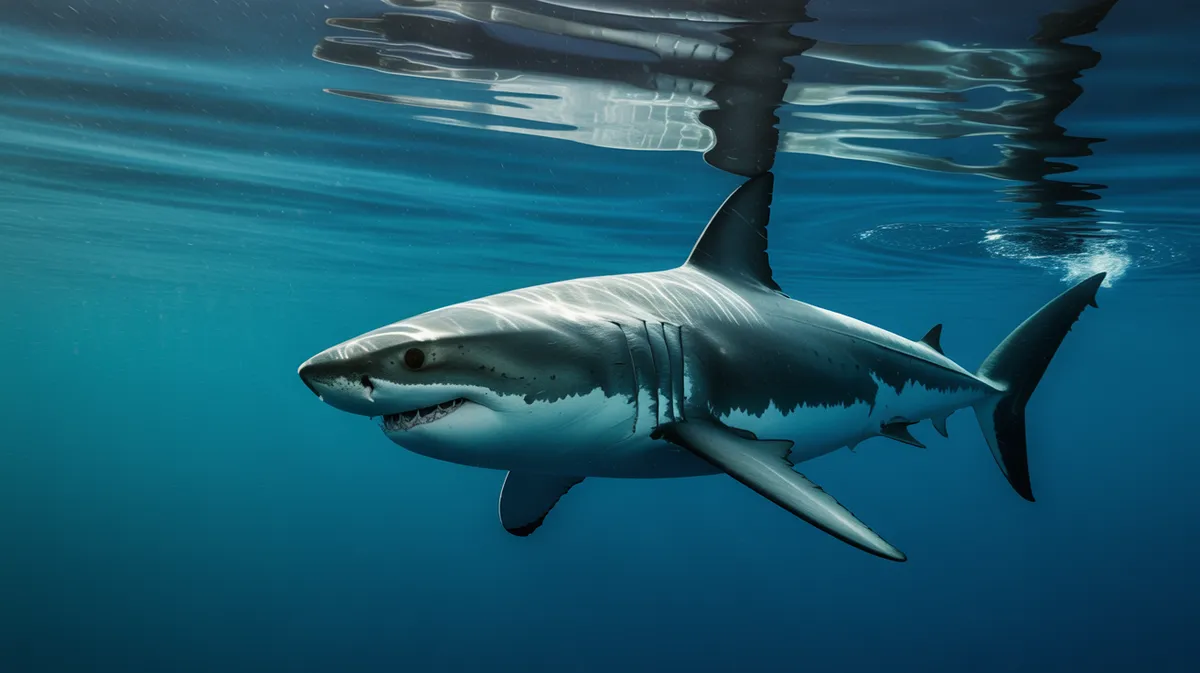
In the dim, grey light before sunrise, the great white hangs deep below the surface, patrolling the waters around a seal colony. From down here it can look up and pick out the dark shape of a seal silhouetted against the brightening sky above.
This is the moment it has been waiting for: the low light gives the shark the cover of darkness while its prey is lit up against the surface.
A great white can smell a single drop of blood diluted in a vast volume of water, giving it an early warning of any wounded animal nearby.
Sunrise
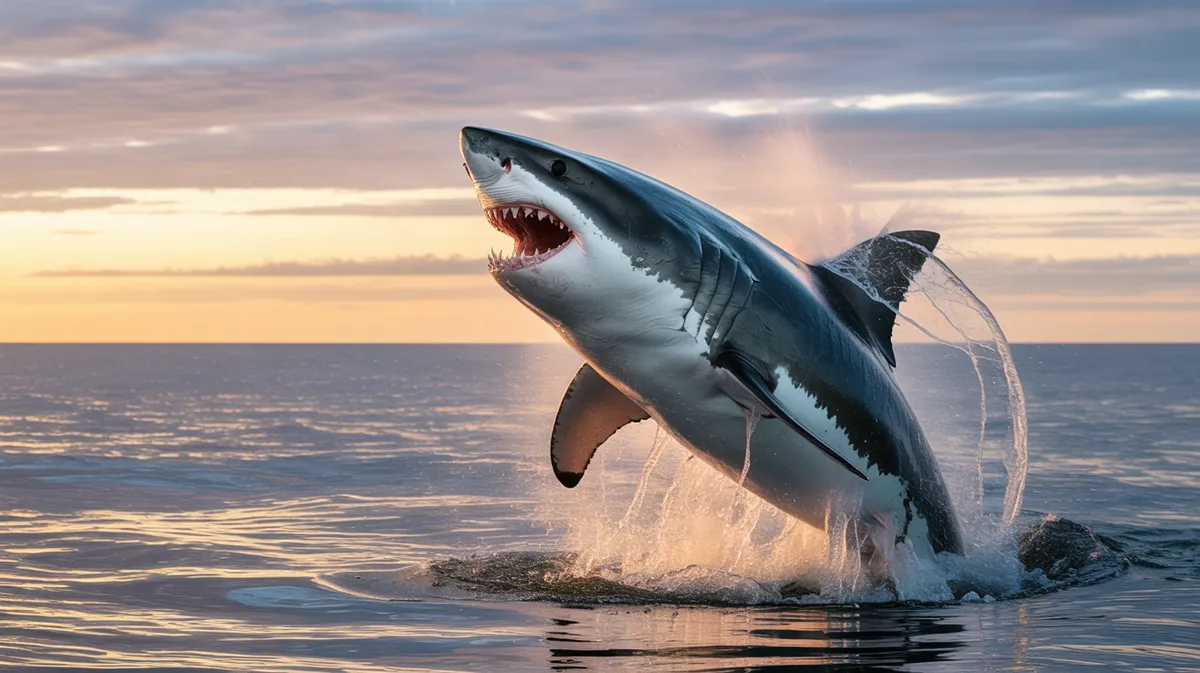
Dawn is the great white's prime hunting window. Spotting a target, it powers upward in an explosive vertical rush, sometimes hitting so hard it launches its entire body clear of the water in a spectacular breach.
Most attacks are ambushes that succeed or fail in a single second. Many miss — hunting is hard, and even the ocean's top predator goes hungry far more often than not.
A breaching great white can launch its two-tonne body completely out of the water, a stunning display of the raw power behind a single ambush strike.
Midday
As the sun climbs and the water brightens, the seals grow wary and ambushes stop working. The shark shifts to steady cruising, swimming endlessly to keep oxygen flowing over its gills.
Unusually for a fish, the great white keeps parts of its body warmer than the surrounding sea, a trick called regional endothermy that powers its muscles and sharpens its senses in cold water.
Keeping its stomach and brain warmer than the sea lets the great white hunt effectively in cold, productive waters that would slow a typical cold-blooded fish.
Afternoon
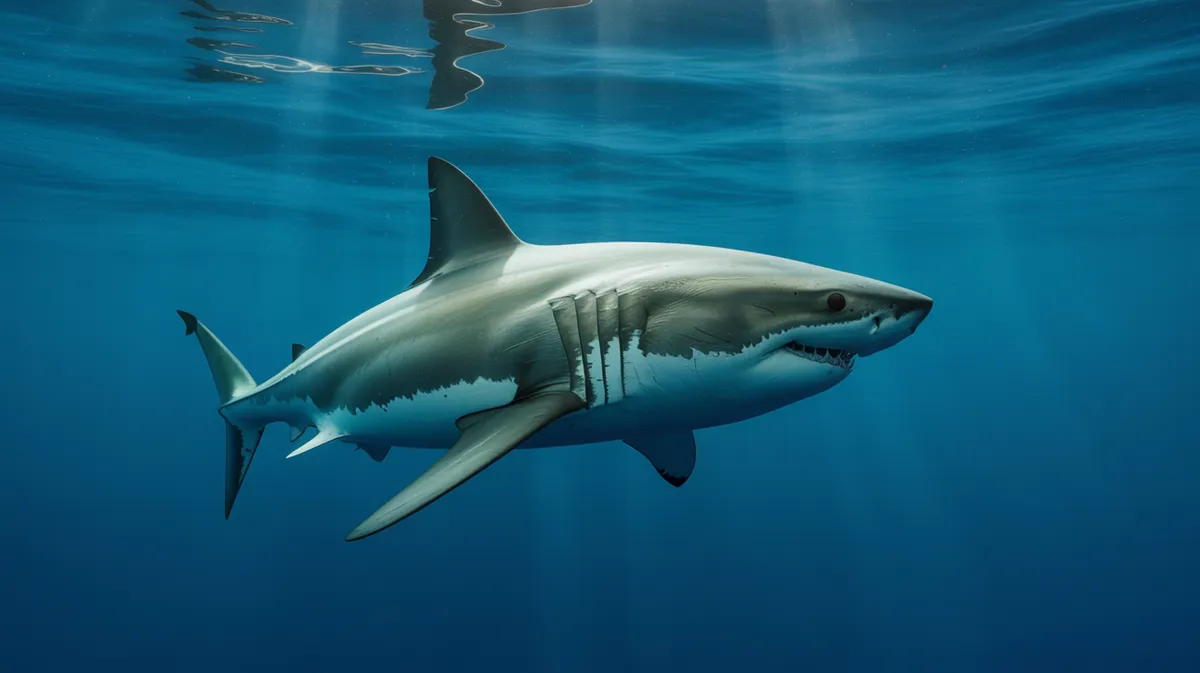
The afternoon may carry the shark far out to sea or down into the depths. Great whites are long-distance travellers, some crossing entire oceans over a year.
As it hunts, it reads the water with senses we can barely imagine — including jelly-filled pores around its snout, the ampullae of Lorenzini, that detect the faint electrical fields given off by every living animal.
Tracking studies have followed individual great whites swimming thousands of kilometres across open ocean and back, returning to the same hunting grounds year after year.
Dusk
As the light dims again toward evening, another hunting window opens. The shark returns to patrolling the colony's edges, using the failing light to mask its approach just as it did at dawn.
It cruises slowly, conserving energy, ready to convert hours of patient searching into one explosive strike.
Great whites are also curious investigators, sometimes lifting their heads above the surface — "spy-hopping" — to get a better look at something unusual.
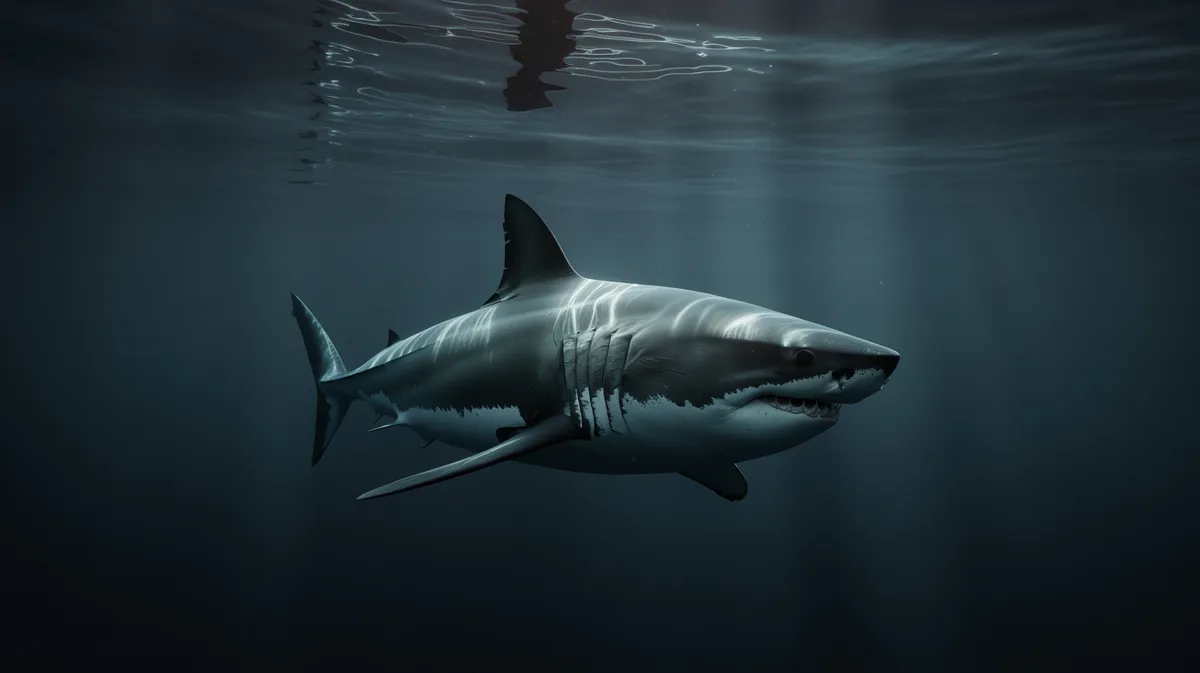
After dark
The great white never truly sleeps. Through the night it keeps swimming, and scientists believe it can enter a kind of restful, low-activity state while still moving forward to breathe.
It may also make deep dives into the dark, cold water below, where the day's warmth in its muscles helps it stay active where other fish would slow to a crawl.
These deep dives may take the shark hundreds of metres down, hunting in cold darkness where few other large predators can follow.
Beyond a Single Day
A day is only a snapshot. Tracked over a year, a great white's life turns out to be far stranger than the coastal hunter of popular imagination.
Many leave the seal colonies entirely and strike out across the open ocean. Sharks from California converge on a remote patch of the mid-Pacific — nicknamed the "White Shark Café" — spending months in deep water far from any coast, diving repeatedly, for reasons still argued over.
They cross entire oceans and return with uncanny precision to the same beaches. The animal we think of as a coastal ambush predator is, in truth, one of the ocean's great travellers.
What a day reveals
A great white's day is relentless motion in service of patient, precise hunting — and, for all its fearsome reputation, humans simply aren't on the menu. The handful of bites each year are almost always cases of mistaken identity, not the work of the monster of the movies.
Frequently asked questions
Do great white sharks ever stop swimming? No — most must keep moving to push water over their gills, even while resting.
How do great whites find prey? By sight, smell, and special electroreceptors (ampullae of Lorenzini) that detect prey's electrical fields.
Are great whites a threat to humans? Rarely — the few bites each year are usually mistaken identity, not deliberate hunting.
How big do great whites get? Commonly around 4 to 5 metres, with the largest reliably measured individuals larger still.
Are great whites warm-blooded? Partly. They keep parts of their body warmer than the surrounding water, which powers their muscles.
How long do great whites live? Possibly 70 years or more, far longer than once assumed.
Do great whites hunt humans? No. The rare bites are almost always mistaken identity, not predation.
Do great whites sleep? Not as we do. They appear to enter a restful, low-activity state while still gliding forward to breathe.
What do great whites eat? Mainly seals, sea lions, fish and rays — and larger prey as they grow.
Are shark numbers falling? Yes. Great whites are threatened, largely by fishing and bycatch.
Continue with a day in the life of an ant colony, or revisit a day in the life of a red fox.