
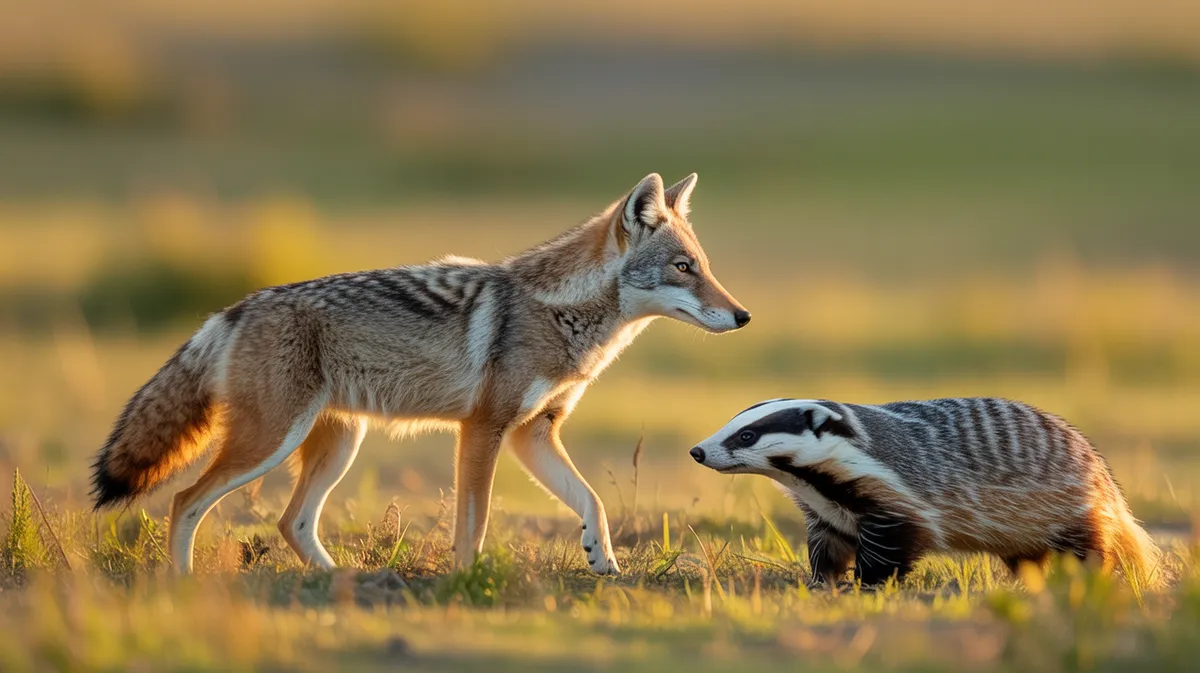
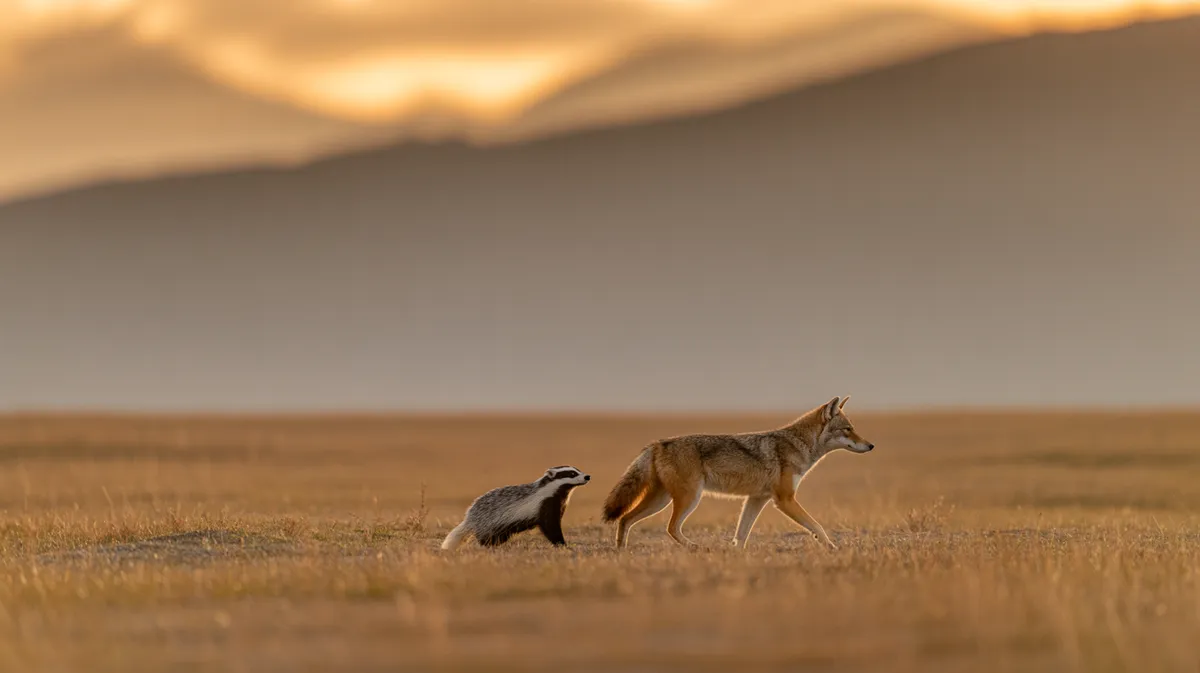
On the open grasslands of North America, you might catch a sight that seems to break the rules of the wild: a coyote and a badger trotting along together, side by side, on their way to hunt as a team. Two very different predators, who might be expected to ignore or even fight one another, instead form one of nature's rare hunting partnerships. In this entry of our Nature's Odd Couples series, we explore the alliance of the badger and the coyote.
It works because each brings a skill the other completely lacks. See also the cooperative deal of the goby and the pistol shrimp and the human alliance in the honeyguide that leads people to honey.
An unlikely team
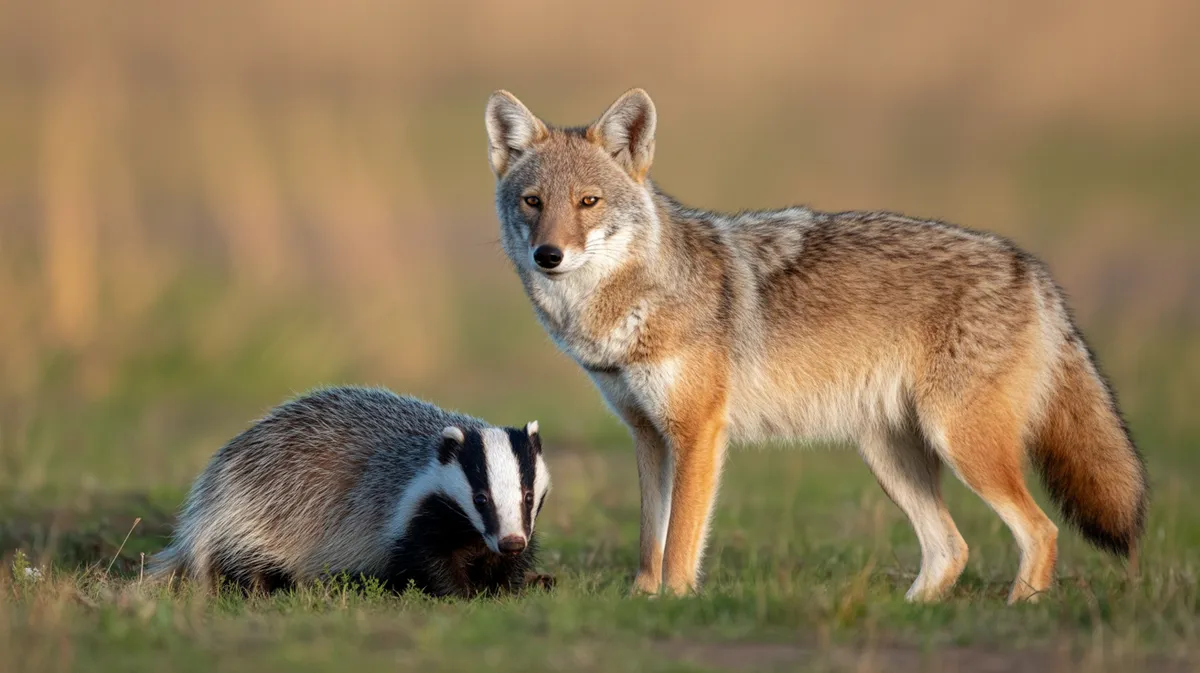
The coyote is a fast, sharp-eyed runner, built to chase down prey across open ground. The badger is a powerful, low-slung digger, able to tear through soil and pursue animals into their burrows.
On their own, each is a capable hunter of the same prey — ground squirrels, prairie dogs, and other burrowing rodents.
But that shared menu is exactly what makes them such effective partners rather than rivals.
Away from the hunt, badgers and coyotes mostly ignore each other, which makes their willingness to cooperate over food all the more striking.
Closing every exit
A burrowing rodent has two ways to escape: stay underground where a coyote can't follow, or pop up and sprint away where a badger can't catch it. A lone predator can only cover one of those options.
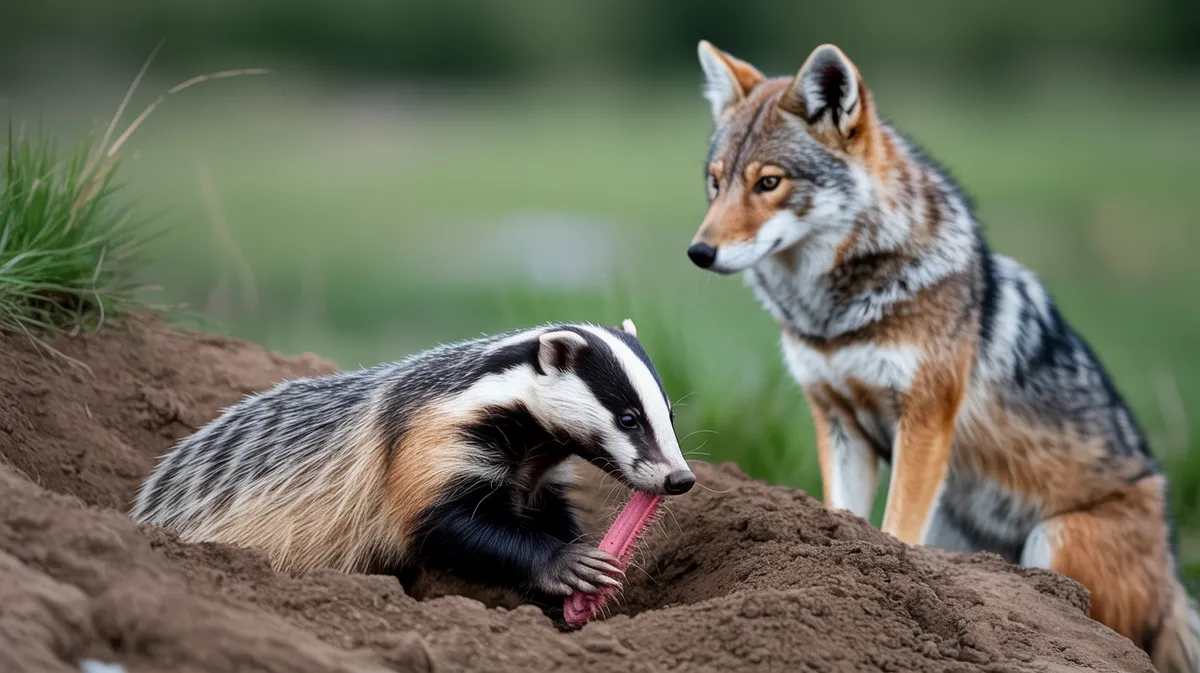
Together, they cover both. The coyote patrols above ground while the badger digs below, so a rodent that flees the badger underground runs straight toward the waiting coyote, and one that dodges the coyote above ground dives down to the digging badger.
The prey is caught in a pincer with no safe exit left.
Faced with this two-front attack, prey animals have even been seen plugging their burrow entrances and simply staying put — a sign of just how effective the pairing is.
Who gets the meal?
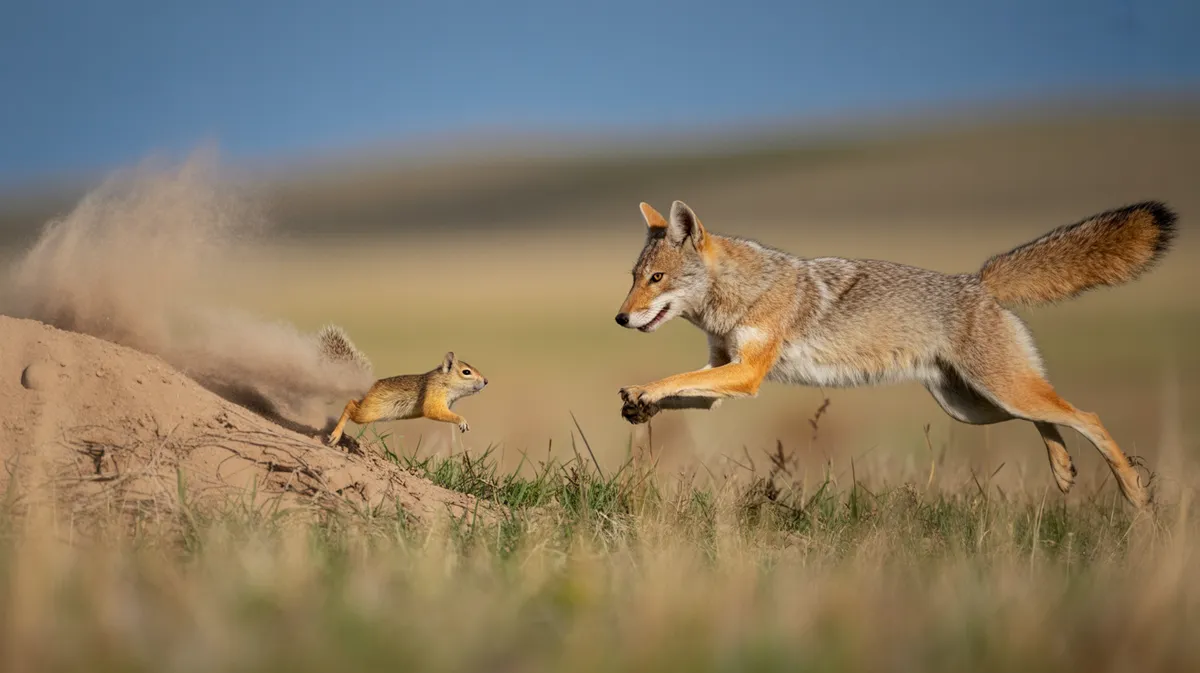
Curiously, they don't share a single carcass — whoever catches the prey eats it. The benefit is that each catches prey far more often when working with the other.
Studies on the prairie found that coyotes hunting with a badger caught noticeably more ground squirrels than coyotes hunting alone, and used less energy doing it.
Both partners simply enjoy more successful hunts, which is reward enough to keep teaming up.
The badger may benefit a little less obviously, but it gains from prey that the coyote's presence keeps from escaping above ground, so both leave the hunt ahead.
How the partnership forms
These pairings are loose and voluntary, not lifelong bonds. A coyote may approach a badger with playful body language — wagging its tail, even bowing as a dog might invite play — and the two will then travel and hunt together.
Some pairs seem to seek each other out repeatedly, suggesting they recognise the value of a familiar partner.
When the hunting is done, they simply go their separate ways until the next time.
Trail cameras have even captured the two travelling together through culverts and across roads, the coyote repeatedly pausing to let its slower digging partner catch up.
An ancient alliance
This partnership is no modern discovery. Several Indigenous peoples of North America long recognised the badger and the coyote as hunting companions, featuring the pair together in stories and art.
Folklore, in other words, had noticed the alliance centuries before biologists confirmed it with data.
It's a striking case of two predators choosing cooperation over competition, written into both science and legend.
To some peoples the pairing symbolised the value of combining different strengths — a lesson drawn from the prairie long before it appeared in any biology textbook.
Other Unlikely Hunting Alliances
The badger and coyote are not alone. On coral reefs, groupers have been filmed recruiting moray eels to hunt with them, using a deliberate head-shake signal to invite the eel along.
The two hunt exactly like the badger and the coyote: the eel flushes prey out of crevices where the grouper cannot reach, and the grouper takes anything that bolts into open water. Neither shares a meal, but both eat more often.
Ravens and wolves show a looser version of the same idea, with ravens following wolf packs to feed on kills and sometimes appearing to lead wolves toward carcasses. Cross-species cooperation is rarer than competition — but it is not as rare as we assumed.
Partners on the prairie
The badger and the coyote prove that even unrelated predators can strike a deal when their talents fit together like puzzle pieces. Speed above, digging below — between them, they leave their prey nowhere to run.
Frequently asked questions
Do badgers and coyotes really hunt together? Yes — they team up to hunt burrowing rodents, with the coyote covering escapes above ground and the badger digging below.
Do they share the prey? No — whoever catches it eats it, but both catch prey more often as a team.
How does the partnership start? Loosely and voluntarily; coyotes sometimes approach badgers with playful, dog-like body language.
Do badgers and coyotes ever fight? Away from a shared hunt they mostly ignore each other, which makes their cooperation all the more striking.
Do they share the prey? No — whoever catches it eats it. The gain is that both catch prey more often.
Is this behaviour common? It has been recorded repeatedly across the North American prairies, and Indigenous peoples noted it long before biologists did.
Where does this partnership happen? Mainly across the grasslands and prairies of western North America.
What prey do they target? Burrowing rodents — chiefly ground squirrels and prairie dogs.
Do they actually travel together? Yes. They have been filmed moving together across roads and through culverts, the coyote pausing for the badger.
Is it a permanent partnership? No — it is loose and voluntary, forming and dissolving as it suits both animals.
Next, a bond neither partner can survive without: the fig and the fig wasp, and the alliance that builds reefs in coral and algae.