
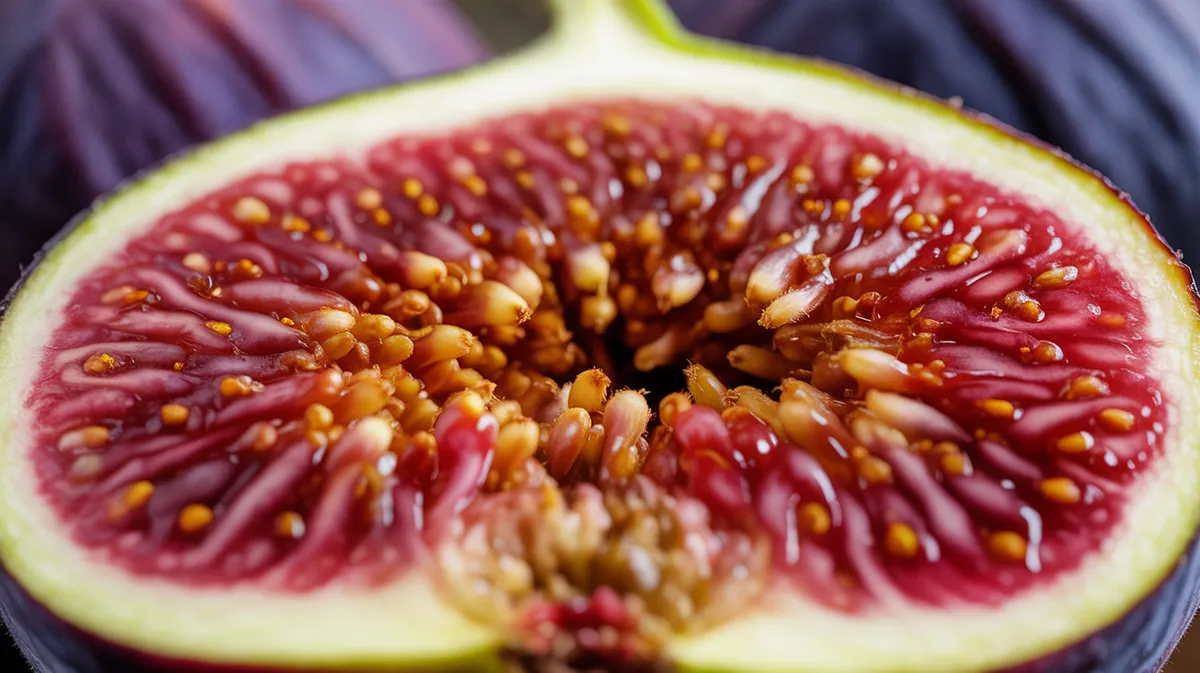
Bite into a fig and you're eating something far stranger than a fruit: a hollow ball lined on the inside with hundreds of tiny flowers. Those flowers can only be pollinated by one creature on Earth — a wasp smaller than a grain of rice — and that wasp, in turn, can only breed inside the fig. Neither can reproduce without the other. In this entry of our Nature's Odd Couples series, we explore the unbreakable bond between the fig and the fig wasp.
It's one of the most complete partnerships in all of nature. See also the chemically enforced alliance of ants and the acacia tree and the venom-proof pairing in the clownfish and the sea anemone.
The flowers that hide inside
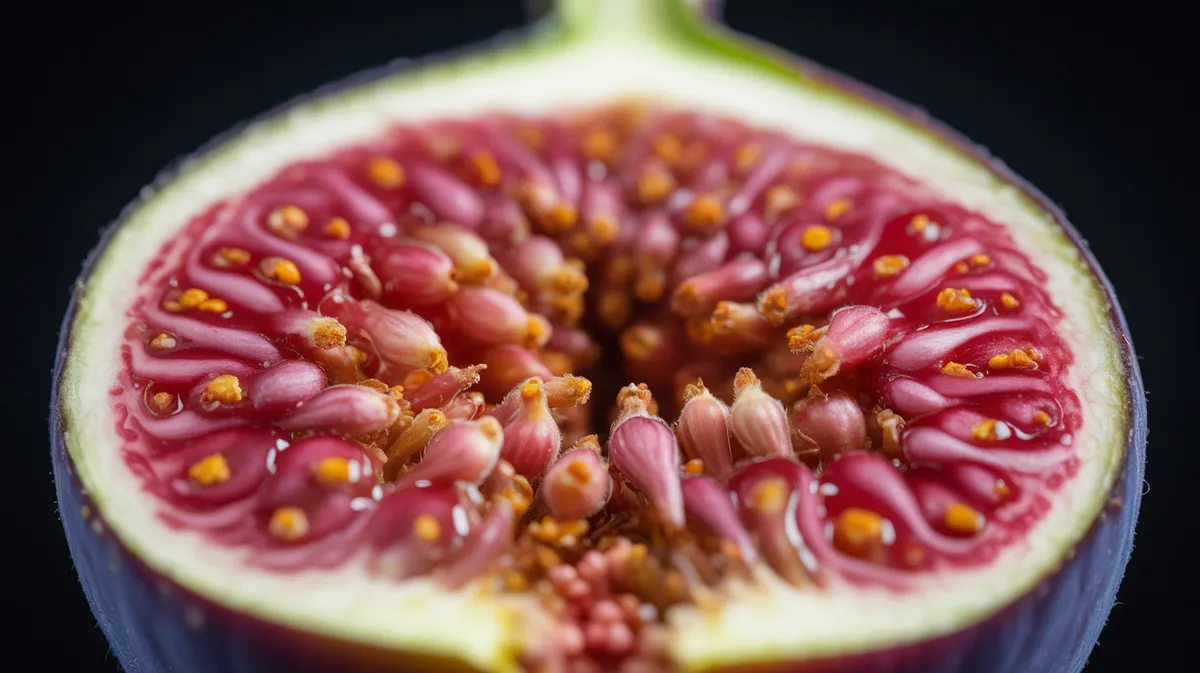
A fig isn't really a single fruit but an inside-out cluster of flowers, sealed into a hollow chamber. All those flowers face inward, with no open petals for a bee or butterfly to land on.
That leaves the fig with a problem: how does pollen get to flowers locked inside a closed ball?
The answer is a tiny private doorway and a single, dedicated partner.
Remarkably, this hidden garden means that when you eat a fig you're really eating a whole inflorescence of tiny flowers, seeds and all.
A one-way journey
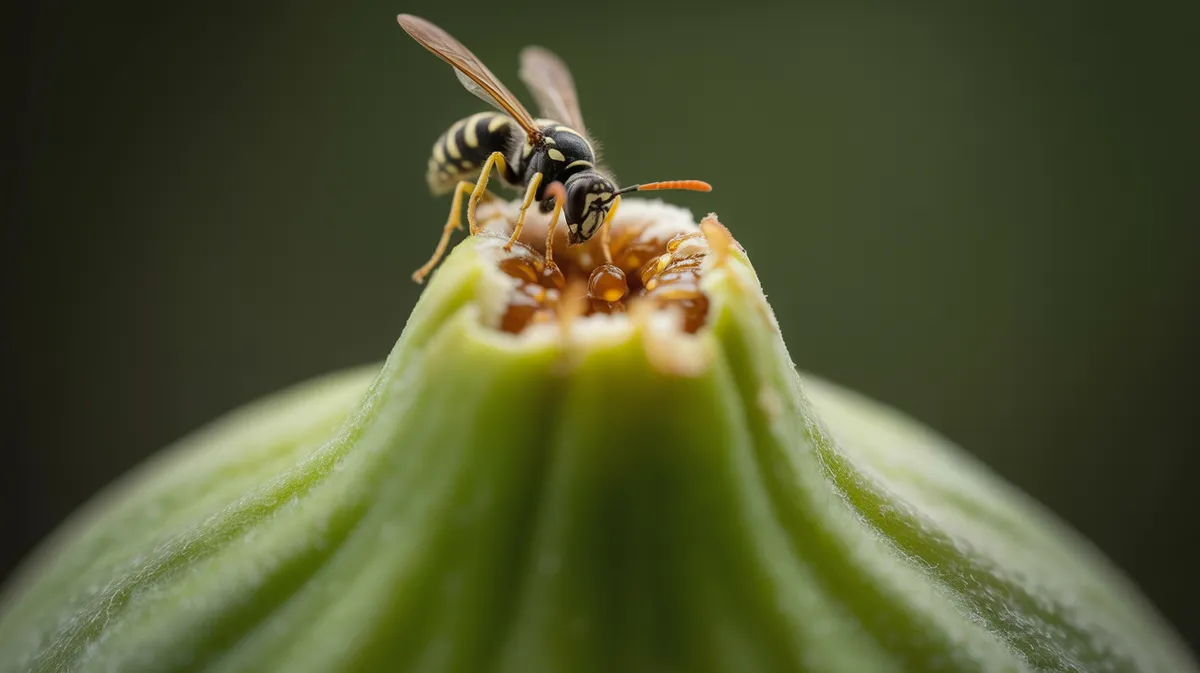
A female fig wasp, carrying pollen from the fig where she was born, finds a new fig and forces her way in through a tight opening at its tip. The passage is so narrow she usually tears off her own wings and antennae getting through.
Once inside, she pollinates the flowers and lays her eggs, and then — her mission complete — she dies within the fig that she has just brought to life.
Her whole existence outside the fig lasts only a day or two, devoted entirely to this final journey.
She follows the scent each fig releases when it's ready, a chemical signal precisely tuned to summon only her own species of wasp.
The next generation
Inside the fig, her eggs hatch into a new generation. The wingless males emerge first; their only jobs are to mate with the females and then chew escape tunnels out through the fig wall before they die.
The newly mated females gather fresh pollen, slip out through those tunnels, and fly off in search of another fig in which to lay their own eggs.
And so the cycle turns: every fig wasp is born in a fig, and every fig is pollinated by a wasp.
The blind, wingless males never leave the fig they were born in, living their entire lives inside a world a few centimetres wide.
An exact match
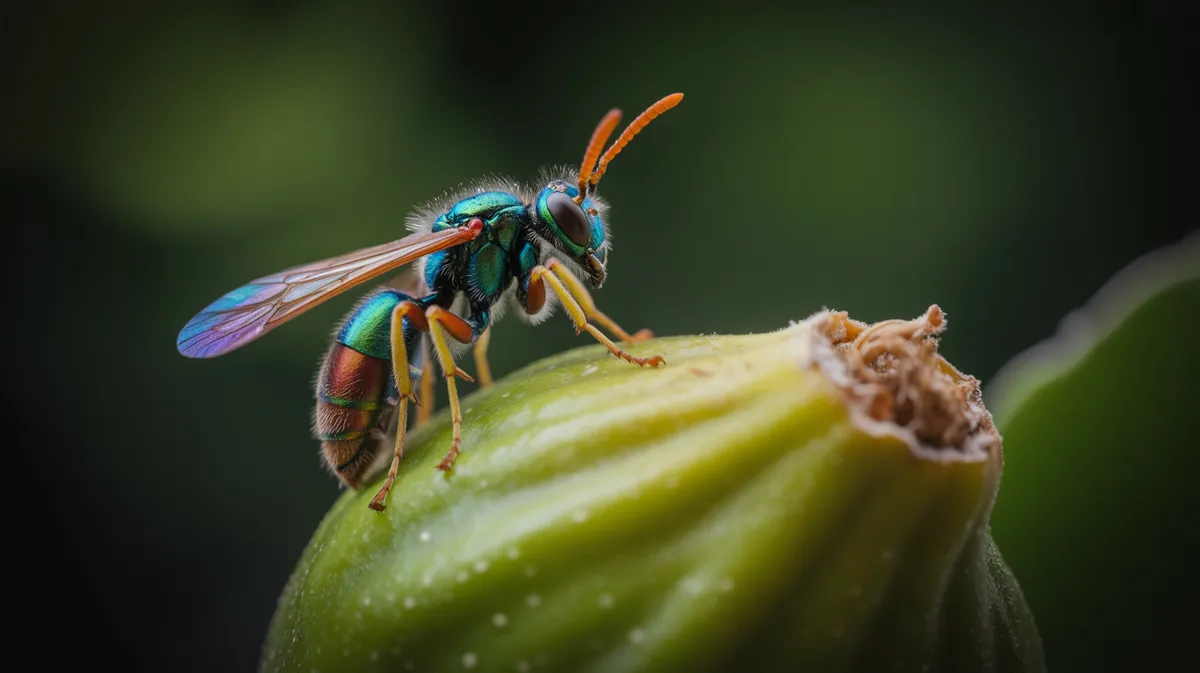
What makes this bond so remarkable is its precision. There are over 750 species of fig, and most has its own specific species of wasp, evolved as a perfect match — a biological lock and key.
Over tens of millions of years, fig and wasp have shaped each other so completely that one cannot exist without the other.
It is co-evolution taken to one of its most extreme and beautiful conclusions.
This tight matching means that introducing a fig species to a new country is pointless for fruit unless its specific partner wasp comes along too.
Enforcing the deal
Even this near-perfect partnership has safeguards against cheating. If a wasp lays her eggs without properly pollinating a fig's flowers, the tree can detect it and drop that fig early, killing the freeloading larvae inside.
These "sanctions" punish wasps that take without giving, keeping the relationship honest over countless generations.
The fig, it turns out, quietly enforces its side of the bargain.
These hidden sanctions are one reason the partnership has stayed stable for some 80 million years rather than collapsing under the weight of cheaters.
A keystone of the forest
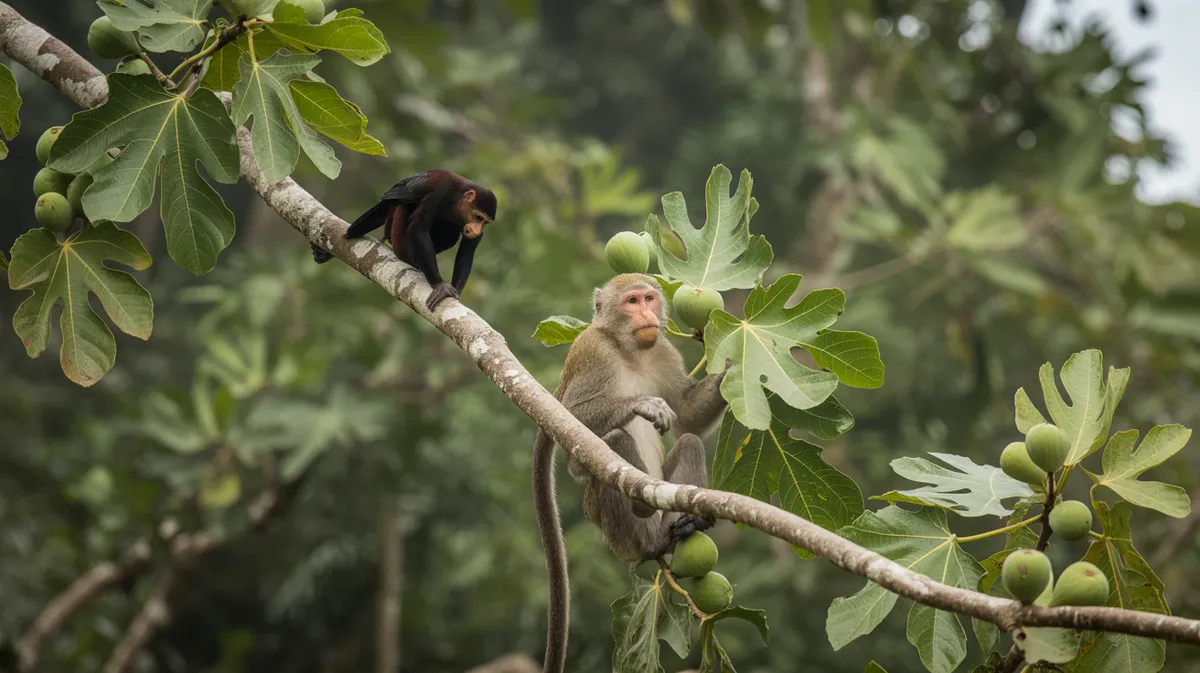
This tiny partnership has outsized consequences. Because different fig trees fruit at different times, figs are available year-round, making them a vital, reliable food for an enormous range of animals — birds, bats, monkeys, and more.
Lose the wasp and you lose the figs; lose the figs and an entire forest community loses one of its most important food sources.
An insect you could lose in the palm of your hand helps hold whole rainforests together.
So… Are There Wasps in My Fig?
This is the question everyone asks, and the honest answer is reassuring. Most figs sold in shops are varieties that set fruit without any pollination at all, so no wasp ever enters them.
Where figs are pollinated the traditional way, a wasp does die inside — but she does not remain there as an insect. The fig produces an enzyme, ficin, which breaks her body down completely, absorbing it into the fruit.
The crunch in a fig, incidentally, is not wasp. Those are the seeds. So you are not eating an insect; you are eating a fruit that has quietly recycled one.
A bond that built a forest
The fig and the fig wasp are bound so tightly that their fates are one and the same. It's the ultimate expression of partnership in nature — two utterly different living things that have become, in the deepest sense, completely inseparable.
Frequently asked questions
Is a fig a fruit or a flower? It's a hollow cluster of flowers turned inward, pollinated from the inside by fig wasps.
Why can't figs be pollinated by bees? Their flowers are sealed inside a closed chamber, reachable only by a tiny wasp that squeezes in through a narrow pore.
Does every fig species have its own wasp? Mostly yes — most of the 750+ fig species has its own matching wasp species in a co-evolved partnership.
Are figs vegan? It is debated. No wasp remains in the fruit, but wasps do die in the pollination process of some varieties.
How long has this partnership existed? Roughly 80 million years of co-evolution between figs and their wasps.
Why are figs so important to forests? They fruit year-round, making them a vital food source for birds, bats, and monkeys when little else is available.
Continue with coral and algae, or revisit the badger and the coyote.