
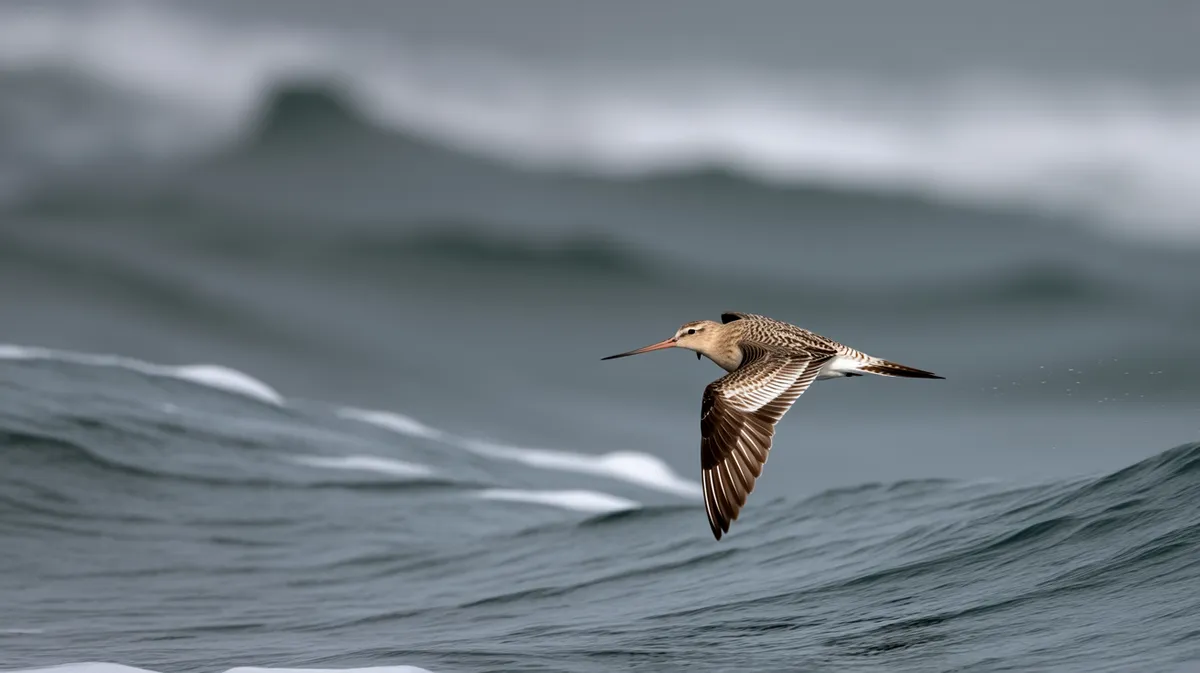
Imagine flying for more than a week without ever stopping — no food, no water, no rest, no land beneath you at all. That is exactly what the bar-tailed godwit does, crossing the largest ocean on Earth in a single, unbroken flight. It holds the record for the longest non-stop journey of any animal. In this entry of our The Great Migrations series, we follow the godwit across the Pacific.
It's a feat of endurance that pushes the limits of what a living body can do. See also the pole-to-pole Arctic tern and the ocean-spanning humpback whale.
A flight without rest
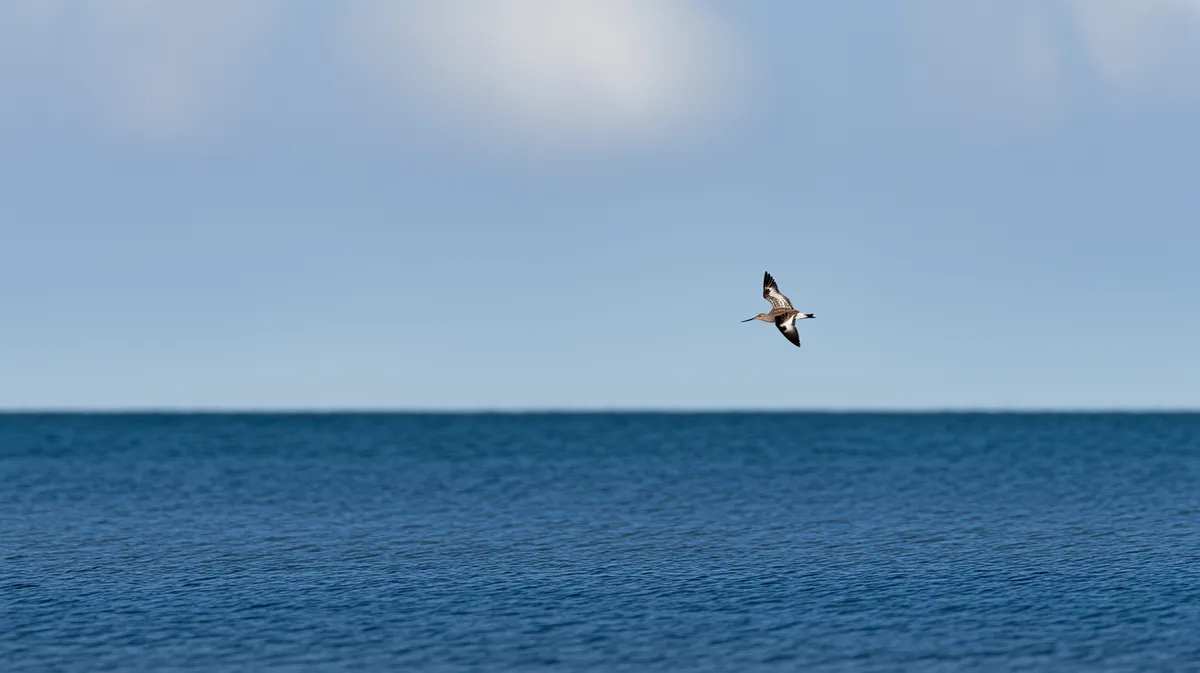
Each autumn, bar-tailed godwits leave their breeding grounds in Alaska and set out across the open Pacific Ocean, bound for New Zealand and eastern Australia. There is no land on the route to break the journey.
So the godwit simply doesn't stop. It flies continuously for around eight to eleven days, covering roughly 11,000 to 12,000 kilometres in one go.
Throughout that entire time it never eats, never drinks, and never lands — it just keeps flapping, day and night, over an endless expanse of sea.
It isn't gliding, either — a godwit must actively flap for almost the entire crossing, with little chance to soar over the open ocean.
Turning the body into a jet
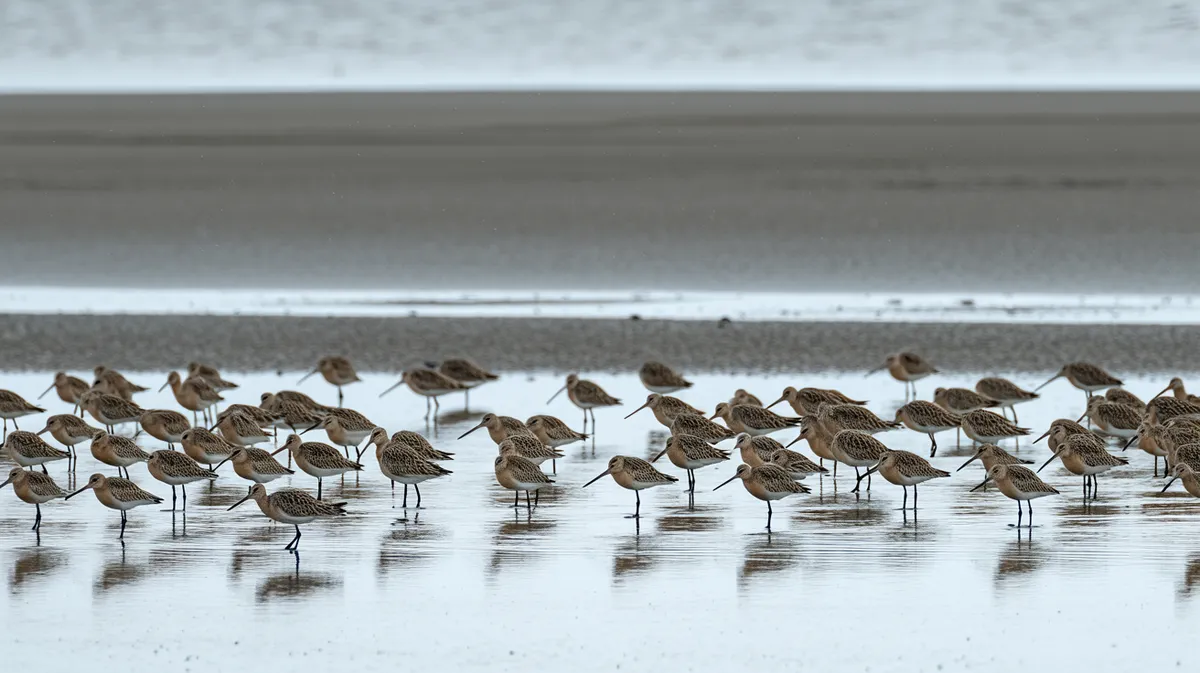
To survive such a flight, the godwit completely rebuilds its own body before departure. In the weeks beforehand it gorges on food, nearly doubling its weight as it packs on fat to burn as fuel.
At the same time it shrinks its digestive organs — its stomach, gut, and liver all wither away — because it won't need them in the air and they'd only be dead weight.
An eating machine transforms itself into a flying machine, trimmed down to little more than muscle, wings, and fuel.
By the time it leaves, fat can make up more than half of a godwit's total weight, among the highest fuel loads of any migrating bird.
Riding the storms
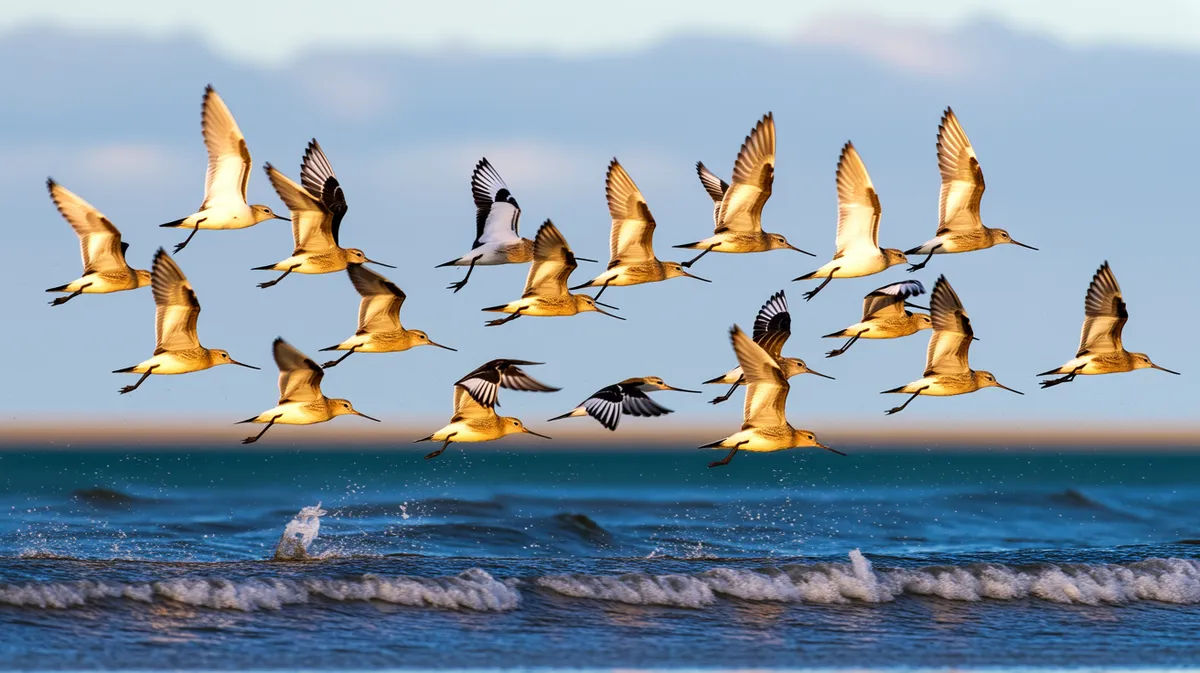
Timing is everything. The godwits wait for the right weather, launching as favourable winds sweep down from the north behind autumn storm systems.
By riding these tailwinds, they let the moving air carry them along, dramatically cutting the energy they need to spend.
They effectively surf the planet's weather, choosing their departure with a precision that suggests they can read the coming winds.
Getting the timing wrong could be fatal, which makes the ability to pick the right weather window as important as the flying itself.
The record-breakers
Satellite tracking has revealed just how extreme these flights can be. One tagged young godwit flew from Alaska to Tasmania without stopping — a journey of more than 13,000 kilometres.
That single flight is the longest continuous journey ever recorded for any bird, or indeed any animal.
And this was a bird only a few months old, making the crossing for the very first time with no adult to follow.
How a first-time migrant knows the route and the destination, with no experienced adult to follow, remains one of the great mysteries of bird migration.
The Yellow Sea lifeline
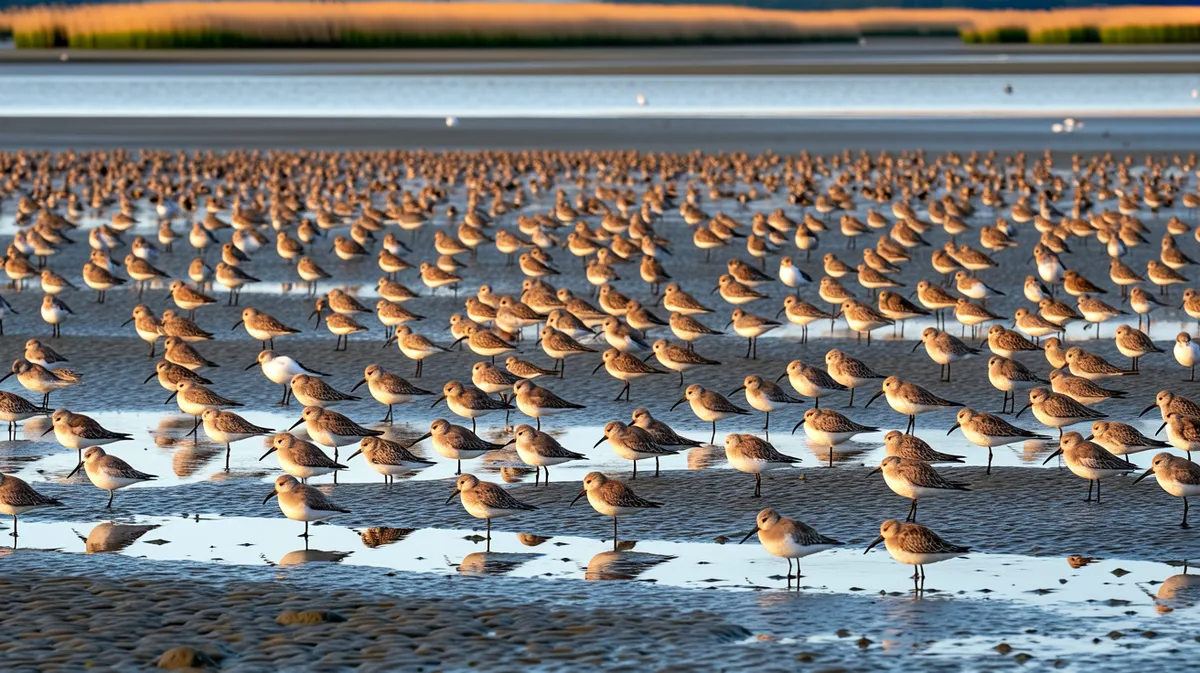
The northward return trip is broken by one crucial pit stop. Flying back toward Alaska in spring, the godwits pause at the vast mudflats of the Yellow Sea, between China and Korea, to rest and refuel.
These tidal flats are a vital service station where the birds rebuild their fat reserves for the next leg of the journey.
Alarmingly, much of this habitat is being lost to land reclamation, putting the entire migration at risk from a single weak link in the chain.
If these mudflats vanish, the godwits could arrive back exhausted with nowhere to refuel — a reminder that a migration is only as safe as its weakest stopover.
How do they do it?
Scientists are still piecing together how such a small bird achieves all this. Its metabolism runs at a phenomenal rate for days on end, yet it doesn't collapse from exhaustion or overheating.
It may even sleep with one half of its brain at a time while continuing to fly, snatching rest on the wing.
However it manages, the godwit performs one of the most astonishing physical feats in the animal kingdom, twice a year.
Their flight muscles and hearts are enlarged and superbly efficient, wringing the maximum distance out of every gram of fat they carry.
Tracking a Record-Breaker
The godwit's record is not folklore — it was measured. Satellite tags fitted to birds in Alaska transmitted their positions continuously across the Pacific.
One young bird, known by its tag code, flew from Alaska to Tasmania without stopping, logging more than 13,000 kilometres in about eleven days.
Because the tag reported all the way, scientists could rule out any secret rest stop. The bird simply never landed, and the record was confirmed beyond argument.
The ultimate endurance flight
The bar-tailed godwit shows just how far evolution can push a body in pursuit of a journey. In flying an ocean without a single stop, this unassuming shorebird accomplishes something that still leaves the scientists who study it shaking their heads in wonder.
Frequently asked questions
How far does the bar-tailed godwit fly non-stop? Around 11,000–13,000 km across the Pacific in a single flight lasting 8–11 days.
How does it fly so long without eating? It nearly doubles its weight in fat beforehand and shrinks its digestive organs to save weight, burning fuel as it flies.
Does it stop at all? The southward trip is non-stop; on the way north it refuels at the Yellow Sea mudflats.
How long is the non-stop flight? Roughly 8 to 11 days in the air with no food, water, or rest.
How does the godwit sleep? It likely sleeps with one half of the brain at a time, snatching rest while continuing to fly.
Why fly over the ocean at all? A direct Pacific crossing is shorter than hugging the coast, and there are no predators or competitors out at sea.
Next in the series: giants of the sea in the humpback whale migration, and the great land march of the caribou.