
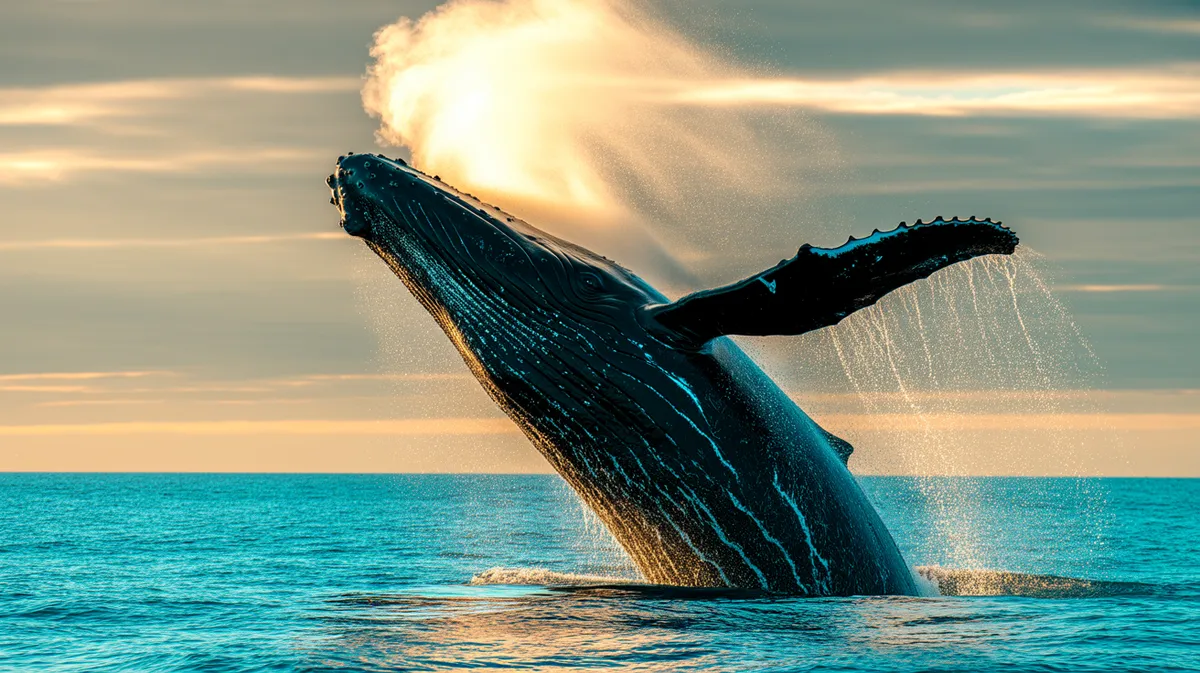
Twice a year, some of the largest animals on Earth set out on a journey between two very different worlds: the cold, food-rich waters near the poles and the warm, gentle seas of the tropics. The humpback whale undertakes one of the longest migrations of any mammal, and it does so on an empty stomach. In this entry of our The Great Migrations series, we follow the humpback across the ocean.
It's a journey ruled by two needs that can't be met in the same place: food and safe calving. See also the record-setting bar-tailed godwit and the homeward salmon journey.
Between two worlds
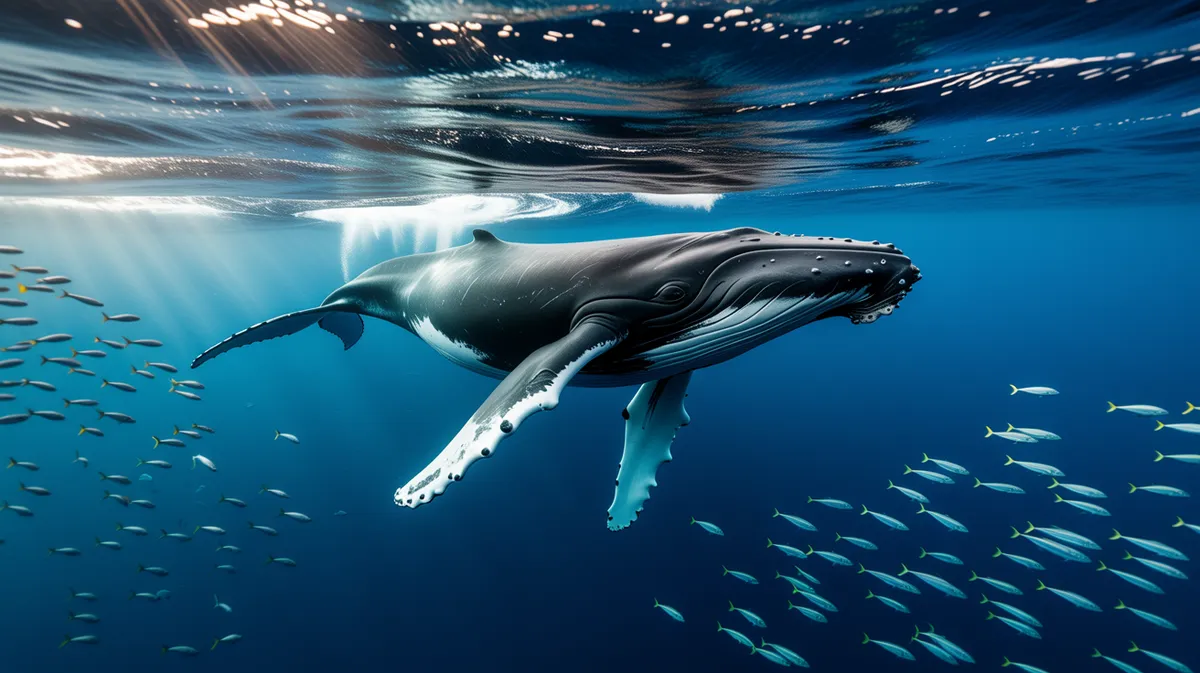
Humpbacks spend the summer feeding in cold, productive waters near the poles, then travel toward the equator to breed and give birth in warm tropical seas in winter.
The distance between these two regions can be enormous — some populations swim around 8,000 kilometres each way, among the longest migrations of any animal.
Each year they trace this vast route between the icy larder and the tropical nursery, and back again.
Individual whales are so faithful to their routes that researchers can recognise them year after year by the unique black-and-white patterns on the underside of their tails.
A summer of feasting
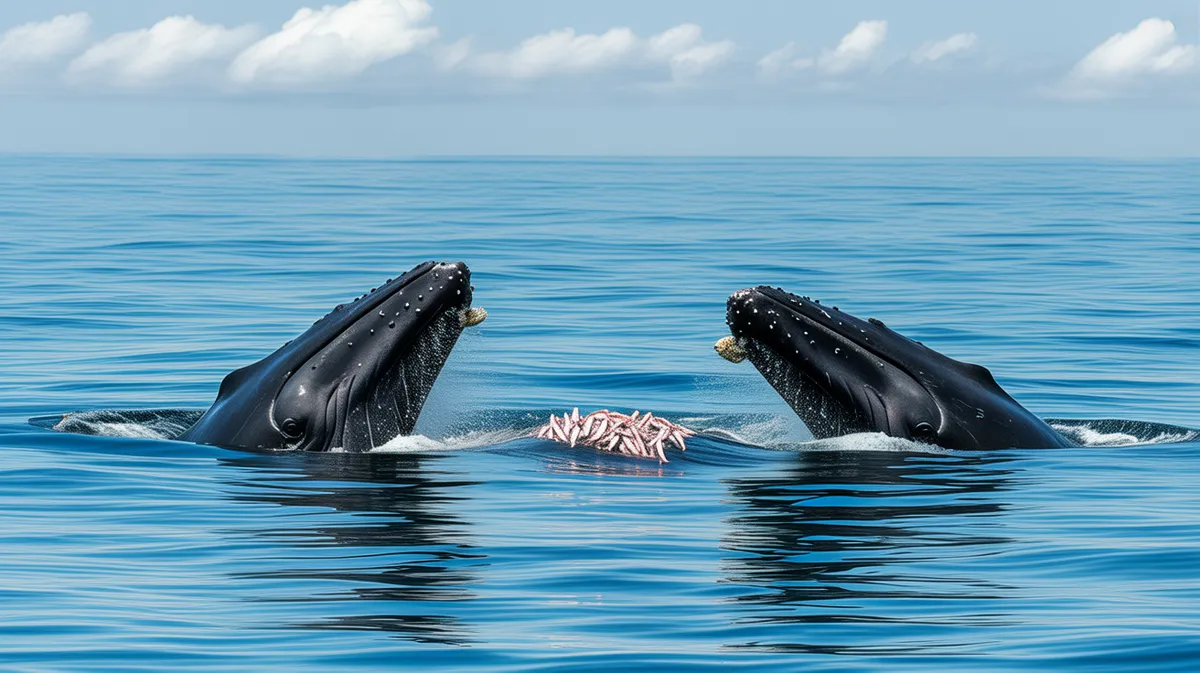
The polar feeding grounds are where the humpback fuels the entire journey. Here it gorges on tiny krill and small schooling fish, sometimes using a spectacular team tactic called bubble-net feeding to trap whole shoals.
In a single feeding season a humpback packs on a thick layer of blubber, storing months of energy.
This fat reserve is not just insulation — it's the fuel that will carry the whale through the long, foodless months ahead.
At the peak of the season a large humpback may eat well over a tonne of food in a single day, an all-out effort to bank enough energy for the journey.
The long fast
Here lies the astonishing part: for much of the migration and its time on the breeding grounds, the humpback barely eats at all. The warm tropical waters that are so good for calves are largely empty of the whale's food.
So it lives off its blubber, fasting for months and losing a large fraction of its body weight before it can return to feed.
Nursing mothers have it hardest of all, pouring rich milk into a fast-growing calf while eating nothing themselves.
By the time they return to the feeding grounds, some whales have lost up to a third of their body weight, gaunt and ready to gorge once more.
Nurseries in warm water
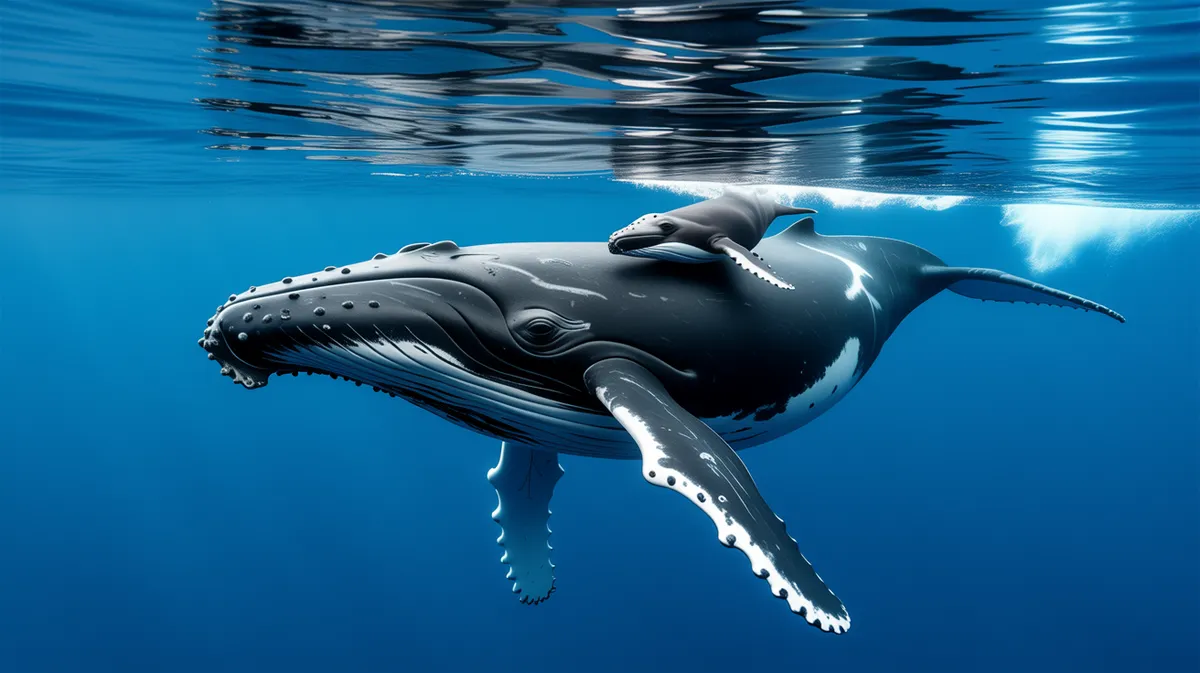
Why go to all this trouble to reach the tropics? The answer is the calves. Newborn humpbacks are born without a thick layer of blubber, so the warm water helps them survive without burning precious energy just to stay warm.
The calm, shallow tropical bays also offer some protection from predators like orcas that hunt in colder seas.
The warm nursery gives the vulnerable young their best chance to grow strong enough for the journey back.
A humpback calf drinks hundreds of litres of extraordinarily rich milk each day, growing fast enough to make the long swim to the feeding grounds within months.
Songs of the breeding grounds
The breeding grounds ring with one of nature's most haunting sounds: the song of the male humpback. These long, complex, evolving songs can last for hours and travel great distances through the water.
All the males in a population sing broadly the same song, which changes gradually over the seasons as new phrases catch on.
It's a shifting soundtrack to the breeding season, and one of the most sophisticated forms of communication in the animal world.
Astonishingly, when whales from different regions meet, songs can spread between populations like a hit tune, sweeping across a whole ocean over just a few years.
Navigating the open ocean
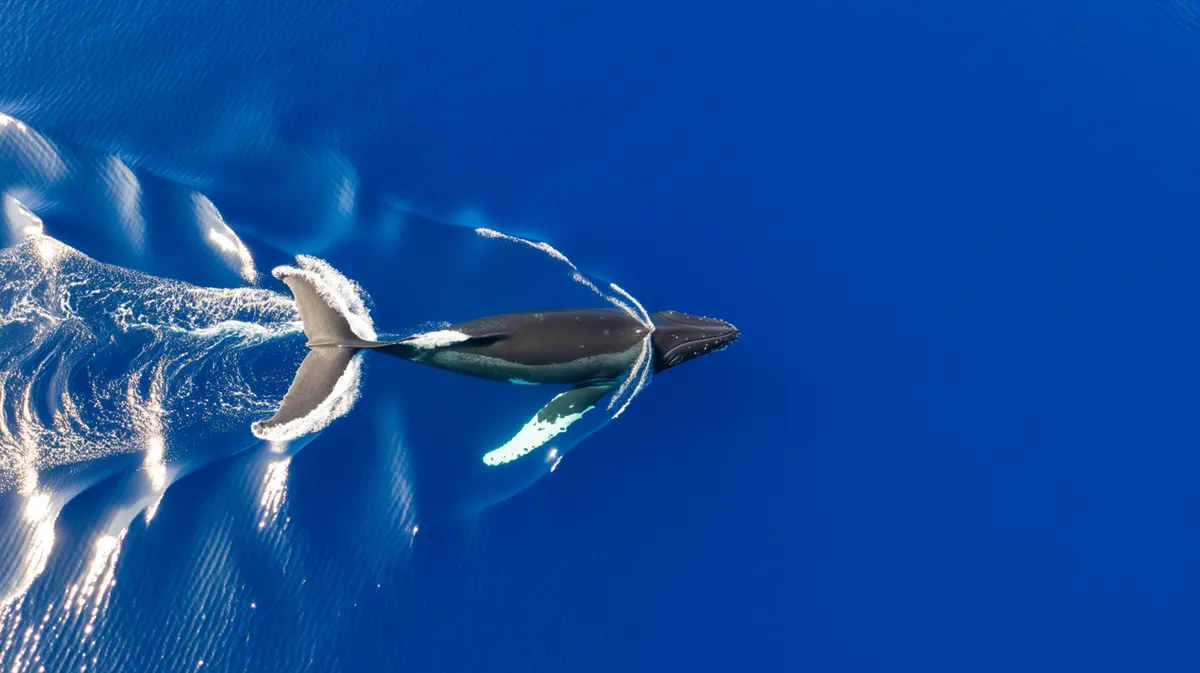
Humpbacks are remarkably precise navigators, holding astonishingly straight courses across thousands of kilometres of open, featureless sea. Tracking studies have shown some deviating by only a degree or two over enormous distances.
Exactly how they do it remains uncertain, but they likely combine cues from the sun, the Earth's magnetic field, and perhaps the stars.
Whatever the method, they cross the trackless ocean with a navigator's confidence.
This precision is all the more remarkable given the currents constantly pushing them off course, which the whales must somehow sense and correct for as they swim.
How We Follow Them
Every humpback carries a natural identity card: the underside of its tail, or fluke, bears a unique pattern of black and white markings and scars.
Researchers photograph these flukes and match them against enormous catalogues, letting them recognise individual whales across decades and oceans without touching the animal.
Anyone can contribute. Photographs uploaded by whale-watchers to citizen-science databases have matched whales between feeding and breeding grounds thousands of kilometres apart, filling in migration routes no research budget could have mapped alone.
An epic of the open sea
The humpback's migration is a story of sacrifice and endurance on a colossal scale — a fast lasting months, a journey spanning oceans, all to give the next generation a safe start. Few journeys so perfectly capture the demands of life in the sea.
Frequently asked questions
How far do humpback whales migrate? Up to around 8,000 km each way between polar feeding grounds and tropical breeding waters — one of the longest mammal migrations.
Do humpbacks eat during migration? Barely — they fast for months, living off blubber, because the warm breeding waters lack their food.
Why do humpbacks breed in the tropics? Warm water helps their blubber-less calves survive and offers some safety from predators.
How long do humpback whales live? Commonly 45 to 50 years, and possibly longer.
Why do humpbacks breach? Nobody is certain — it may be communication, play, or a way to dislodge parasites.
Are humpbacks endangered? Most populations have recovered strongly since commercial whaling ended, a genuine conservation success.
Continue with the caribou migration, or revisit the bar-tailed godwit.