
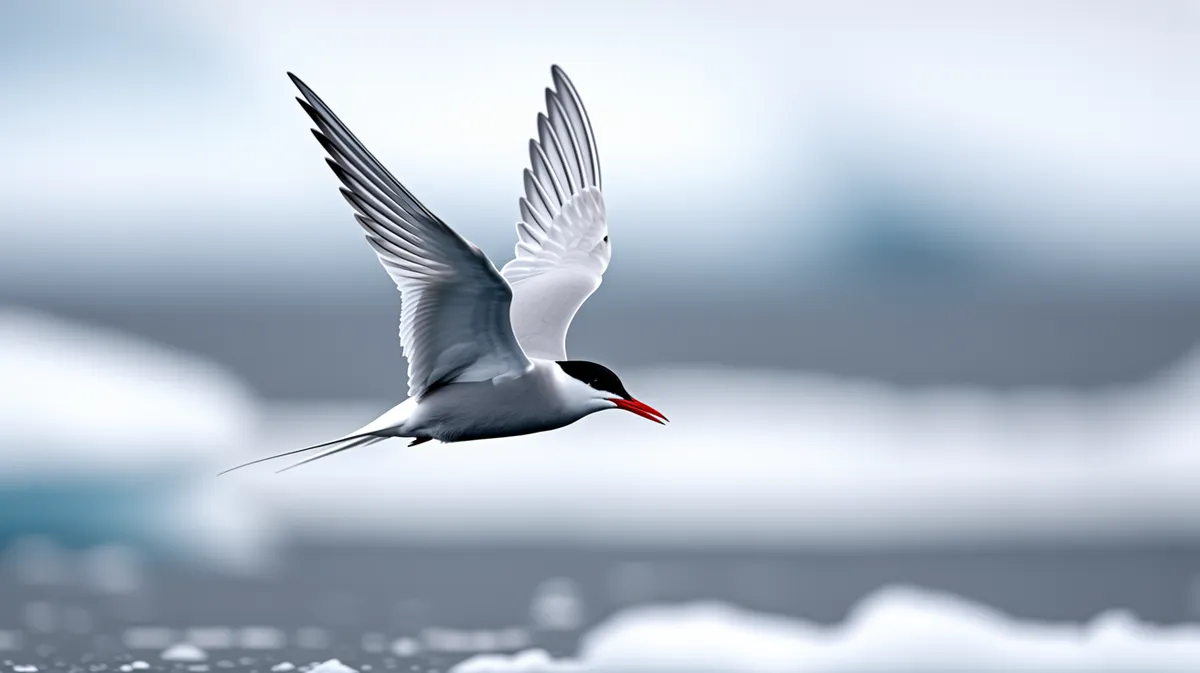
A bird small enough to hold in one hand makes a journey so vast it defies belief: from the top of the world to the bottom and back again, every single year. The Arctic tern holds the record for the longest migration of any animal on Earth, and in doing so it lives a life bathed in more daylight than any other creature. In this opening entry of our The Great Migrations series, we follow the tern from pole to pole.
It is a feat of endurance, navigation, and sheer determination almost impossible to comprehend. When you've followed the tern, meet four more astonishing journeys, including the monarch butterfly and the sea turtle.
Pole to pole
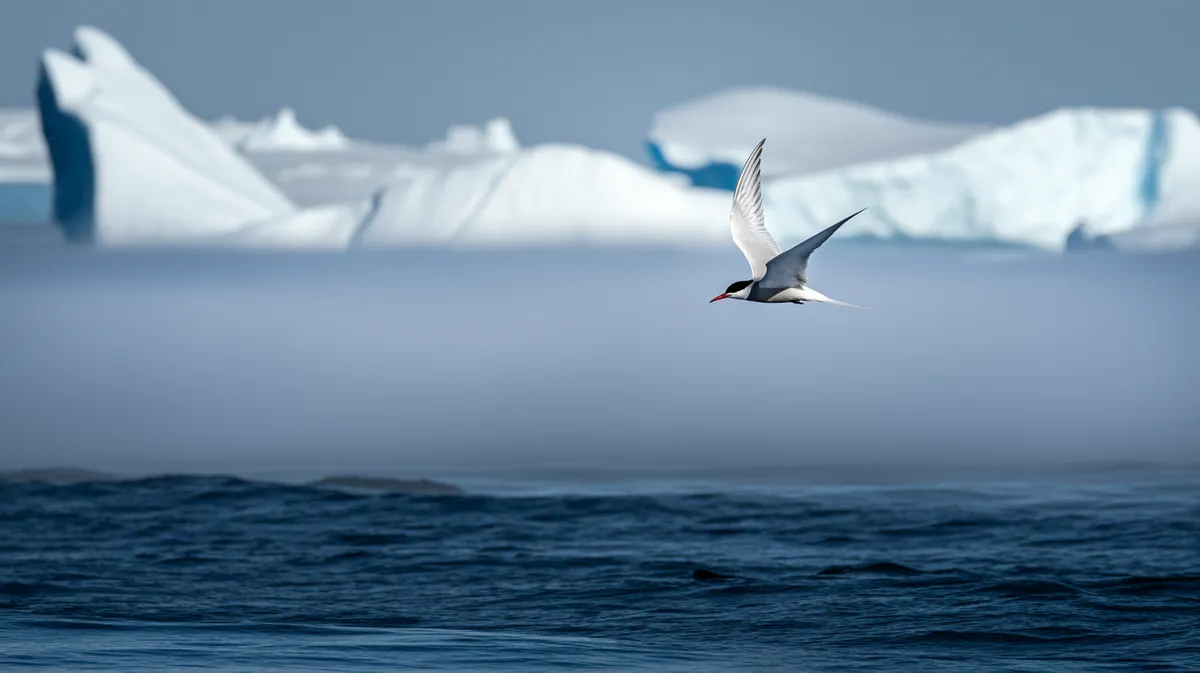
The Arctic tern breeds during the northern summer in the Arctic, across the far north of Europe, Asia, and North America. When the season ends, it does not simply fly south for winter — it flies to the other end of the planet, all the way to the seas around Antarctica.
Then, months later, it turns around and flies all the way back. In a single year it may cover somewhere between 70,000 and 90,000 kilometres, and tracked individuals have logged even more.
No other animal travels so far in a year, and it does it again and again for a life that can span 30 years.
It's a route that carries the tern past the coastlines of continents on both sides of the globe, so it effectively lives along the entire length of the planet.
Chasing an endless summer
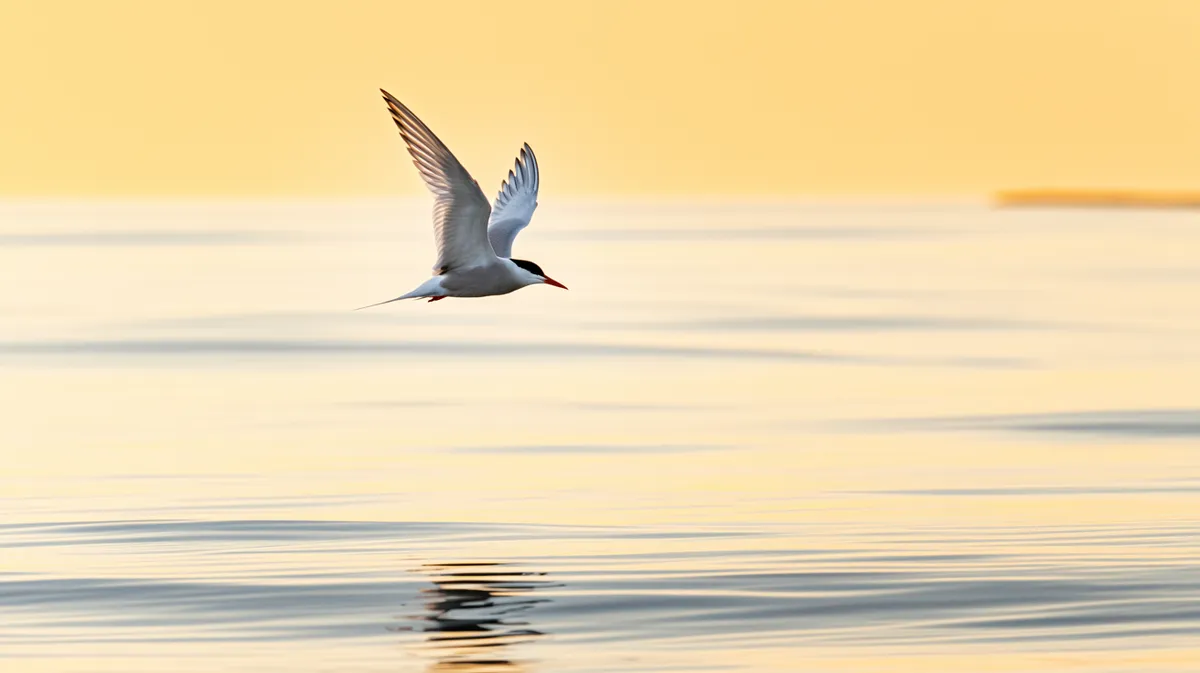
The tern's route is no accident of geography — it is chasing the sun. By breeding in the northern summer and then flying to the southern summer, the tern experiences two summers each year and skips winter almost entirely.
This means it sees more hours of daylight than any other animal on the planet, living in an almost perpetual polar summer.
The endless daylight also means endless feeding opportunities, fuelling the enormous journeys in between.
In effect, the Arctic tern lives in a world where the sun almost never sets, shuttling between two lands of the midnight sun.
A zigzag across the oceans
The tern doesn't fly in a straight line. Satellite tracking has revealed that it follows a great, looping, zigzag path, swinging out across the Atlantic or Pacific to ride prevailing winds and find the richest feeding grounds.
This wandering route adds thousands of kilometres to the trip, but it lets the tern travel more efficiently, letting the winds do much of the work.
Rather than fighting the weather, the tern reads it, turning the planet's wind systems into a moving highway.
One tracked tern was recorded flying around 96,000 kilometres in a single year by following these great looping detours.
A lifetime in the air
Add up all these annual journeys and the numbers become staggering. Over a lifetime of around 30 years, an Arctic tern may fly close to two and a half million kilometres.
That's the equivalent of flying to the Moon and back three times, all under the power of its own wings.
Few animals commit so completely to a life of constant motion.
Because terns can live for decades and breed year after year, the oldest individuals rank among the most well-travelled animals ever to have lived.

Built for the long haul
Everything about the tern is shaped for efficient flight. It has long, narrow, pointed wings and a light, streamlined body, ideal for gliding vast distances on the wind with minimal effort.
It feeds on the wing too, plunge-diving for small fish and crustaceans at the ocean surface, refuelling as it goes without ever needing to stop for long.
This ability to eat and travel at once is what makes such an extreme migration possible in the first place.
Its buoyant, tireless flight lets it work the open ocean where there is nowhere to rest, staying aloft through the long stretches between feeding grounds.

Why fly so far?
Such an enormous journey only makes sense because of the rewards at each end. Both polar regions explode with life during their brief summers, offering long days and abundant food to raise chicks and to survive the rest of the year.
By shuttling between them, the tern always lives in a land of plenty, avoiding the harsh, lean polar winters entirely.
The longest migration on Earth, then, is really a strategy for a life of endless summer.
Raising chicks in the round-the-clock daylight of the polar summer gives the young the best possible start before they, too, must make the journey.
How We Finally Measured It
For most of history the tern's journey was guesswork. Ringing recoveries hinted at enormous distances, but nobody could follow a hundred-gram bird across the planet.
That changed when researchers began fitting terns with tiny geolocators — devices light enough not to burden the bird, which log light levels to estimate position each day.
When the first tagged birds returned and the data was read, the results stunned everyone: the route was far longer and far stranger, full of great looping detours, than anyone had guessed.
A journey beyond compare
The Arctic tern shows just how far an animal will go — literally — to follow the food and the light. In a body weighing barely a hundred grams, it carries out one of the most extraordinary feats of endurance in the entire animal kingdom, year after year after year.
Frequently asked questions
How far does the Arctic tern migrate? Roughly 70,000–90,000 km round trip each year, the longest migration of any animal.
Why does it fly pole to pole? To live in perpetual summer, breeding in the Arctic summer and wintering in the Antarctic summer, where food and daylight are abundant.
How much does an Arctic tern fly in its lifetime? Around 2.4 million km over about 30 years — roughly three round trips to the Moon.
How long do Arctic terns live? Commonly 20 to 30 years, and some individuals have been recorded well beyond that.
How big is an Arctic tern? Small — roughly 33–36 cm long and only around 100 grams, which makes the distances it covers all the more absurd.
Do young terns migrate too? Yes, and often on their very first journey, without an experienced adult to follow.
Next in the series: a journey so long no single traveller completes it — the monarch butterfly migration, and the thundering herds of the great wildebeest migration.