
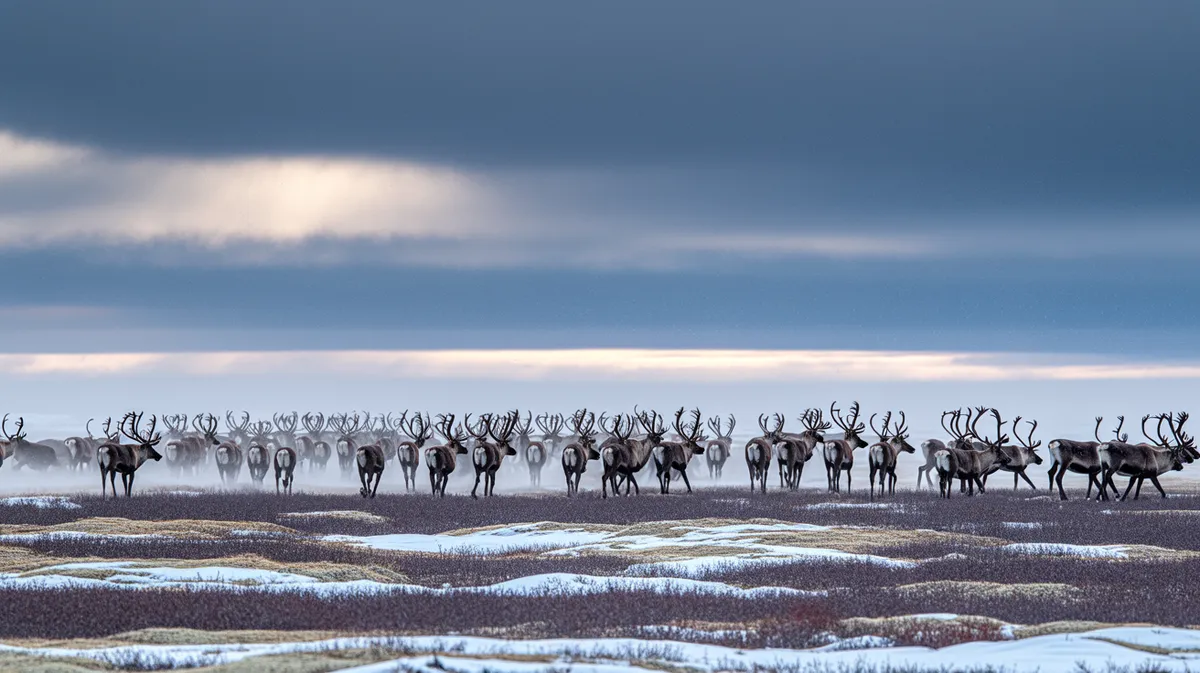
Across the vast, treeless north, hundreds of thousands of animals move together over the frozen ground in a march that never really ends. The caribou undertakes the longest overland migration of any land animal, an endless trek dictated by snow, food, and the drive to raise its young in the safest place it can find. In this entry of our The Great Migrations series, we follow the caribou across the tundra.
It is the great land journey of the Arctic, played out on an almost unimaginable scale. See also the thundering wildebeest migration and the ocean-crossing humpback whale.
The longest land march
Caribou — the same species as the Old World reindeer — travel farther over land each year than any other land mammal. Some herds cover in the region of 5,000 kilometres over the course of a year's wanderings.
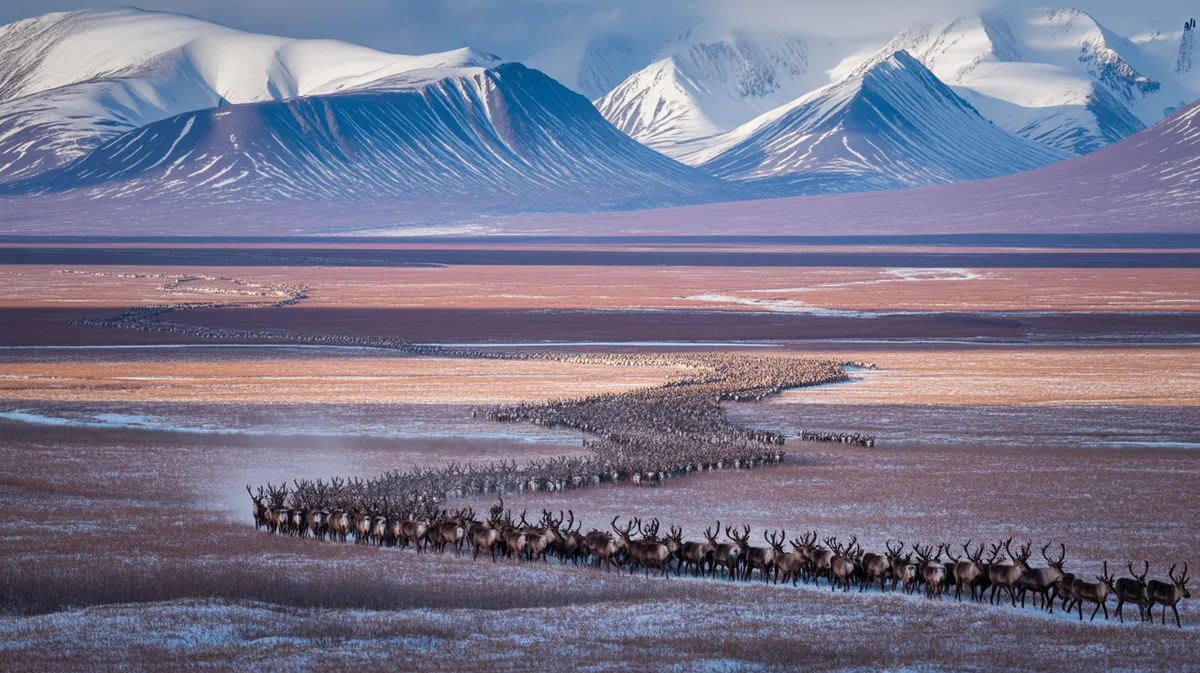
They move in immense herds, at times numbering in the hundreds of thousands, flowing across the tundra like a living tide.
Seen from above, the migration becomes a series of dark rivers of animals winding across the pale northern landscape.
Their broad, crescent-shaped hooves act like snowshoes on soft ground and as paddles when they must swim the many rivers along the route.
Following the seasons
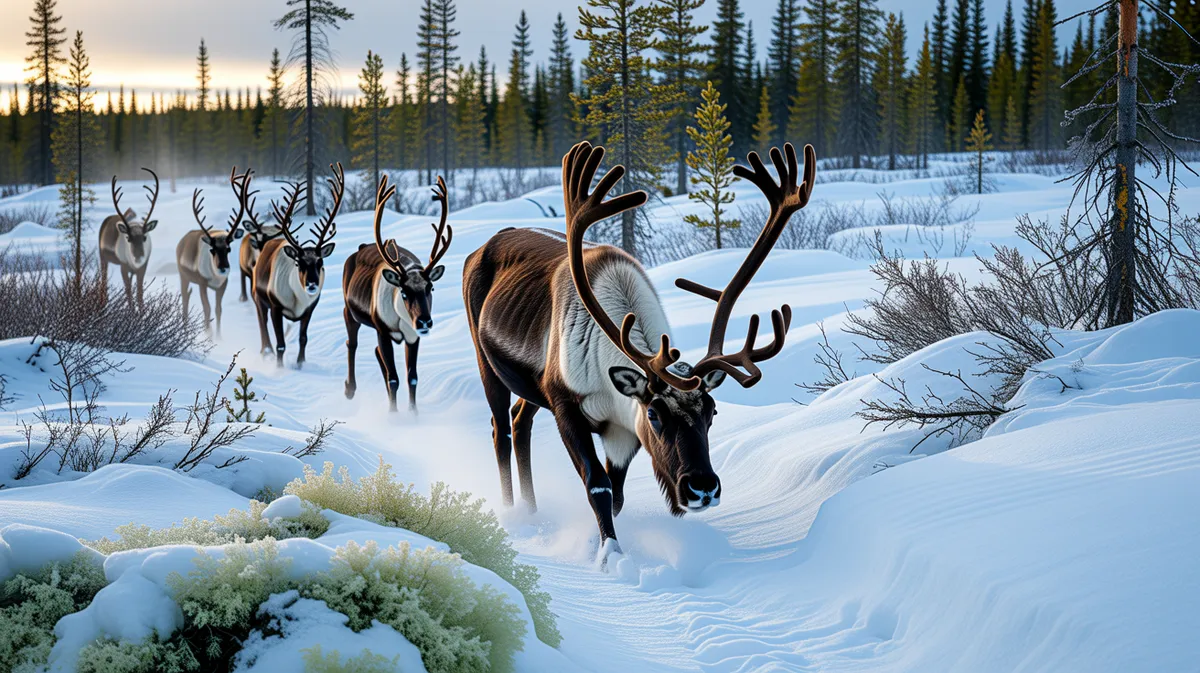
Like so many migrations, this one is a search for food across a changing land. In winter the caribou shelter in more southerly forests, digging through snow with their hooves to reach the lichen that sustains them.
As spring arrives they head north onto the open tundra, where fresh plants burst into growth during the brief, intense Arctic summer.
The herds are forever chasing the flush of new food that ripples northward as the snow retreats.
Caribou are among the only large mammals that can live on lichen, a slow-growing food that largely dictates where they can spend the winter.
The calving grounds
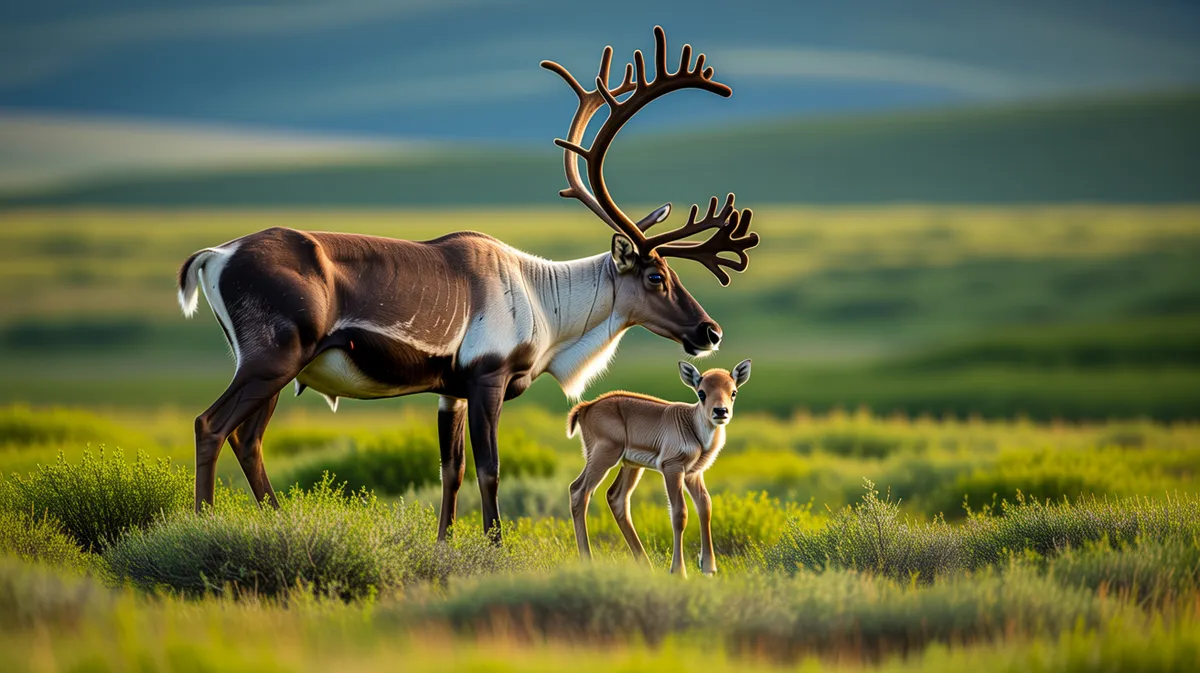
The northward journey has a clear destination: traditional calving grounds where the females give birth. These sites are chosen for good reason.
Out on the open coastal tundra there are fewer predators such as wolves and bears, and the wind helps keep down the maddening clouds of biting insects.
By timing their arrival to the greening of the tundra, the mothers give birth just as the best feeding of the year begins.
So important are these traditional sites that females will often return to give birth in the very area where they themselves were born.
Born to keep moving
A caribou calf is born into a world of constant motion, and it must be ready almost at once. Within hours of birth a newborn can stand, and it can outrun a human within a day.
This astonishing speed is essential, because the herd never stays still for long and the calf must keep pace or be left behind to the predators.
Almost as soon as it is born, the young caribou joins the endless march.
Within a week or two the calves are strong enough to keep pace with the herd's steady march across the open tundra.
Running a gauntlet
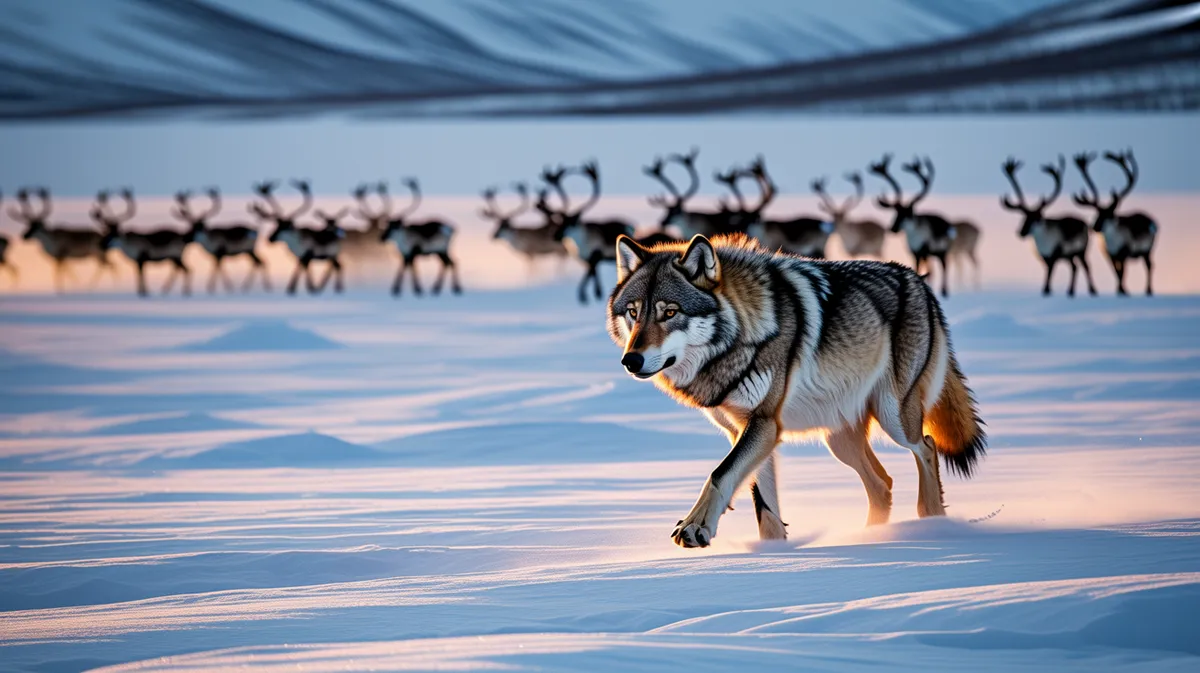
The migration is shadowed every step of the way by predators. Wolves in particular follow the herds year-round, and grizzly bears and golden eagles take their share, especially of the calves.
The caribou's best defences are sheer numbers and constant movement, which make it hard for any predator to single out and follow one animal.
The great herds feed a whole community of Arctic hunters as they pass.
The bond is so close that in many places the caribou herds and the wolves that shadow them have shaped one another over thousands of years.
A route under pressure
These ancient migration routes are increasingly under threat. A warming climate is disrupting the timing of the plants the caribou rely on, and worsening insect swarms harass the herds.
Roads, pipelines, and other development can cut across traditional paths, blocking or diverting animals that have followed the same routes for generations.
Protecting the freedom of the herds to roam is now central to the caribou's survival.
Because the whole system depends on precise timing, even small shifts in the seasons can leave calves born before or after the food is at its best.
The People of the Caribou
The caribou migration is not only an ecological event — it is the foundation of human cultures that have depended on the herds for thousands of years.
For Indigenous peoples across the Arctic, from the Gwich'in of Alaska and Canada to the Sámi of northern Europe, the caribou or reindeer provides food, clothing, tools, and the rhythm of the year itself.
That is why proposals to develop the calving grounds are so fiercely contested. To many communities, protecting the herd is not an environmental preference but a matter of cultural survival — a point too often lost in distant debates.
The pulse of the Arctic
The caribou migration is the great heartbeat of the northern wilderness, a movement so large it shapes the entire ecosystem around it. In its endless circling of the tundra, driven by snow and season, it embodies the raw scale of life in the far north.
Frequently asked questions
How far do caribou migrate? Some herds travel around 5,000 km a year — the longest overland migration of any land mammal.
Why do caribou migrate? To follow their food across the seasons and to reach calving grounds with fewer predators and insects.
How fast can a caribou calf run? A newborn can stand within hours and outrun a person within a day, so it can keep up with the herd.
Are caribou and reindeer the same animal? Yes — the same species. "Caribou" is used for wild herds in North America, "reindeer" for Eurasian and domesticated animals.
Do both sexes grow antlers? Uniquely among deer, yes — female caribou grow antlers too, and keep them through winter.
Are caribou endangered? Several herds have declined steeply, and some populations are now considered threatened.
Continue with the dragonfly that crosses an ocean, or revisit the humpback whale migration.