
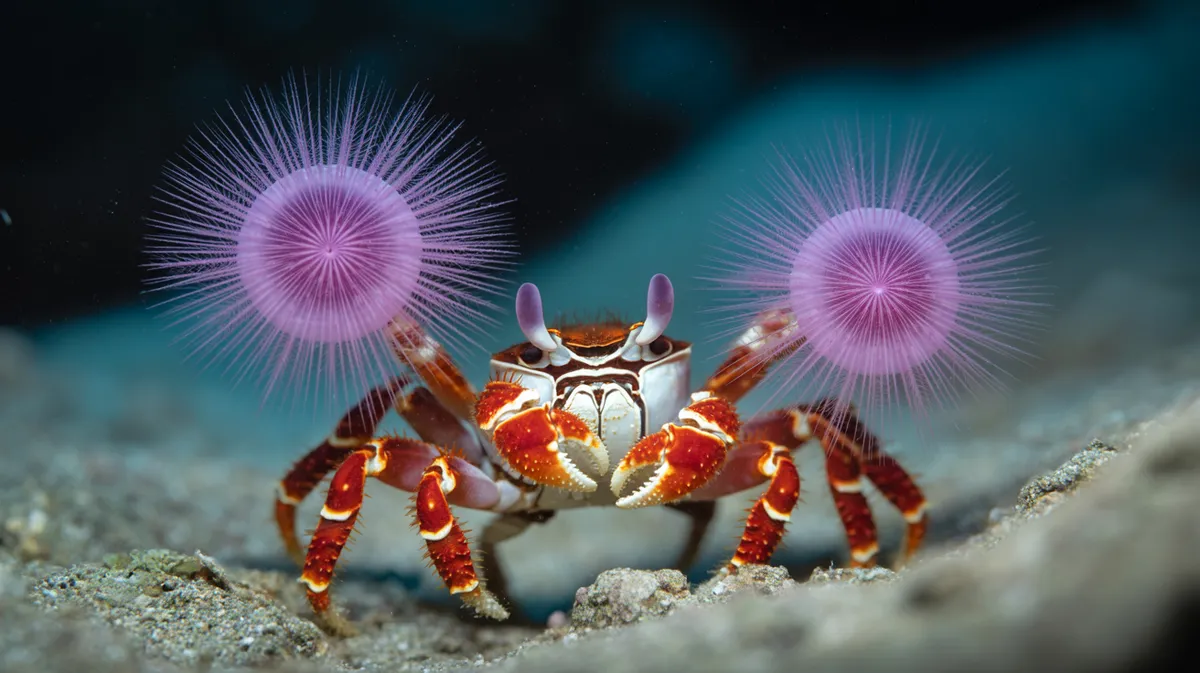
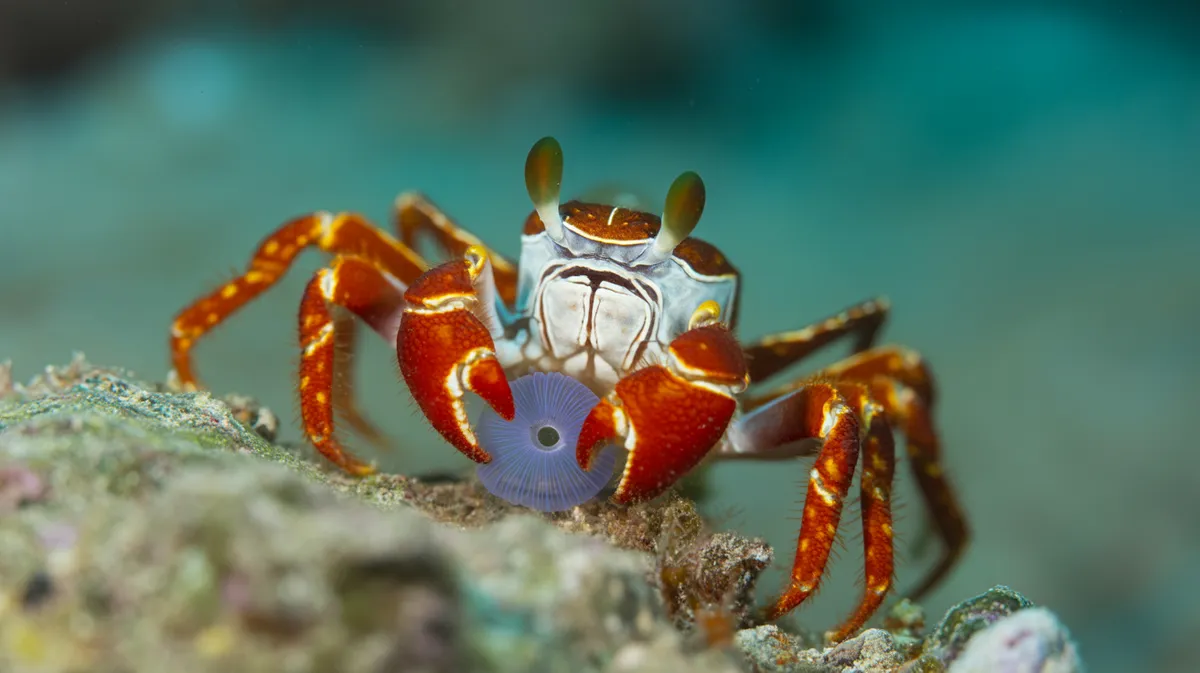
Meet one of the ocean's most charming oddballs: a tiny crab that goes through life clutching a small, stinging sea anemone in each claw and waving them about like fluffy pom-poms — or a boxer's gloves. The boxer crab has turned two other animals into living weapons, in one of the strangest partnerships on the reef. In this entry of our Nature's Odd Couples series, we explore the boxer crab and its anemones.
It's a relationship that blurs the line between partner and tool. See also the venom-proof pairing of the clownfish and the sea anemone and the reef-building deal in coral and algae.
Living weapons
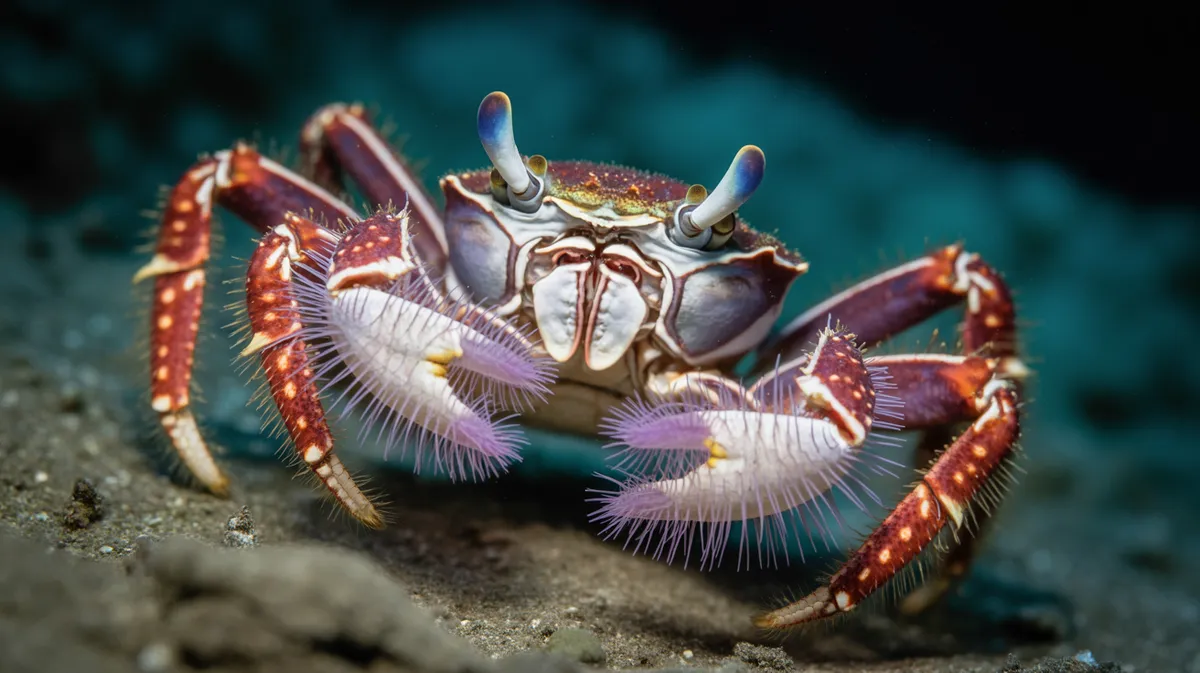
The boxer crab, also called the pom-pom crab, is barely the size of a fingernail and poorly armed on its own. Its solution is to hold a small sea anemone in each of its claws.
When a predator threatens, the crab thrusts and waves these stinging anemones at it, jabbing like a tiny boxer to drive the attacker away.
Two harmless-looking animals, combined, become a surprisingly effective defence.
The anemones the crab favours are often a species rarely found living freely on its own, hinting at just how deep this relationship runs.
What the anemones get
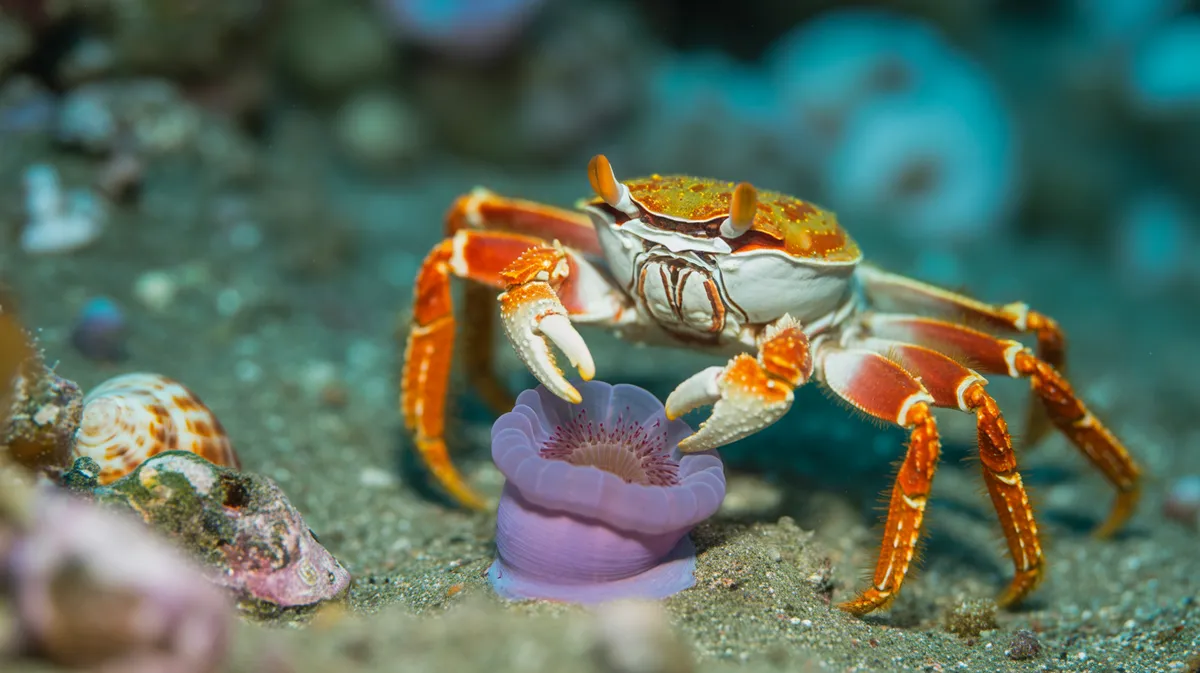
The crab also puts its anemones to work gathering food, dabbing them against surfaces and then eating particles the tentacles collect, almost like using two mops.
The anemones aren't simply prisoners — in theory they gain mobility, carried to new spots and possibly to food they couldn't reach while anchored to one rock.
It's an unusual deal in which one partner becomes both a weapon and a feeding tool.
Whether the anemone truly benefits is debated, but being ferried around a reef does at least expose it to food it could never reach while fixed in one place.
Cloning a spare
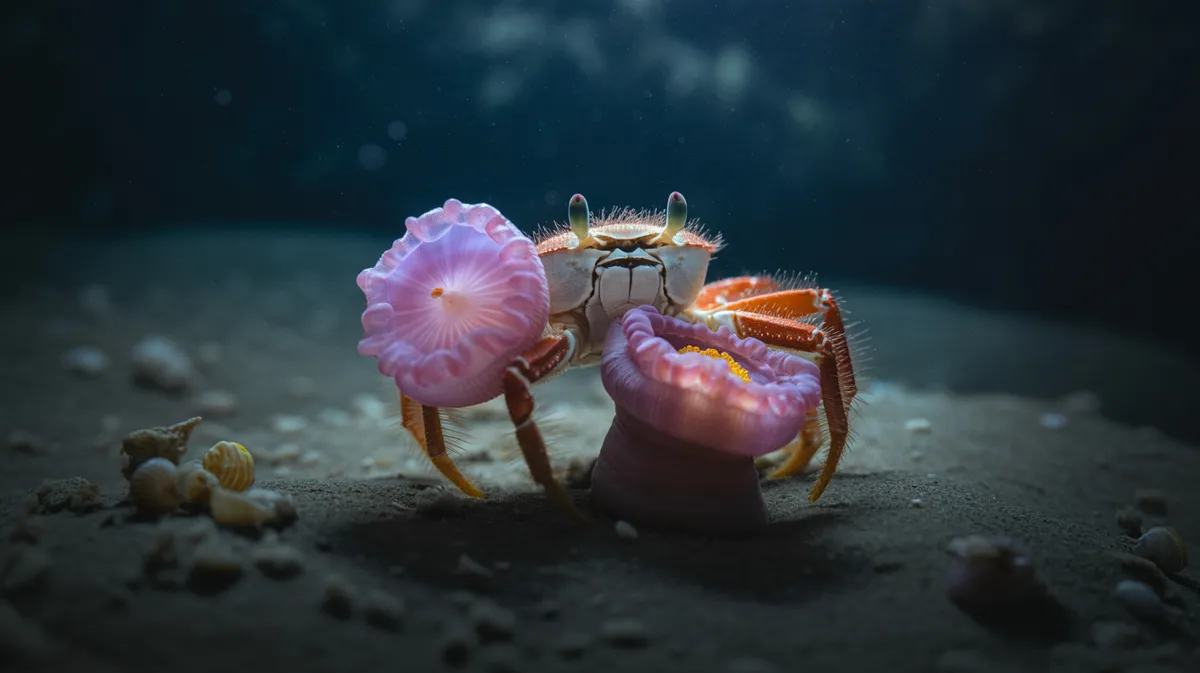
Here's where it gets truly bizarre. If a boxer crab has only one anemone, it will tear it in half — and each half regenerates into a whole new anemone, giving the crab a matched pair of genetically identical clones.
Scientists have watched crabs do exactly this, effectively forcing their anemones to reproduce on demand.
And if a crab has none at all, it may pick a fight with another crab and steal one of its anemones to get started.
The two halves regrow into a perfectly matched pair of clones, which is why a boxer crab's two anemones are usually genetically identical.
Defenceless without them
This partnership isn't optional for the crab. Its claws are so specialised for holding anemones that they're nearly useless for fighting or feeding on their own.
A boxer crab without its anemones is left almost helpless, which is why it goes to such lengths — splitting and even stealing — to make sure it always has a pair.
The crab has, in a sense, traded its own weapons for borrowed ones.
Researchers who removed the anemones found the crabs became noticeably more timid, hiding away until they could find replacements.
A lopsided deal
Scientists still debate how good this arrangement really is for the anemones. Because the crab keeps them small — likely by hogging much of the food they catch — and forcibly clones them, some researchers think the anemones are more farmed than partnered.
It may be closer to the way we keep livestock than a deal between equals.
Whether partner or possession, though, the anemone is utterly central to the boxer crab's survival.
It raises a genuinely interesting question for biologists: at what point does a partnership stop being symbiosis and start being domestication?
How the Cloning Was Discovered
The idea that a crab could force another animal to reproduce sounds outlandish, so scientists set out to test it directly.
Researchers took one anemone away from boxer crabs and watched what happened. Rather than living with a single weapon, the crabs tore the remaining anemone in half — and each half regenerated into a complete new one, giving the crab a matched pair.
When both anemones were removed, crabs fought other crabs to steal one, then split it. Genetic testing confirmed the pair a crab carries are usually clones, making this one of the few known cases of an animal effectively farming another and forcing it to reproduce on demand.
Armed and adorable
The boxer crab shows just how creative nature's partnerships can get — to the point of one animal wielding two others as weapons, tools, and even cloning them at will. It's equal parts charming and ruthless, and one of the reef's most unforgettable odd couples.
Frequently asked questions
Why do boxer crabs hold anemones? For defence and feeding — they wave the stinging anemones at predators and use them to gather food.
What happens if a boxer crab loses an anemone? It can split its remaining one in two to regenerate a clone, or steal an anemone from another crab.
Is the deal fair to the anemone? Maybe not — the crab keeps them small and clones them, so some scientists think the anemones are more farmed than partnered.
How big is a boxer crab? Tiny — often little more than a fingernail across.
Do the anemones benefit? It is debated. They gain mobility and food scraps, but the crab keeps them small, so some call it farming rather than partnership.
What happens if a crab loses both anemones? It becomes timid and vulnerable, and will try to steal one from another crab.
Why is it called a boxer crab? Because it waves the anemones in its claws like a boxer's gloves. It is also known as the pom-pom crab.
Are boxer crabs dangerous? Not to people. The anemones sting, but the crab itself is tiny and extremely shy.
Where do boxer crabs live? On tropical reefs across the Indo-Pacific, usually hidden among coral rubble.
Do the anemones ever get away? Rarely. The crab holds them firmly and keeps the same pair for long periods.
That's three more of nature's odd couples. Revisit the fig and the fig wasp and warthogs and mongooses — and watch for more in the Nature's Odd Couples series.