
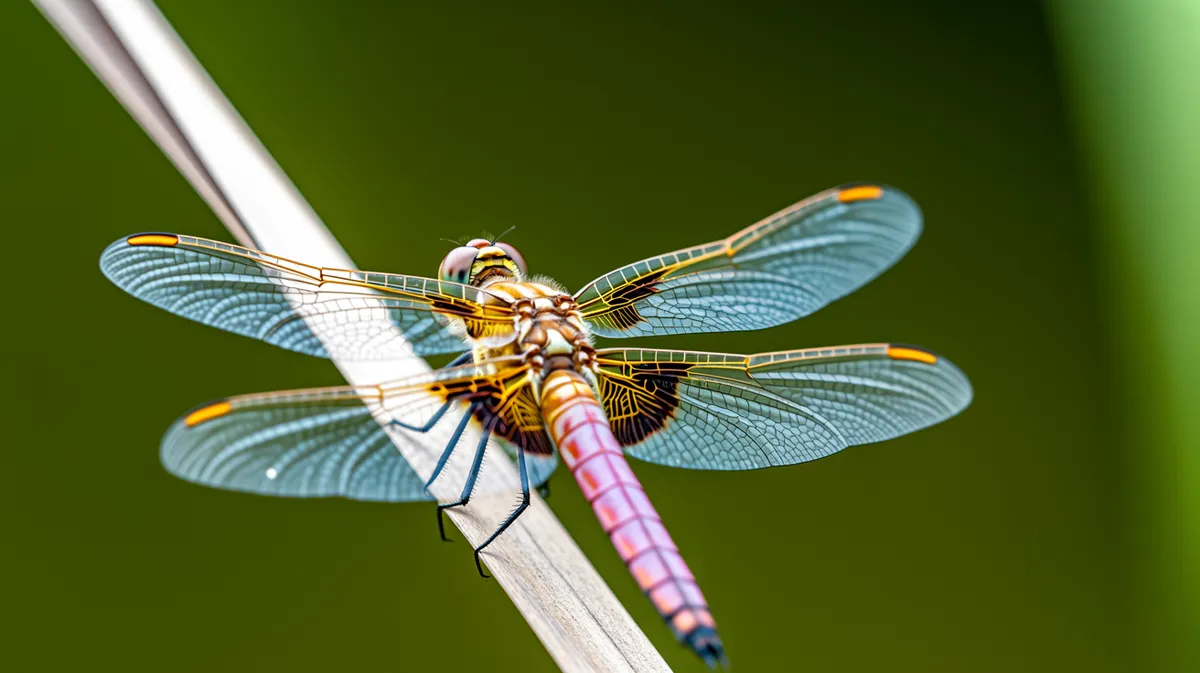
The longest migration of any insect on Earth is made not by a butterfly but by a dragonfly barely the length of your finger. The globe skimmer crosses open ocean, rides monsoon winds thousands of metres up, and completes a round trip so vast that no single dragonfly ever finishes it. In this entry of our The Great Migrations series, we follow this tiny ocean-crossing wanderer.
It's a journey that dwarfs even the famous monarch. See also the multi-generational monarch butterfly and the record-setting bar-tailed godwit.
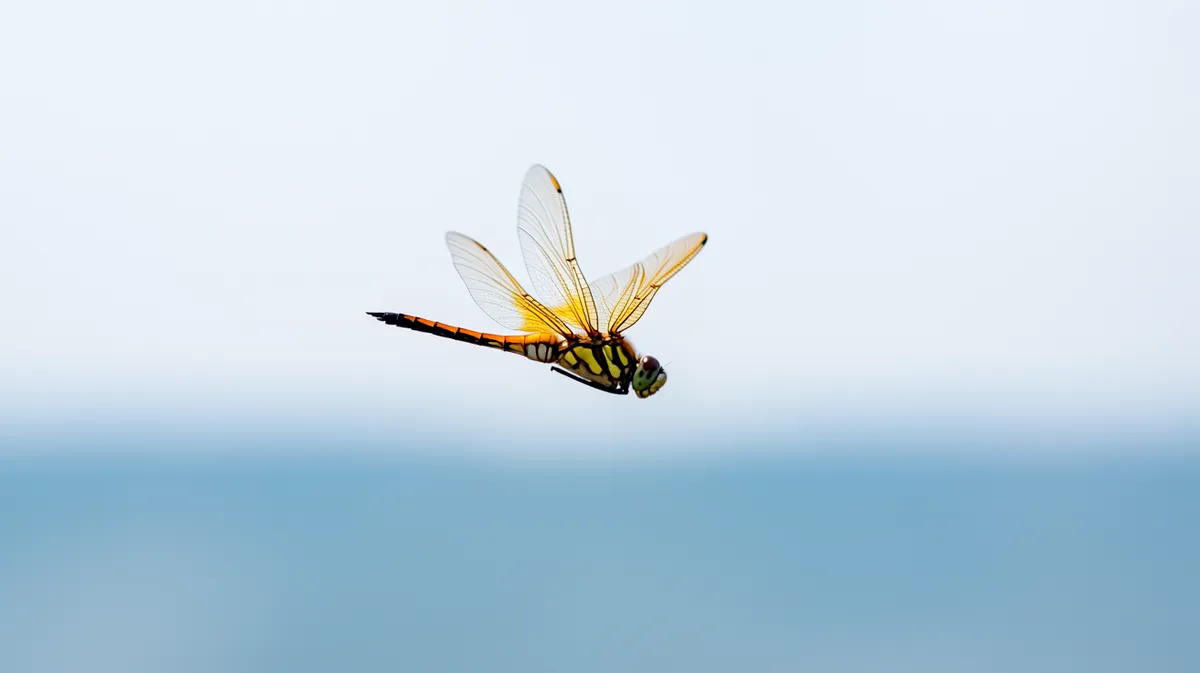
An insect that crosses an ocean
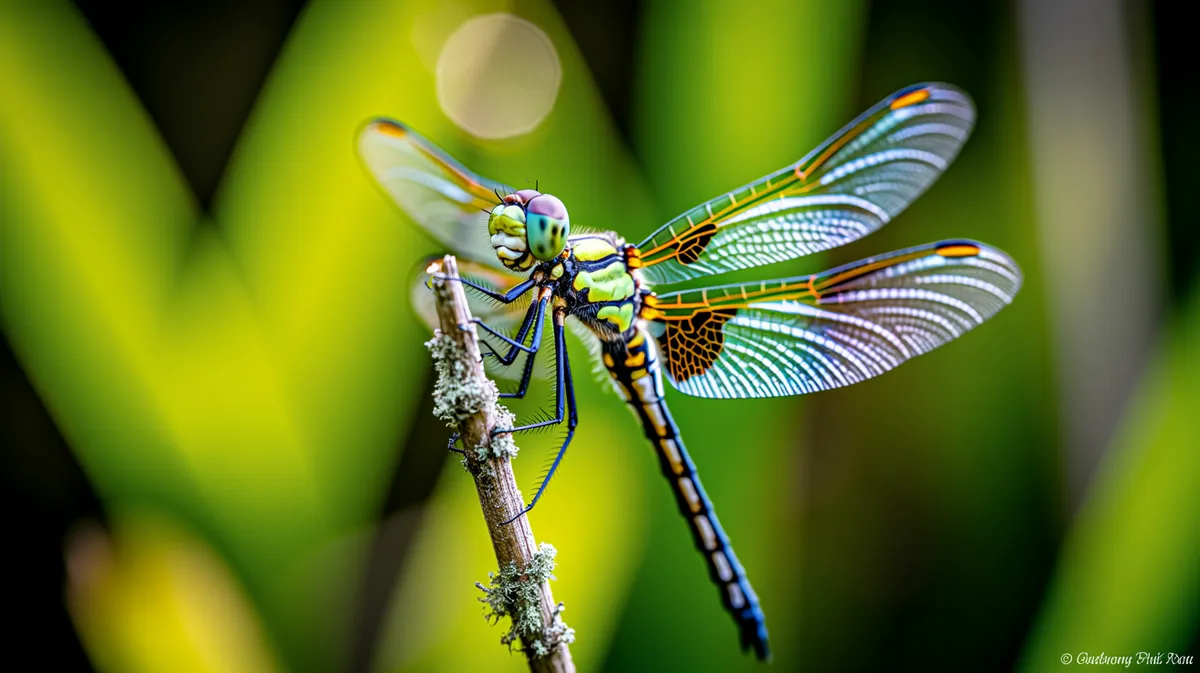
The globe skimmer is a small, unremarkable-looking dragonfly found across much of the world's warmer regions. Yet it performs a migration of staggering scale.
Populations travel back and forth across the Indian Ocean between India and East and Southern Africa, a round trip that may total 14,000 to 18,000 kilometres.
Part of that route runs over open sea, far from any land — an extraordinary crossing for such a fragile flier.
That a creature weighing less than a gram can cross hundreds of kilometres of open water is one of the most improbable feats in all of migration.
Following the rains
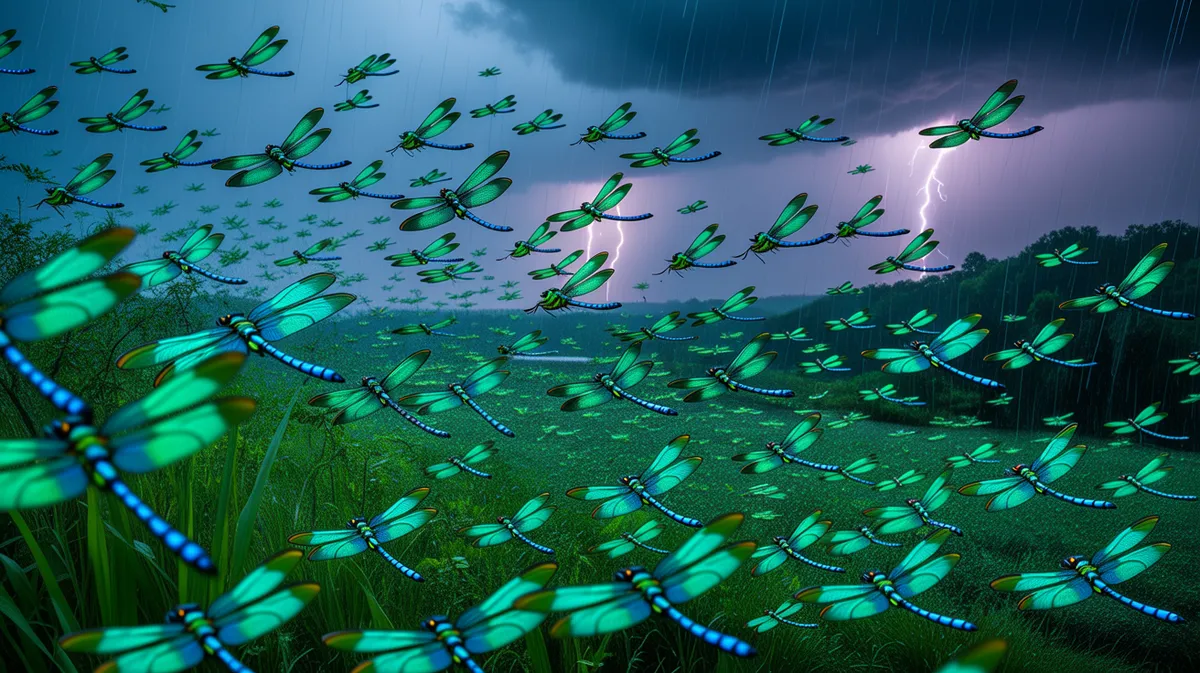
The reason for this epic wandering is water. The globe skimmer breeds in temporary pools left by heavy rain, which its larvae race to develop in before the puddles dry up.
To keep finding fresh pools, the dragonflies chase the rains, timing their movements to the shifting monsoon that sweeps moisture between continents.
In effect, the whole migration is a pursuit of rainfall across half the world.
This is why the dragonflies so often appear in huge numbers just after the monsoon breaks, seemingly arriving from nowhere to breed in the fresh pools.
A journey across generations
Like the monarch, no single globe skimmer completes the round trip. The full circuit takes around four successive generations, each flying part of the way, breeding in fresh pools, and dying as its offspring carry on.
An individual dragonfly lives only a matter of weeks, so the migration is a relay handed down the lineage.
The species remembers a route that no individual could ever fly in full.
Each new generation inherits both the urge to migrate and the timing to match the rains, without ever being taught a thing.
Riding the monsoon winds
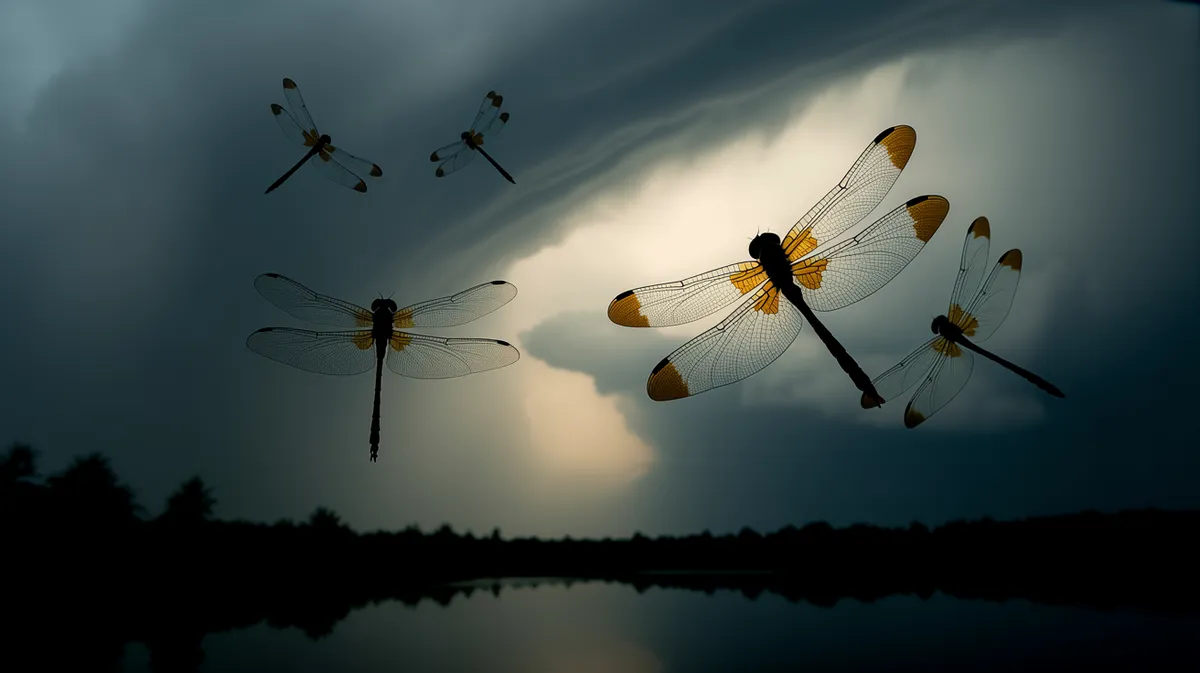
The globe skimmer doesn't power across the ocean by brute force. Instead it climbs high into the atmosphere and lets the monsoon winds carry it, sometimes soaring thousands of metres up.
Dragonflies have even been found high on mountain passes and far out over the sea, borne along on these high-altitude air currents.
By hitching a ride on the winds, a tiny insect can traverse distances that seem impossible for its size.
Sailors far out at sea have reported these dragonflies landing on their ships, hundreds of kilometres from the nearest land.
One global population
The globe skimmer's constant wandering has left a remarkable genetic fingerprint. Because these dragonflies travel and mix across such huge distances, populations from different continents are almost genetically identical.
Scientists have found that globe skimmers around the world form something close to a single, interbreeding global population.
Its restless migration has, in effect, stitched the species together across the entire planet.
This global mixing may also help the species stay resilient, spreading its genes and its numbers across many continents at once.
The little wanderer
Fittingly, the globe skimmer's scientific name, Pantala flavescens, and its common name both hint at a wanderer without borders. For an insect so small and so short-lived, it lives an astonishingly expansive life.
Every generation is born, breeds, and dies mid-journey, part of a migration none of them will ever see the whole of.
It is a humbling reminder that some of nature's greatest travellers are also its most overlooked.
Because they follow the rains, globe skimmers are often among the first creatures to colonise newly formed pools, even in deserts after a rare downpour.
How We Know They Cross an Ocean
The idea that a dragonfly crosses the Indian Ocean sounds far-fetched, so the evidence matters. Much of it came from a biologist in the Maldives who noticed swarms arriving on islands with no freshwater at all — meaning they could not have bred there.
The timing lined up precisely with the shifting monsoon, and the insects appeared to be arriving from India and heading on toward Africa.
Genetics sealed it. Globe skimmers sampled on different continents turned out to be almost genetically identical, which is only possible if populations are constantly mixing across enormous distances. Sailors reporting dragonflies landing on ships far out at sea completed the picture.
The record no butterfly can match
The globe skimmer proves that the title of greatest insect migrant belongs not to a showy butterfly but to a plain little dragonfly chasing the rain across oceans. In its windborne, generations-long journey, it quietly performs one of the most extraordinary feats in the insect world.
Frequently asked questions
What is the longest insect migration? The globe skimmer dragonfly's, a multi-generational round trip of up to 14,000–18,000 km across the Indian Ocean.
How does a dragonfly cross an ocean? It climbs high and rides the monsoon winds, letting the moving air carry it thousands of kilometres.
Does one dragonfly complete the trip? No — it takes about four generations, each flying part of the way and breeding before passing it on.
How long do globe skimmers live? Only a matter of weeks, which is why the round trip takes several generations.
How high do they fly? They ride winds thousands of metres up, and have been recorded at extraordinary altitudes.
Is this really the longest insect migration? Yes — the multi-generational round trip far exceeds the monarch butterfly's.
What exactly is a globe skimmer? A small golden-brown dragonfly, Pantala flavescens, found across the warmer regions of nearly every continent.
Do other dragonflies migrate? Yes — several species migrate in North America and Europe, though none comes close to the globe skimmer's range.
Why do they need temporary pools? Their larvae develop unusually fast, racing to mature before a rain-filled puddle dries out again.
Are globe skimmers endangered? No — they are among the most widespread and abundant dragonflies on Earth.
Continue with the red crab march of Christmas Island, or revisit the monarch butterfly migration.