
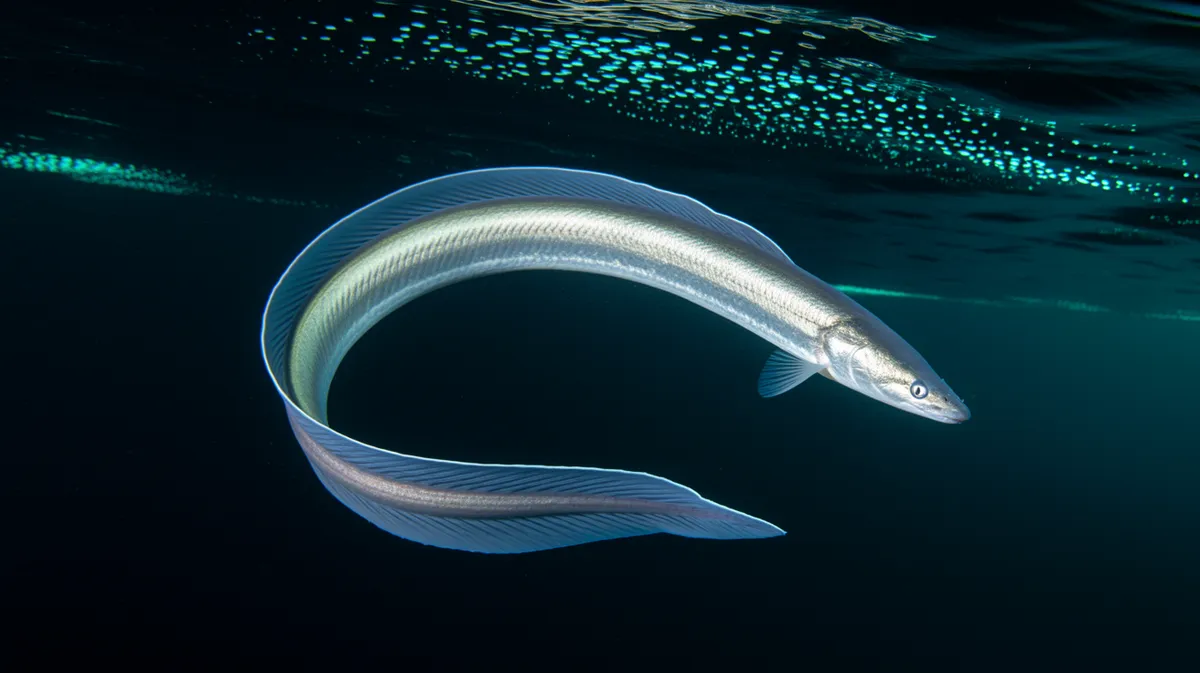
Of all the great migrations, none is stranger, or more mysterious, than that of the humble eel. It lives its life in reverse of the salmon — growing up in freshwater rivers, then vanishing out to sea to breed in a place no human has ever seen it do so. The European eel's journey has puzzled naturalists since the time of the ancient Greeks. In this entry of our The Great Migrations series, we trace the eel's secret voyage.
It is a migration built almost entirely of unanswered questions. See also the homeward salmon journey and the ocean-crossing Arctic tern.
A life in reverse
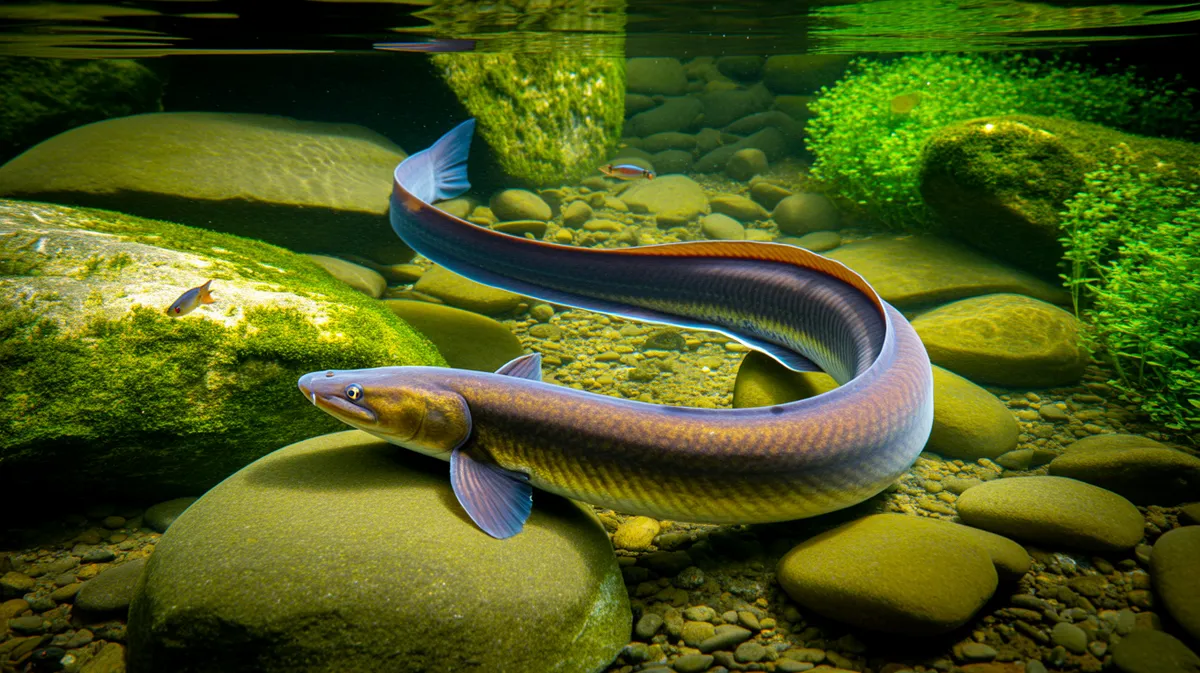
Most migratory fish, like salmon, are born in rivers, grow in the sea, and return to freshwater to breed. The eel does the exact opposite, a pattern known as catadromy.
It is born far out in the ocean, grows up in rivers and lakes, and then travels back to the sea to reproduce.
This upside-down life story means the eel makes not one but two epic ocean crossings, at opposite ends of its life.
This unusual lifestyle also lets eels colonise almost any freshwater within reach of the sea, from mountain streams to farm ponds far inland.
Born in a sea of weeds
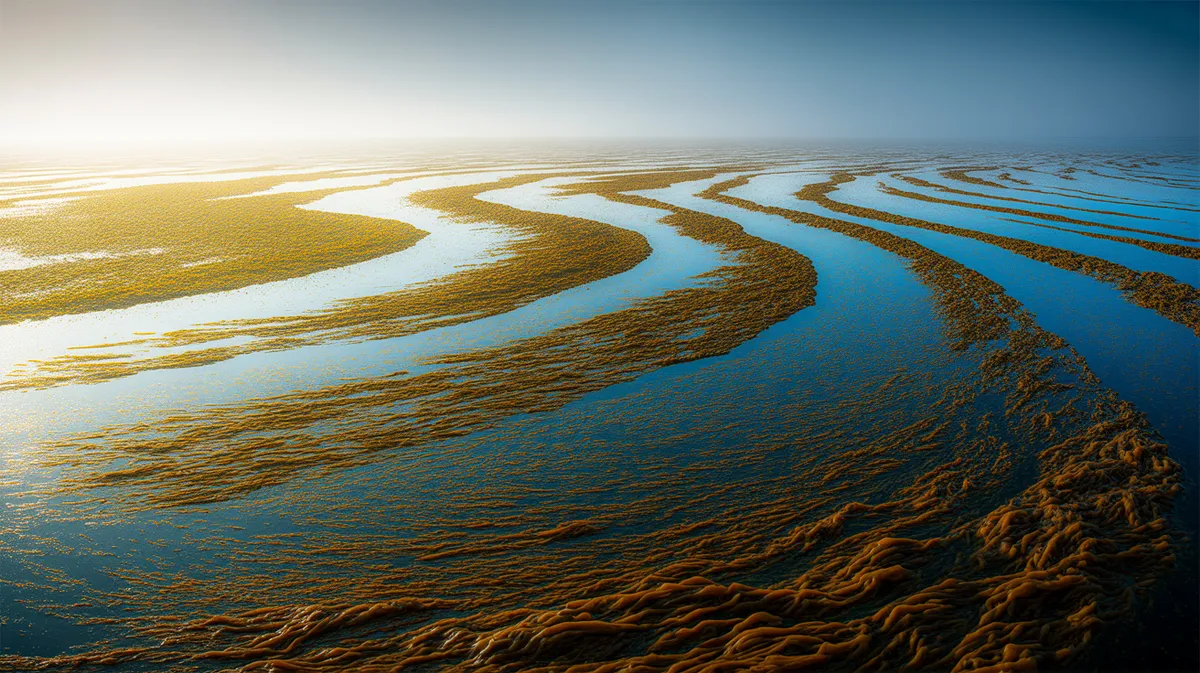
The story begins in the Sargasso Sea, a strange, calm region of the mid-Atlantic ringed by ocean currents and famous for its floating mats of seaweed. It is here, scientists believe, that European eels are born.
The evidence is indirect, pieced together from the tiny larvae found drifting there, because no one has ever actually observed a European eel spawning.
The Sargasso Sea remains a nursery hidden in plain sight, its role inferred rather than seen.
The Sargasso Sea is itself a strange place — the only sea on Earth defined not by coastlines but by the great ring of currents that swirl around it.
The long drift to Europe
Newly hatched eels look nothing like the adults — they are tiny, transparent, leaf-shaped larvae. Rather than swimming, they drift, carried by the Gulf Stream and other currents on a journey of thousands of kilometres toward Europe.
This passive drift can take anywhere from one to three years. As they near the coast, they transform into slender, see-through "glass eels" and begin pushing up into river mouths.
From there they wriggle upstream, sometimes even crossing damp land, to reach the freshwater where they will spend the bulk of their lives.
This astonishingly long larval journey means an eel that ends up in a European river may have begun its life on the far side of the Atlantic years earlier.
Years in freshwater
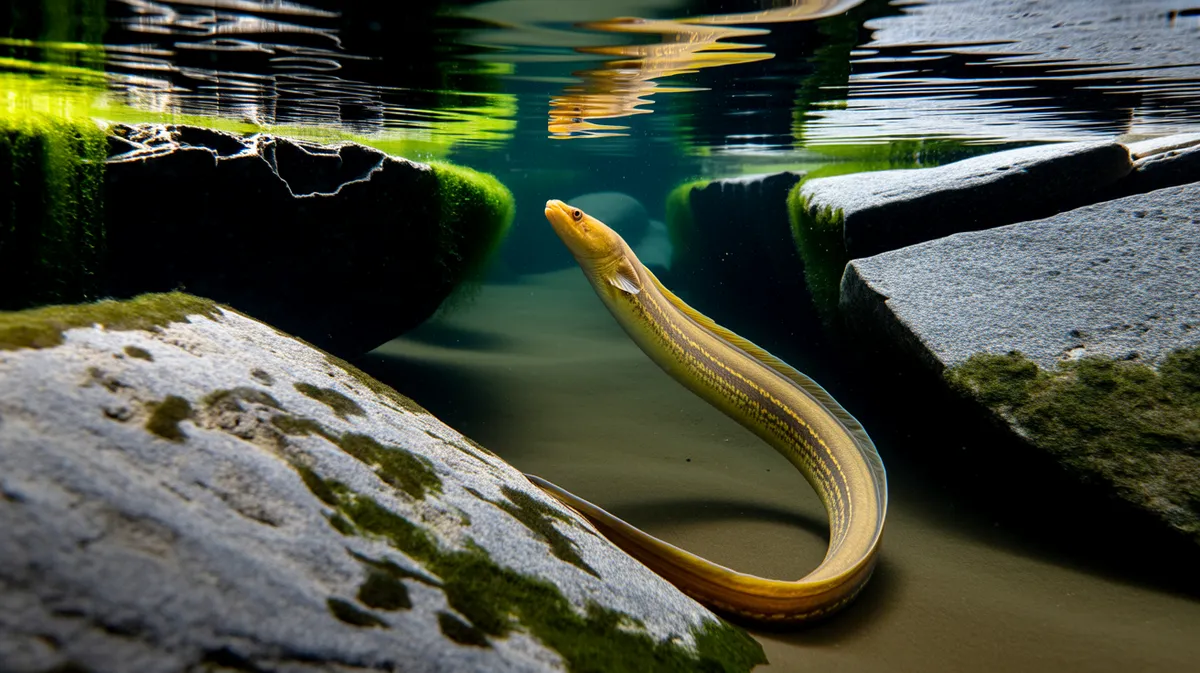
Now settled in rivers, lakes, and ponds, the eels enter their long "yellow eel" stage, feeding and growing slowly, often hidden in mud by day.
They can remain in freshwater for a remarkably long time — commonly a decade or two, and sometimes far longer.
For years they seem like ordinary, unremarkable river fish, giving no hint of the extraordinary journey encoded within them.
Eels are also remarkably hardy, able to breathe partly through their skin, which lets them survive out of water long enough to wriggle overland between ponds.
The great return
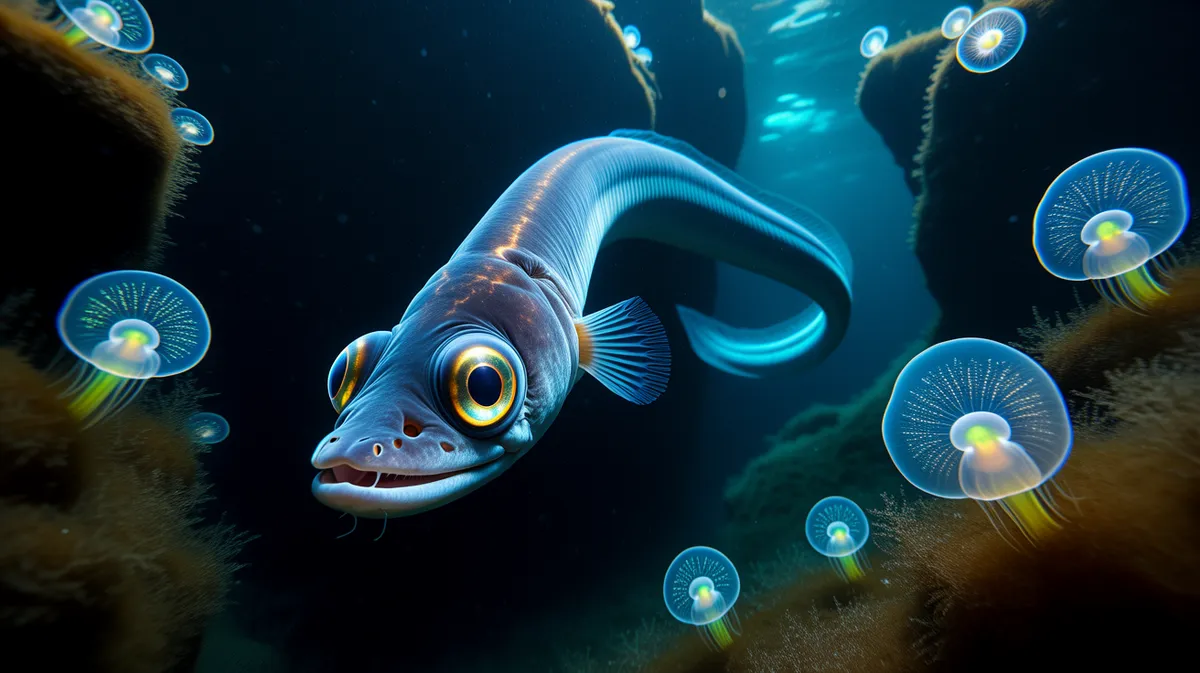
Then, one autumn, the transformation comes. The eels' bodies change again — they turn a silvery colour, their eyes enlarge for the deep sea, and their guts shrink as they stop feeding.
These "silver eels" leave the rivers and set off on a one-way journey of some 5,000 to 6,000 kilometres back across the Atlantic to the Sargasso Sea.
There, it is believed, they spawn a single time and then die, completing a life cycle that began in the very same patch of ocean.
So complete is this final transformation that the silver eel stops eating entirely, running the whole ocean crossing on reserves built up over its years in freshwater.
A journey wrapped in mystery
Astonishingly, so much of this remains unproven. No one has ever witnessed European eels spawning, or followed an adult all the way to the Sargasso Sea.
The great naturalist Aristotle, unable to find eel eggs, once concluded that eels simply arose from mud, and the puzzle of their origins lingered for over two thousand years.
Even today, the eel guards the final secrets of its migration closely, one of the last great mysteries of the animal world.
Modern satellite tags have finally begun to follow adult eels partway across the Atlantic, slowly closing in on secrets the species has kept for millennia.
A Species in Freefall
The European eel is not merely mysterious — it is disappearing. The number of young glass eels arriving on European coasts has collapsed by well over 90% since the 1980s.
The causes stack up: dams and weirs block rivers, wetlands have been drained, pollution and parasites take their toll, and shifting ocean currents may be disrupting the long larval drift.
On top of that sits a lucrative illegal trade. Glass eels are trafficked out of Europe in vast numbers for aquaculture abroad, making the eel one of the most trafficked animals on Earth — a fact almost nobody knows.
The most mysterious migration
The European eel undertakes a double ocean crossing across a lifetime, ending in a spawning ground no human has ever seen. Now critically endangered, this most secretive of migrants may vanish before we ever fully understand the journey it has always kept hidden.
Frequently asked questions
Where are European eels born? It's believed to be the Sargasso Sea in the mid-Atlantic, though no one has ever seen them spawn there.
How do baby eels reach Europe? As tiny transparent larvae, they drift on ocean currents for 1–3 years, then enter rivers as "glass eels."
Why is the eel's migration so mysterious? Its spawning has never been observed, and much of the journey is inferred rather than directly seen.
How long do European eels live? Often 10 to 20 years in freshwater, and sometimes far longer before they return to the sea.
Has anyone seen eels spawn? No. Despite a century of searching, European eel spawning has never been directly observed.
Are eels endangered? Critically endangered, with the population having fallen dramatically in recent decades.
Continue with the sandhill crane migration, or revisit the salmon journey home.