
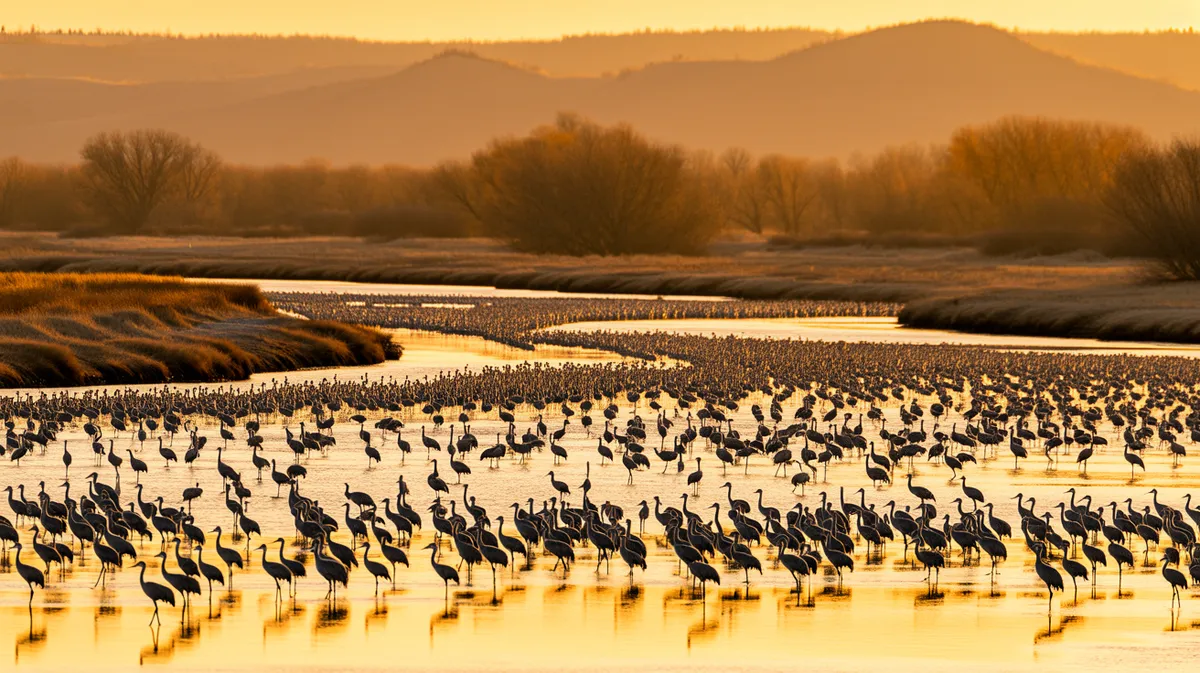
For a few weeks each spring, a single stretch of river in the American heartland becomes the stage for one of the greatest wildlife gatherings in North America. Hundreds of thousands of sandhill cranes descend on Nebraska's Platte River, filling the sky with their calls and the sandbars with their bodies. In this entry of our The Great Migrations series, we join the sandhill crane gathering.
It is a spectacle of numbers, ritual, and astonishing antiquity. See also the record-setting bar-tailed godwit and the pole-to-pole Arctic tern.
Half a million cranes
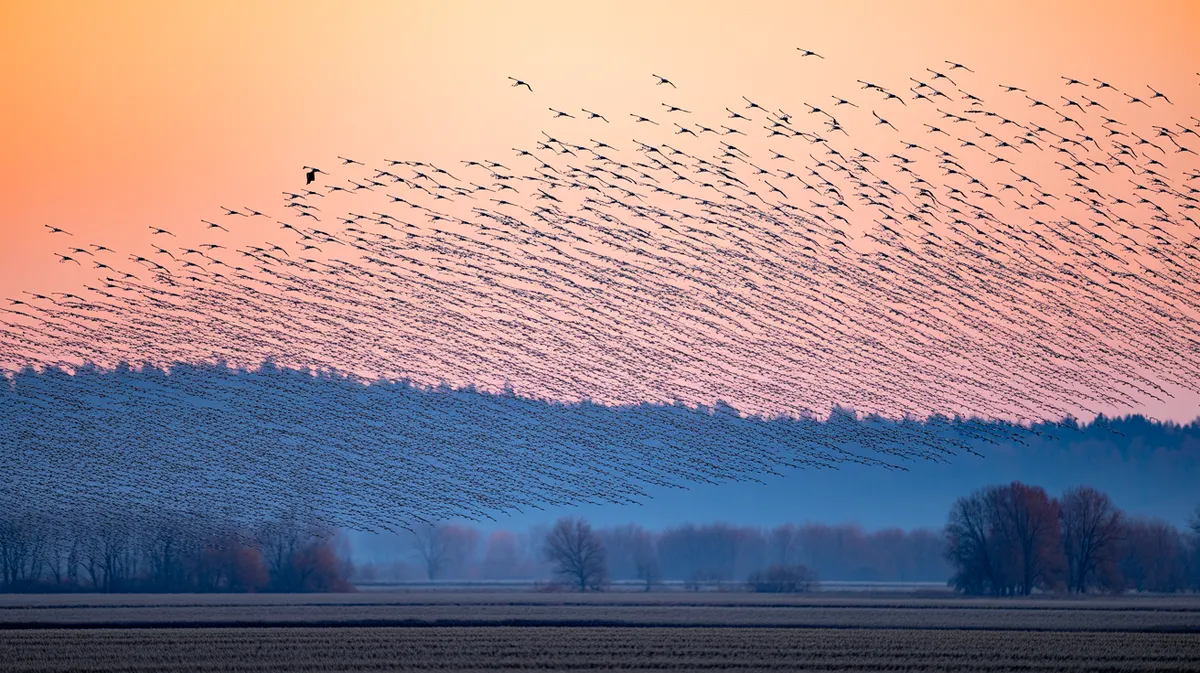
Each spring, on their way north to their breeding grounds, around half a million sandhill cranes — a huge share of the world's population — funnel down onto a short section of the Platte River.
For a few weeks the region hosts one of the densest concentrations of large birds anywhere on the continent.
The sight and sound of so many cranes rising and settling together is one of North America's great natural spectacles.
Standing over a metre tall with a wingspan of around two metres, sandhill cranes are big birds, and half a million of them in one place is a truly staggering sight.
A river of safety
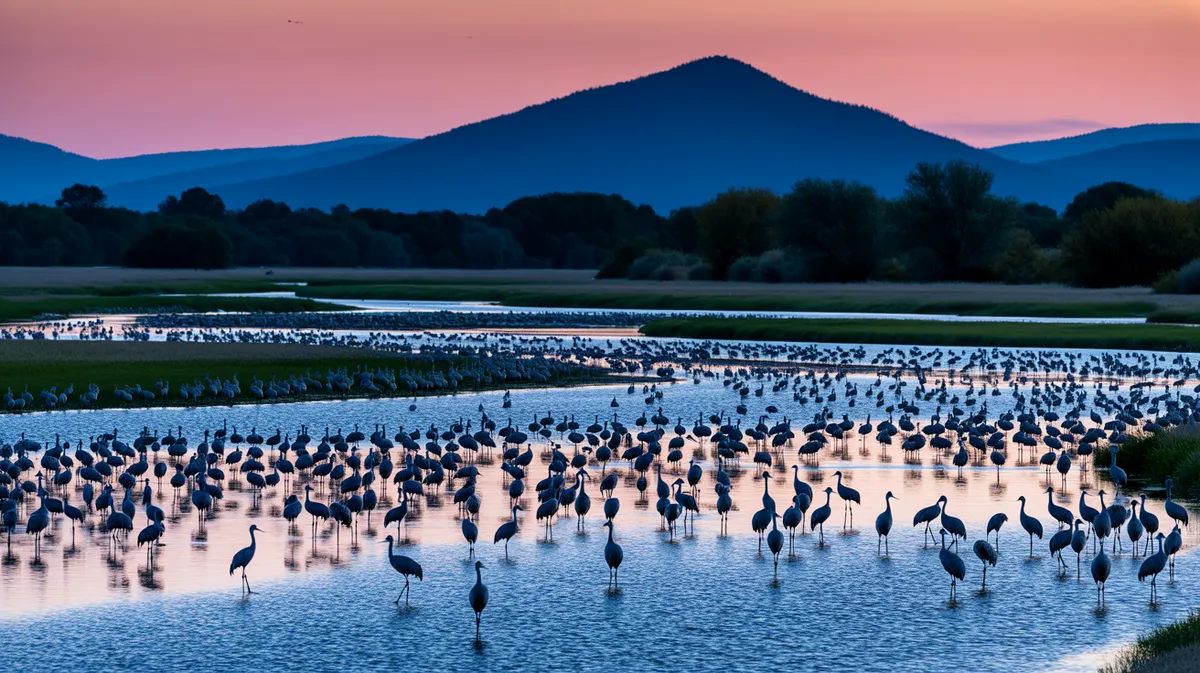
The Platte's wide, shallow, braided channels are the reason the cranes come. At night the birds roost standing in the shallow water on the river's sandbars.
Surrounded by water, they are far safer from prowling predators like coyotes, which cannot approach unheard or unseen.
The river offers a rare combination of safe roosting and rich surrounding farmland, making it the perfect waystation.
As dawn breaks, the cranes lift off the water in great, noisy waves, a spectacle that draws crowds to riverside blinds every spring.
Fuelling up
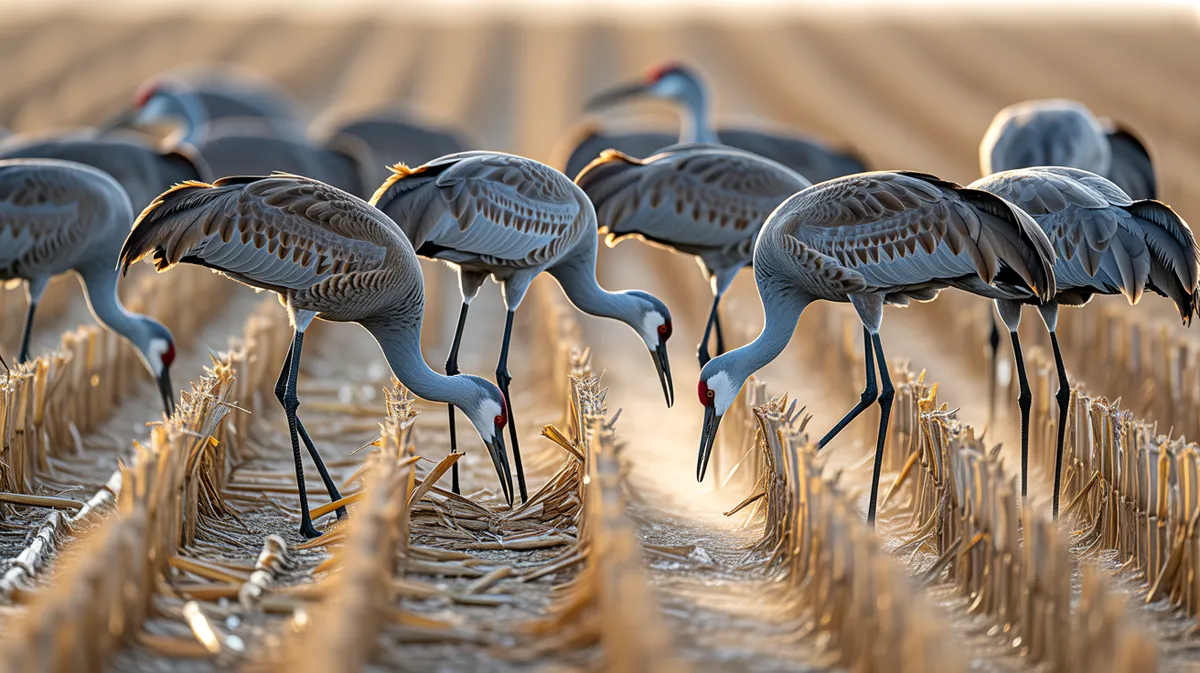
By day, the cranes fan out into the surrounding fields to feed, gleaning waste grain left over from the harvest along with insects and other morsels.
This is a crucial refuelling stop: over these few weeks the cranes fatten up, banking the energy they'll need for the long final push to their nesting grounds in the far north.
The Platte is, in effect, a giant fuelling station on a continental highway in the sky.
A crane may gain a significant fraction of its body weight during this stopover, fuel that can mean the difference between a successful breeding season and a failed one.
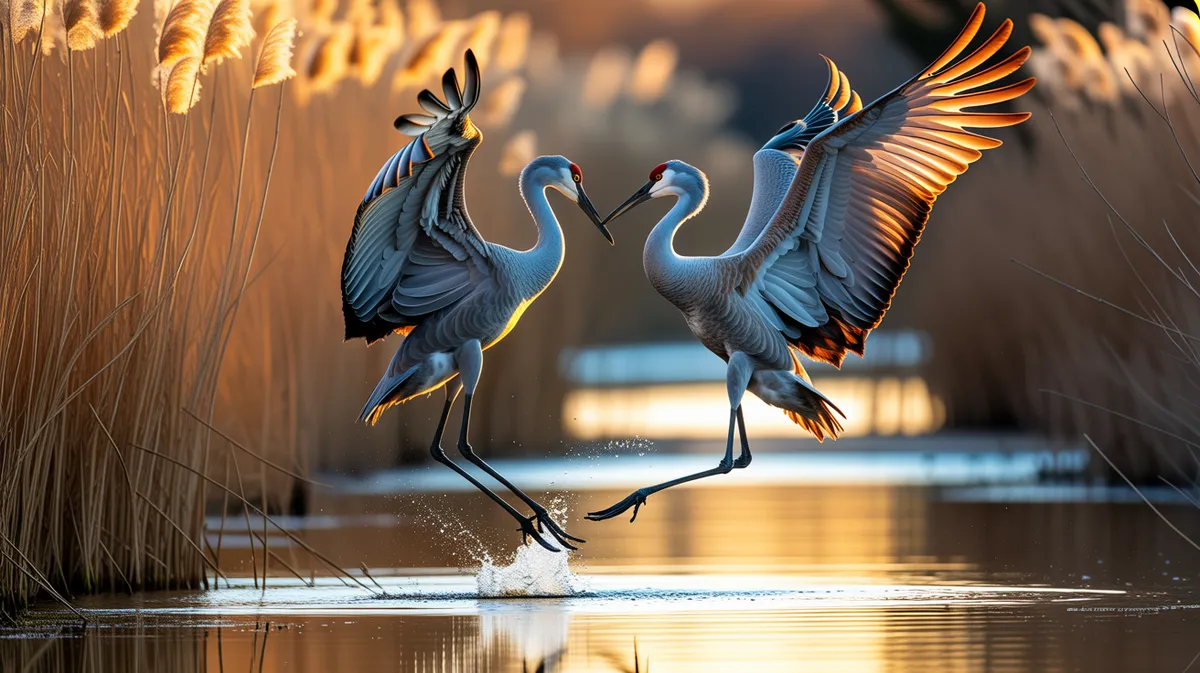
The dance of the cranes
The gathering is not just about feeding. It is also a time for one of the bird world's most captivating displays: the crane dance.
The cranes leap into the air with wings spread, bow, and toss grass and sticks, bouncing around one another in an elaborate, joyful-looking ritual.
These dances help strengthen the bonds between mated pairs, which often stay together for life.
Though it peaks in the breeding season, cranes of all ages dance, and even young birds practise the moves long before they will ever need them.
An ancient journey
What makes the spectacle even more remarkable is its age. Sandhill cranes belong to one of the oldest bird lineages on Earth, with fossil relatives dating back millions of years.
That means cranes have very likely been gathering on this river, or ones like it, for an almost unimaginable span of time.
To watch them is to witness a migration that may be older than the human species itself.
A fossil crane bone strikingly similar to today's sandhill crane has been dated to around ten million years ago, making it one of the oldest known bird species still alive.
A fragile bottleneck
The very thing that makes the gathering so spectacular also makes it fragile. Because so many cranes rely on this one short stretch of river, it is a vital bottleneck in their entire migration.
Changes to the river's flow and the loss of its open sandbars threaten the roosting habitat the birds depend on.
Careful management of the Platte has become essential to safeguarding a spectacle that funnels a continent's cranes through a single place.
It's a stark reminder that for many migrations, safeguarding a single crucial stopover can matter as much as protecting the breeding grounds themselves.
How to See the Gathering
The Platte River spectacle is one of the most accessible great migrations in the world, and it happens on a reliable schedule.
The birds mass in central Nebraska through roughly late February into early April, with the peak usually in March. Viewing blinds along the river let people watch the cranes lift off the sandbars at dawn without disturbing them.
The gathering has become a significant local economy in its own right, drawing tens of thousands of visitors each spring — which in turn helps fund the habitat work that keeps the river's sandbars open and the cranes coming back.
An ancient rite of spring
The sandhill crane gathering is a yearly reminder that some migrations are as much ritual as journey. In its dancing, calling multitudes on an ancient river, it links the deep past to every returning spring — a spectacle worth crossing a continent to see.
Frequently asked questions
How many sandhill cranes gather on the Platte River? Around half a million each spring — a large share of the world's population.
Why do the cranes stop at the Platte? To roost safely on the river's sandbars at night and fatten up on grain in nearby fields.
Why do cranes dance? The leaping, bowing dances help strengthen the bonds between lifelong mated pairs.
How tall are sandhill cranes? Over a metre tall, with a wingspan around two metres.
How long do sandhill cranes live? Often 20 years or more in the wild.
Do cranes mate for life? Generally yes — pairs stay together and reinforce the bond with their famous dances.
What do sandhill cranes eat? Waste grain, insects, tubers, and small animals — they are opportunistic omnivores.
Are cranes related to herons? No. Despite the superficial resemblance, cranes and herons are only distantly related.
Do cranes fly in a V formation? Often, yes, and they also soar on thermals to save energy over long distances.
How many sandhill cranes are there? Several hundred thousand, making them one of the more numerous crane species in the world.
That's three more of the planet's great migrations. Revisit the Arctic tern and the European eel — and watch for more in the The Great Migrations series.