
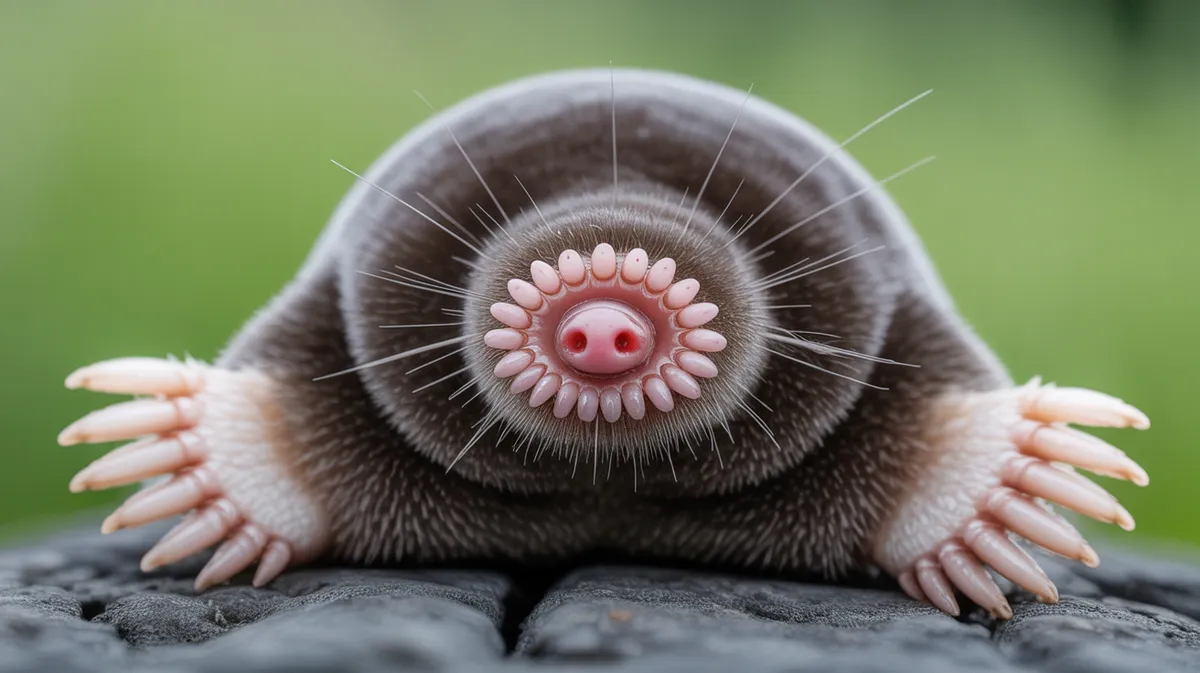
Beneath wet meadows and marshes lives an animal that perceives the world in a way no human ever could: it "sees" almost entirely through touch, and it does so faster than our eyes can follow. The star-nosed mole, with its bizarre ring of fleshy tentacles, has one of the most remarkable sensory systems on Earth. In this entry of our Through Animal Eyes series, we explore how it feels its way through the world.
For this mole, touch isn't a backup sense — it's the main event. See also the touch-free worlds of how bats see with sound and how elephants hear with their feet.
The star
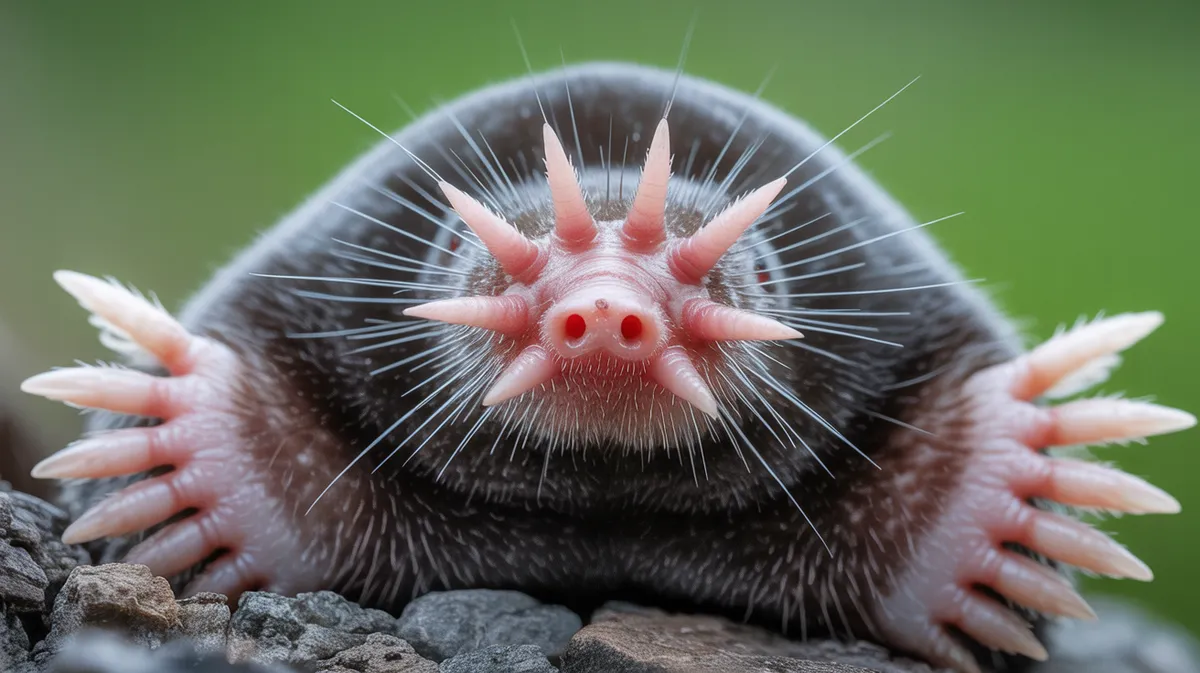
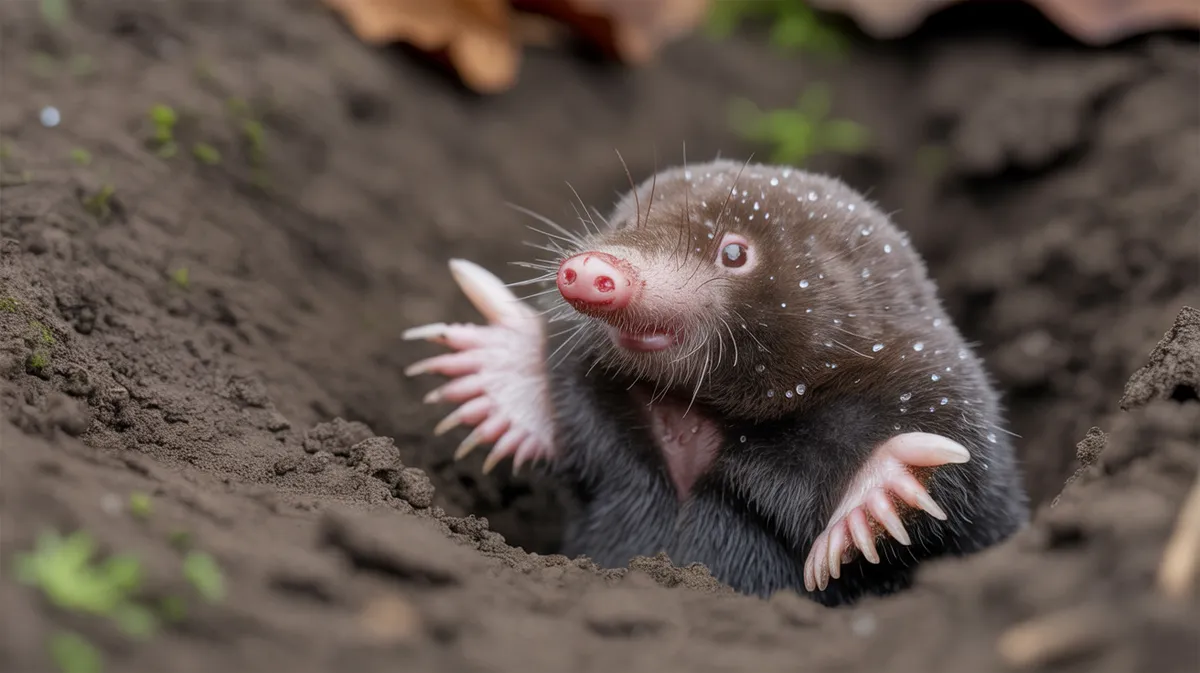
Ringing the mole's snout are 22 pink, fleshy appendages that give it its name and its unsettling appearance. This "star" is not for smelling or grabbing — it's a touch organ, and an astonishing one.
Packed into it are around 25,000 tiny sensory structures called Eimer's organs, making the star the most sensitive touch organ known in any mammal.
Through it, the mole reads the texture and shape of everything it brushes against in its dark tunnels, building a picture of the world by feel alone.
The whole star is smaller than a fingertip, yet it gathers more touch information than a human hand, which is itself one of our most sensitive body parts.
Touching at the speed of sight
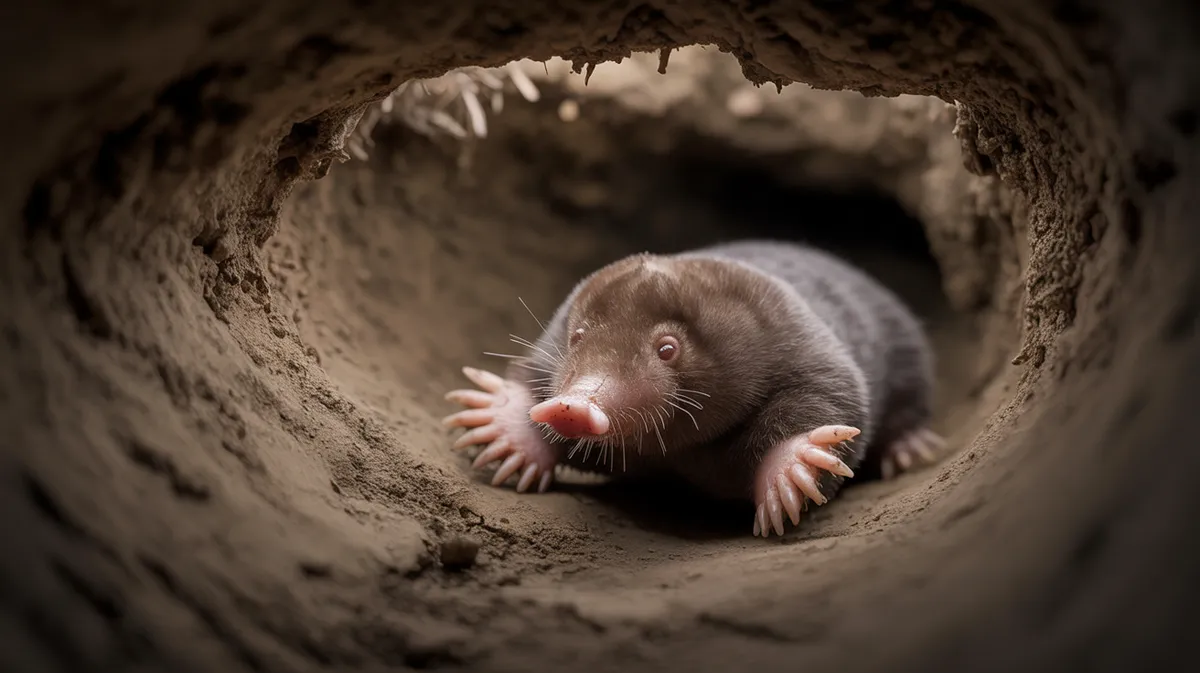
The star is in constant, blurring motion, tapping objects more than ten times every second as the mole explores. Functionally blind, the mole effectively "sees" by touch.
This makes it the fastest forager ever recorded: it can find a morsel of food, identify it as edible, and eat it in around a quarter of a second — faster than the human eye can even register.
It processes touch information so quickly that, by some measures, it's bumping up against the physical speed limits of the nervous system itself.
Each tap is so brief and so well organised that the mole never wastes a movement, methodically working through the soil like a reader scanning a page.
A touch map in the brain
Just as our brains devote enormous space to processing vision, the star-nosed mole's brain dedicates a huge area to processing input from its star.
Remarkably, the star even has a "fovea" — a small central region of two appendages that the mole focuses on fine detail, much as we point our eyes' sharpest spot at whatever we want to examine.
When the mole finds something interesting, it quickly shifts the object to this touch-fovea for a closer "look," exactly as a person glances directly at something to see it clearly.
Studying this touch map has helped neuroscientists understand how any brain, including ours, builds a detailed model of the world from a flood of sensory signals.
Smelling underwater
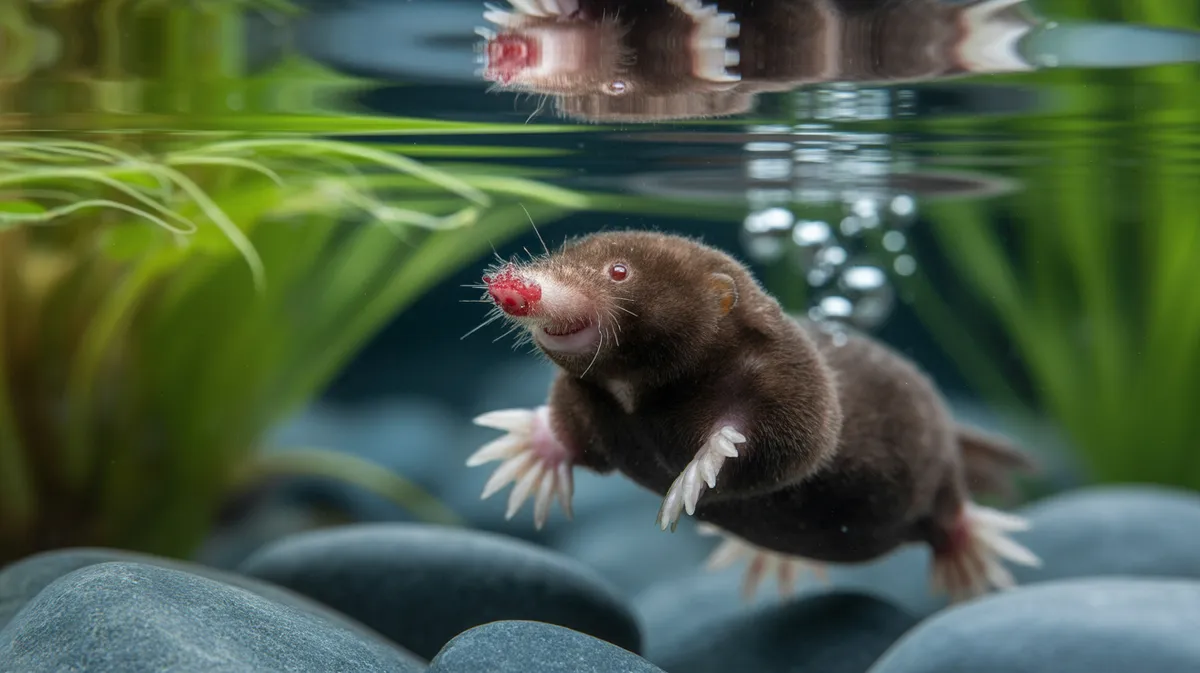
The star-nosed mole has another trick that astonished scientists: it can smell underwater. It does this by blowing tiny air bubbles onto an object or scent trail, then inhaling them back to sample the odour.
This was long thought to be impossible for a mammal, since smelling requires drawing air across scent receptors.
It lets the mole hunt by scent even while submerged in the muddy, waterlogged ground it calls home.
The bubbles are blown and re-inhaled so fast — many times a second — that the trick went unnoticed by scientists until it was caught on high-speed film.
Why touch beats sight here
In the lightless, waterlogged tunnels where this mole lives, eyes are next to useless, so evolution invested everything in touch instead. Its tiny eyes can barely do more than tell light from dark.
By turning its nose into a high-speed touch sensor, the mole found a way to thrive where vision simply can't work.
It's a perfect illustration of how an animal's senses are shaped by the world it actually lives in, not the one we assume is "normal."
It's a humbling reminder that "seeing" is really just the brain making sense of incoming signals, whatever sense happens to deliver them.
Other Animals That "See" by Touch
The star-nosed mole is the extreme case, but touch-dominated worlds are more common than we assume.
Catfish are essentially swimming tongues, their barbels and skin studded with taste and touch receptors that let them read a muddy river bottom they cannot see. Manatees use thousands of stiff, sensitive whiskers to feel their way through murky water.
Seals hunt with their whiskers, tracking the invisible wake a fish leaves in the water for many seconds after it has passed. Wherever light fails — mud, murk, or the dark of a burrow — evolution reaches for touch, and builds something remarkable.
What it's like to be a star-nosed mole
To perceive the world as a star-nosed mole does is to feel it in rapid, high-resolution touches, the way we take in a scene at a glance — a world drawn not in light but in texture, sampled dozens of times a second. It's touch elevated into something very close to sight.
Frequently asked questions
Is the star-nosed mole blind? Effectively yes — its eyes barely work, and it perceives the world almost entirely through its ultra-sensitive star-shaped nose.
How fast can it find food? About a quarter of a second to detect, identify, and eat prey — the fastest of any mammal recorded.
Can the star-nosed mole smell underwater? Yes — it blows and re-inhales tiny air bubbles to sample scents while submerged.
Is the star-nosed mole blind? Effectively. Its eyes barely function, and it perceives the world through its star.
How fast can it eat? It can find, identify and eat prey in roughly a quarter of a second — the fastest known of any mammal.
Can it really smell underwater? Yes — it blows out air bubbles and re-inhales them to sample scent.
Where does it live? In wet meadows and marshes of eastern North America.
That's three more extraordinary senses. Revisit how cats see the world and how dogs smell the world — and watch for more in the Through Animal Eyes series.