
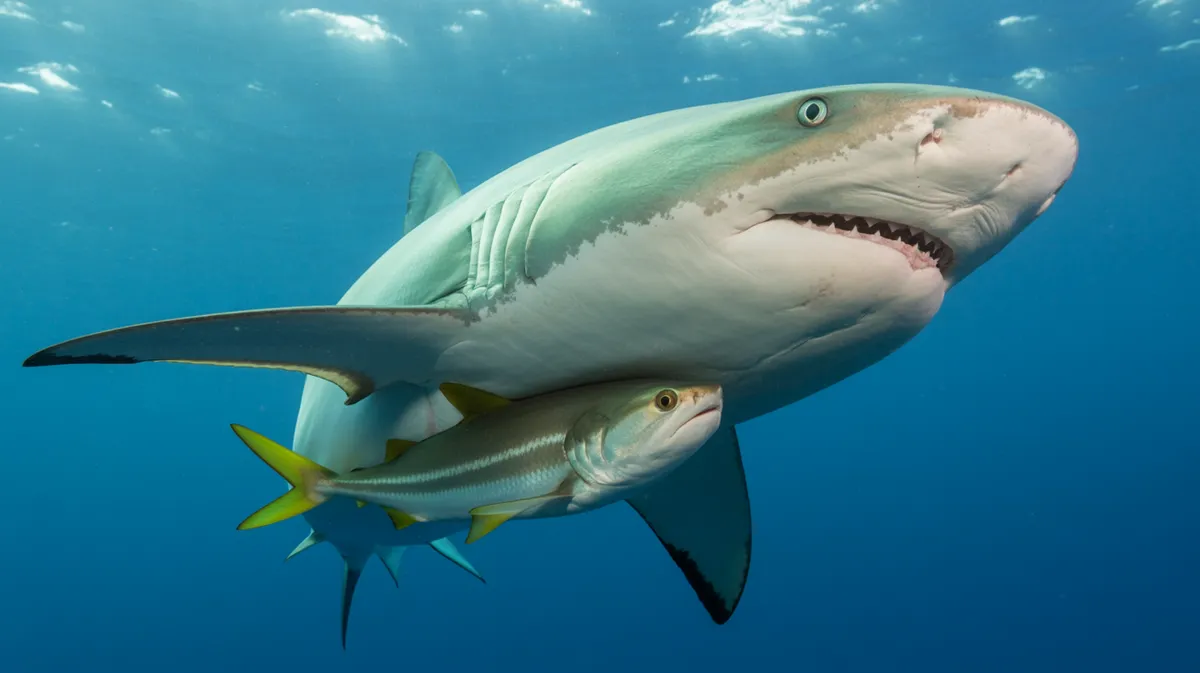
Swimming alongside a great shark, you'll often spot smaller fish stuck firmly to its body, riding along as if glued in place. These are remoras, the ocean's ultimate hitchhikers, and they've turned freeloading into a fine art. In this entry of our Nature's Odd Couples series, we explore the curious partnership between the remora and the shark.
It's a relationship that ranges from harmless freeloading to genuine help. See also the cleaning-station deal of the cleaner wrasse and its clients and the reef pairing in the clownfish and the sea anemone.
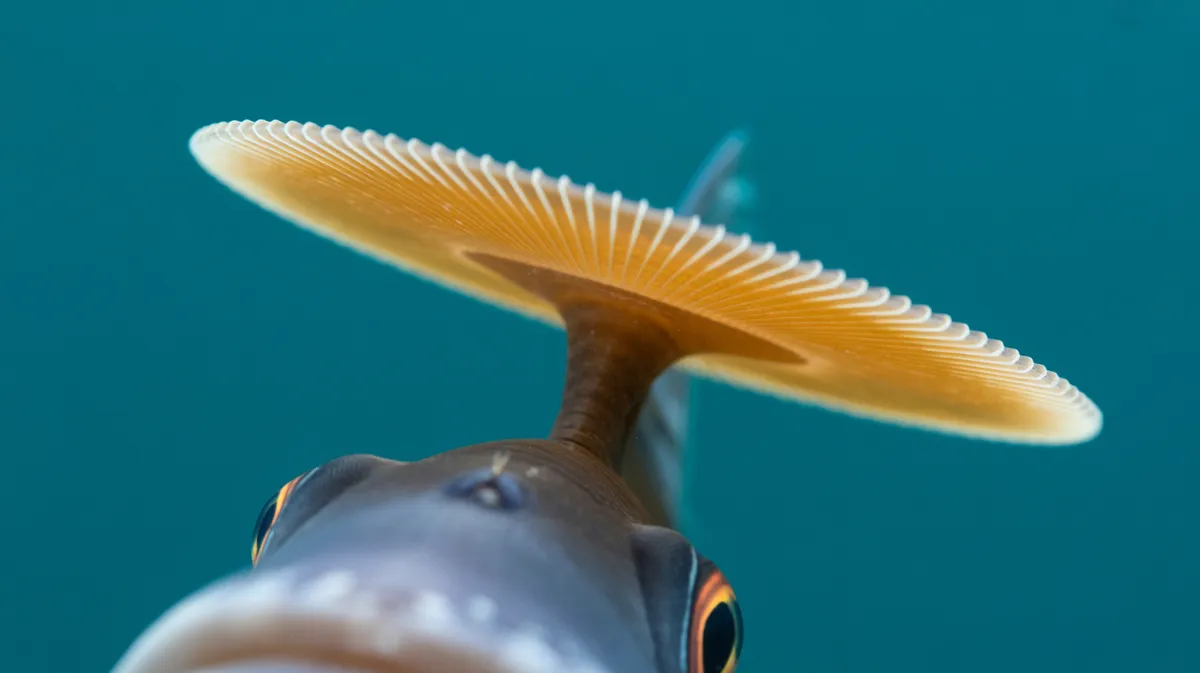
The suction disc
The remora's secret is on top of its head: a flat, oval disc that works like a powerful suction pad. It's actually a highly modified dorsal fin, reshaped over evolution into a gripping organ.
Rows of movable ridges inside the disc create suction strong enough to hold the fish against a host moving at full speed.
The grip is so secure that a remora can hang on through a shark's fastest bursts and sharpest turns without being shaken loose.
The bond can be reversed in an instant — the remora simply slides forward to release its grip, so it can detach and reattach whenever it likes.
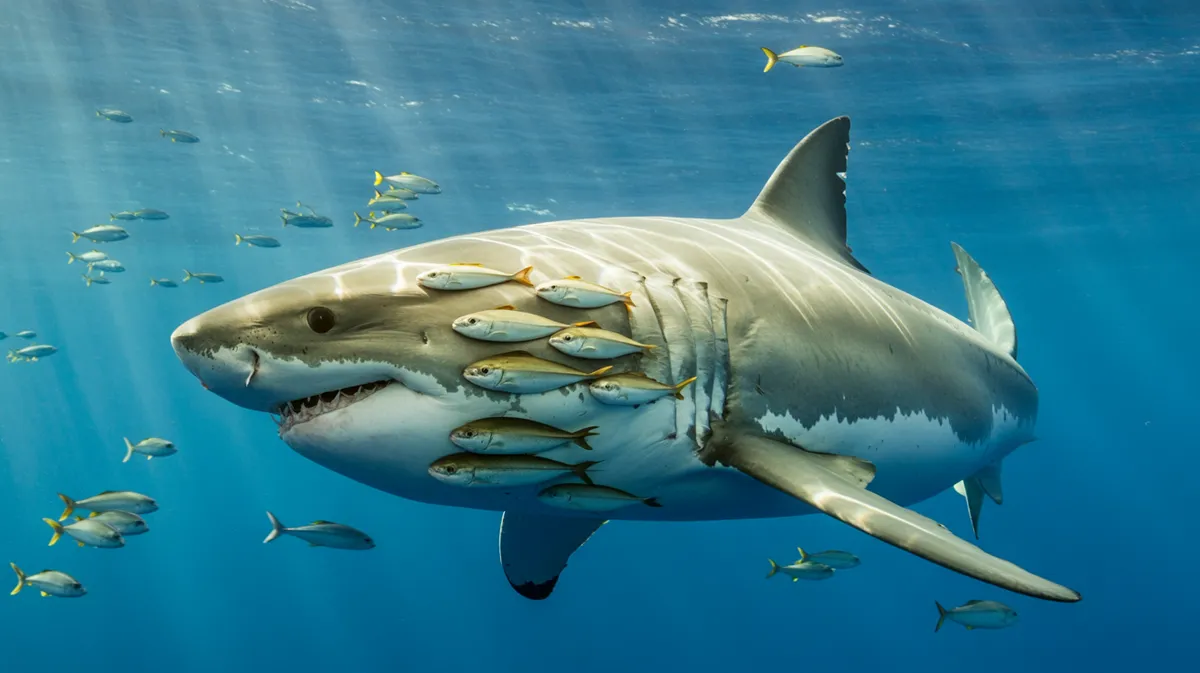
A free ride and free meals
For the remora, the benefits stack up. By letting the shark do the swimming, it travels huge distances across the ocean while barely lifting a fin, saving enormous amounts of energy.
It also eats well, snapping up scraps left over from the shark's messy meals and scavenging whatever drifts by.
In effect, the remora gets free transport, free food, and the protection of swimming with one of the sea's top predators.
Riding a shark also offers safety in numbers: few predators will risk approaching a meal that's stuck to a much larger hunter.
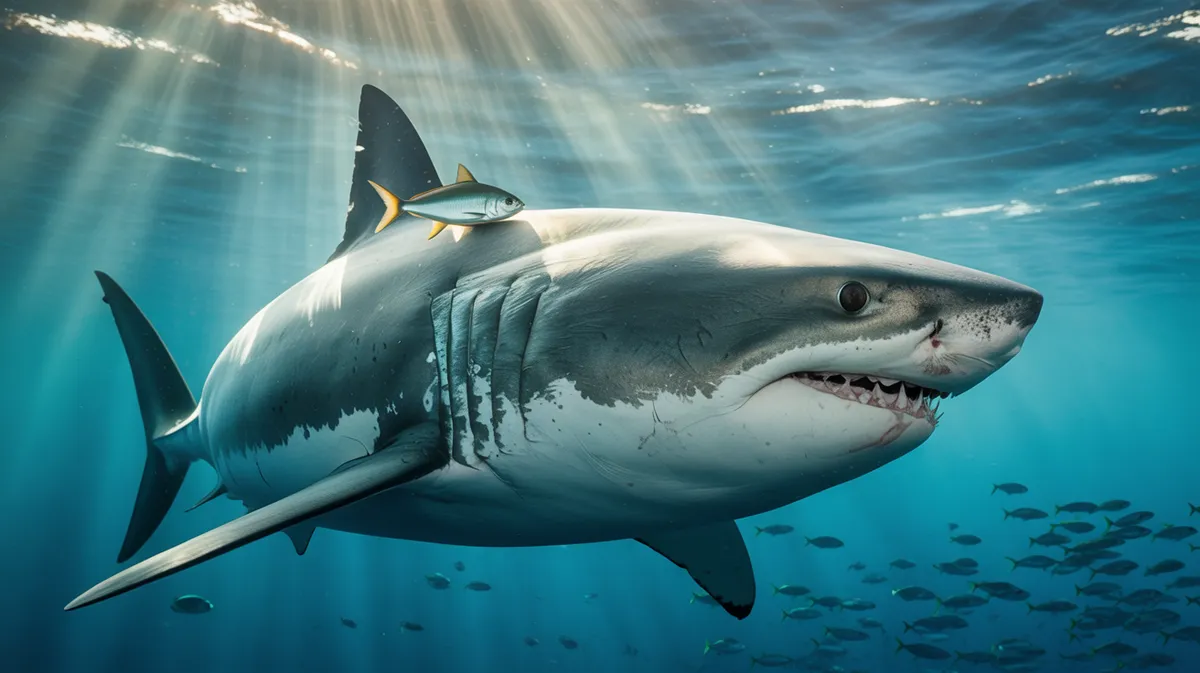
What the host gets
For a long time this looked like a one-sided deal, with the shark simply tolerating an unpaying passenger. But remoras aren't pure freeloaders.
They also pick parasites, dead skin, and bacteria off their host's body, providing a cleaning service much like the cleaner wrasse of the reef.
So the relationship sits somewhere between commensalism and mutualism — the shark gets some grooming in exchange for the ride, even if a clinging remora can be a minor drag.
Some hosts clearly tolerate them better than others, and manta rays in particular are often seen cruising with a whole entourage of remoras in tow.
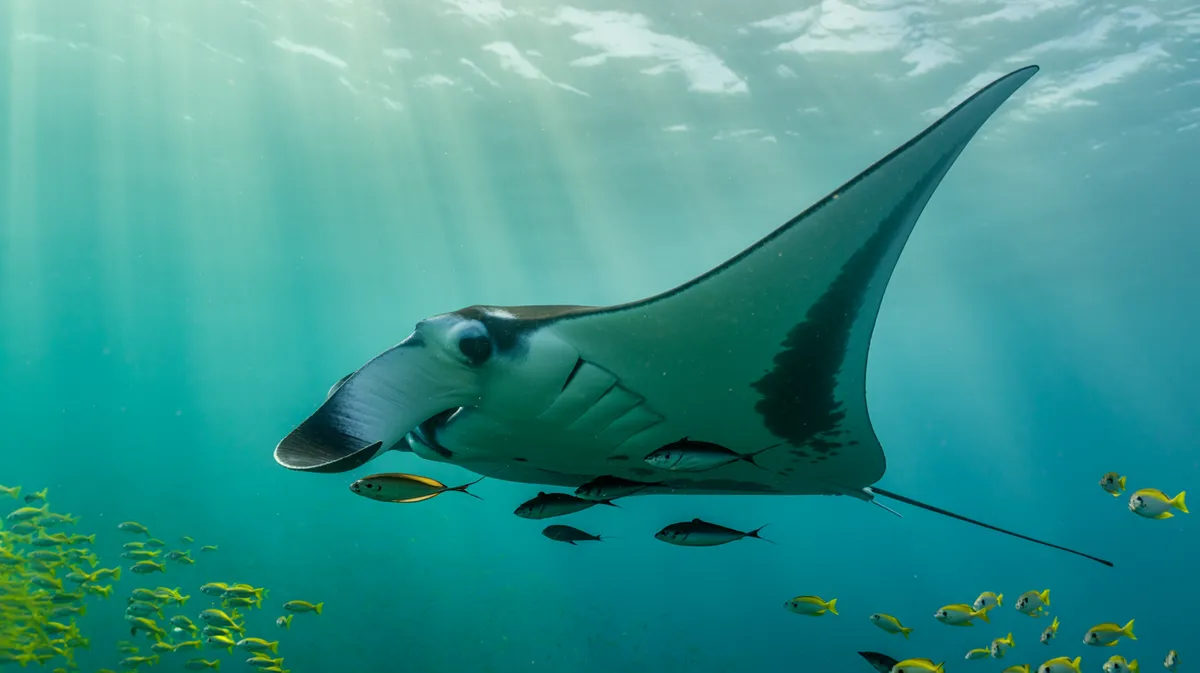
Choosy hitchhikers
Remoras aren't fussy about which big animal they ride, as long as it's large and mobile. They attach to sharks, rays, sea turtles, whales, and big fish alike.
They've even been known to latch onto scuba divers, boat hulls, and the occasional unlucky swimmer, mistaking them for a passing host.
What they're really after is a large, fast-moving vehicle with a steady supply of scraps — the bigger the better.
Young remoras must find their first host quickly, and they'll often start out riding smaller fish before graduating to sharks and rays as they grow.
Hitching with humans
People have long known about the remora's astonishing grip, and some traditional fishing cultures put it to use. They would tie a line to a remora's tail and release it near a sea turtle.
The remora would clamp onto the turtle, and the fisher could then haul both back in together, using the little fish as a living fishing tool.
It's a rare case of humans turning one animal's hitchhiking instinct into a clever way to catch another.
This "remora fishing" was recorded across the Indian Ocean and the Caribbean, a clever piece of traditional knowledge built entirely on the fish's natural instinct.
Nature's Other Hitchhikers — and a Human Copy
The remora is the most famous freeloader in the sea, but far from the only one. Pilot fish swim alongside sharks and rays, feeding on scraps and parasites, while barnacles cement themselves to whales and ride the oceans for free.
Some crabs hitch on jellyfish, and small fish shelter among the tentacles of the very stingers that would kill anything else. The ocean is full of animals that have worked out it is easier to travel on something bigger.
The remora has also inspired engineers. Its suction disc is so effective, and detaches so cleanly, that researchers have built biomimetic adhesives and robotic grippers modelled directly on it — for attaching sensors to marine animals without harming them.
The art of the free ride
The remora and the shark show that a partnership doesn't have to be perfectly equal to work. One side mostly hitchhikes, the other mostly tolerates it — with a little cleaning thrown in — and both go on cruising the ocean together.
Frequently asked questions
How do remoras stick to sharks? With a suction disc on the head — a modified dorsal fin with ridges that grip tightly even at speed.
Do remoras harm the shark? Not really — they mostly hitch a ride and eat scraps, and even clean parasites off the host, though they can be a minor drag.
What animals do remoras attach to? Sharks, rays, turtles, whales, big fish — and occasionally boats and divers.
Do remoras hurt the shark? Not really. They mostly hitch a ride and eat scraps, and even clean parasites — though they add a little drag.
How strong is a remora's grip? Strong enough to hold against a shark's fastest bursts and sharpest turns.
Can a remora detach whenever it wants? Yes — it simply slides forward to release the suction, and can reattach at will.
How big do remoras get? Most are modest, though some species reach around 60 to 90 centimetres.
Do remoras attach to people? Occasionally. Divers and swimmers are sometimes mistaken for a passing host.
How does the suction disc work? Rows of movable ridges inside the disc create suction strong enough to hold on at full speed.
Is a remora a parasite? Not really. It is closer to a commensal hitchhiker, and it cleans parasites from its host in return.
Next, a grooming deal on land: warthogs and mongooses, and a crab that fights with living weapons in the boxer crab and its anemones.