
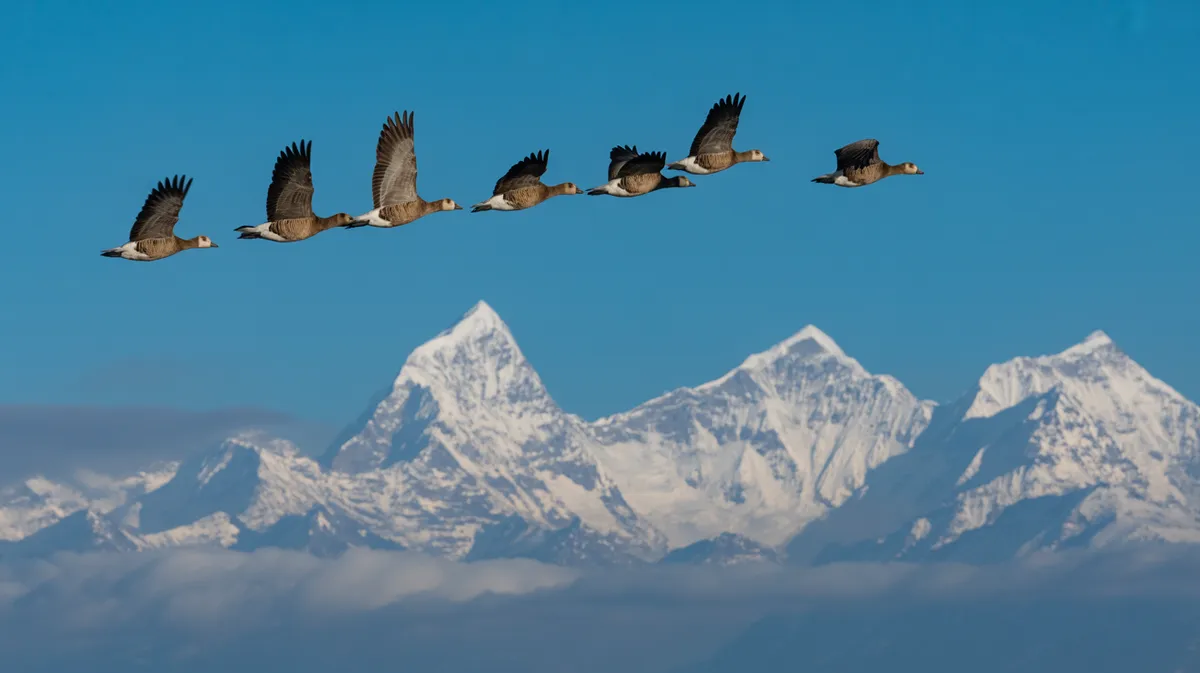
The air thins fast as you climb, until there's barely enough oxygen to stay conscious and barely enough lift to stay aloft. Yet a handful of animals fly where jet aircraft cruise, crossing the world's highest mountains and soaring kilometres above the clouds. This entry in our Nature's Record-Breakers series ranks the highest-flying animals on Earth, and the extraordinary biology that lets them breathe up there.
It rounds out the series alongside the fastest animals and the deepest divers — two opposite extremes of the same story about pushing into hostile worlds.
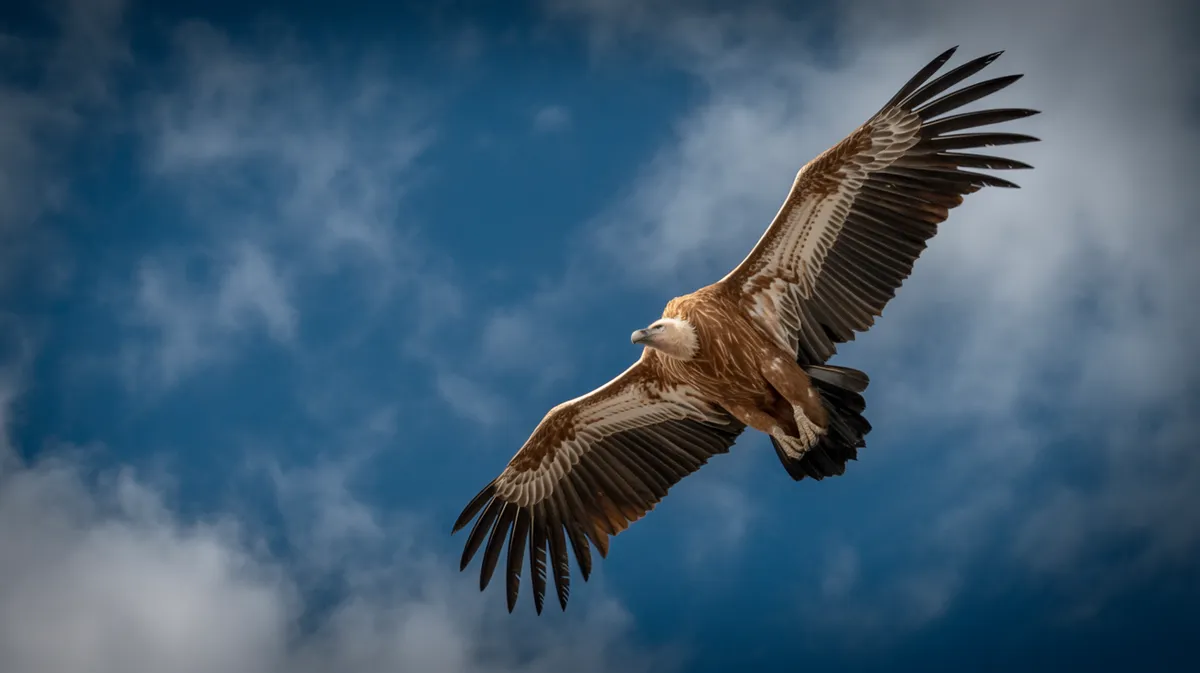
1. Rüppell's Griffon Vulture — 11,300 metres
The highest-flying bird ever recorded, and it earned the title the hard way: one was sucked into a jet engine at 11,300 metres over West Africa. At that altitude the air holds barely a third of the oxygen at sea level, but the vulture's blood carries a special form of haemoglobin that grabs oxygen with extraordinary efficiency.
Sadly the species is now critically endangered, its numbers collapsing across Africa from poisoning and habitat loss — a record-breaker fading even as we marvel at it. Its high-altitude haemoglobin is so efficient that researchers study it for clues about how bodies cope with thin air.
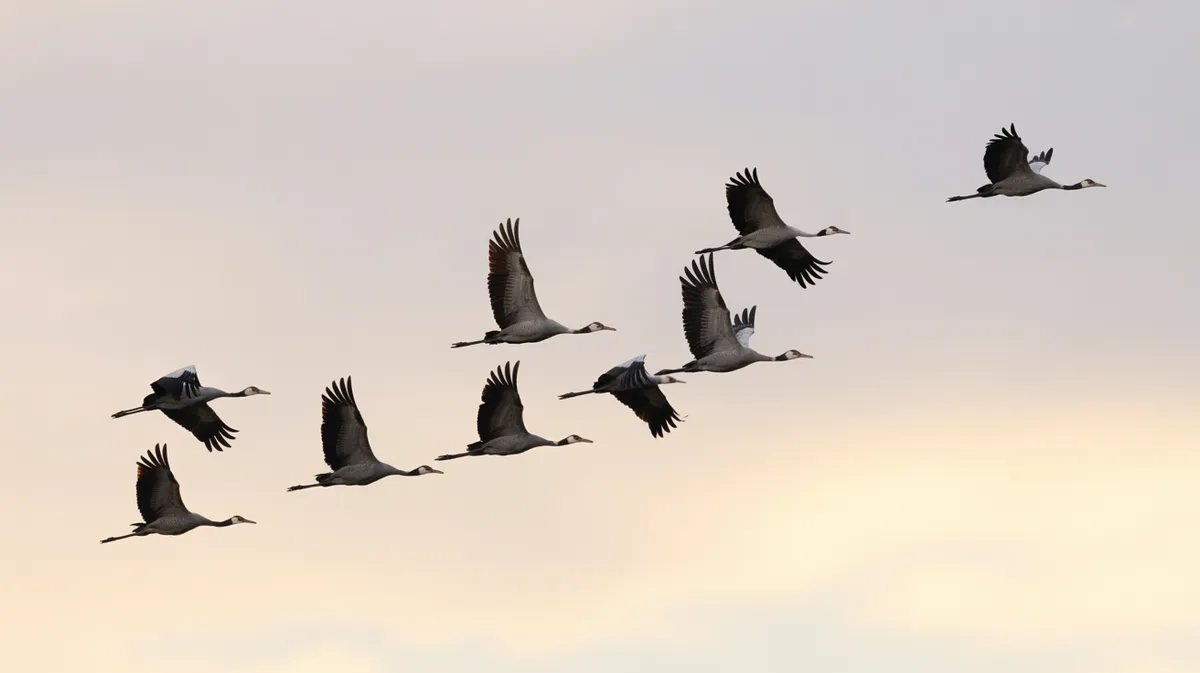
2. Common Crane — 10,000 metres
Common cranes routinely fly extremely high on migration, riding favourable winds at altitudes approaching 10,000 metres to clear mountain ranges like the Himalayas. Flying that high lets them cover vast distances quickly while avoiding predators below.
Flying that high exposes the cranes to brutal cold and scarce oxygen, which they endure on journeys of thousands of kilometres between Europe, Africa, and Asia. Their bugling calls, carrying from far below, often betray flocks crossing too high to see with the naked eye.
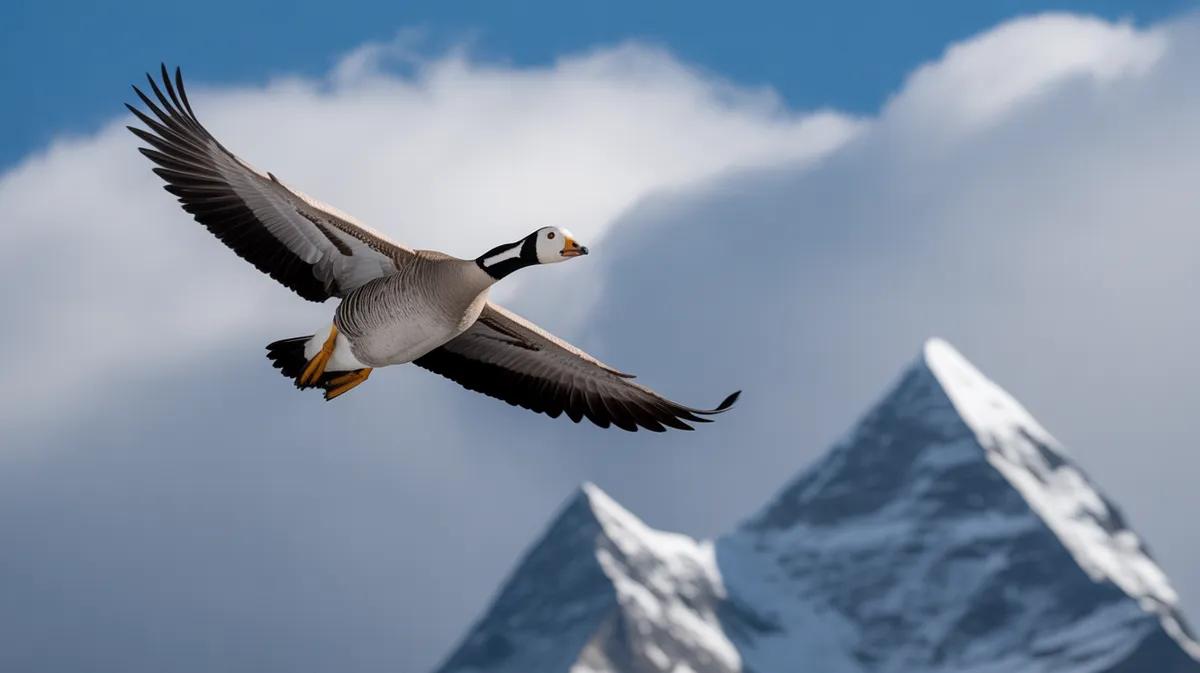
3. Bar-headed Goose — 7,300 metres
Perhaps the most celebrated high-altitude flier, the bar-headed goose migrates directly over the Himalayas, sometimes near the height of the peaks themselves. It powers through the thin air with oversized lungs, extra-dense capillaries, and muscles unusually good at extracting every scrap of oxygen.
Astonishingly, it makes its Himalayan crossing in a single push, sometimes climbing thousands of metres in hours without the days of acclimatisation a human climber needs. Its flight muscles are packed with extra mitochondria positioned close to the oxygen supply, wringing maximum power from minimal air.
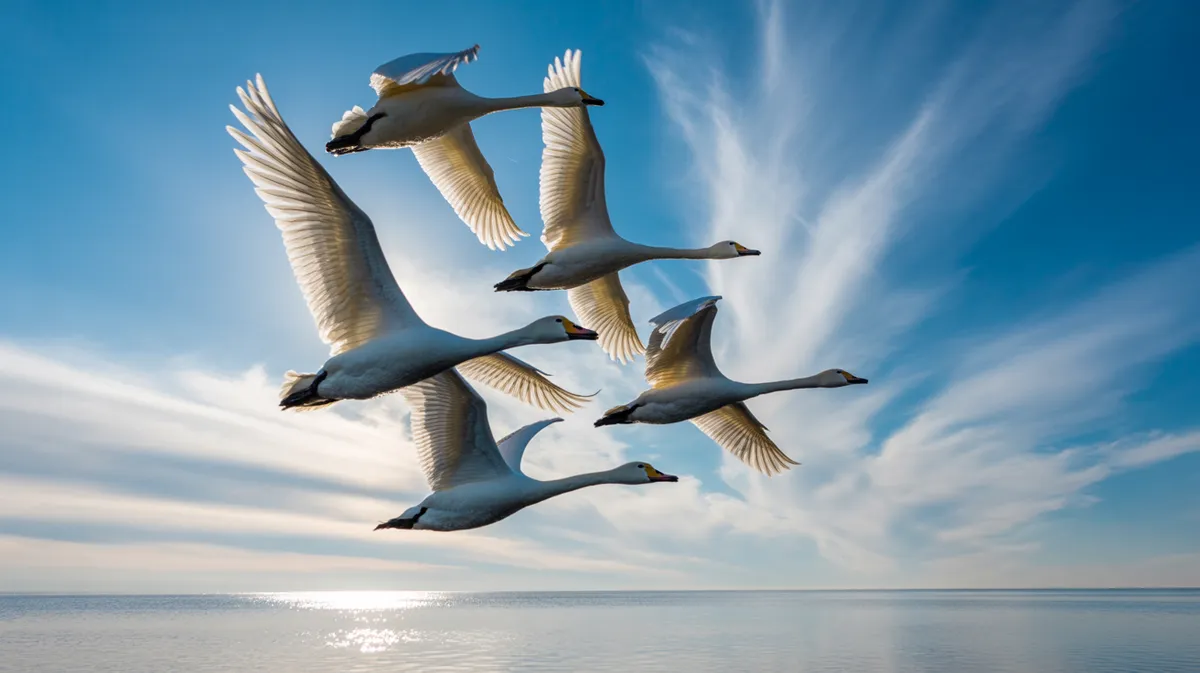
4. Whooper Swan — 8,200 metres
One of the heaviest flying birds, the whooper swan has been tracked by pilots at over eight kilometres up during migration. That a bird this large can climb so high is a testament to the power of its flight muscles and the efficiency of the avian lung.
Migrating in family groups, whooper swans use altitude to find the strongest tailwinds and the clearest air for their long sea crossings. Their loud, trumpeting calls help the flock hold together through cloud and darkness on these high passages.
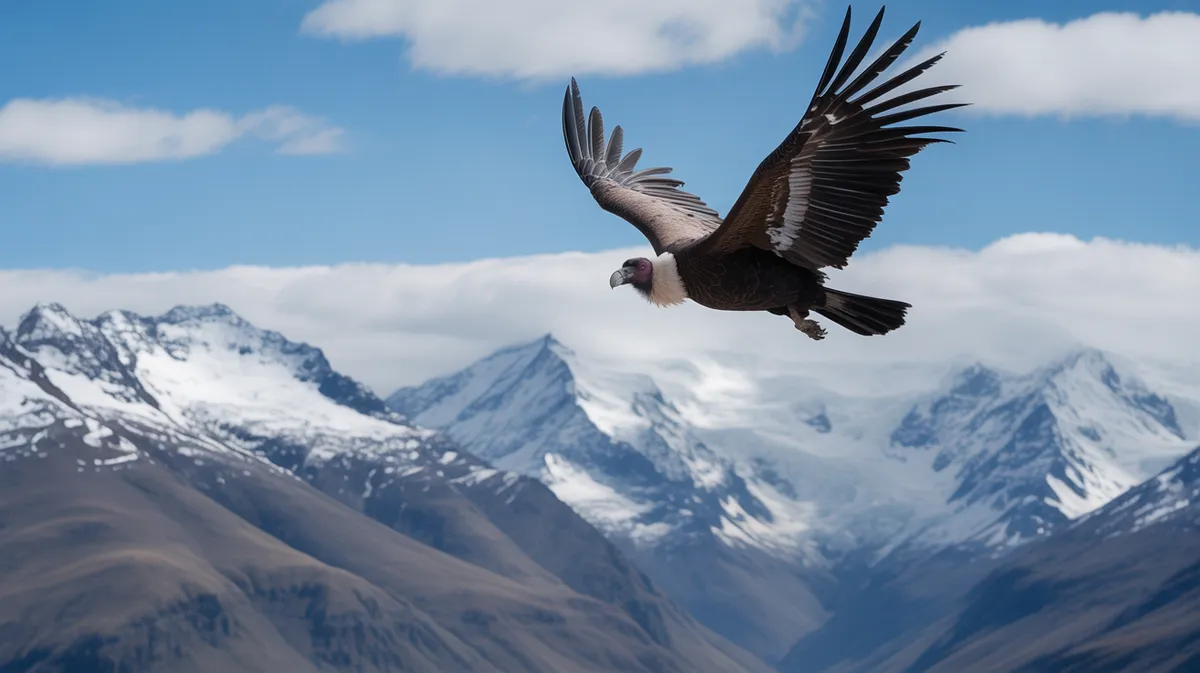
5. Andean Condor — 6,500 metres
With one of the largest wingspans of any bird, the Andean condor barely flaps at all — it rides thermals and mountain updrafts to soar effortlessly thousands of metres above the Andes. It can stay aloft for hours, scanning enormous areas of terrain for carrion below.
By riding rising air instead of flapping, the condor can travel more than a hundred kilometres while barely moving its wings — one tracked bird flapped just one percent of the time over a five-hour flight. That efficiency lets it patrol immense territories in search of carrion.
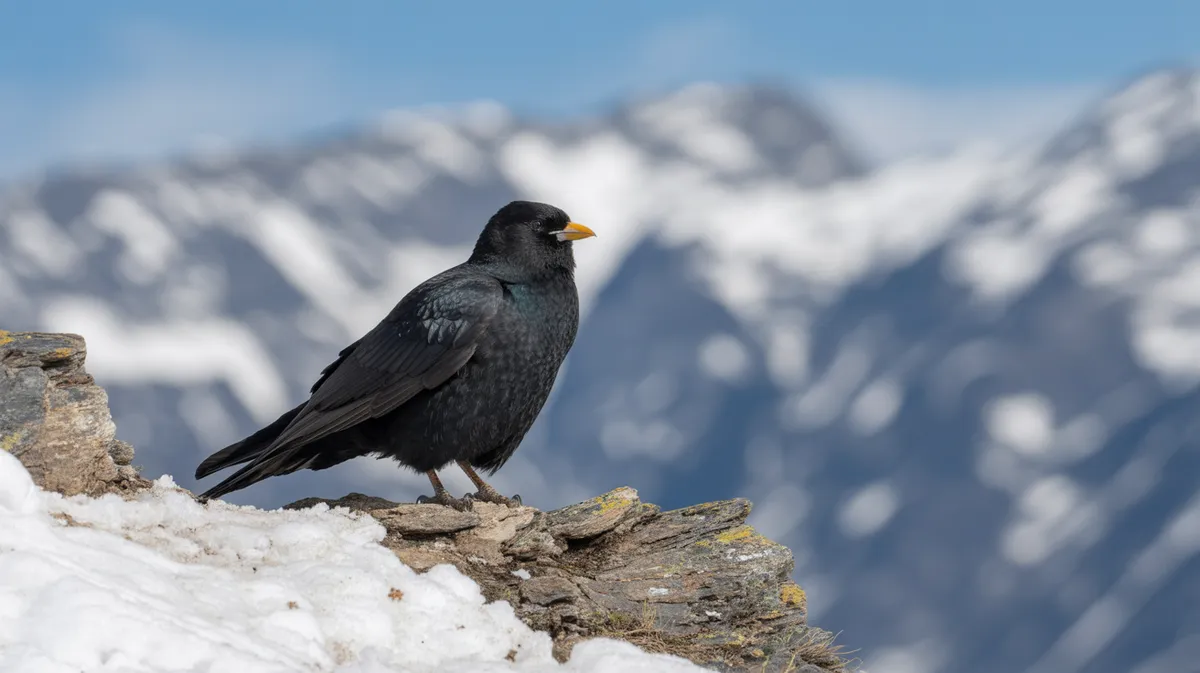
6. Alpine Chough — 8,000 metres
This mountain crow holds the record for the highest-nesting bird and has been seen following climbers high on Everest. Agile and bold, it thrives in an environment of cold, wind, and thin air that defeats almost everything else with feathers.
Supremely adapted to mountain life, it nests higher than any other bird and scavenges scraps near the world's highest climbing camps. Its acrobatic flight lets it ride the violent, swirling winds that funnel between high peaks with apparent ease.
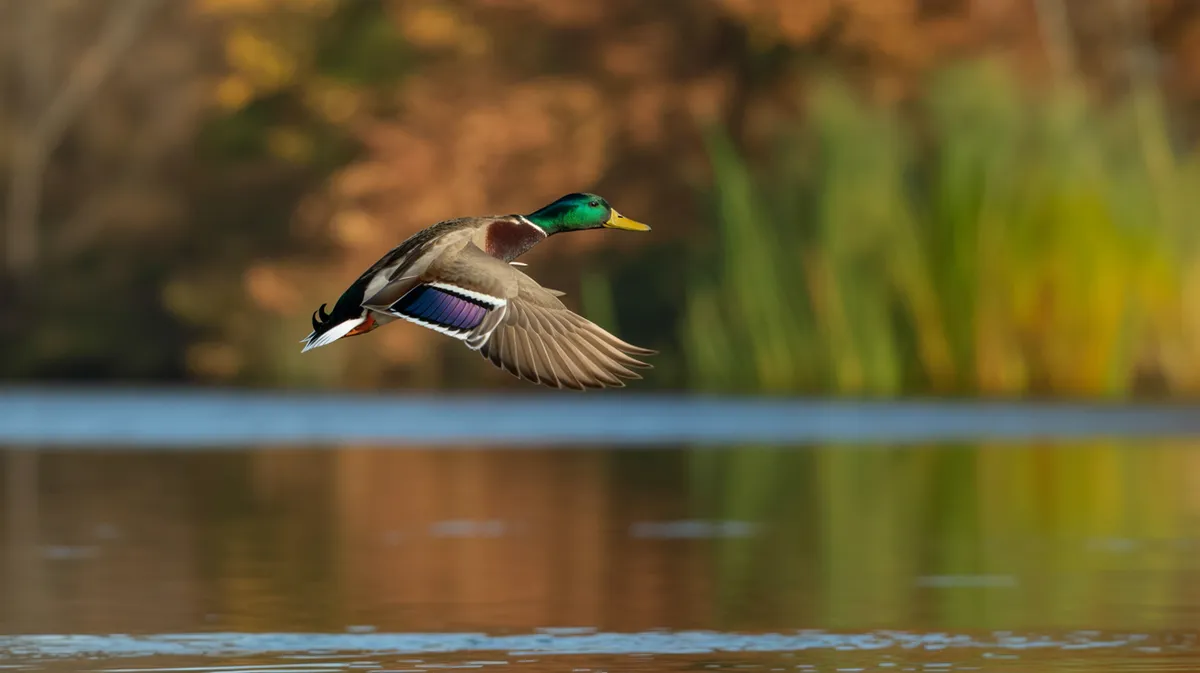
7. Mallard — 6,400 metres
The humble mallard makes the list thanks to an unfortunate collision: one struck an aircraft at 6,400 metres over the United States. It's a reminder that even familiar backyard birds can climb to astonishing heights when migrating.
That a duck so familiar can reach airliner altitudes shows how routinely migrating birds climb far higher than we ever notice them. Mallards travel mostly at night, navigating by the stars and the Earth's magnetic field high above the sleeping landscape.
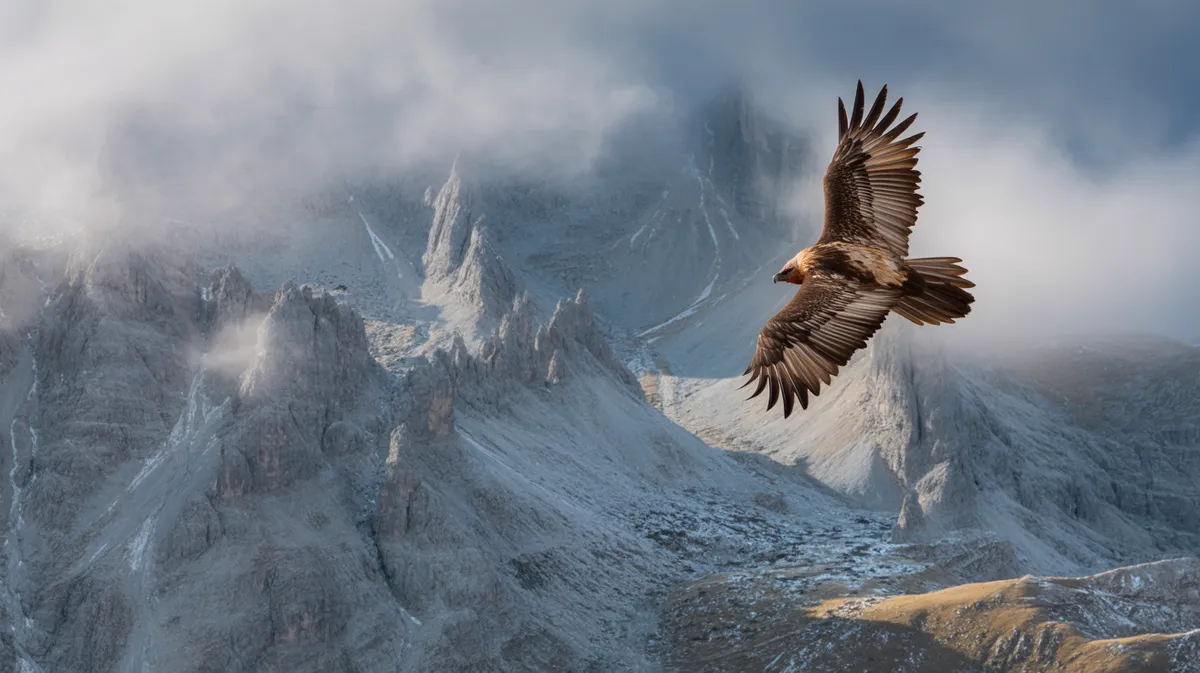
8. Bearded Vulture — 7,300 metres
A specialist of high mountains, the bearded vulture soars at extreme altitude across the Himalayas, Alps, and African ranges. Famous for dropping bones from a height to crack them open, it lives almost its entire life among the peaks.
Almost its entire diet is bone, which it swallows whole or shatters by dropping from a height onto rocks — a feat demanding both altitude and remarkable aim. The reddish tinge of its feathers comes from deliberately bathing in iron-rich mud, a kind of mineral cosmetics.
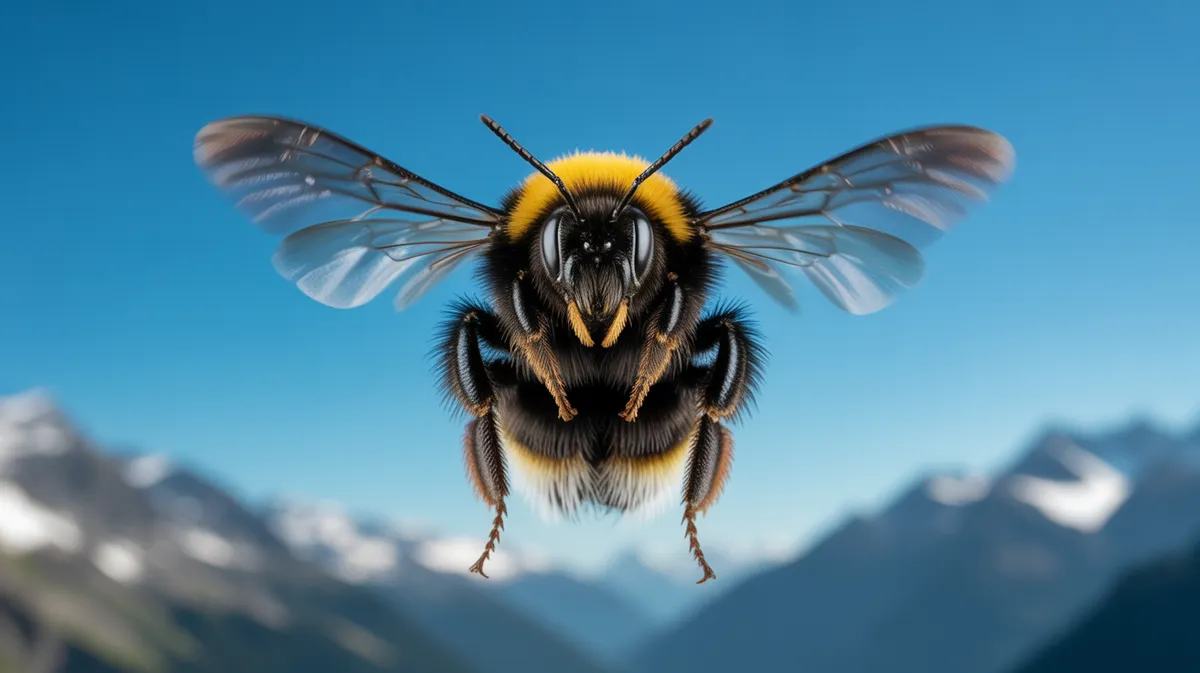
9. Bumblebee — 5,600 metres
The highest-flying insect known is a bumblebee, which researchers found could still fly in lab conditions mimicking the air above Mount Everest. It manages not by beating its wings faster but by sweeping them through a wider arc to claw lift from the thin atmosphere.
Researchers were stunned, since the thin air at such heights offers almost no lift; the bees compensate not by beating faster but by sweeping their wings through a wider arc. It suggests some bumblebees could, in principle, fly higher than the summit of Everest.
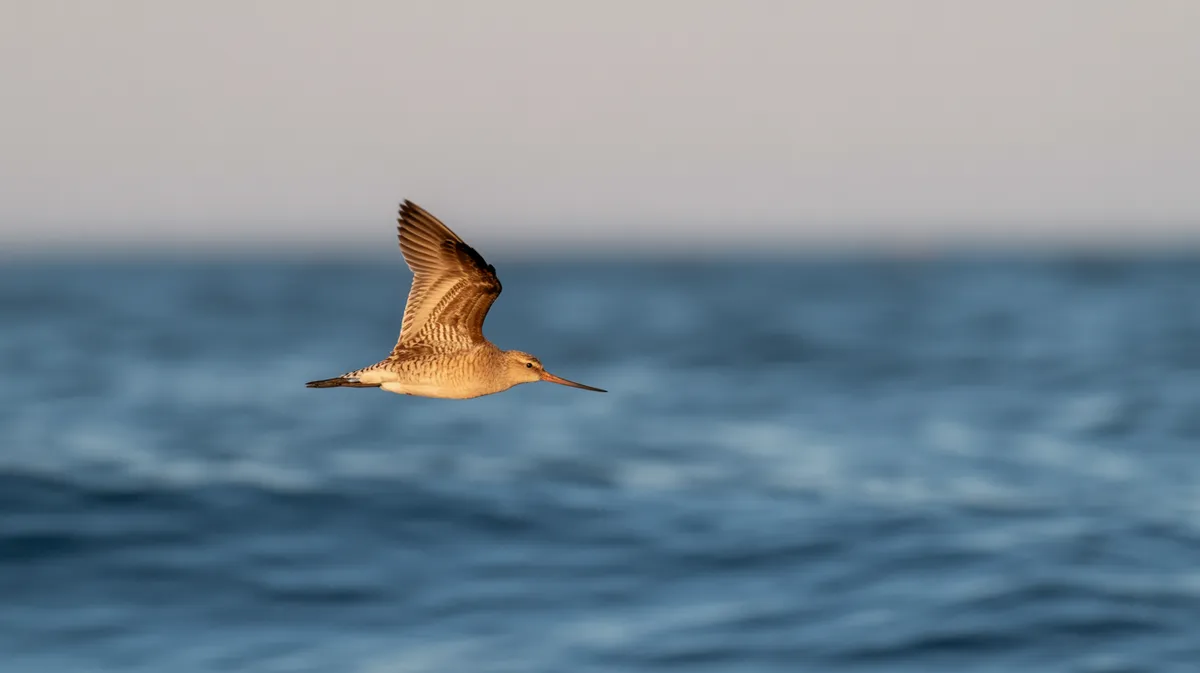
10. Bar-tailed Godwit — high and astonishingly far
The godwit makes the list less for sheer altitude than for endurance: it flies non-stop for over a week, crossing the entire Pacific without landing, eating, or drinking. Climbing to find favourable winds is part of how it pulls off the longest non-stop flight of any bird.
One tracked godwit flew more than 13,000 kilometres from Alaska to Tasmania without a single stop, burning through half its body weight as fuel. Before departing it even shrinks its own digestive organs to save weight, rebuilding its body into a long-range aircraft.
How do they breathe up there?
Birds have a uniquely efficient lung that pushes air in one direction, extracting oxygen on both the inhale and the exhale. Add specialised haemoglobin and dense networks of capillaries, and high-altitude fliers can wring usable oxygen from air that would leave a human unconscious in minutes.
Frequently asked questions
What is the highest-flying bird? Rüppell's griffon vulture, recorded at 11,300 metres.
How do birds fly over the Himalayas? Species like the bar-headed goose have super-efficient lungs, dense capillaries, and specialised haemoglobin that extracts oxygen from thin air.
What is the highest-flying insect? The bumblebee, shown to fly in conditions mimicking altitudes above Mount Everest.
That extends our Nature's Record-Breakers series further still. Revisit the deepest divers, the best animal parents, or the 12 fastest animals on Earth.