
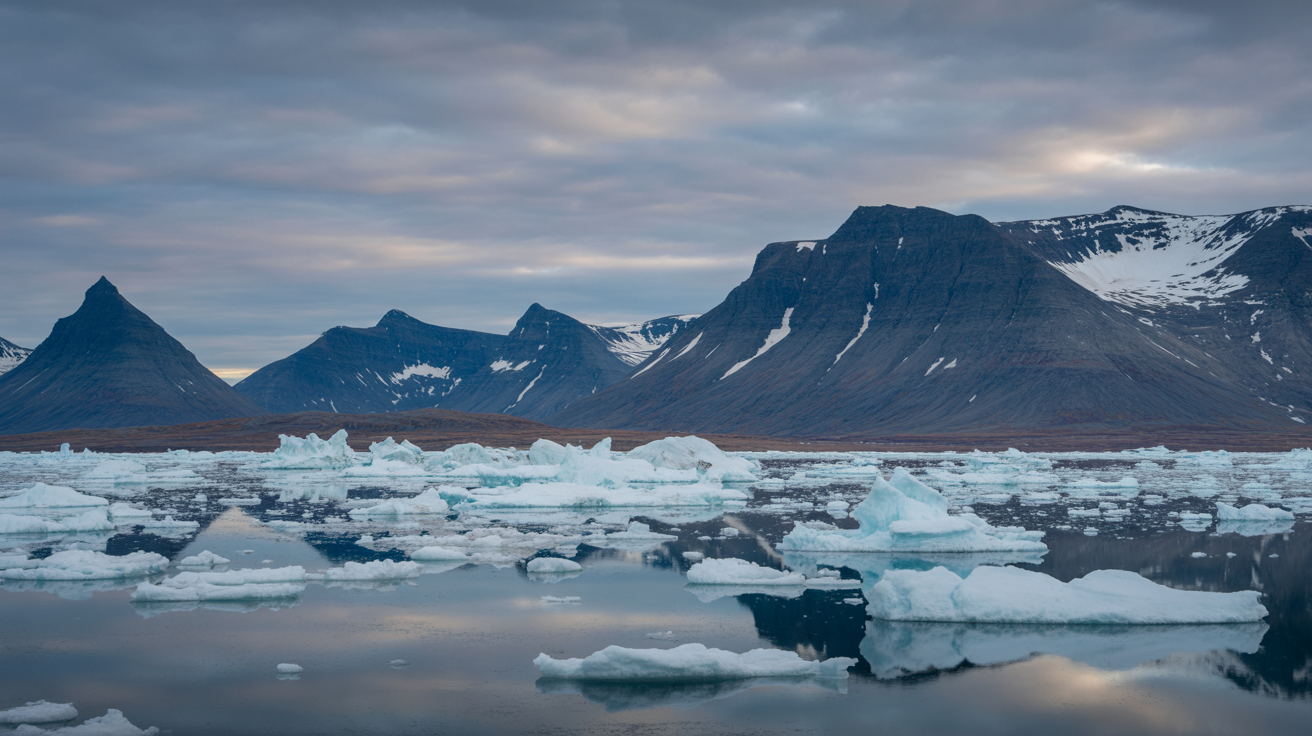
Arctic
Cold, frozen landscapes around the North Pole with specialized wildlife adapted to extreme cold.
Animals of the Arctic
Species recorded in this habitat.
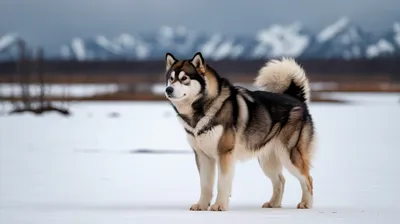
Alaskan Malamute
Canis lupus familiaris
The Alaskan Malamute is a large, powerful breed of domestic dog originally bred for its strength and endurance to haul heavy freight as a sled dog in the Arctic. With a thick double coat, erect ears, and distinctive facial markings, Malamutes are well-adapted to cold, harsh environments. They are known for their friendly disposition, intelligence, and loyalty, making them beloved companions as well as working dogs. While they resemble wolves in appearance, they are a distinct, domesticated breed with a gentle temperament. Their high energy and need for exercise make them best suited to active families and experienced owners.
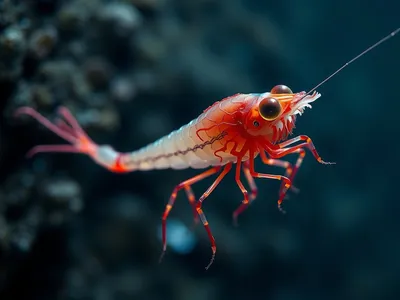
Antarctic Krill
Euphausia superba
Antarctic krill may be the most abundant single wild animal species on Earth by biomass: estimates put the standing stock in the hundreds of millions of tonnes, comparable to or exceeding the mass of all humans. They form swarms so dense — up to tens of thousands of animals per cubic metre — that they are visible from the air as reddish stains under the sea, and whole ecosystems from whales to penguins to crabeater seals rest on them. In winter they graze algae from the underside of sea ice, combing it off with rake-like thoracic legs, which is why the loss of winter ice is an existential threat to them. Their strangest ability is shrinking: a starving krill will moult into a smaller body, running its own growth backwards, and can do this repeatedly through a dark winter — extremely unusual among animals, and it means body size is a poor guide to age. They live five or six years, carry light-producing photophores, and migrate vertically hundreds of metres each day.
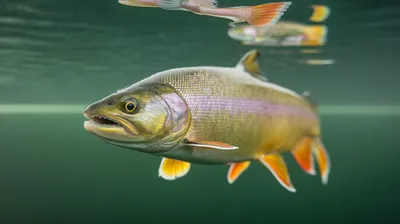
Arctic char
Salvelinus alpinus
The Arctic char is the northernmost freshwater fish in the world, living in lakes above 80 degrees north where the ice never entirely leaves and the growing season is a few weeks long. It is also one of the most variable vertebrates known. A single lake can hold several distinct forms — a small bottom-feeding dwarf, a large fish-eating morph, a plankton-feeder — that differ in shape, size and jaw structure and that breed separately from one another. Thingvallavatn in Iceland, with four coexisting morphs, is a textbook case in the study of how species can split without any physical barrier between them. Some populations run to sea and back like salmon; others are landlocked, and those can grow with glacial slowness and live for forty years. It spawns in autumn or winter, often under ice, which for a fish is a very odd time to breed and only makes sense in water this cold. The spawning colours are extraordinary: the belly turns deep orange to blood-red, and the leading edges of the fins go white.
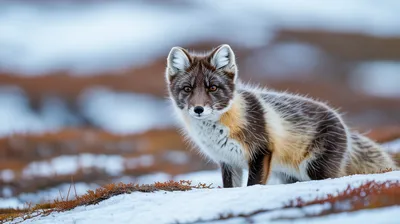
Arctic Fox
Vulpes lagopus
The Arctic Fox (Vulpes lagopus) is a small, resilient mammal adapted to the harsh conditions of the Arctic tundra. Measuring approximately 46 to 68 centimeters in body length, with an additional 30-centimeter bushy tail, this fox is well-equipped for survival in temperatures as low as -50 degrees Celsius. Its dense, multi-layered coat, which changes from white in winter to brown or gray in summer, provides exceptional insulation and camouflage against predators and while hunting. Unlike many other fox species, the Arctic Fox has fur-covered footpads, which prevent heat loss and allow it to traverse icy surfaces with ease. This species primarily inhabits regions such as Greenland, Iceland, and parts of North America, thriving on a diet of small mammals, birds, and carrion. In comparison to its relative, the Red Fox, the Arctic Fox has a more compact body, a trait that minimizes heat dissipation, an excellent example of Allen's rule in action.
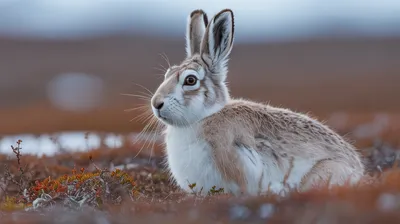
Arctic Hare
Lepus arcticus
The Arctic hare is built by subtraction. Its ears are short and its limbs are compact, minimising the surface area available to leak heat — the exact inverse of the huge-eared desert jackrabbits, and one of the cleanest field demonstrations of Allen's rule. In the far north it does not bother with a seasonal wardrobe at all: high-latitude populations stay white all year, because the ground is essentially never brown, while more southerly ones moult to blue-grey in summer. It has heavy claws on the forefeet used to dig through hard wind-packed snow to reach willow and saxifrage, and willow twigs, buds and bark make up most of its winter diet. It can hit 60 km/h, and when moving slowly through snow it will often rear up and bound along on its hind legs alone, kangaroo-fashion. Unusually for a hare, it aggregates: hundreds and occasionally thousands gather in loose groups, which may improve predator detection on terrain with no cover whatsoever.
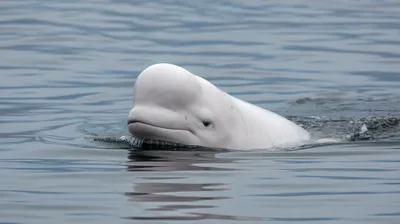
Beluga Whale
Delphinapterus leucas
The beluga is the only whale that can turn its head. In every other cetacean the neck vertebrae are fused into a rigid block; in the beluga they are not, so it can nod and look sideways — an adaptation for manoeuvring in the shallow, ice-choked coastal water and river estuaries where it feeds. The bulging melon on its forehead is a fatty organ, and unlike other whales the beluga can visibly deform it, changing its shape to focus and steer the beam of its echolocation clicks like a lens. It is so vocal that whalers called it the sea canary — clicks, whistles, chirps and squeals, audible through a boat's hull. It has no dorsal fin, which would be a liability under ice; in its place is a tough dorsal ridge, which it uses to break through thin ice from below to breathe. It moults each year, rubbing itself against gravel in river shallows, and it is born grey, whitening only as it matures.
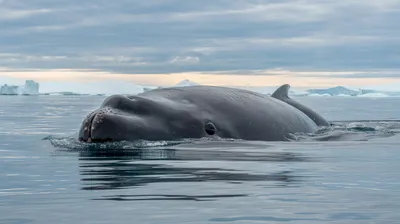
Bowhead Whale
Balaena mysticetus
The bowhead whale is the longest-lived mammal on Earth. Stone and ivory harpoon points from the nineteenth century have been recovered from the blubber of living animals, and chemical dating of the lens of the eye has produced age estimates well beyond two hundred years, which means whales alive today were already swimming before the invention of the light bulb. It lives its entire life in Arctic waters, insulated by blubber that can approach half a metre thick — the thickest of any animal — and it does not migrate to warmer seas but instead breaks breathing holes upward through sea ice with a massive, reinforced, upward-curving skull. It has the largest mouth of any animal, filters plankton through baleen that can exceed four metres in length, and sings complex, changing songs beneath the ice. Its resistance to cancer and to ageing — a body that large should accumulate far more mutations than it does — has made its genome a serious object of study in longevity research.
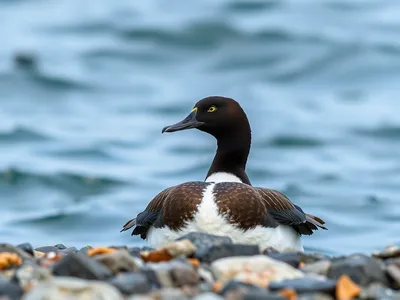
Common Eider
Somateria mollissima
Somateria mollissima is the largest duck in the Northern Hemisphere and a specialist at eating things that fight back with armour. It dives to the seabed, tears blue mussels off the rock, and swallows them whole, shell included; a muscular gizzard then crushes the shells and the fragments are voided. The famous eiderdown comes from the female alone, who plucks the insulating down from her own breast to line the nest, exposing a brood patch in the process. That down has microscopically hooked barbules that lock together into a mat, giving it a loft-to-weight ratio no synthetic has matched, and in Iceland it is still gathered from wild nests after the ducklings leave — a genuinely non-lethal harvest managed for centuries. The female incubates for around 26 days without feeding at all, losing a large fraction of her body mass. Once hatched, ducklings from many nests merge into large creches guarded by a few females, so a single "mother" may be seen shepherding dozens of young that are not hers. Drakes are unmistakable in black and white with a lime-green nape and a long sloping wedge of a bill, and their soft, rising "ah-OOO" courtship coo carries across cold water.
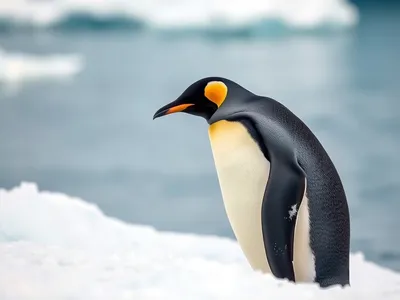
Emperor Penguin
Aptenodytes forsteri
The Emperor Penguin (Aptenodytes forsteri) stands as the tallest and heaviest of all penguin species, with adults reaching heights of up to 100 cm (39 in) and weighing between 22 to 45 kg (49 to 99 lbs). Both males and females share similar plumage, characterized by a striking contrast of black feathers on the head and back against a white belly. These penguins also display a pale-yellow hue on the breast and bright-yellow ear patches, which are thought to play a role in species recognition and mate selection. Exclusively inhabiting the harsh Antarctic environment, they are uniquely adapted to withstand temperatures as low as -60°C (-76°F) during the breeding season. Their dense plumage and a thick layer of subcutaneous fat provide essential insulation. Unlike many birds, Emperor Penguins breed during the Antarctic winter, a strategy that ensures their chicks are ready to fledge in the relatively milder conditions of the austral summer.
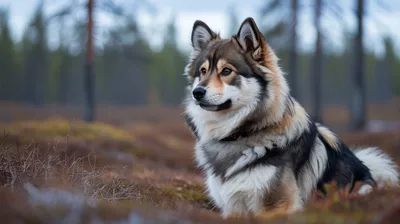
Finnish Lapphund
Canis lupus familiaris
The Finnish Lapphund is a hardy, intelligent, and friendly dog breed originating from the Arctic regions of Finland. Traditionally used by the indigenous Sámi people for herding reindeer, this medium-sized breed is known for its thick, weather-resistant double coat and expressive eyes. Finnish Lapphunds are highly adaptable, thriving in cold climates and displaying remarkable agility and stamina. They are renowned for their gentle nature, loyalty, and sociable temperament, making them excellent family companions as well as working dogs.
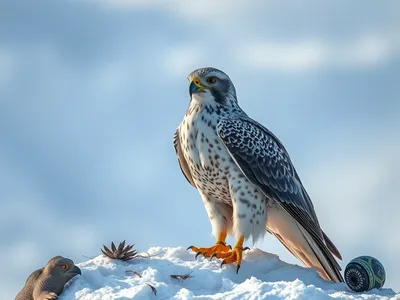
Gyrfalcon
Falco rusticolus
Falco rusticolus is the largest falcon in the world, a bulky, broad-winged Arctic bird whose females can top 2 kg, and its hunting method sets it apart from its famous cousin the peregrine. Where a peregrine stoops from height, the gyrfalcon typically flies low and hard in a tail-chase, using raw sustained speed and mass to run down ptarmigan across open tundra - ptarmigan can make up the great majority of its diet in some regions, and the falcon's breeding success tracks the ptarmigan population cycle closely. Gyrfalcons come in a continuous range of morphs from near-pure white through silver-gray to almost black, with the whitest birds concentrated in Greenland and the high Arctic, and colour is inherited rather than seasonal. They breed on cliff ledges, frequently taking over the old stick nests of ravens and rough-legged buzzards, and some ledges have been used continuously for thousands of years - guano deposits at Greenland sites have been radiocarbon dated to over 2,500 years of occupancy. In medieval falconry, the gyrfalcon was reserved for kings, and white Greenland birds were among the most valuable diplomatic gifts in Europe; that prestige persists, and illegal trapping for Gulf falconry markets remains a real threat.
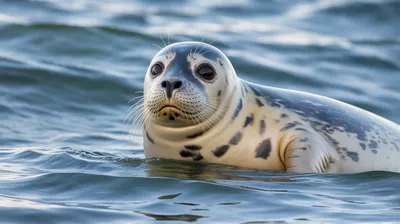
Harbor Seal
Phoca vitulina
Phoca vitulina is the most widely distributed pinniped in the northern hemisphere, and its hunting depends on an organ most people never think about: the whiskers. Harbour seal vibrissae are not smooth cylinders but wavy, undulating in a precise repeating pattern along their length, and that geometry suppresses the vortices the whisker would otherwise shed as it moves through water. The result is a sensor with an extraordinary signal-to-noise ratio - blindfolded, headphone-wearing seals in experiments by Guido Dehnhardt tracked the hydrodynamic wake left by a model fish more than 30 seconds after it had passed, following the invisible trail accurately across a pool. That lets seals hunt in turbid or dark water where vision is useless. Harbour seal pups are born so developed they can swim and dive within hours, having shed the white lanugo coat in the womb, which is what allows the species to pup on tidal sandbars that flood twice a day. Adults haul out in loose, unsociable aggregations, keeping personal space and squabbling, rather than forming the packed rookeries of sea lions. They can dive to 400 m and stay down over 20 minutes, slowing the heart to a handful of beats a minute.
Other habitats
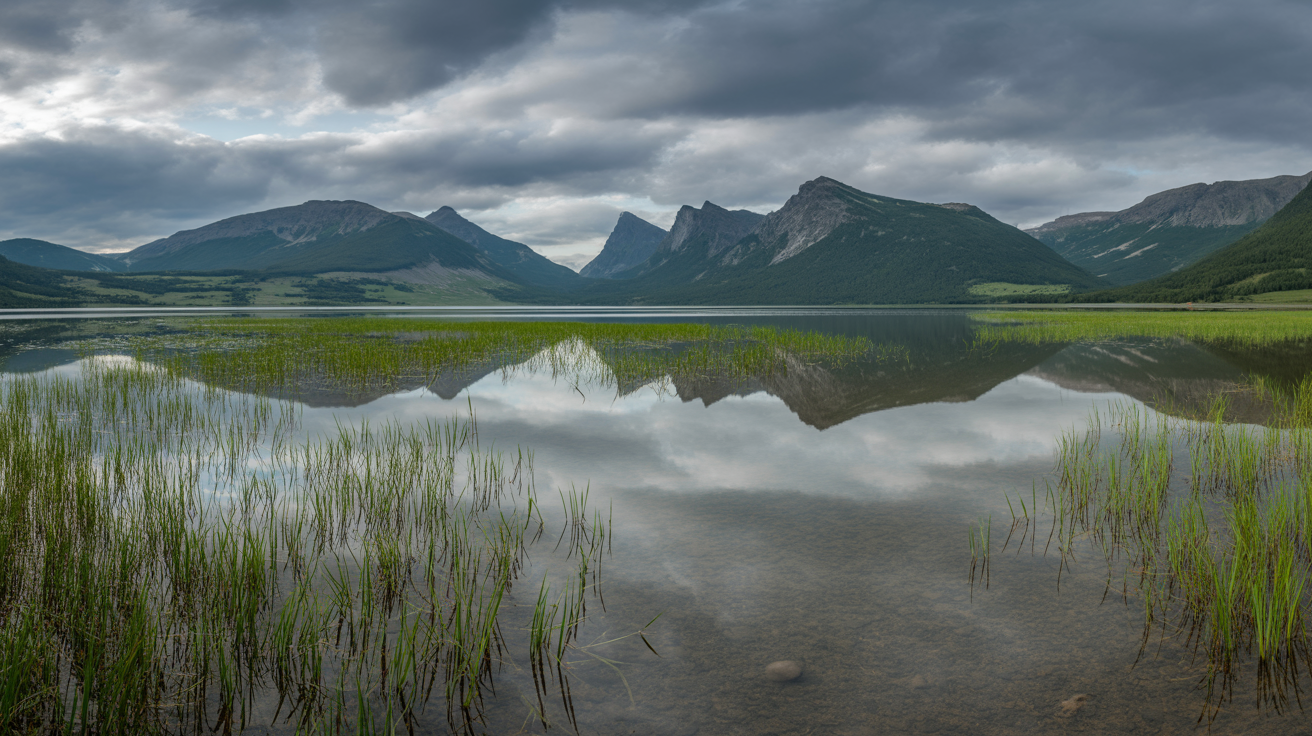 Global
Freshwater
Lakes, rivers, and wetlands with diverse aquatic ecosystems.
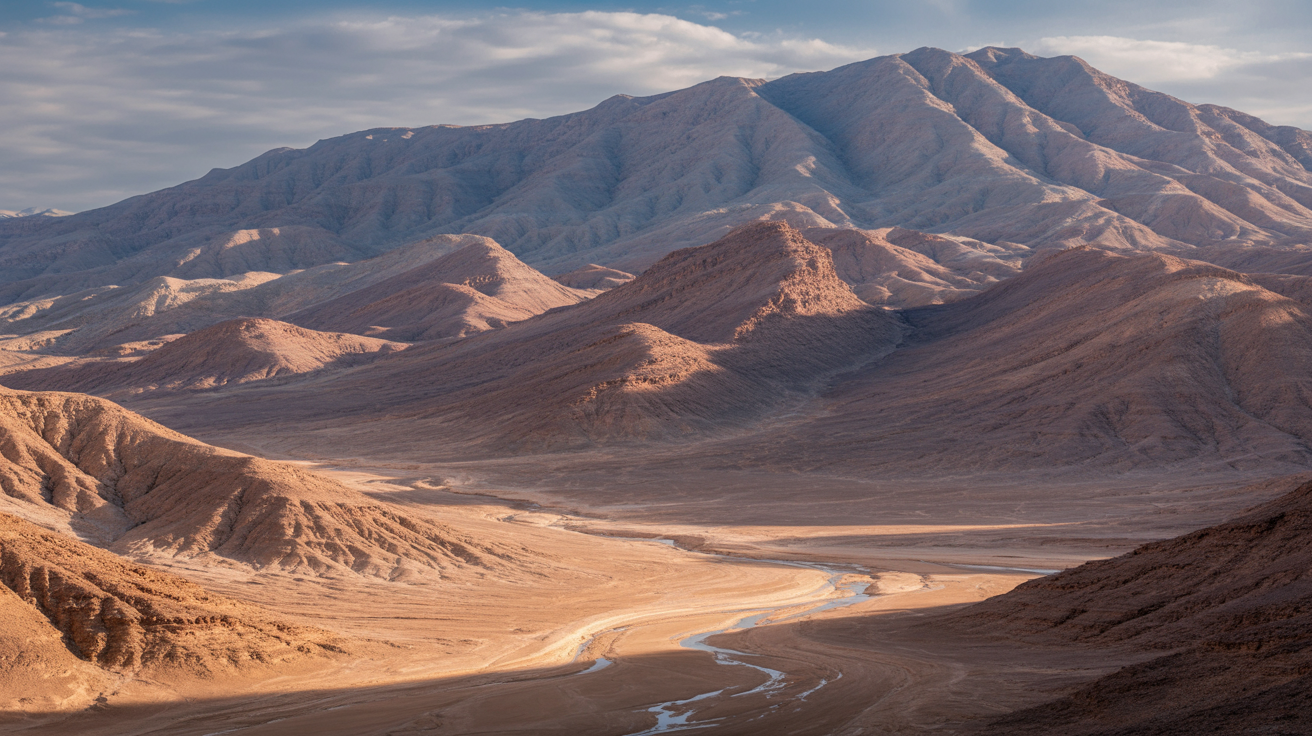 Arid Regions
Desert
Arid lands with minimal rainfall, extreme temperatures, and specialized wildlife adapted to harsh conditions.
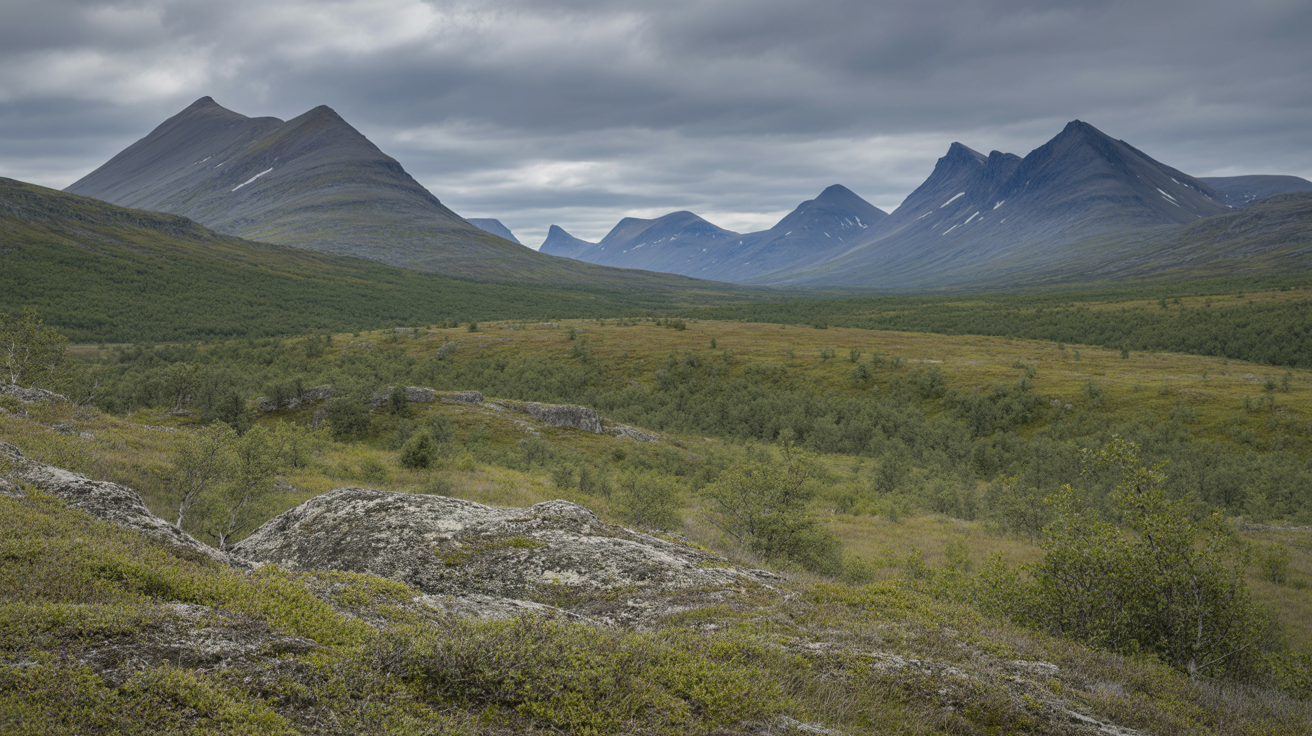 Polar and Subpolar Regions
Tundra
Cold, treeless regions with permafrost supporting specialized cold-adapted wildlife.
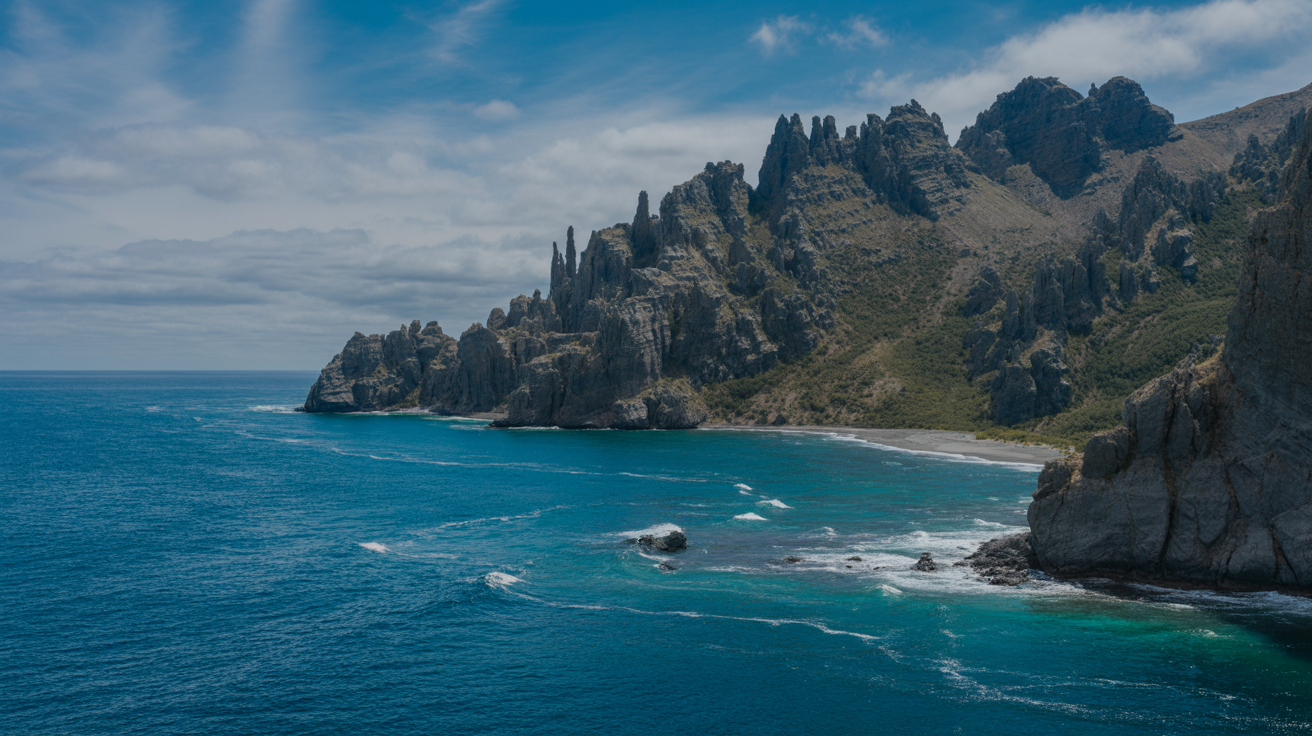 Global Waters
Ocean
Saltwater environments covering more than 70% of the Earth's surface, home to a vast variety of marine life.
 Global
Forest
Wooded areas with significant tree cover and diverse plant and animal communities.
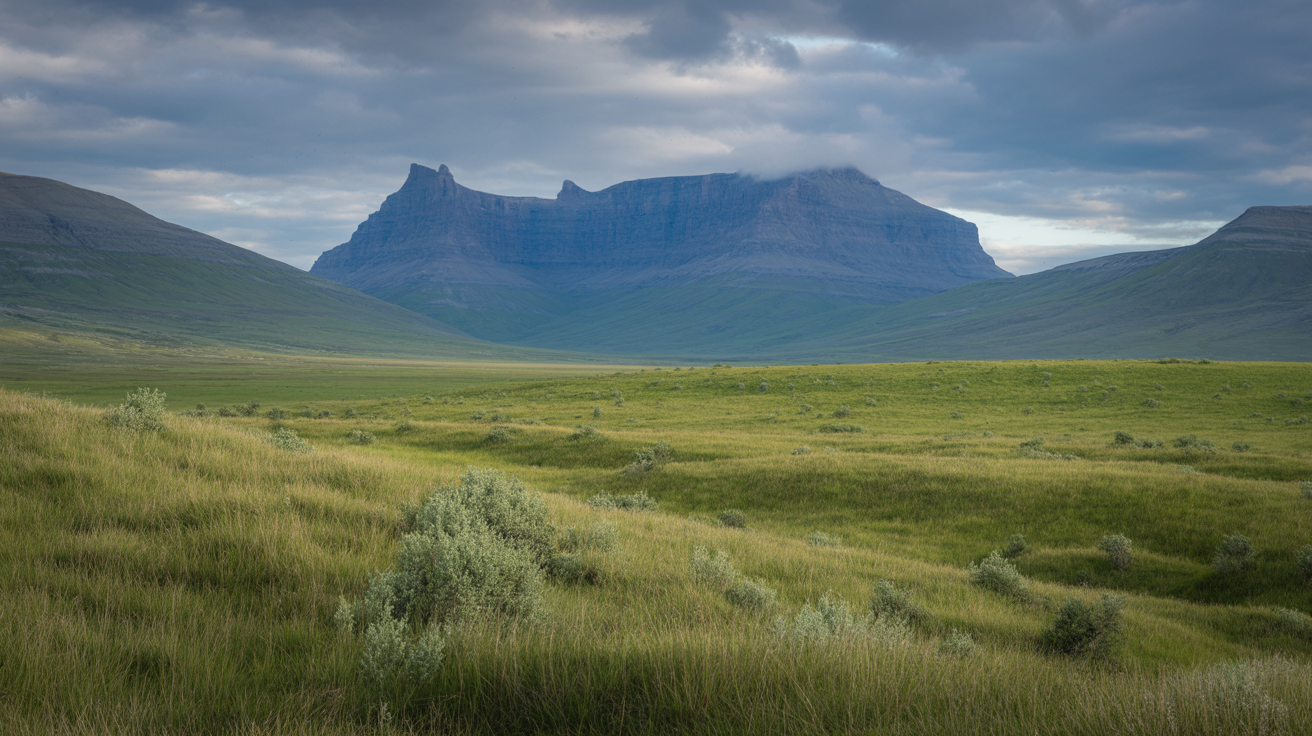 Various Continental Regions
Grassland
Open areas dominated by grasses rather than trees, supporting numerous herbivores and their predators.