
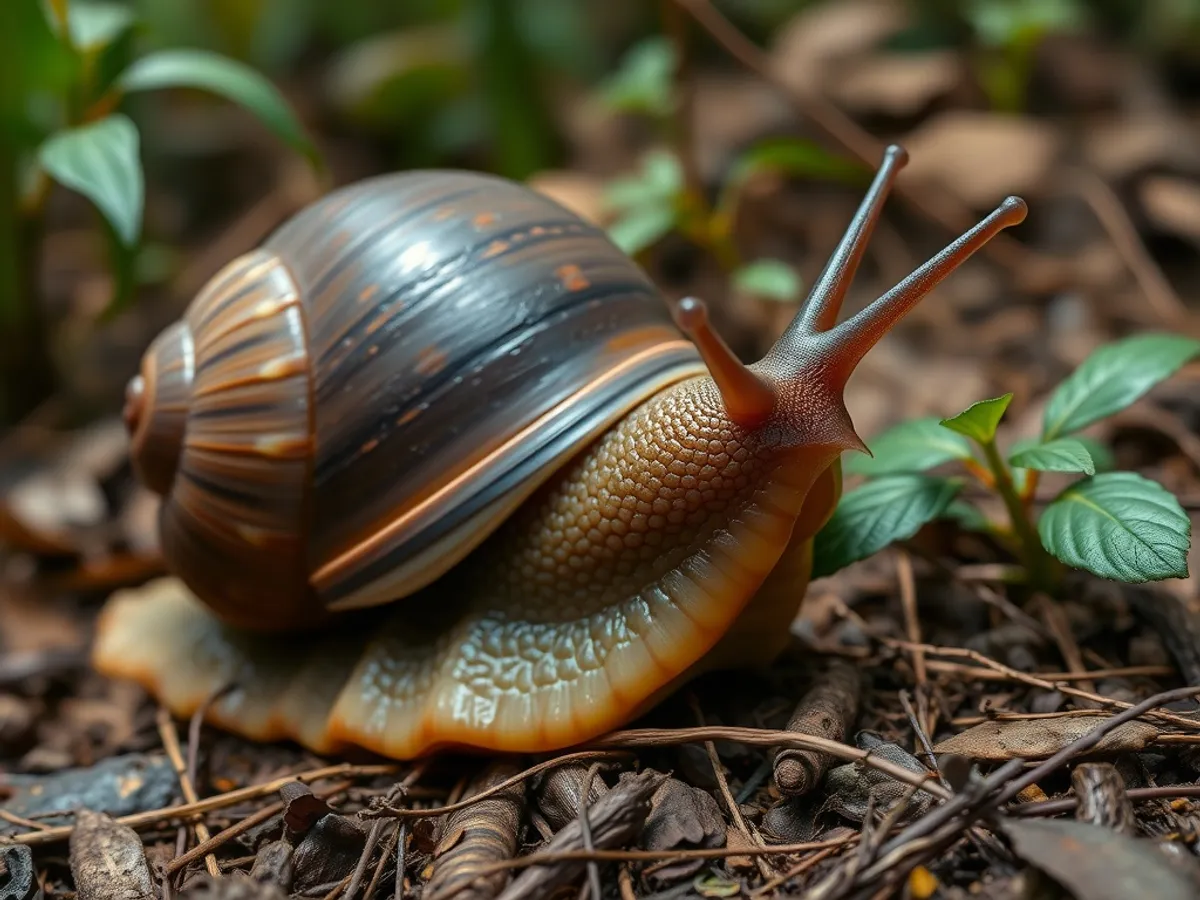
About the Giant African Land Snail
The Giant African Land Snail is one of the largest terrestrial gastropods in the world, easily recognized by its large, conical shell that can reach up to 20 centimeters in length. Native to East Africa, this snail has become an invasive species in many tropical and subtropical regions due to accidental and deliberate human introduction. It thrives in moist environments, feeding on a wide variety of plant matter, and is known for its voracious appetite. The snail reproduces rapidly and can lay hundreds of eggs per year, making it a significant agricultural pest in many areas. Despite its pest status, it is sometimes kept as a pet and studied for its unique physiological adaptations.
Fascinating facts
Rapid Reproducers
Giant African Land Snails can lay hundreds of eggs at a time, making them prolific breeders and a potential threat to agriculture.
Plant Eaters
They feed on a wide variety of plants, fruits, and vegetables, often causing damage to crops and ornamental plants.
Invasive Species
Originally from East Africa, these snails have spread to many parts of the world, becoming one of the most notorious invasive species.
Detailed description
The Giant African Land Snail (Achatina fulica) is a terrestrial pulmonate gastropod mollusk distinguished by its large, spiraled shell, which typically measures 7–20 cm in length and up to 10 cm in diameter, with some rare individuals exceeding these sizes. The shell is generally brown with darker banding, and the soft body is grayish to brown. Achatina fulica possesses a muscular foot for locomotion and a distinct head with two pairs of tentacles: the upper pair bearing eyes and the lower pair functioning as sensory organs. This species is primarily nocturnal, seeking shelter during the day to avoid desiccation. It is hermaphroditic, with each individual having both male and female reproductive organs, allowing for flexible mating strategies. The snail’s radula, a specialized rasping tongue, enables it to feed on a wide variety of plant materials, including leaves, fruits, vegetables, and even decaying organic matter. Its rapid growth and high reproductive rate contribute to its invasive potential. The species exhibits remarkable tolerance to a range of environmental conditions, thriving in disturbed habitats and urban areas as well as native forests. Notably, Achatina fulica can enter a state of aestivation during periods of drought, sealing itself inside its shell with a mucous epiphragm to conserve moisture. This adaptability, combined with its generalist diet and prolific breeding, has facilitated its spread across Asia, the Pacific, and the Americas, often with detrimental ecological and agricultural impacts.
Did you know?
A single Giant African Land Snail can lay up to 1,200 eggs per year, which contributes to its spread as an invasive species.
Research & sources
Behaviour & social structure
Achatina fulica is primarily crepuscular and nocturnal, emerging at dusk or after rainfall to forage when humidity is high. It exhibits solitary behavior, though aggregations can occur in favorable microhabitats with abundant food or moisture. The snail uses chemosensory cues to locate food and mates, and its feeding behavior is characterized by slow, methodical rasping of plant surfaces with its radula. It is a generalist feeder, consuming over 500 species of plants, and will also ingest calcium-rich materials such as soil, bones, or concrete to support shell growth. During dry or cold conditions, the snail burrows into soil or leaf litter and enters aestivation, reducing metabolic activity. Social interactions are limited, primarily occurring during mating, although high-density populations may compete for resources. The species is known to climb vertical surfaces, including trees and walls, to access food or escape unfavorable ground conditions.
Reproduction & life cycle
Giant African Land Snails are simultaneous hermaphrodites, possessing both male and female reproductive organs, but typically require cross-fertilization with another individual. Courtship and copulation can last several hours, often occurring during the wet season when conditions favor egg survival. After mating, each snail can lay clutches of 100–500 eggs, with several clutches produced annually; a single individual may lay up to 1,200 eggs per year. Eggs are deposited in moist soil or leaf litter, where they incubate for 8–21 days depending on temperature and humidity. There is no parental care; hatchlings emerge fully independent and begin feeding immediately. Sexual maturity is reached within 5–9 months under optimal conditions, contributing to rapid population growth in invaded regions.
Adaptations & survival
Achatina fulica exhibits several adaptations for terrestrial life, including a highly vascularized mantle cavity functioning as a lung for air-breathing. Its ability to aestivate allows survival during prolonged dry periods, while a thick mucous secretion protects against desiccation and predation. The radula is adapted for scraping a wide variety of plant materials, supporting its generalist diet. The shell provides defense against predators and environmental extremes. High fecundity and rapid maturation are evolutionary strategies that enhance colonization success. Additionally, the snail’s tolerance for a broad range of temperatures (9–29°C) and humidity levels enables it to thrive in diverse environments, from forests to urban gardens.
Cultural significance
Achatina fulica holds varied significance in human culture. In some African communities, it is collected for food and traditional medicine, valued for its protein and purported health benefits. The snail’s shell is occasionally used in crafts or as a calcium supplement for livestock. In recent years, it has gained popularity as an exotic pet, particularly in Europe and North America, though this practice is tightly regulated due to its invasive potential. In several countries, the snail is featured in educational programs to teach about invasive species and ecosystem balance. There is little evidence of mythological or symbolic roles, but its notoriety as a pest has made it a subject of public awareness campaigns.
Recent research
Recent research on Achatina fulica has focused on its role as a vector for zoonotic diseases, particularly the transmission of Angiostrongylus cantonensis. Studies have also examined its physiological adaptations to desiccation and temperature extremes, providing insights into gastropod resilience. Genomic analyses are underway to understand the genetic basis of its invasiveness and rapid adaptation to new environments. Investigations into its gut microbiome have revealed complex microbial communities that may aid in digestion and detoxification. Ongoing research aims to develop targeted, environmentally friendly control methods to mitigate its agricultural and ecological impacts. Additionally, Achatina fulica is used as a model organism in neurobiology and developmental studies due to its large, accessible nervous system.
Videos
Habitat
Tropical forests and moist environments
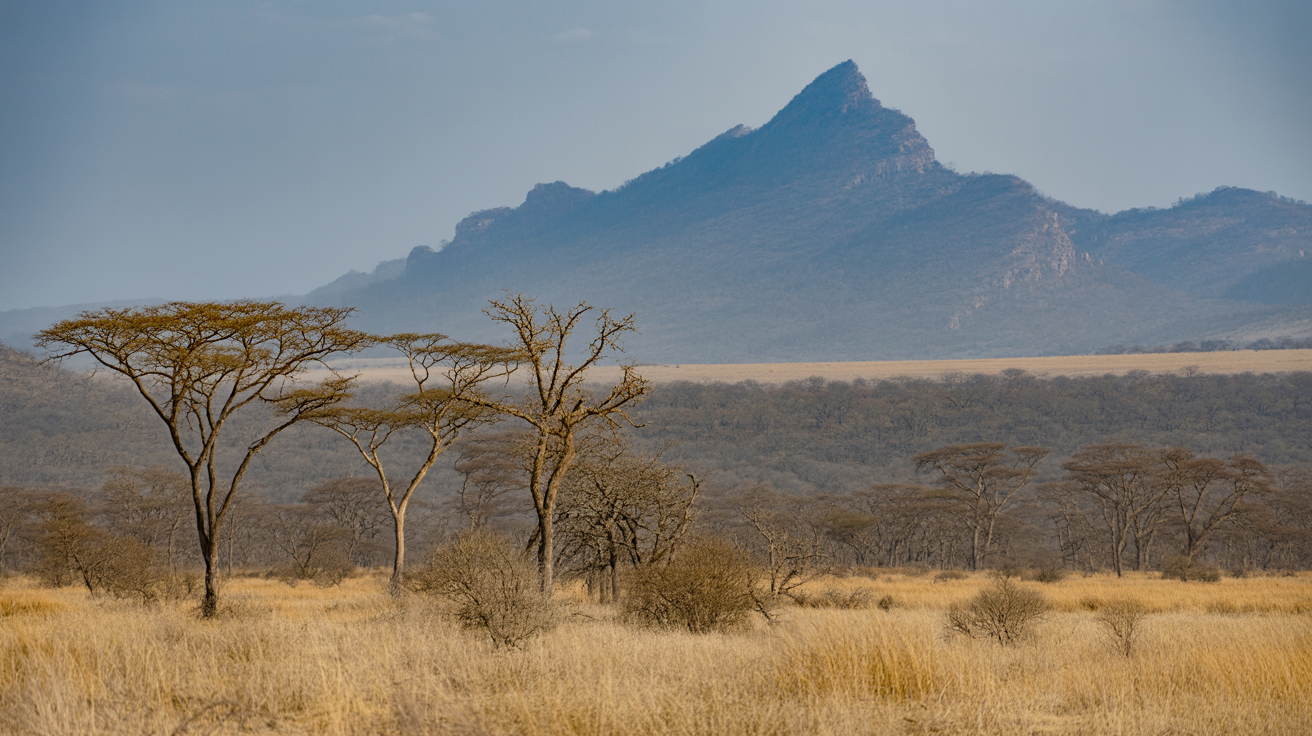 Africa
Savanna
Grasslands with scattered trees, characterized by seasonal rainfall and home to diverse grazing animals and predators.
 Global
Forest
Wooded areas with significant tree cover and diverse plant and animal communities.
 Various Continental Regions
Grassland
Open areas dominated by grasses rather than trees, supporting numerous herbivores and their predators.
Conservation
The Giant African Land Snail is currently classified as Least Concern on the IUCN Red List.
Threats & challenges
While Achatina fulica is not threatened globally and is classified as Least Concern by the IUCN, it faces localized threats from predation, parasitism, and control measures in areas where it is invasive. In its native range, natural predators include birds, small mammals, and beetles. Invasive populations are subject to eradication efforts due to their status as agricultural pests and vectors for plant and human pathogens, such as the rat lungworm (Angiostrongylus cantonensis), which can cause eosinophilic meningitis in humans. The widespread use of molluscicides and habitat modification may impact local populations. However, the primary conservation challenge is the ecological and economic damage caused by its invasiveness, leading to biodiversity loss and crop destruction in affected regions. Population trends are stable or increasing in most introduced areas.
Taxonomy
Scientific name
Achatina fulica
- Kingdom
- Animalia
- Phylum
- Mollusca
- Class
- Gastropoda
- Order
- Achatinoidea
- Family
- Achatinidae
- Genus
- Achatina
- Species
- fulica
Community notes
Share your observations about the Giant African Land Snail.
No community notes yet. Be the first!
Discover more wildlife
More fascinating animals from the encyclopedia.