
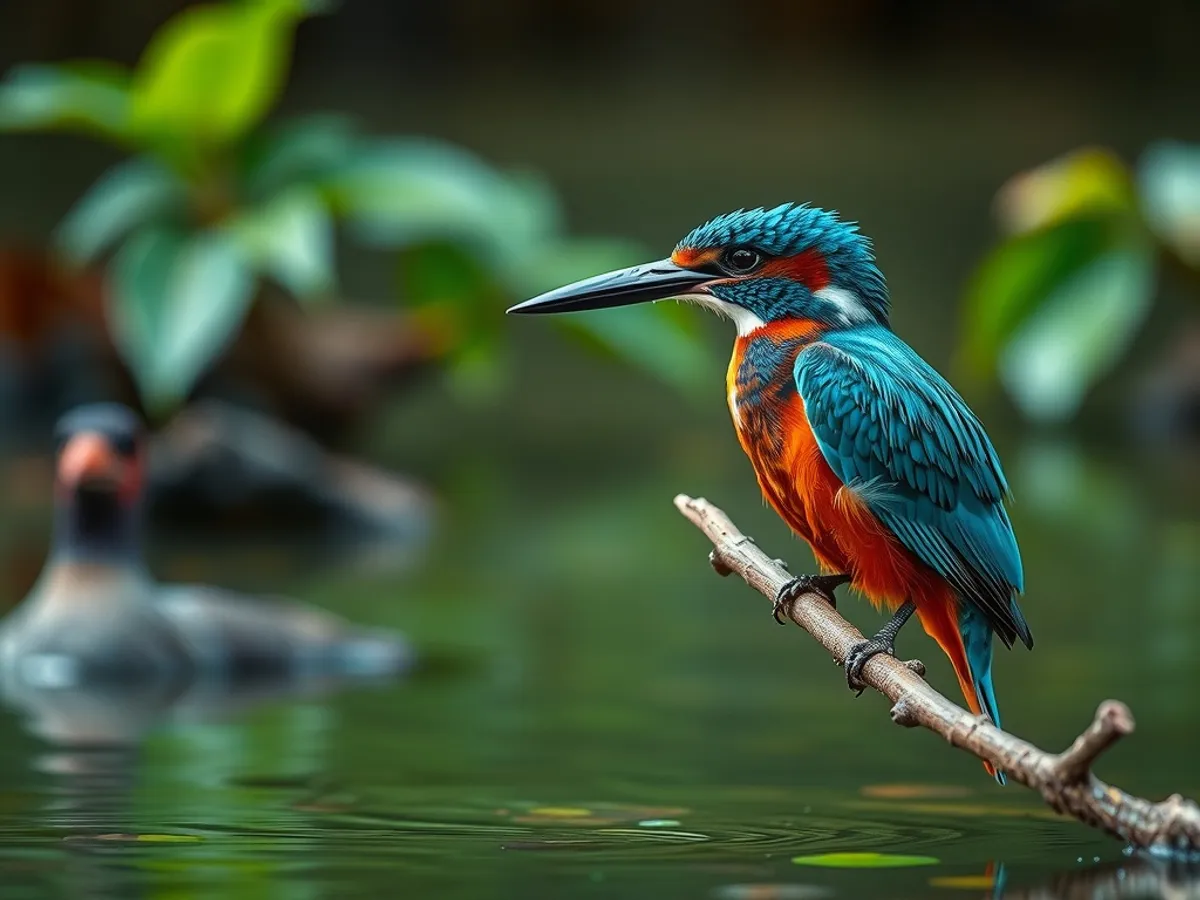
About the Amazon Kingfisher
The Amazon Kingfisher is a medium-sized, strikingly colored bird found throughout Central and South America, especially along rivers and streams. It is recognized by its glossy green upperparts, white underparts, and the prominent white collar around its neck; males have a rufous band across the chest. This kingfisher is an agile hunter, perching quietly above water before diving headfirst to catch small fish and aquatic invertebrates. Its sharp bill and excellent vision make it a formidable predator in its freshwater habitat. The Amazon Kingfisher is a solitary bird, often seen alone or in pairs, and communicates with sharp, rattling calls.
Fascinating facts
Brilliant Green Plumage
The Amazon Kingfisher's shimmering green feathers help it blend into the riverbank foliage, providing camouflage from both predators and prey.
Expert Fisher
This bird catches its prey by diving swiftly from a perch into the water, using its long, pointed bill to snatch fish and aquatic insects.
Burrow Nester
Amazon Kingfishers excavate tunnels in muddy riverbanks, creating nesting chambers that are safe from most terrestrial predators.
Detailed description
The Amazon Kingfisher (Chloroceryle amazona) is a medium-sized kingfisher, typically measuring 29–30 cm (11–12 in) in length and weighing between 98–140 g (3.5–4.9 oz). It is characterized by a robust, straight black bill adapted for catching fish, and short legs suited for perching. The plumage is glossy green on the head, back, and wings, with a conspicuous white collar and underparts; males display a broad rufous breast band, while females have a green band and some rufous spotting. The tail is relatively short and square. The species exhibits sexual dimorphism, with males and females differing in chest coloration. Its eyes are large and adapted for acute vision both above and below water. Amazon Kingfishers are primarily solitary, often seen perched quietly over slow-moving rivers, streams, oxbow lakes, or flooded forests. Their flight is rapid and direct, with stiff wingbeats and occasional gliding. Vocalizations are sharp, metallic rattles, especially during territorial disputes or courtship. The species is diurnal, with peak activity at dawn and dusk. Its diet consists mainly of small fish, but also includes aquatic insects and crustaceans. The Amazon Kingfisher is well-adapted to riparian habitats throughout its range, from southern Mexico to northern Argentina, typically below 900 m elevation.
Did you know?
Despite being called the Amazon Kingfisher, this species can be found as far north as southern Texas and Mexico, not just in the Amazon Basin.
Research & sources
Wikipedia summary
The Amazon kingfisher is a species of "water kingfisher" in subfamily Cerylinae of family Alcedinidae. It is found in the lowlands of the American tropics from southern Mexico south through Central America to northern Argentina.
Behaviour & social structure
Amazon Kingfishers are sit-and-wait predators, often perching motionless on low branches or exposed roots above water, scanning for prey. Once a target is spotted, they plunge-dive headfirst, using their streamlined bodies and powerful bills to snatch fish or aquatic invertebrates. After catching prey, they return to their perch to manipulate and swallow it head-first. They are territorial, defending feeding and nesting sites with aggressive chases and loud rattling calls. Social interactions are generally limited to breeding pairs or parent-offspring groups; otherwise, individuals are solitary. Daily routines include periods of foraging interspersed with preening, sunning, and resting. During the dry season, they may move locally in response to water levels and prey availability.
Reproduction & life cycle
Breeding occurs during the local dry season, which varies geographically but often coincides with lower water levels (e.g., December to April in the Amazon basin). Courtship involves aerial chases and vocal displays. Pairs excavate horizontal burrows in earthen riverbanks, typically 1–1.5 meters (3–5 ft) long, ending in a nesting chamber. The female lays 3–5 glossy white eggs. Both parents incubate the eggs for about 22–24 days. After hatching, both adults feed the nestlings, which fledge at approximately 27–30 days old. Parental care continues for a short period post-fledging. Nest predation by snakes, mammals, and other birds is a significant risk.
Adaptations & survival
The Amazon Kingfisher exhibits several key adaptations for its aquatic lifestyle. Its long, dagger-like bill is specialized for catching slippery prey. The eyes have a high density of rod cells, providing excellent vision in dim light and under water. Nictitating membranes protect the eyes during dives. The feet are syndactyl (two or more toes fused), aiding in perching on narrow branches. Plumage is water-resistant, and preening helps maintain feather condition. Behaviorally, the species uses stealth and patience to ambush prey, minimizing energy expenditure. The cryptic green upperparts provide camouflage among riverside vegetation.
Cultural significance
While not a major figure in indigenous mythology, the Amazon Kingfisher is admired for its striking appearance and fishing prowess. It occasionally features in local folklore as a symbol of agility and patience. In some South American cultures, kingfishers in general are seen as omens of good fishing or as guardians of waterways. The species is a favorite among birdwatchers and ecotourists, contributing to local economies through wildlife tourism.
Recent research
Recent research has focused on the Amazon Kingfisher's role as an indicator species for riparian ecosystem health, given its sensitivity to water quality and prey abundance. Studies using stable isotope analysis have provided insights into its trophic ecology and dietary flexibility. Genetic studies have clarified its relationship to other Chloroceryle kingfishers, supporting its status as a distinct species. Ongoing research includes the effects of habitat fragmentation and environmental contaminants on reproductive success and population dynamics.
Videos
Habitat
Freshwater rivers and streams
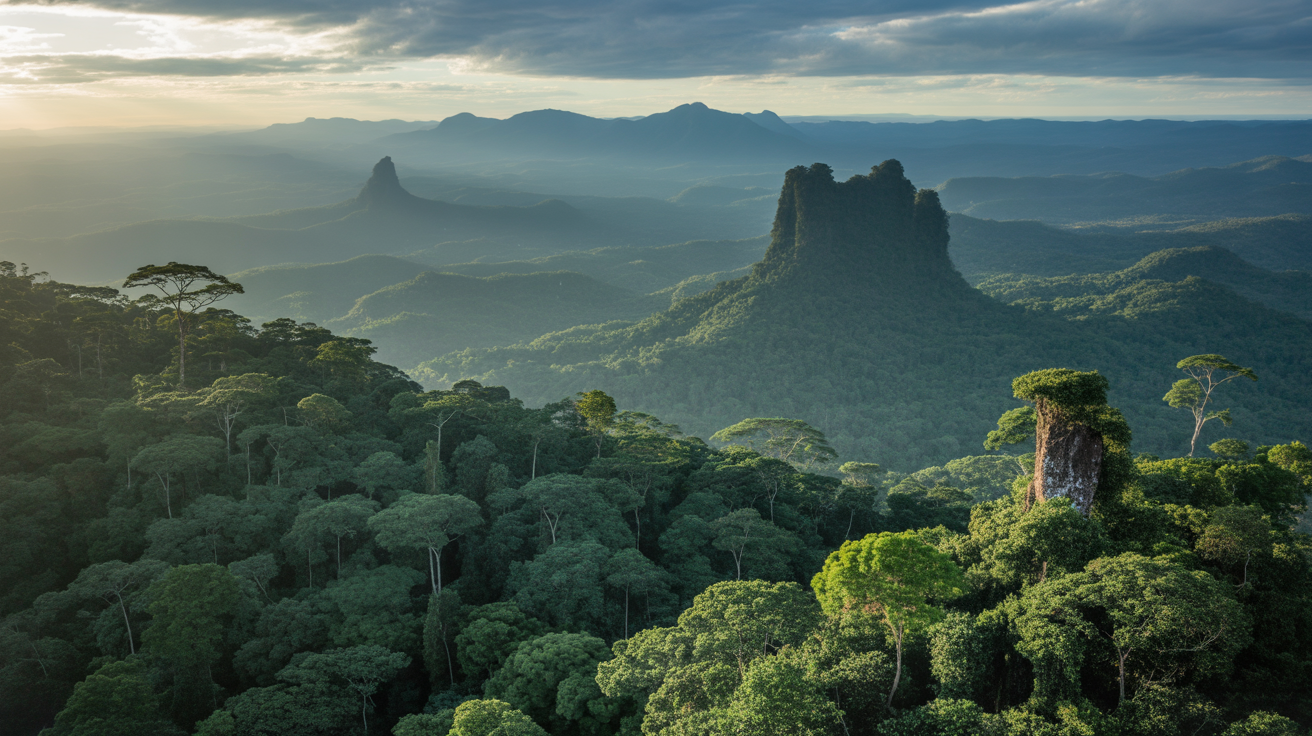 Tropical Regions
Rainforest
Dense, wet forests with the highest biodiversity on Earth, containing more than half of the world's plant and animal species.
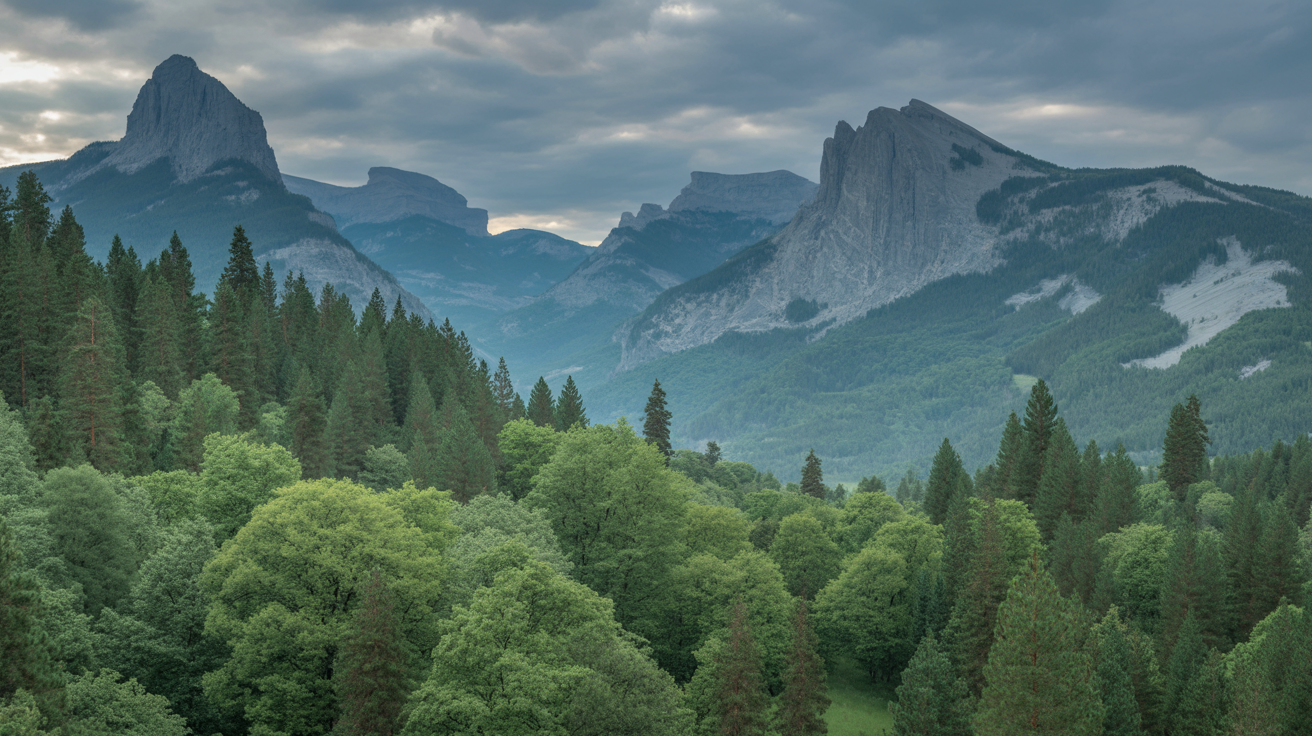 Global
Forest
Wooded areas with significant tree cover and diverse plant and animal communities.
 Global
Freshwater
Lakes, rivers, and wetlands with diverse aquatic ecosystems.
Conservation
The Amazon Kingfisher is currently classified as Least Concern on the IUCN Red List.
Threats & challenges
Currently assessed as Least Concern by the IUCN, the Amazon Kingfisher has a wide distribution and stable population trend. However, localized threats include habitat degradation from deforestation, riverbank erosion, water pollution (especially from agricultural runoff and mining), and human disturbance. Dam construction and waterway modification can alter nesting and feeding habitats. In some regions, climate change may affect water levels and prey availability. Despite these pressures, the species remains common in suitable habitats, but ongoing monitoring is recommended.
Taxonomy
Scientific name
Chloroceryle amazona
- Kingdom
- Animalia
- Phylum
- Chordata
- Class
- Aves
- Order
- Coraciiformes
- Family
- Alcedinidae
- Genus
- Chloroceryle
- Species
- amazona
Community notes
Share your observations about the Amazon Kingfisher.
No community notes yet. Be the first!
Discover more wildlife
More fascinating animals from the encyclopedia.