
About the Antarctic scale worm
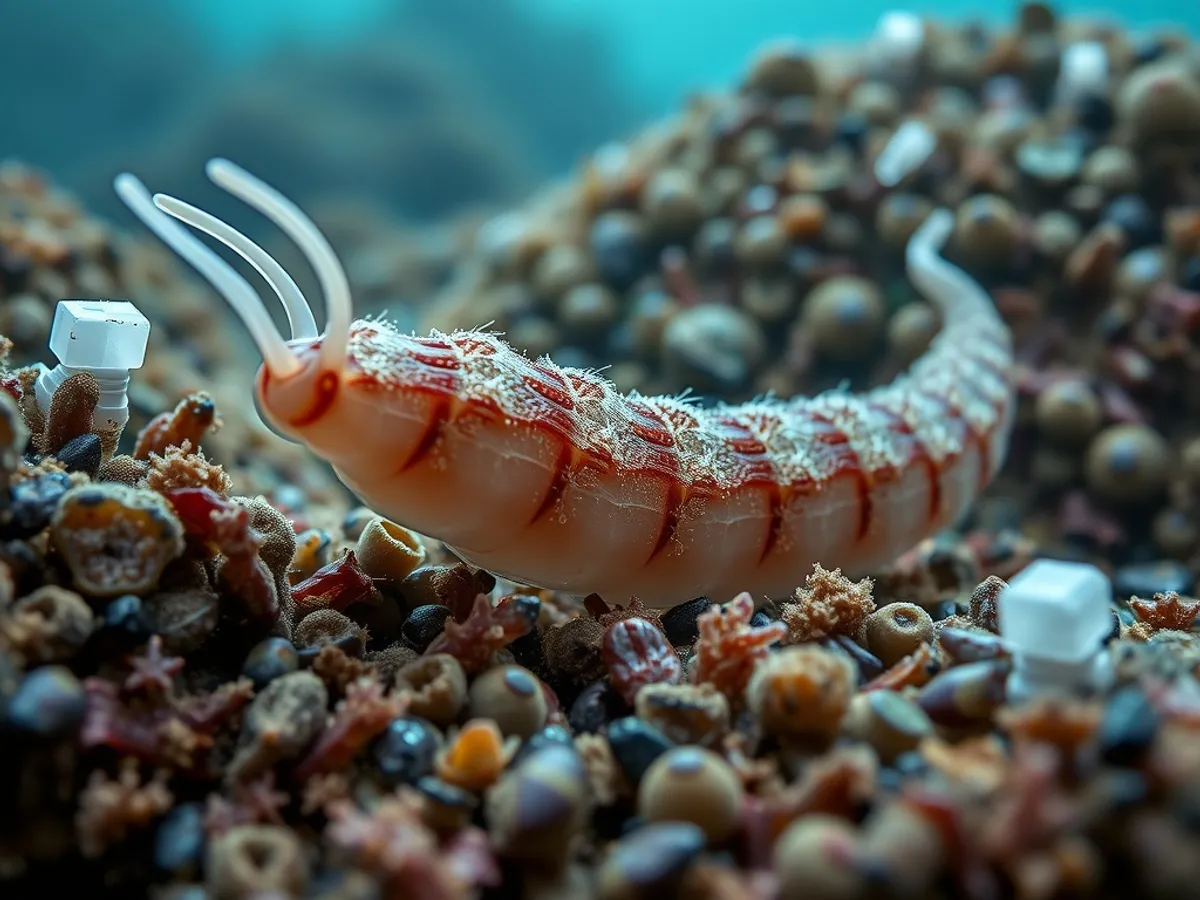
The Antarctic scale worm is a large, predatory polychaete worm found in the frigid waters surrounding Antarctica. Recognizable by its broad, flattened body covered with overlapping scales (elytra), this worm can reach lengths of up to 20 centimeters. Its impressive jaws and iridescent, segmented appearance make it a striking resident of the deep Antarctic seafloor. This invertebrate is a fierce predator, preying on other marine invertebrates in one of the most extreme environments on Earth.
Fascinating facts
Huge Jaws
The Antarctic scale worm has massive eversible jaws that can extend outwards to snatch prey from the ocean floor.
Cold Water Survivor
It thrives in the near-freezing temperatures and high pressures of the Antarctic deep sea, an environment few animals can survive.
Iridescent Armor
Its body is covered with shiny, overlapping scales called elytra, which can reflect light in iridescent colors.
Detailed description
Eulagisca gigantea, commonly known as the Antarctic scale worm, is a large polychaete annelid distinguished by its broad, dorsoventrally flattened body and striking iridescent coloration. Adults typically reach lengths of 20 cm, though some specimens have been recorded up to 30 cm, making it one of the largest scale worms known. The body is segmented, with each segment bearing a pair of parapodia for locomotion and respiration. The dorsal surface is covered by 15 pairs of thick, overlapping elytra (scales), which provide protection and may help insulate against the extreme cold of Antarctic waters. Its anterior end features a prominent eversible proboscis armed with powerful jaws, capable of extending to capture prey. Eulagisca gigantea possesses well-developed sensory structures, including antennae and palps, which aid in navigation and prey detection in the dark, high-pressure environment of the deep sea. The worm’s coloration ranges from pale beige to metallic green or blue, with iridescence likely serving as camouflage among the seafloor sediments. Internally, it has a closed circulatory system and specialized hemoglobin adapted for oxygen transport at low temperatures. This species is primarily benthic, inhabiting soft sediments and rocky substrates at depths ranging from 150 to over 1,000 meters. Its robust morphology and physiological adaptations enable it to thrive in the stable but harsh conditions of the Antarctic abyssal zone.
Did you know?
Despite its fearsome appearance, the Antarctic scale worm is rarely seen by humans and was first described only in the early 20th century.
Research & sources
Wikipedia summary
Eulagisca gigantea is a species of scale worm commonly known as the Antarctic scale worm. This species is specifically found in the deep sea in cold waters like the Antarctic Ocean. The scale worms are named for the elytra on their surface that look like scales.
Behaviour & social structure
Eulagisca gigantea is a solitary and highly predatory organism. It spends most of its time concealed within the substrate or under rocks, emerging primarily at night or during periods of low light to hunt. The worm uses its sensitive antennae and palps to detect vibrations and chemical cues from potential prey, which include other polychaetes, small crustaceans, and occasionally scavenged carrion. When prey is detected, E. gigantea rapidly everts its muscular proboscis, deploying its strong jaws to seize and immobilize the victim. Feeding is intermittent and opportunistic, reflecting the scarcity of food in the deep-sea environment. There is little evidence of social behavior; individuals are typically encountered alone, and there are no known aggregations or cooperative behaviors. Locomotion is achieved through undulating movements of the body and parapodia, allowing the worm to burrow or crawl across the seafloor. Daily routines are largely dictated by prey availability and environmental conditions, with periods of inactivity interspersed with bursts of hunting activity.
Reproduction & life cycle
The reproductive biology of Eulagisca gigantea is not fully understood, but as with many polychaetes, it is believed to be gonochoristic (having separate sexes). Spawning likely occurs seasonally, possibly synchronized with the Antarctic summer when productivity is higher. Fertilization is external, with males and females releasing gametes into the water column. The development is presumed to involve a planktonic trochophore larval stage, which eventually settles to the benthos and metamorphoses into the juvenile worm. There is no evidence of parental care, and larvae are left to develop independently. The extreme environment and low temperatures may result in slow growth rates and extended developmental periods. Some studies suggest that reproductive output is low, consistent with the low-energy lifestyle of deep-sea organisms.
Adaptations & survival
Eulagisca gigantea exhibits several remarkable adaptations for life in the Antarctic deep sea. Its thick elytra provide not only physical protection from predators and abrasive sediments but may also serve as insulation against the near-freezing temperatures. The worm’s hemoglobin is highly efficient at binding oxygen, an adaptation to the low-oxygen, high-pressure environment. Its iridescent coloration and ability to burrow help it avoid detection by both predators and prey. The eversible proboscis and robust jaws are specialized for capturing hard-bodied prey, a necessity in the resource-scarce deep sea. Biochemical adaptations include enzymes and membrane structures that remain functional at low temperatures, and antifreeze proteins may be present to prevent ice crystal formation in tissues. Its sensory organs are highly developed for detecting chemical and mechanical signals in the absence of light.
Cultural significance
Eulagisca gigantea holds little direct cultural significance due to its inaccessible habitat and lack of interaction with humans. However, it has become a subject of fascination in popular science and deep-sea documentaries, often highlighted for its unusual appearance and predatory behavior. Its striking morphology and adaptations have made it an emblematic species in discussions of Antarctic biodiversity and the resilience of life in extreme environments. There are no known traditional uses or mythological associations.
Recent research
Recent research on Eulagisca gigantea has focused on its unique physiological and molecular adaptations to extreme cold and high pressure. Genomic and proteomic studies have begun to identify antifreeze proteins and cold-adapted enzymes, which have potential biotechnological applications. Morphological studies using scanning electron microscopy have revealed fine details of its elytra and jaw structures, shedding light on evolutionary relationships within Polynoidae. Ecological studies are limited but ongoing, with deep-sea expeditions using remotely operated vehicles (ROVs) providing new insights into its distribution, behavior, and interactions with other benthic organisms. There is growing interest in its role as a top invertebrate predator in Antarctic benthic ecosystems and its potential as an indicator species for environmental change.
Videos
Habitat
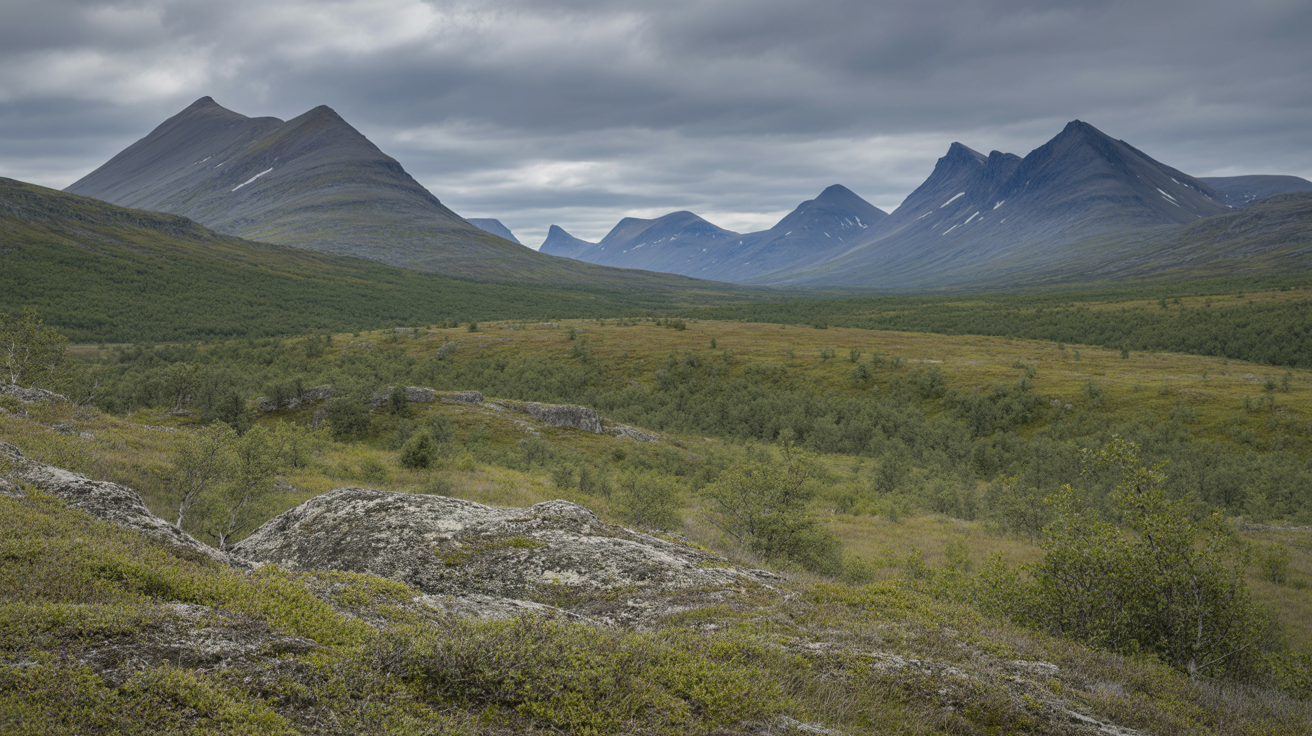
Deep Antarctic Ocean

Conservation
The Antarctic scale worm is currently classified as Least Concern on the IUCN Red List.
Threats & challenges
Currently, Eulagisca gigantea faces minimal direct threats due to its remote and inhospitable habitat. However, potential challenges include changes in ocean temperature and chemistry associated with climate change, which could alter food webs and oxygen availability in the deep Antarctic. Deep-sea trawling and scientific sampling, though limited in the Southern Ocean, could pose localized risks. The species is not targeted by fisheries and is considered to be of Least Concern, but its population trends are poorly understood due to the difficulty of conducting deep-sea surveys. The stability of its environment makes it vulnerable to even small perturbations, and ongoing monitoring is necessary to detect any future impacts.
Taxonomy
Scientific name
Eulagisca gigantea
- Kingdom
- Animalia
- Phylum
- Annelida
- Class
- Polychaeta
- Order
- Phyllodocida
- Family
- Polynoidae
- Genus
- Eulagisca
- Species
- gigantea
Community notes
Share your observations about the Antarctic scale worm.
No community notes yet. Be the first!
Discover more wildlife
More fascinating animals from the encyclopedia.