
About the Asian Elephant
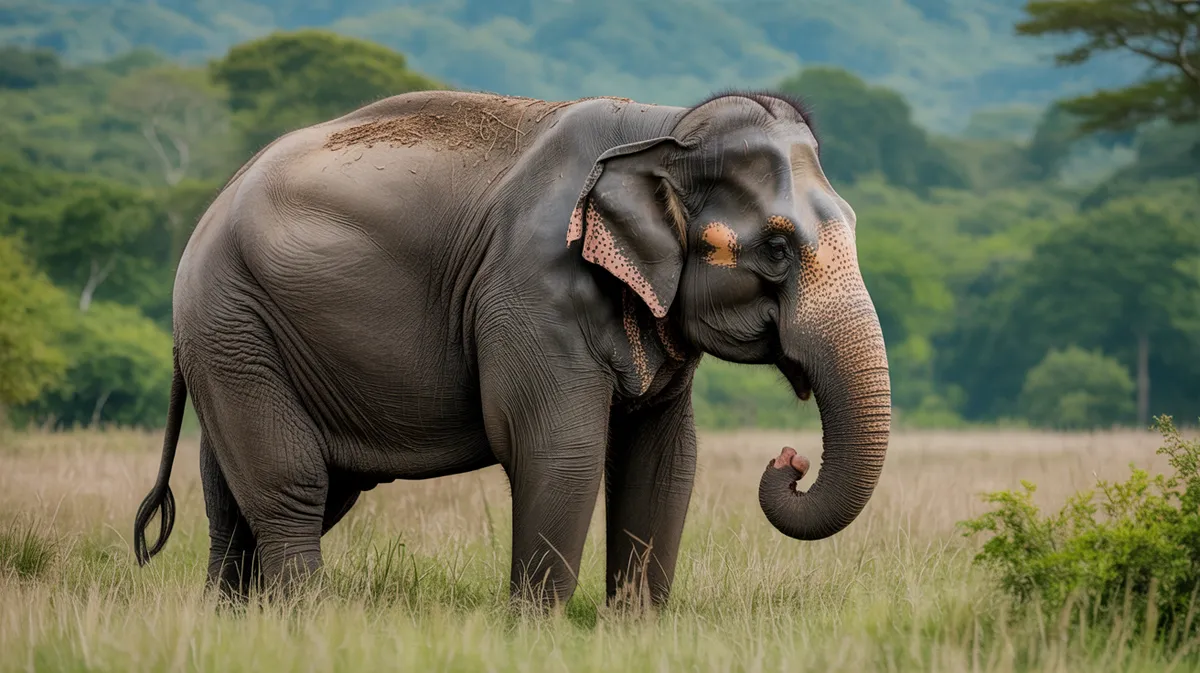
The Asian elephant differs from the African in more than ear size. Its trunk ends in a single finger-like process rather than two, so it grips by curling the tip around an object and pinning it, where an African elephant pinches with two lips. It has a twin-domed forehead, a more arched back, and — crucially — tusks that many individuals simply do not have. Females essentially never carry proper tusks, only small tushes, and a large proportion of males are tuskless too; in Sri Lanka the figure is around 90 percent, a legacy of centuries of selective removal of the tusked animals. The trunk itself contains on the order of 40,000 muscle fascicles and no bone, and it is simultaneously a nose, a hand, a hose, a snorkel and a loudspeaker. Elephants communicate with infrasonic rumbles below the range of human hearing, which travel for kilometres through air and ground, and they detect them partly through their feet. Adult males enter musth, a periodic state with testosterone levels up to sixty times baseline, marked by temporal gland secretion and dangerous aggression.
Fascinating facts
Trunk Versatility
An Asian Elephant's trunk contains over 40,000 muscles and is used for breathing, drinking, grasping food, and social interactions.
Voracious Eaters
These elephants can spend up to 18 hours a day feeding and may consume up to 150 kg of vegetation daily.
Complex Social Bonds
Asian Elephants live in matriarchal herds led by an older female and display deep social bonds, mourning deceased companions.
Detailed description
The Asian elephant (Elephas maximus) is a large terrestrial mammal distinguished by its domed head, convex or level back, and relatively small, rounded ears compared to its African relatives. Adult males typically stand 2.7–3.2 meters at the shoulder and weigh between 4,000–5,400 kg, while females are smaller, averaging 2.4 meters in height and 2,700–3,500 kg in weight. Their skin is thick and wrinkled, with characteristic depigmented patches, especially on the trunk, ears, and face. The trunk, a fusion of the nose and upper lip, is highly muscular and dexterous, ending in a single finger-like projection used for grasping objects, feeding, and social interactions. Only some males develop prominent tusks, while females and many males have small or absent tusks (called 'tushes'). Asian elephants are highly social, forming matriarchal family groups led by the oldest female, with complex communication involving vocalizations, infrasound, and tactile signals. They are primarily crepuscular, feeding on grasses, leaves, bark, fruit, and roots, and can consume up to 150 kg of vegetation daily. Their large, highly developed brains support advanced cognitive abilities, including problem-solving, tool use, and self-recognition. Lifespans in the wild can reach 60 years, though many face threats that reduce longevity.
Did you know?
Asian Elephants can recognize themselves in a mirror, demonstrating advanced self-awareness that is rare among animals.
Research & sources
Wikipedia summary
The Asian elephant, also known as the Asiatic elephant, is the only living Elephas species. It is the largest living land animal in Asia and the second largest living elephantid in the world. It is characterised by its long trunk with a single finger-like processing; large tusks in males; laterally folded large ears and wrinkled grey skin that is partly depigmented on the trunk, ears or neck. Adult males average 4 t in weight and females 2.7 t. It has a large and well developed neocortex of the brain, is highly intelligent and self-aware being able to display behaviours associated with grief, learning and greeting. Three subspecies are recognised—E. m. maximus, E. m. indicus and E. m. sumatranus.
Behaviour & social structure
Asian elephants exhibit intricate social behavior, living in stable family groups of related females and their offspring, while adult males are more solitary or form loose bachelor groups. Social bonds are reinforced through frequent physical contact, vocalizations, and coordinated movements. Elephants communicate over long distances using low-frequency infrasound. Their daily routine involves foraging for up to 18 hours, interspersed with periods of rest, dust-bathing, and socializing. They are known to travel long distances in search of food and water, often following traditional migratory routes. Elephants play a keystone role in their ecosystems by dispersing seeds and modifying vegetation structure. Aggressive behaviors are rare but can occur during musth in males, a period of heightened sexual activity and aggression. Play behavior is common among calves and juveniles, contributing to social learning and development.
Reproduction & life cycle
Asian elephants have a polygynous mating system, with dominant males in musth competing for access to receptive females. Females reach sexual maturity at 9–15 years, while males mature later, around 14–17 years. The estrous cycle lasts 14–16 weeks, with a brief period of receptivity. Gestation is the longest of any land mammal, averaging 18–22 months, after which a single calf (rarely twins) is born weighing about 90–120 kg. Calves are precocial but rely on maternal care and allomothering from other females for several years. Weaning occurs at 2–4 years, but calves remain with the maternal group for life. Birth intervals are typically 4–5 years, limiting population growth rates.
Adaptations & survival
Asian elephants possess several adaptations for survival in diverse habitats. Their trunk contains over 40,000 muscles, enabling precise manipulation, olfaction, and water intake. Large molar teeth are replaced six times in a lifetime, allowing efficient processing of fibrous plant material. Their thick skin protects against parasites and injury, while sparse hair and large ears aid in thermoregulation. The ability to detect seismic vibrations through the feet enhances communication and predator awareness. Behavioral flexibility, advanced memory, and problem-solving skills allow them to navigate complex environments and human-altered landscapes.
Cultural significance
Asian elephants hold profound cultural and religious significance across their range. In Hinduism and Buddhism, they symbolize wisdom, strength, and good fortune, epitomized by the deity Ganesha. Elephants are featured in traditional festivals, ceremonies, and art, particularly in India, Sri Lanka, and Thailand. Historically, they have been used as working animals in logging, warfare, and ceremonial processions. However, the use of captive elephants is increasingly scrutinized due to welfare concerns. Their image persists as a national symbol in several Asian countries.
Recent research
Recent research has focused on Asian elephant cognition, revealing advanced problem-solving, empathy, and self-awareness. Genetic studies have clarified subspecies distinctions and highlighted the need for targeted conservation. Satellite tracking and camera traps have improved understanding of movement ecology and habitat use. Studies on human-elephant conflict mitigation, such as early warning systems and community-based management, are ongoing. Conservation genetics and reproductive technologies, including artificial insemination, are being explored to support population viability. Research into disease dynamics, especially herpesvirus, is critical for calf survival.
Videos
Habitat
Tropical and subtropical forests, grasslands
 Various Continental Regions
Grassland
Open areas dominated by grasses rather than trees, supporting numerous herbivores and their predators.
 Tropical Regions
Rainforest
Dense, wet forests with the highest biodiversity on Earth, containing more than half of the world's plant and animal species.
 Global
Forest
Wooded areas with significant tree cover and diverse plant and animal communities.
Conservation
The Asian Elephant is currently classified as Endangered on the IUCN Red List.
Threats & challenges
The primary threats to Asian elephants include habitat loss and fragmentation due to agriculture, infrastructure development, and urbanization. Human-elephant conflict, resulting from crop raiding and competition for resources, leads to retaliatory killings and injuries on both sides. Poaching for ivory (in tusked males), skin, and other body parts remains a significant concern, despite legal protections. Emerging threats include disease transmission (e.g., elephant endotheliotropic herpesvirus), climate change impacts, and genetic isolation of small populations. The global population is estimated at 40,000–50,000 individuals, with a declining trend. Conservation efforts are hampered by limited habitat connectivity, insufficient law enforcement, and socio-economic challenges in range countries.
Taxonomy
Scientific name
Elephas maximus
- Kingdom
- Animalia
- Phylum
- Chordata
- Class
- Mammalia
- Order
- Proboscidea
- Family
- Elephantidae
- Genus
- Elephas
- Species
- maximus
Where to see an asian elephant
28 zoos and aquariums in 8 countries are recorded as keeping this species.
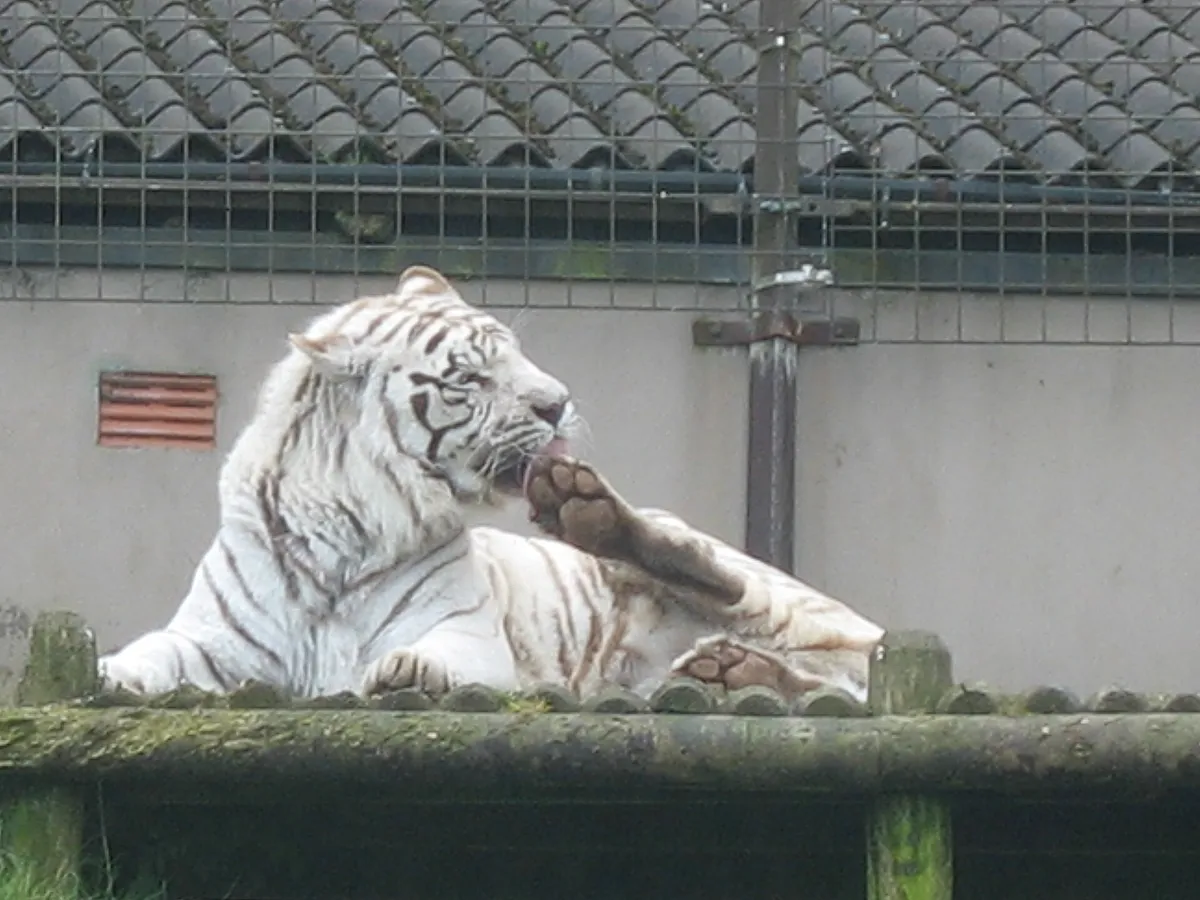 Belfast Zoo🇬🇧 Belfast, United Kingdom
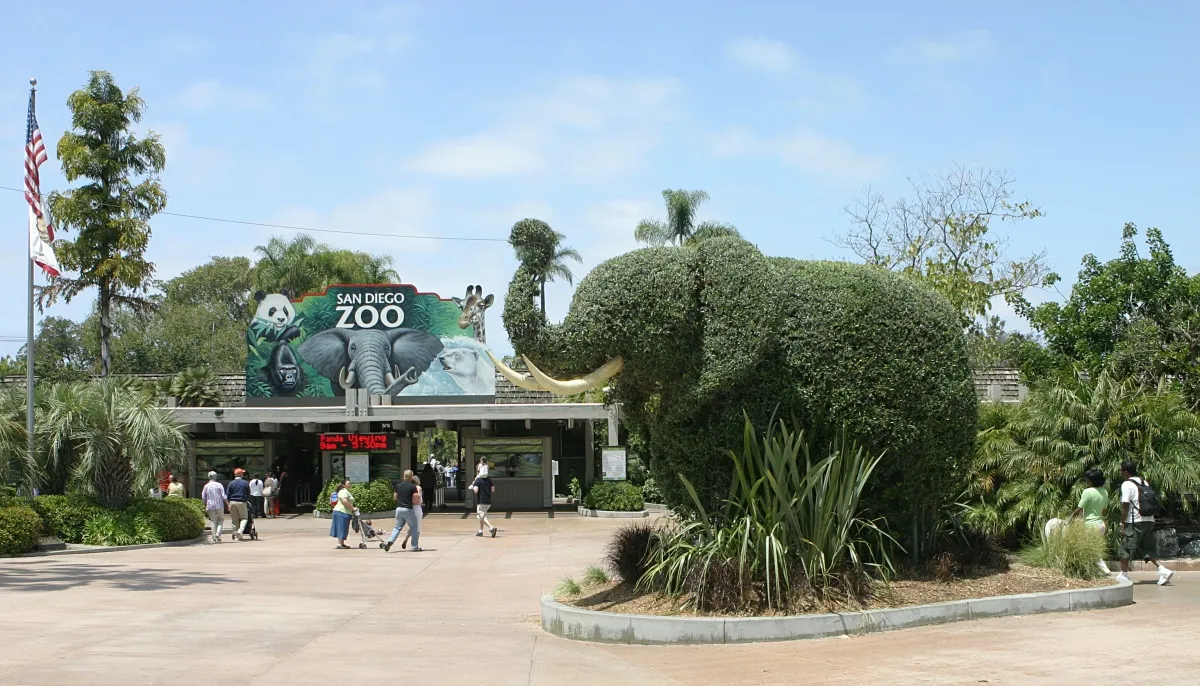 San Diego Zoo🇺🇸 San Diego, United States
 Blackpool Zoo🇬🇧 Blackpool, United Kingdom
 Calgary Zoo🇨🇦 Calgary, Canada
 Chester Zoo🇬🇧 Chester, United Kingdom
Community notes
Share your observations about the Asian Elephant.
No community notes yet. Be the first!
Discover more wildlife
More fascinating animals from the encyclopedia.