
About the Asian Vine Snake
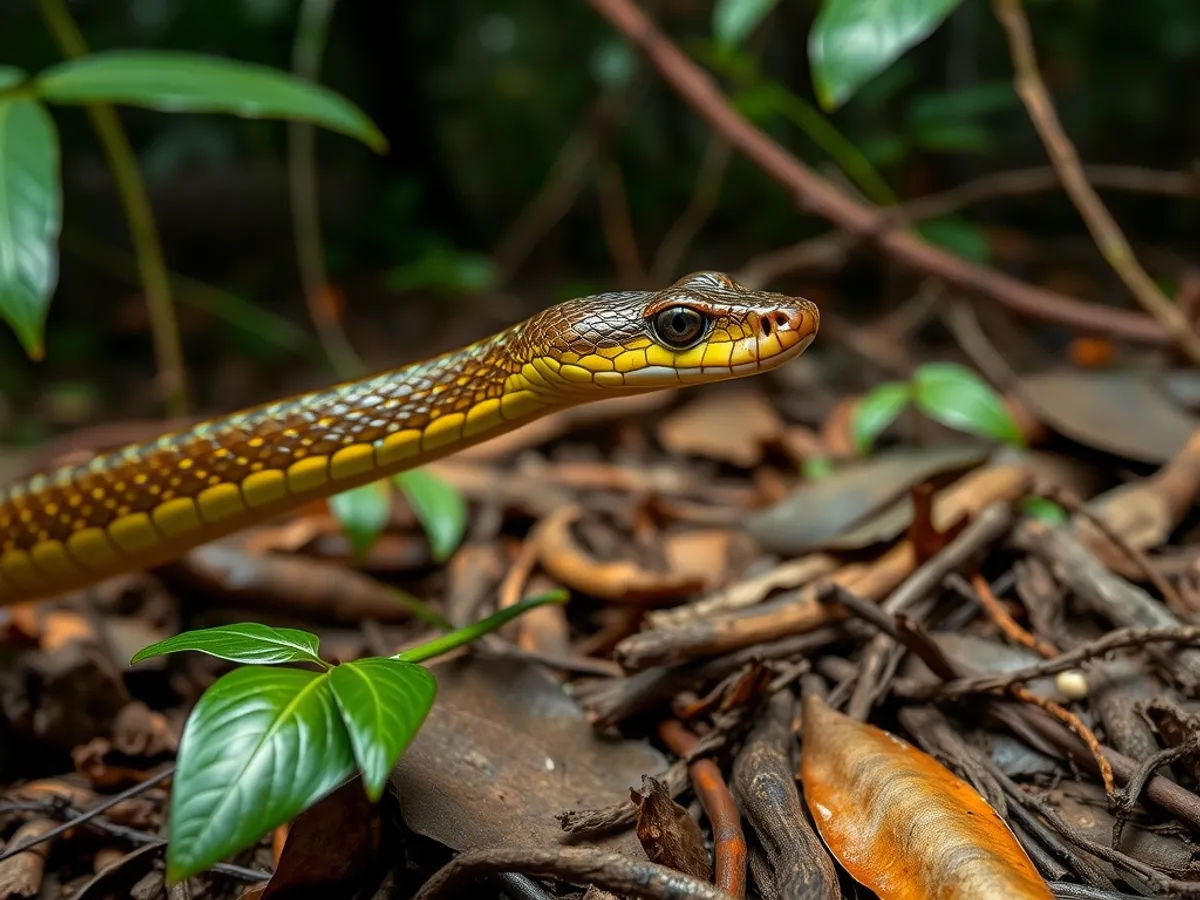
The Asian Vine Snake is a slender, mildly venomous arboreal snake native to South and Southeast Asia. Easily recognizable by its elongated, pointed snout and brilliant green coloration, this snake is perfectly adapted for life among the foliage, where it relies on its camouflage to ambush prey. Its thin, whip-like body allows it to move gracefully through branches and leaves in search of small vertebrates, especially lizards and frogs. Although its venom is not considered dangerous to humans, it uses it effectively to subdue its prey.
Fascinating facts
Master of Camouflage
The Asian Vine Snake's vibrant green color and slender body make it nearly invisible among vine-covered branches.
Binocular Vision
This species has horizontal, keyhole-shaped pupils, providing exceptional depth perception for catching fast-moving prey.
Mildly Venomous
Though it possesses venom to immobilize prey, the Asian Vine Snake is not dangerous to humans.
Detailed description
The Asian Vine Snake (Ahaetulla prasina) is a highly specialized arboreal colubrid, typically measuring between 1.0 and 1.8 meters in length, though individuals exceeding 2 meters have been recorded. Its body is extremely slender, with a laterally compressed form and a sharply pointed, elongated snout, which enhances its resemblance to twigs or vines. The dorsal coloration is a vivid, leaf-green, sometimes with faint yellow or blue hues, while the ventral side is usually lighter, aiding in camouflage among dense foliage. The eyes are large and laterally positioned, featuring horizontal, keyhole-shaped pupils that provide exceptional binocular vision—an adaptation for depth perception critical to its predatory lifestyle. The scales are smooth and glossy, further reducing friction as the snake glides through branches. Ahaetulla prasina is diurnal, relying on its acute vision to detect prey and threats. It is mildly venomous, possessing rear-fanged (opisthoglyphous) dentition; the venom is primarily neurotoxic and effective against small vertebrates but poses minimal risk to humans. The species is solitary outside of the breeding season and exhibits territorial tendencies, particularly among males. Its cryptic coloration and slow, deliberate movements make it nearly invisible in its natural habitat, an adaptation that serves both predation and predator avoidance.
Did you know?
Unlike many snakes, the Asian Vine Snake has horizontal pupils, which help it gauge distances precisely when hunting among the branches.
Research & sources
Behaviour & social structure
Asian Vine Snakes are predominantly diurnal and arboreal, spending most of their lives in the mid to upper canopy of tropical forests, secondary growth, and sometimes cultivated areas. They are sit-and-wait predators, often remaining motionless for extended periods, blending seamlessly with vines and branches. When hunting, they use their binocular vision to accurately judge distance before striking with remarkable speed and precision. Their diet consists mainly of lizards (especially agamids and geckos), frogs, and occasionally small birds and rodents. Feeding is facilitated by their mildly venomous bite, which subdues prey quickly. Social interactions are limited; individuals are generally solitary, though males may engage in ritualized combat during the breeding season, involving intertwining and pushing rather than biting. The species is known for its defensive display: when threatened, it may inflate its body to appear larger and reveal a black-and-white checkered pattern along the flanks, accompanied by open-mouthed gaping to deter predators.
Reproduction & life cycle
Ahaetulla prasina is ovoviviparous, meaning females retain eggs internally until they hatch, giving birth to live young. Breeding typically coincides with the onset of the rainy season, which varies regionally but often occurs between May and August. Courtship involves tactile and chemical cues, with males following pheromone trails left by receptive females. Gestation lasts approximately 3 to 4 months, after which the female gives birth to 4–10 neonates, each measuring about 20–30 cm in length. There is no parental care post-birth; juveniles are independent from the moment they are born and must fend for themselves. Sexual maturity is usually reached at around 2 years of age.
Adaptations & survival
The Asian Vine Snake exhibits several remarkable adaptations for arboreal life. Its elongated, laterally compressed body and pointed snout enhance its camouflage, making it nearly indistinguishable from surrounding vegetation. The horizontal, keyhole-shaped pupils grant superior depth perception, crucial for striking at prey among branches. Its prehensile tail aids in anchoring and maneuvering through complex foliage. The rear-fanged venom apparatus allows efficient subjugation of agile prey such as lizards and frogs. The snake’s ability to inflate its body and display contrasting flank patterns serves as a deimatic (startle) display against predators. Additionally, its slow, deliberate movements minimize detection by both prey and predators.
Cultural significance
In several Southeast Asian cultures, the Asian Vine Snake is associated with folklore and traditional beliefs. Its striking appearance and arboreal habits have led to myths about its supernatural abilities, such as being able to hypnotize prey or humans. In some rural communities, it is erroneously believed to be highly venomous and is thus killed on sight. Conversely, in parts of India and Thailand, the species is considered a symbol of agility and stealth. There are no significant records of the species being used in traditional medicine or as a food source.
Recent research
Recent research has focused on the visual ecology of Ahaetulla prasina, highlighting its unique binocular vision and depth perception, which are rare among snakes. Studies using high-speed videography have documented its precision strikes and prey capture techniques. Genetic analyses have revealed significant cryptic diversity within the genus Ahaetulla, suggesting the possibility of unrecognized species complexes. Ongoing ecological studies are examining the impact of habitat fragmentation on population genetics and dispersal. The species has also been used as a model for studying arboreal locomotion and camouflage in reptiles.
Sources
Ahaetulla prasina (Asian Vine Snake): Natural History, Taxonomy, and Ecology
Das, I. & de Silva, A. (2021)
scientificAhaetulla prasina: The IUCN Red List of Threatened Species 2010
IUCN SSC Amphibian and Reptile Specialist Group
conservationAhaetulla prasina (Asian Vine Snake): Natural History, Behavior, and Ecology
Das, I. & de Silva, A. (2021)
scientificAhaetulla prasina: The IUCN Red List of Threatened Species 2010
IUCN SSC Amphibian and Reptile Specialist Group
conservationSystematics and Natural History of the Vine Snakes (Ahaetulla, Colubridae) of the Indian Subcontinent
Deepak, V., et al. (2019)
scientificVideos
Habitat
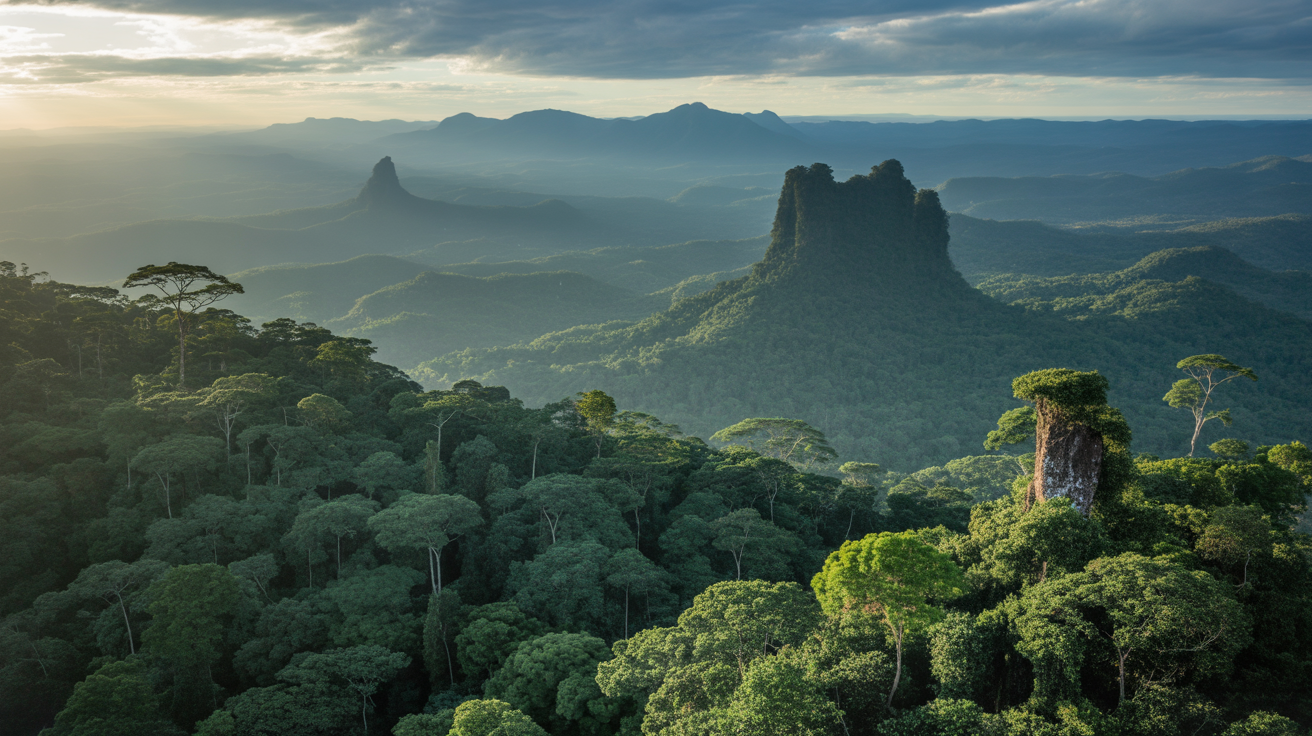
Tropical rainforest and woodland

Conservation
The Asian Vine Snake is currently classified as Least Concern on the IUCN Red List.
Threats & challenges
Currently assessed as Least Concern by the IUCN, Ahaetulla prasina maintains stable populations across its wide range, which includes India, Bangladesh, Myanmar, Thailand, Malaysia, Indonesia, the Philippines, and southern China. However, localized threats exist, primarily habitat loss due to deforestation, agricultural expansion, and urbanization. The species is occasionally collected for the pet trade, but this does not appear to significantly impact wild populations at present. Road mortality and persecution due to mistaken identity as a dangerous snake are minor but persistent threats. Climate change and ongoing habitat fragmentation could pose future challenges, particularly in regions experiencing rapid land-use change.
Taxonomy
Scientific name
Ahaetulla prasina
- Kingdom
- Animalia
- Phylum
- Chordata
- Class
- Reptilia
- Order
- Squamata
- Family
- Colubridae
- Genus
- Ahaetulla
- Species
- prasina
Community notes
Share your observations about the Asian Vine Snake.
No community notes yet. Be the first!
Discover more wildlife
More fascinating animals from the encyclopedia.