
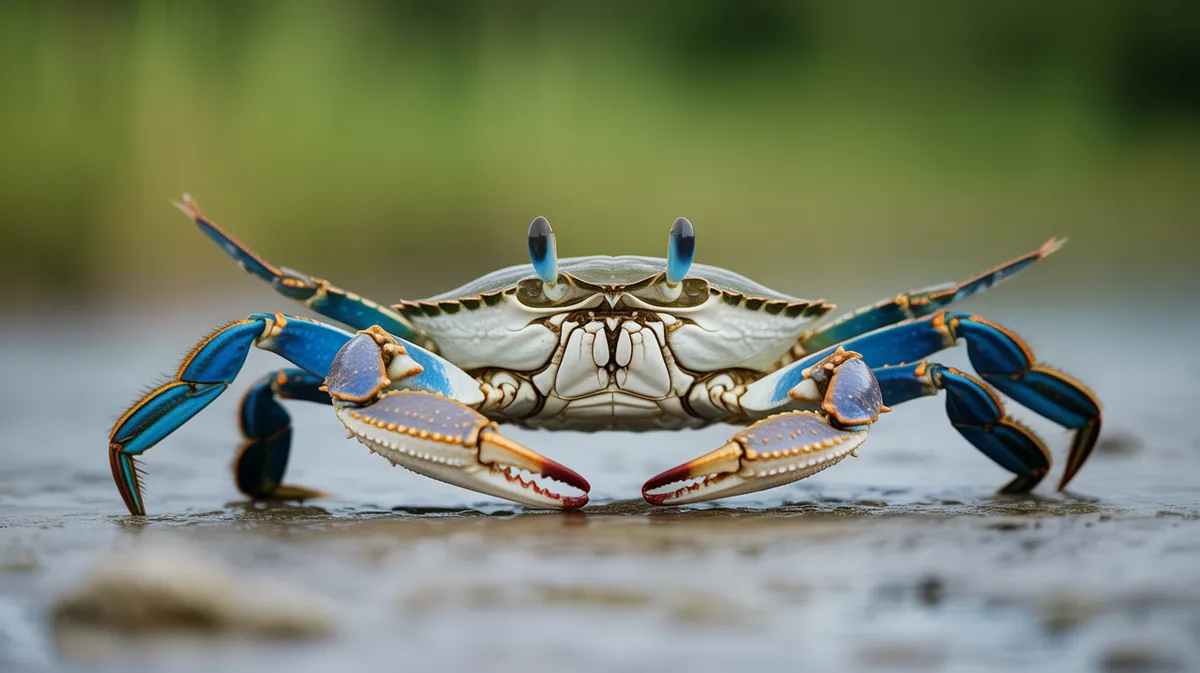
About the Atlantic blue crab
The Atlantic blue crab is a vibrant crustacean easily recognized by its brilliant blue claws and olive-green shell. Native to the western Atlantic Ocean and the Gulf of Mexico, it thrives in estuarine and coastal habitats. Blue crabs are highly adaptable, living in both salty and brackish waters, and play an essential role in their ecosystems as both predator and prey. Highly valued as a seafood delicacy, their populations are closely monitored due to intensive fishing and habitat changes.
Fascinating facts
Iconic Blue Claws
The blue crab's vivid blue claws are a result of pigments that react with proteins in their shells, making them stand out among other crabs.
Estuarine Expert
Blue crabs are well adapted to brackish environments, often found where freshwater rivers meet the sea, providing them with abundant food sources.
Seafood Favorite
Atlantic blue crabs are a culinary delicacy, particularly prized for their sweet, tender meat in dishes like Maryland crab cakes.
Detailed description
The Atlantic blue crab (Callinectes sapidus) is a robust decapod crustacean notable for its striking blue chelae (claws) and a carapace that ranges from olive-green to bluish-brown, typically measuring up to 23 cm (9 inches) across. Its body is laterally compressed and features a broad, serrated carapace with nine marginal spines on each side, the last of which is elongated into a sharp point. The species is sexually dimorphic: mature females possess red-tipped claws and a broader, rounded abdominal apron, while males have a narrow, T-shaped apron. Blue crabs are highly agile swimmers, aided by their flattened, paddle-like fifth pair of legs (swimmerets), an adaptation unique to the family Portunidae. They are opportunistic omnivores, feeding on bivalves, fish, detritus, and plant material, and are known for their aggressive, territorial behavior. Blue crabs exhibit complex social interactions, including dominance hierarchies and ritualized combat. Their life cycle includes a planktonic larval stage, followed by multiple molts as they grow. The species is euryhaline, tolerating a wide range of salinities, which allows it to exploit diverse estuarine environments. Blue crabs are ecologically significant as both predators and prey, influencing the structure of benthic communities throughout their range.
Did you know?
Atlantic blue crabs can change their shell up to 20 times before reaching adulthood through a process called molting.
Research & sources
Wikipedia summary
Callinectes sapidus, the blue crab, Atlantic blue crab, or, regionally, the Maryland blue crab, is a species of crab native to the waters of the western Atlantic Ocean and the Gulf of Mexico, and introduced internationally.
Behaviour & social structure
Atlantic blue crabs are primarily crepuscular, exhibiting peak activity at dawn and dusk. They are solitary foragers but can aggregate in high densities in productive habitats. Blue crabs use their keen chemosensory abilities to detect prey and scavenging opportunities, often ambushing small fish, mollusks, and crustaceans. They are known for their aggressive defense of territory and will engage in threat displays or physical combat with conspecifics, especially during mating or competition for food. Blue crabs are also adept burrowers, often burying themselves in sediment to avoid predators or extreme temperatures. During molting, individuals become reclusive and vulnerable, seeking shelter until their new exoskeleton hardens. Seasonal migrations are common, with adults moving to deeper, saltier waters in autumn for overwintering and females migrating to high-salinity areas to spawn.
Reproduction & life cycle
Reproduction in Callinectes sapidus is highly seasonal, with mating typically occurring from late spring through early autumn. Mating is timed to coincide with the female's terminal molt, after which she is receptive for a brief period. Males guard pre-molt females (a behavior known as precopulatory mate guarding) for several days, ensuring successful copulation immediately post-molt. Fertilization is internal, and females store sperm for months, using it to fertilize multiple broods. Egg masses, or 'sponges,' can contain 750,000 to 8 million eggs, which females carry under their abdomen for about two weeks. After hatching, larvae are released into high-salinity waters, where they undergo seven to eight planktonic zoeal stages before settling as juvenile crabs. No parental care is provided after larval release, and juvenile survival rates are low due to predation and environmental factors.
Adaptations & survival
Blue crabs possess several key adaptations for survival in dynamic estuarine environments. Their paddle-shaped swimmerets enable rapid, multidirectional swimming, facilitating both escape from predators and efficient foraging. The euryhaline physiology of C. sapidus allows it to osmoregulate across a broad salinity gradient, from nearly freshwater to hypersaline conditions. Their powerful chelae are adapted for both predation and defense, capable of crushing mollusk shells and deterring larger predators. Molting, or ecdysis, enables growth and regeneration of lost limbs, a critical survival trait. Chemoreceptors on their antennae and legs provide acute detection of food and conspecifics, while their cryptic coloration and burrowing behavior offer camouflage against predators.
Cultural significance
The Atlantic blue crab holds immense cultural and economic importance, especially in the Mid-Atlantic United States. It is the state crustacean of Maryland and a culinary icon, central to regional dishes such as crab cakes and steamed crabs. Annual crab festivals and traditions, such as the 'crab feast,' reflect its role in local heritage. Blue crabs also feature in folklore and symbolism, representing resilience and adaptability. Historically, indigenous peoples and early settlers relied on blue crabs as a food source, and their fishery remains a cornerstone of coastal economies today.
Recent research
Recent research on Callinectes sapidus has focused on population genetics, larval dispersal, and responses to environmental stressors. Genomic studies have revealed significant genetic differentiation among populations, influenced by larval transport and estuarine connectivity. Investigations into the impacts of hypoxia and ocean acidification have shown that blue crabs exhibit physiological plasticity, but chronic exposure can impair growth and survival. Ongoing studies are assessing the effects of climate change on spawning phenology and range shifts. Additionally, blue crabs are being used as bioindicators for estuarine health due to their sensitivity to pollutants and habitat quality.
Videos
Habitat
Estuaries and coastal waters


Conservation
The Atlantic blue crab is currently classified as Least Concern on the IUCN Red List.
Threats & challenges
Despite their ecological resilience, Atlantic blue crabs face significant threats from overfishing, habitat degradation, pollution, and climate change. Intensive commercial and recreational harvesting has led to localized population declines, particularly in the Chesapeake Bay. Loss of seagrass beds and estuarine habitats, often due to coastal development and water quality deterioration, reduces critical nursery and spawning grounds. Blue crabs are also susceptible to diseases such as Hematodinium perezi (a parasitic dinoflagellate) and shell disease. Climate-driven changes in temperature and salinity regimes may alter distribution patterns and reproductive success. While currently listed as Least Concern by the IUCN, ongoing monitoring and adaptive management are essential to ensure sustainable populations.
Taxonomy
Scientific name
Callinectes sapidus
- Kingdom
- Animalia
- Phylum
- Arthropoda
- Class
- Malacostraca
- Order
- Decapoda
- Family
- Portunidae
- Genus
- Callinectes
- Species
- sapidus
Where to see an atlantic blue crab
3 zoos and aquariums in 1 country are recorded as keeping this species.
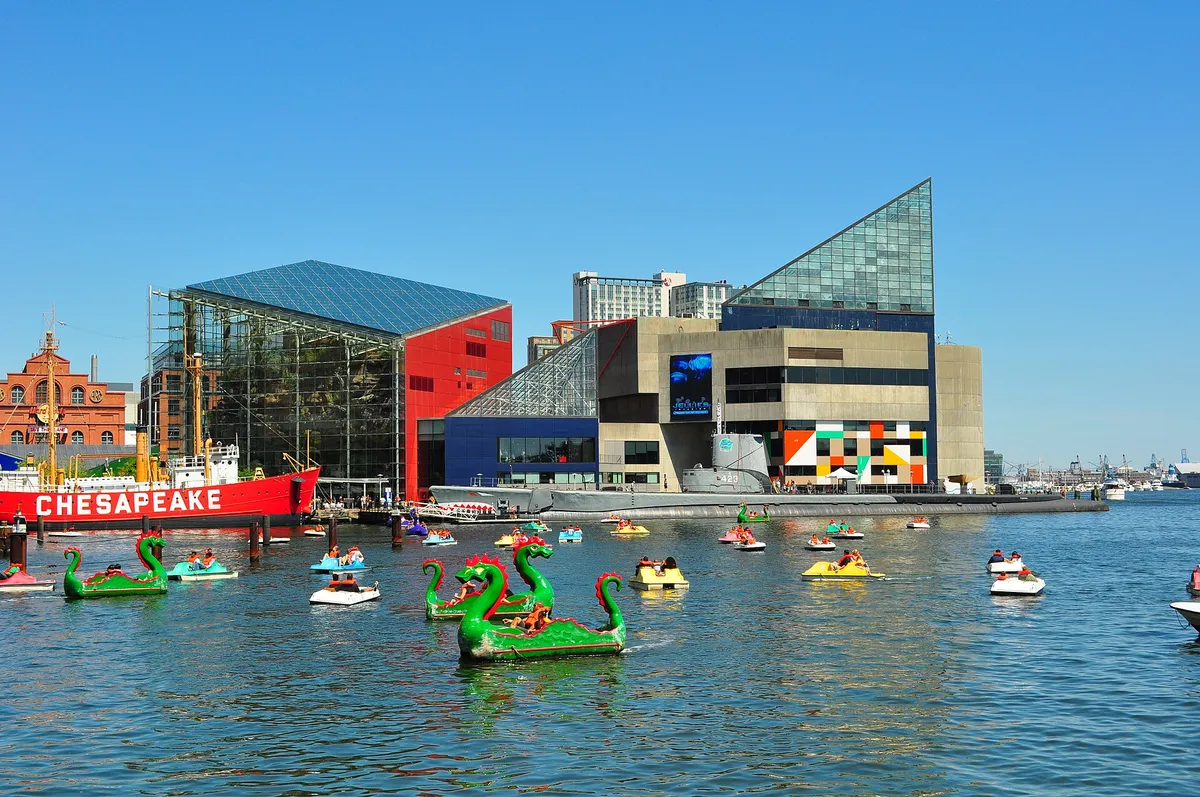 National Aquarium🇺🇸 Baltimore, United States
 National Zoological Park🇺🇸 Washington, United States
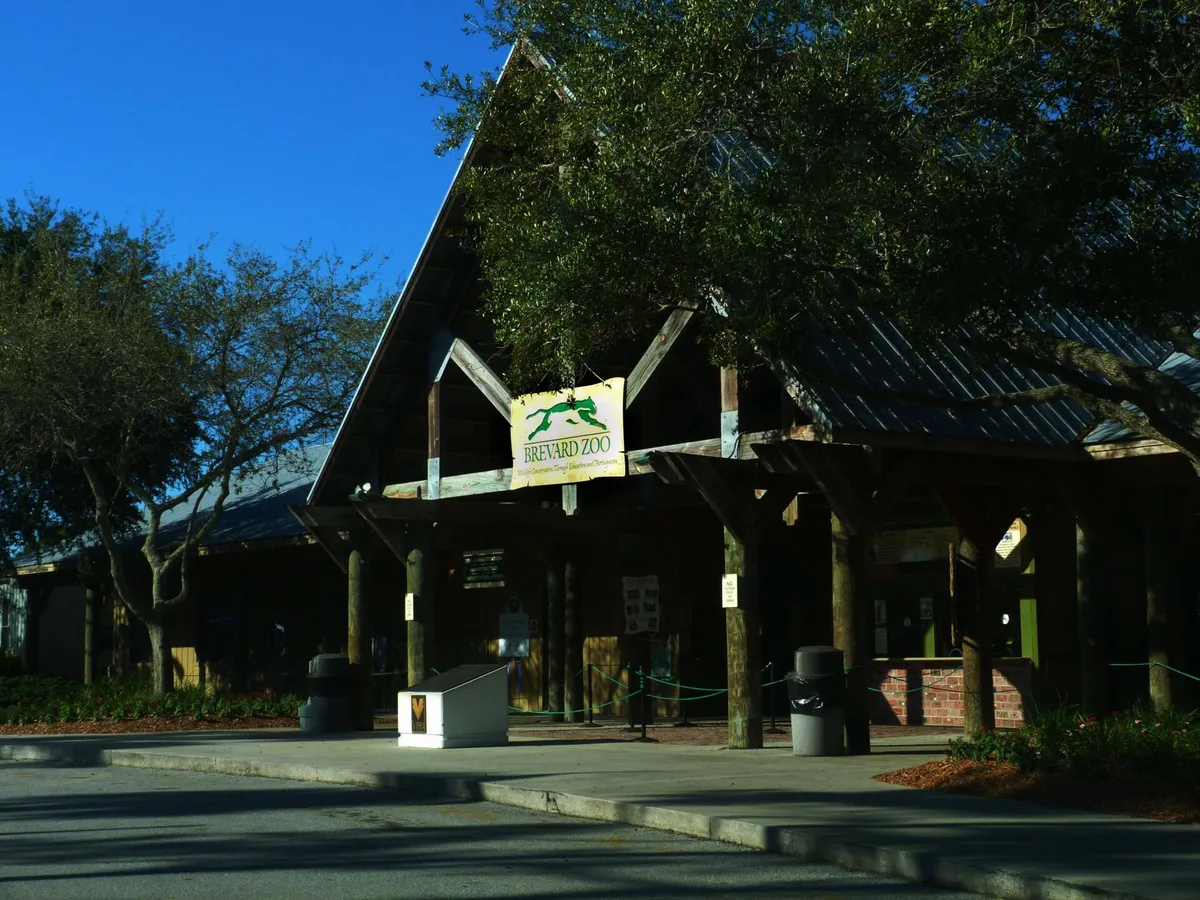 Brevard Zoo🇺🇸 Melbourne, United States
Community notes
Share your observations about the Atlantic blue crab.
No community notes yet. Be the first!
Discover more wildlife
More fascinating animals from the encyclopedia.