
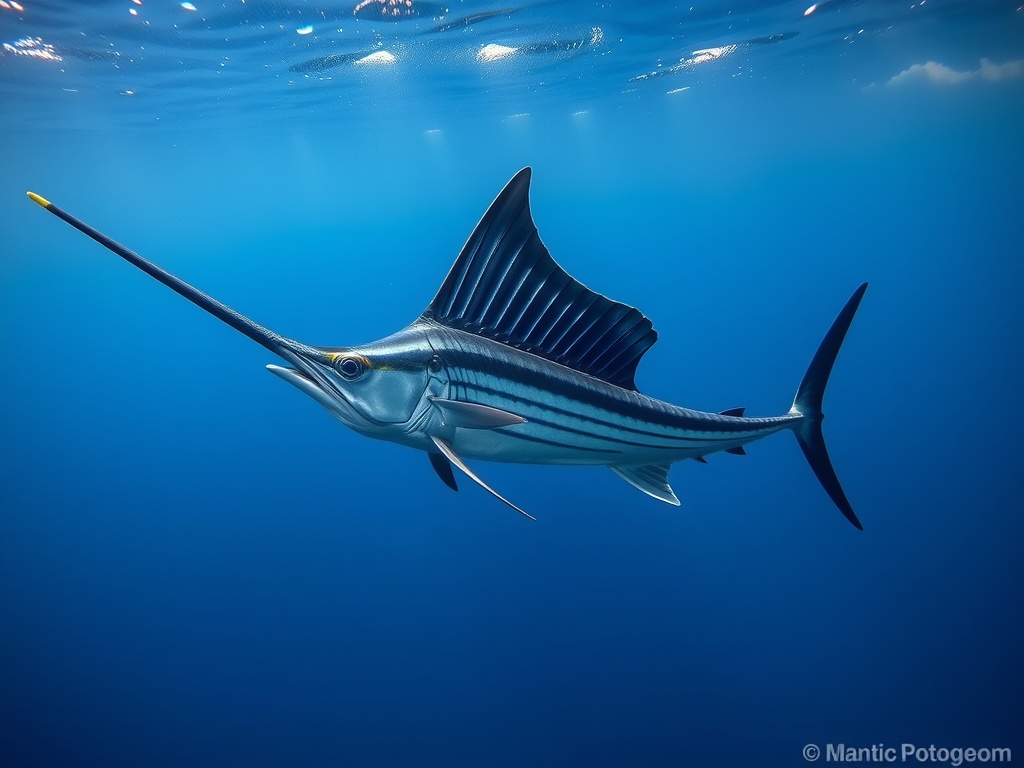
About the Atlantic sailfish
The Atlantic sailfish is a large, predatory fish known for its striking dorsal fin, or 'sail', and its elongated, spear-like bill. Recognized for its incredible speed, it is often cited as one of the fastest fish in the ocean, capable of bursts up to 68 miles per hour (110 km/h). This agile predator primarily occupies warm and temperate waters of the Atlantic Ocean, preying on schools of smaller fish such as sardines and mackerel. Its distinctive sail is thought to help herd prey and may also play a role in communication and temperature regulation.
Fascinating facts
Super Speed
Atlantic sailfish are among the fastest marine animals, reaching speeds up to 68 mph (110 km/h) during short bursts.
Sport Fishing Icon
Highly prized by sport fishers, sailfish are renowned for their acrobatic leaps and rapid runs when hooked.
Habitat Range
They inhabit both coastal and offshore waters throughout the tropical and temperate Atlantic, from the Gulf of Mexico to the Mediterranean Sea.
Detailed description
The Atlantic sailfish (Istiophorus albicans) is a large, pelagic billfish distinguished by its elongated, slender body, pronounced spear-like upper jaw (rostrum), and its spectacular, sail-like first dorsal fin that can reach nearly the height of its body. Adults typically measure between 1.7 and 2.4 meters (5.6–7.9 ft) in length and weigh 30–60 kg (66–132 lbs), though exceptional individuals can exceed these sizes. The body is streamlined and covered with small, embedded scales, displaying a dark blue dorsum, silvery flanks, and vertical rows of cobalt spots. The sail, marked with black spots, can be raised or lowered and is used in both hunting and social displays. Sailfish possess large, deeply forked caudal fins and powerful musculature, enabling rapid acceleration and agile maneuvering. Their eyes are relatively large, providing acute vision for detecting prey in varying light conditions. The species is highly migratory, often traveling long distances in search of prey and optimal spawning grounds. Sailfish are apex predators, primarily preying on schooling fish and cephalopods, and are known for their cooperative hunting tactics. They exhibit rapid color changes due to specialized chromatophores, which may serve in communication or camouflage. Sexual dimorphism is minimal, though females tend to be slightly larger than males. The Atlantic sailfish is an iconic species in sport fishing due to its size, speed, and acrobatic leaps when hooked.
Did you know?
Despite their size and speed, Atlantic sailfish are sometimes preyed upon by larger predators like sharks and killer whales.
Research & sources
Wikipedia summary
The Atlantic sailfish is a species of marine fish in the family Istiophoridae of the order Istiophoriformes. It is found in the Atlantic Ocean and the Caribbean Sea, except for large areas of the central North Atlantic and the central South Atlantic, from the surface to depths of 200 m (656 ft). The Atlantic sailfish is related to the marlin.
Behaviour & social structure
Atlantic sailfish are primarily solitary or found in small, loosely associated groups, particularly during feeding or spawning events. They are diurnal hunters, most active at dawn and dusk, using their speed and agility to herd and strike at schools of prey such as sardines, anchovies, and mackerel. During hunting, sailfish often work cooperatively, raising their dorsal fins to corral prey into tight bait balls, then slashing with their bills to stun or injure multiple fish before consuming them. Their feeding strikes are precise and rapid, minimizing energy expenditure and maximizing capture efficiency. Sailfish are capable of rapid bursts of speed, but generally cruise at moderate velocities while searching for prey. Social interactions include color changes and fin displays, which may signal aggression, courtship, or coordination during group hunting. They are known for their spectacular leaps and tail-walking behavior, which may serve to dislodge parasites or evade predators. Daily routines are influenced by prey availability, water temperature, and ocean currents.
Reproduction & life cycle
Atlantic sailfish are oviparous, with external fertilization. Spawning typically occurs in warm, offshore waters during spring and summer, though timing varies regionally. Females are highly fecund, releasing between 1.2 and 4.8 million buoyant eggs per spawning event, often in multiple batches throughout the season. Males release sperm simultaneously, fertilizing the eggs in the water column. There is no parental care; eggs and larvae are planktonic, drifting with currents and subject to high predation. Larvae grow rapidly, developing the characteristic bill and dorsal fin early. Sexual maturity is reached at approximately 2–3 years of age, with a lifespan estimated at 4–10 years in the wild. Spawning grounds are often associated with oceanic fronts and upwellings, where food is abundant for developing larvae.
Adaptations & survival
The Atlantic sailfish exhibits several remarkable adaptations for life as a high-speed oceanic predator. Its streamlined body minimizes drag, while the large, deeply forked caudal fin and powerful lateral muscles enable rapid acceleration and sustained swimming. The elongated bill is used to slash and stun prey, a unique feeding adaptation among billfishes. The large, retractable dorsal 'sail' is employed to herd prey and may also aid in thermoregulation by increasing surface area for heat exchange. Sailfish possess a counter-current heat exchange system (rete mirabile) in their cranial region, allowing them to maintain elevated brain and eye temperatures for enhanced sensory performance in cooler waters. Their skin contains specialized chromatophores, enabling rapid color changes for communication or camouflage. Acute vision, facilitated by large eyes and a high density of rod and cone cells, supports effective hunting in varying light conditions. These adaptations collectively make the sailfish one of the ocean's most efficient and formidable predators.
Cultural significance
The Atlantic sailfish holds significant value in recreational sport fishing, particularly in the Caribbean, Florida, and the western Atlantic, where it is prized for its speed, strength, and acrobatic displays. It is often featured in angling tournaments and is a symbol of marine adventure and prowess. While not a major commercial species, its image is widely used in tourism and marine conservation campaigns. In some coastal cultures, the sailfish is revered for its beauty and agility, occasionally appearing in local art and folklore. Historically, indigenous peoples of the Caribbean and Central America may have utilized sailfish for food, though this is less common today. The species' iconic status has contributed to increased awareness of billfish conservation and sustainable fishing practices.
Recent research
Recent research has focused on the biomechanics of sailfish hunting, revealing that their bills reduce hydrodynamic drag and increase prey capture efficiency. High-speed video studies have documented the precision of their bill strikes and cooperative hunting strategies. Satellite tagging and genetic studies have improved understanding of their migratory patterns, stock structure, and connectivity between Atlantic populations. Ongoing research is examining the effects of ocean warming and acidification on sailfish physiology and distribution. Advances in telemetry are providing new insights into their vertical movements and habitat use, informing management and conservation efforts. There is also interest in the sailfish's rapid color change mechanisms and their role in social signaling and predation.
Videos
Habitat
Open ocean (pelagic zone) of the Atlantic Ocean

Conservation
The Atlantic sailfish is currently classified as Least Concern on the IUCN Red List.
Threats & challenges
While the Atlantic sailfish is currently listed as Least Concern by the IUCN, it faces several threats. Bycatch in commercial longline and drift net fisheries targeting tuna and swordfish is a significant source of mortality, as sailfish are often caught unintentionally. Overfishing of prey species and habitat degradation, particularly in spawning and nursery areas, may impact population dynamics. Climate change poses additional risks by altering ocean temperatures, currents, and prey distributions, potentially affecting migration and reproductive success. Recreational fishing, though largely catch-and-release, can cause post-release mortality if not properly managed. Population trends are not fully understood due to the species' wide range and migratory habits, but localized declines have been reported in some regions. Ongoing monitoring and international management are necessary to ensure sustainable populations.
Taxonomy
Scientific name
Istiophorus albicans
- Kingdom
- Animalia
- Phylum
- Chordata
- Class
- Actinopterygii
- Order
- Istiophoriformes
- Family
- Istiophoridae
- Genus
- Istiophorus
- Species
- albicans
Community notes
Share your observations about the Atlantic sailfish.
No community notes yet. Be the first!
Discover more wildlife
More fascinating animals from the encyclopedia.