
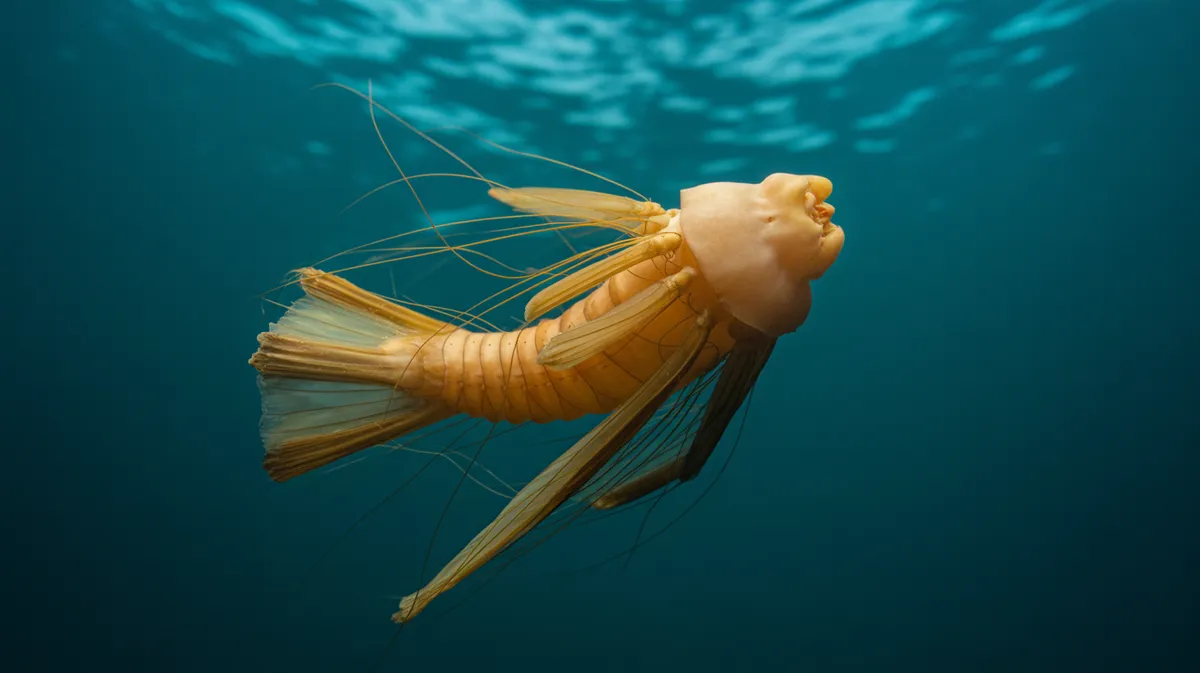
About the Atlantic sea nettle
The Atlantic sea nettle is a species of jellyfish commonly found along the Atlantic and Gulf coasts of the United States. Recognized by its translucent, bell-shaped body with distinctive long, trailing tentacles and often with reddish or brown stripes, it can deliver a mild to moderate sting to humans. This invertebrate plays a vital ecological role, preying on plankton, small fish, and other jellyfish, while also serving as prey for sea turtles and larger fish. The Atlantic sea nettle is often found in bays, estuaries, and coastal waters, where it drifts with the currents in search of food. It is a common sight during the warmer months and is known for its seasonal population booms.
Fascinating facts
Stinging Tentacles
The Atlantic sea nettle has long tentacles lined with specialized cells called nematocysts that can inject venom into their prey and potential threats.
Seasonal Blooms
Population numbers of Atlantic sea nettles can increase dramatically during the summer, sometimes forming large swarms in estuaries and bays.
Prey for Sea Turtles
Atlantic sea nettles are an important food source for leatherback sea turtles, which are immune to their stings.
Detailed description
The Atlantic sea nettle (Chrysaora quinquecirrha) is a large scyphozoan jellyfish, with a bell diameter typically ranging from 10 to 25 cm (4–10 inches), though some individuals may reach up to 40 cm (16 inches). The bell is semi-transparent, often tinged with hues of white, pink, yellow, or reddish-brown, and is marked by 8–24 radiating stripes, most prominent near the bell margin. The bell margin is scalloped, bearing 16 marginal lappets and eight rhopalia (sensory structures). Extending from the bell are four long, frilly oral arms and numerous thin, hair-like tentacles, which can reach lengths of up to 2 meters (6.5 feet). The tentacles are equipped with specialized stinging cells called nematocysts, used for prey capture and defense. Internally, the gastrovascular cavity is divided into four gastric pouches, each containing a horseshoe-shaped gonad. The species lacks a centralized brain, instead relying on a diffuse nerve net for sensory processing and movement. Atlantic sea nettles are primarily solitary but may aggregate in large swarms, particularly during summer blooms. Their locomotion is achieved by rhythmic pulsations of the bell, allowing them to move vertically in the water column, though they are largely at the mercy of currents for horizontal movement.
Did you know?
Despite their gelatinous appearance, Atlantic sea nettles are composed of about 95% water.
Research & sources
Wikipedia summary
The Atlantic sea nettle, also called the East Coast sea nettle in the United States, is a species of jellyfish that inhabits the Atlantic coast of the United States. Historically it was confused with several Chrysaora species, resulting in incorrect reports of C. quinquecirrha from other parts of the Atlantic and other oceans. Most recently, C. chesapeakei of estuaries on the Atlantic coast of the United States, as well as the Gulf of Mexico, was only fully recognized as separate from C. quinquecirrha in 2017. It is smaller than the Pacific sea nettle, and has more variable coloration, but is typically pale, pinkish or yellowish, often with radiating more deeply colored stripes on the exumbrella, especially near the margin.
Behaviour & social structure
Atlantic sea nettles are opportunistic carnivores, employing a passive hunting strategy. They drift with the currents, trailing their tentacles to ensnare zooplankton, copepods, small fish, ctenophores, and even other jellyfish. Prey is immobilized by nematocyst stings and transported to the mouth via the oral arms. Feeding activity peaks during daylight hours, coinciding with planktonic prey abundance. While generally solitary, they can form dense aggregations—sometimes numbering thousands—during seasonal blooms, which are thought to be triggered by temperature, salinity, and prey availability. Social interactions are minimal, as they lack complex nervous systems, but physical contact between individuals is common in aggregations. They exhibit diel vertical migration, tending to remain deeper during the day and rising toward the surface at night.
Reproduction & life cycle
Chrysaora quinquecirrha exhibits a complex life cycle with both sexual and asexual phases. Sexual reproduction occurs in the medusa stage, with external fertilization: males release sperm into the water column, which females collect via their oral arms to fertilize eggs internally. Fertilized eggs develop into planula larvae, which settle onto substrates and metamorphose into sessile polyps (scyphistomae). Polyps can reproduce asexually by budding or strobilation, a process in which they segment to release multiple ephyrae (juvenile medusae). Ephyrae mature into adult medusae over several weeks. Breeding typically peaks in late spring and summer, coinciding with warmer water temperatures. There is no parental care; larvae are released into the plankton and must fend for themselves.
Adaptations & survival
The Atlantic sea nettle's translucent bell and variable coloration provide camouflage in the water column, reducing predation risk. Its nematocyst-laden tentacles are highly effective for capturing a wide range of prey, while also deterring predators. The species tolerates a broad range of salinities (5–38 ppt), allowing it to thrive in both marine and estuarine environments, including brackish bays and river mouths. Its ability to form large blooms is an adaptation to exploit seasonal surges in prey availability. The simple nerve net and rhopalia allow for basic sensory perception, including light detection and orientation, aiding in vertical migration and prey localization.
Cultural significance
While the Atlantic sea nettle does not hold significant mythological or symbolic roles, it is a familiar species to coastal communities and is often featured in public aquaria for educational purposes. Its seasonal blooms can impact tourism and fisheries, leading to local notoriety. The species is sometimes used in scientific research to study cnidarian biology, venom, and ecological dynamics. There are no known traditional uses for this species in medicine or cuisine.
Recent research
Recent taxonomic research has clarified the identity of Chrysaora quinquecirrha, distinguishing it from the closely related Chrysaora chesapeakei, which inhabits estuarine environments of the Atlantic and Gulf coasts. Molecular studies (e.g., Bayha et al., 2017) have revealed cryptic diversity within the genus, prompting reevaluation of historical records. Ongoing research focuses on the ecological impacts of jellyfish blooms, their role in food webs, and the environmental drivers of population dynamics. Studies of their venom have identified bioactive compounds with potential biomedical applications. Additionally, the species serves as a model for understanding the effects of climate change on gelatinous zooplankton.
Videos
Habitat
Coastal waters, estuaries, and bays

Conservation
The Atlantic sea nettle is currently classified as Least Concern on the IUCN Red List.
Threats & challenges
Currently, the Atlantic sea nettle is not considered threatened and is classified as Least Concern. However, it faces localized challenges from habitat alteration, pollution, and eutrophication, which can disrupt food webs and water quality. Paradoxically, nutrient enrichment and overfishing of jellyfish predators (such as sea turtles and certain fish) may contribute to population increases and more frequent blooms. Climate change, with its impacts on water temperature and salinity, may alter distribution patterns, potentially expanding the range of this species. Human encounters, particularly stings, are a nuisance but rarely dangerous.
Taxonomy
Scientific name
Chrysaora quinquecirrha
- Kingdom
- Animalia
- Phylum
- Cnidaria
- Class
- Scyphozoa
- Order
- Semaeostomeae
- Family
- Pelagiidae
- Genus
- Chrysaora
- Species
- quinquecirrha
Where to see an atlantic sea nettle
2 zoos and aquariums in 1 country are recorded as keeping this species.

Community notes
Share your observations about the Atlantic sea nettle.
No community notes yet. Be the first!
Discover more wildlife
More fascinating animals from the encyclopedia.